
Football defenses come in many shapes. But few are as widely used, or as widely misunderstood, as the cover 2 defense.
It’s a scheme built on structure, spacing, and discipline. This blog breaks down how it works from the ground up.
You’ll learn how the field is divided, what each player is responsible for, where the scheme shines, and where offenses can crack it open. You’ll also see key variations that modern teams use to keep things fresh.
Understanding Cover 2 Defense Structure
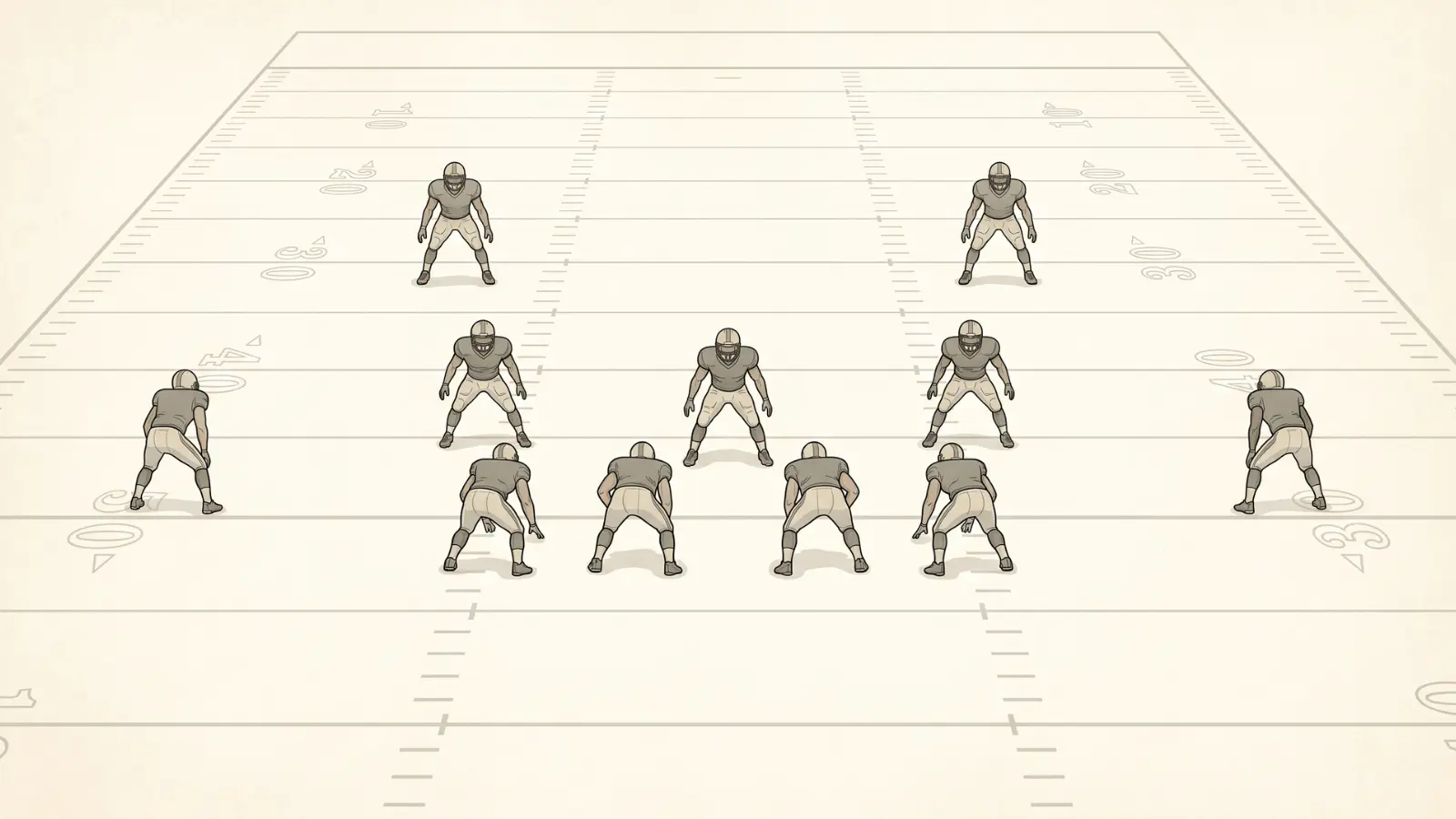
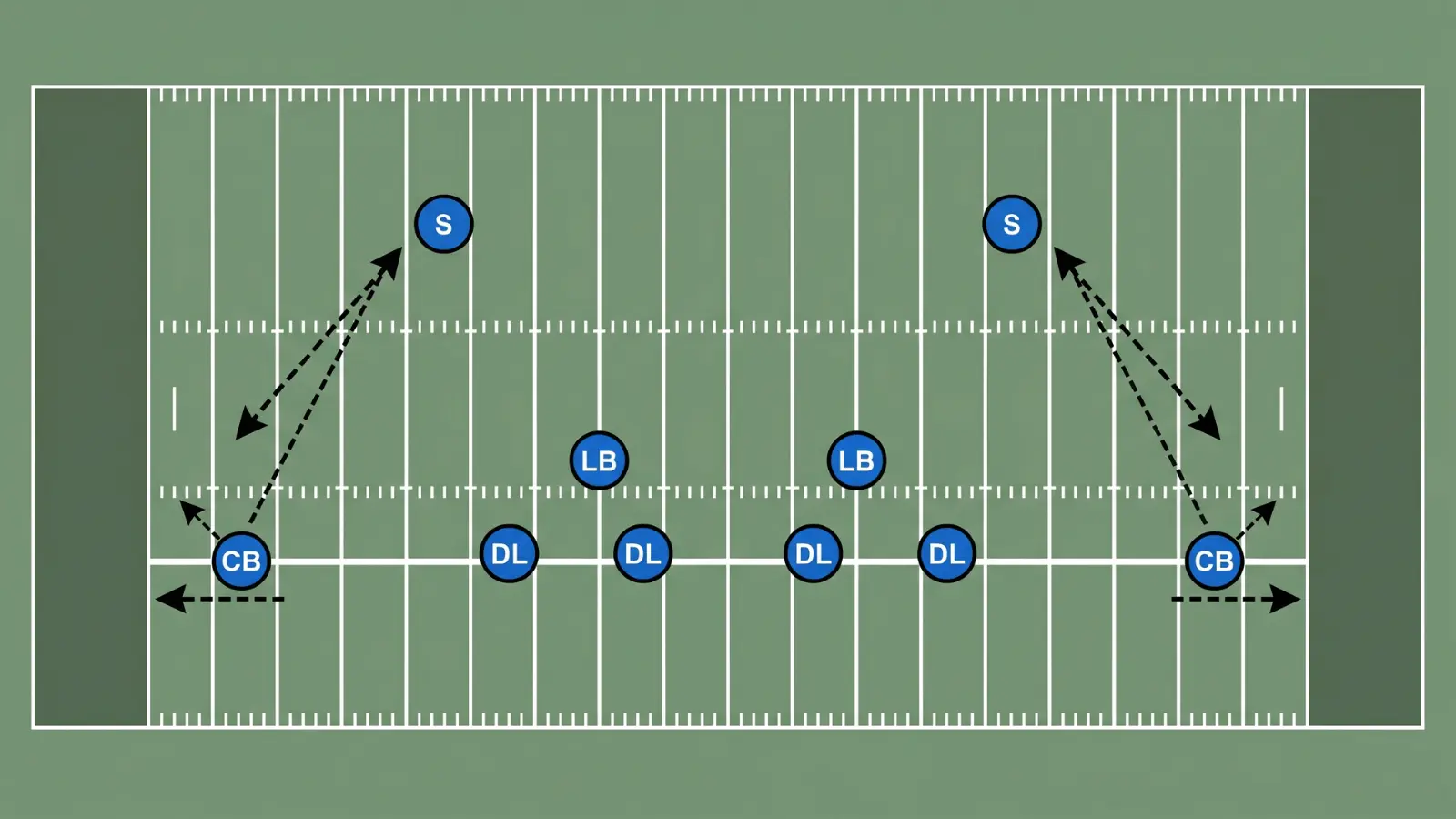
The cover 2 defense splits the deep part of the field into two halves. Each half is owned by one safety. Below them, five defenders cover the short and mid zones.
Here’s how the field is divided underneath:
- Two cornerbacks cover the flat zones, the area near the sidelines, close to the line of scrimmage
- Three linebackers cover hooks, curls, and the middle zones in between
This creates a layered wall of defenders. Deep balls are handled by the safeties. Short throws have to beat five defenders underneath.
The result is a defense that makes vertical routes difficult and keeps short passes well-covered. The tradeoff is the deep middle: that space between the two safeties stays open by design.
One common misconception: many fans think cover 2 leaves the whole field exposed. That’s not true. Only the deep middle is naturally vulnerable; the rest of the field is well-protected.
Player Roles and Responsibilities
Every player in a cover 2 defense has a specific job. When everyone does their job, the defense is hard to beat.
Safeties
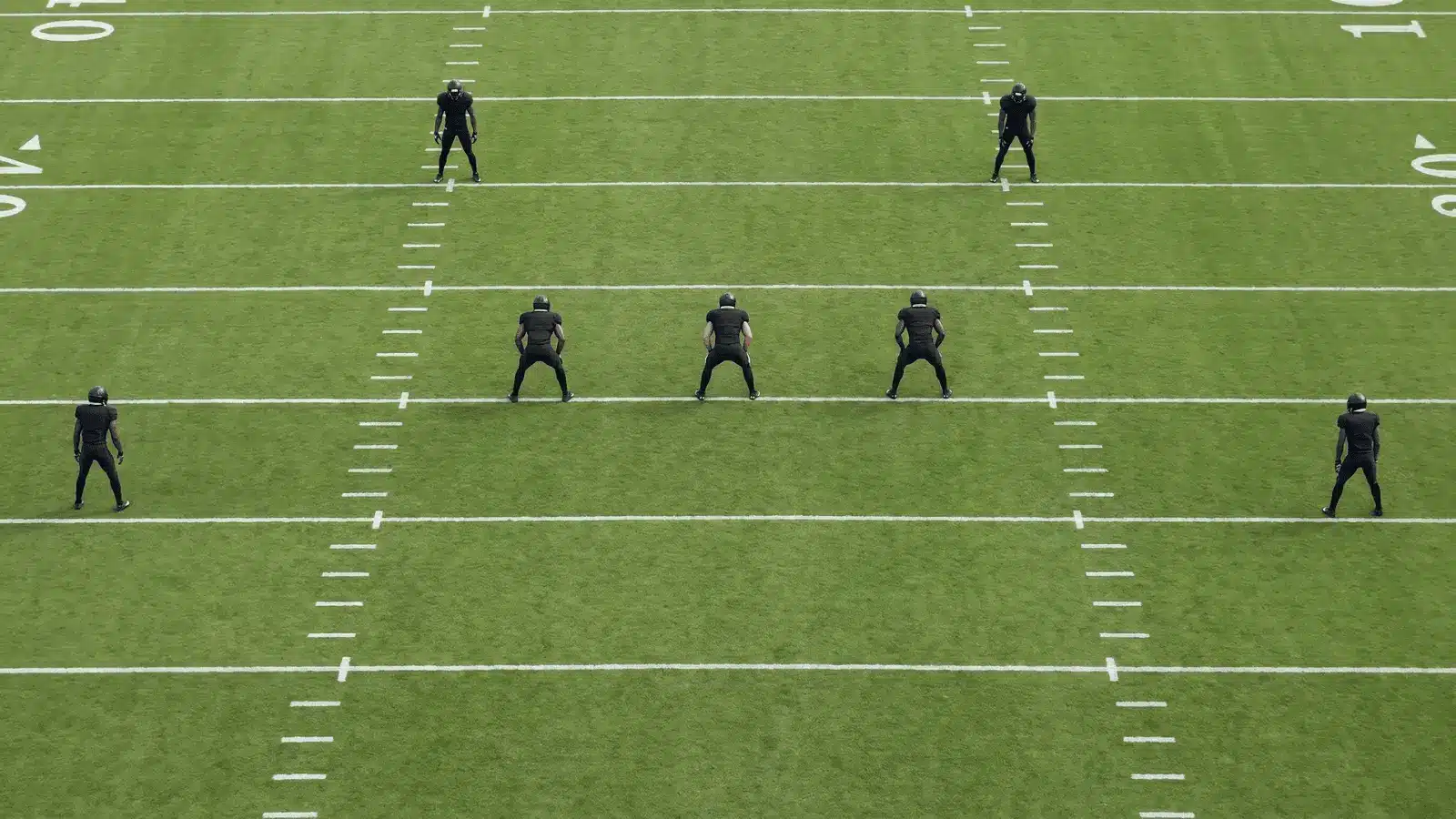
The two safeties line up 10–12 yards deep before the snap. Each one takes a deep half of the field.
Their job is to track deep routes and act as the last line of defense. They watch for vertical routes and post routes that try to split them down the middle.
Cornerbacks
Corners in cover 2 play what’s called “cloud coverage.“
They line up near the line of scrimmage and jam receivers at the snap. After the jam, they drop back into the flat zone.
Their job is to prevent short outside completions and stop quick screen passes from gaining yards.
Linebackers
The three linebackers are the connective tissue of the defense. They cover hook routes, curl routes, and runs up the middle. They also provide run support when needed.
However, if they play too shallow, seam routes can slip over them, right into the gap between the linebackers and safeties.
Strengths of Cover 2 Defense
The Cover 2 defense does several things really well.
1. Run Defense
Corners are close to the line of scrimmage. Linebackers are in a position to fill gaps. That makes it tough for running backs to find space, especially on outside runs.
2. Short Pass Coverage
Five defenders underneath is a lot of traffic for a quarterback to deal with. Quick slants, screens, and short crossing routes are all contested. Offenses have to be very precise to pick up yards in these zones.
3. Pass Rush Dependency
Cover 2 only works if the defensive line can generate consistent pressure with four rushers.
Because linebackers and corners are dropping into zones rather than blitzing, the quarterback has time to wait out the coverage if the front four don’t get home.
When the pass rush is effective, the scheme is hard to beat. When it isn’t, quarterbacks find the open zones easily. The scheme doesn’t protect itself.
4. Sideline Coverage
The safeties cover more than just the deep middle. They protect the deep sidelines too. Long throws down the outside are risky against this defense because a safety is always tracking that direction.
Together, these strengths make Cover 2 a solid base defense. It’s great at limiting big plays along the sidelines and stopping short, high-percentage passes from turning into long gains.
Weaknesses and Vulnerabilities
No defense is perfect, and Cover 2 has clear weak spots that smart offenses target.
The Deep Middle (MOFO)
MOFO stands for “Middle of the Field Open.” In Cover 2, it’s the most exploited weakness. When both safeties drift toward the sidelines, the center of the field opens up.
Routes like the post and the seam, run by receivers or tight ends straight up the middle, can find open space between the two safeties.
If a linebacker drops too shallow, there’s a massive window right over his head for a big gain.
Light Box Against the Run
By dropping both safeties deep, the defense removes them from run support close to the line. That means fewer bodies are stacked in the box.
A strong offensive line can occasionally exploit this, especially on inside runs where safeties can’t make plays fast enough.
But that in no way means that Cover 2 is easy to beat. Most of its vulnerabilities only show up when defenders misread routes or fail to execute their assignments.
How Offenses Attack Cover 2
Knowing the vulnerabilities is one thing. Knowing the specific plays offenses use to exploit them is another.
4 Verticals
The most reliable Cover 2 beater is four vertical routes: all four eligible receivers running straight up the field at once.
Each safety has to cover a full half of the field, roughly 26 yards wide.
When two receivers run verticals to the same half, the safety has to choose. One of them comes open. If the quarterback reads it correctly, it’s a big gain or a touchdown.
Trips Formation
Lining up three receivers on one side of the field puts enormous stress on the single safety covering that half. He can’t cover three routes by himself.
Offenses run verticals or seam-and-out combos out of trips specifically to isolate him.
The Seam Route
A tight end or slot receiver running straight up the hash attacks the gap between the linebacker and the safety.
The linebacker drops shallow to cover the hook zone. The safety is tracking the deep half.
The seam route hits the window right between them; over the linebacker’s head, in front of the safety. Against a well-timed throw, neither defender can make a play on the ball.
Key Variations of Cover 2
Teams don’t always run base cover 2. Two variations help fix its weaknesses and keep offenses guessing.
Tampa 2
Tampa 2 is the most famous version of this scheme. The key change: the middle linebacker drops deeper than usual to cover the seam route.
This directly fixes the deep middle problem. With the linebacker patrolling that zone, seam and post routes become much riskier for the offense.
The tradeoff? That linebacker has to be athletic enough to drop back and cover ground quickly. If he misreads the route or gets caught in run traffic, the window opens right back up.
The prototype for this role was Brian Urlacher with the Chicago Bears. His combination of range and instincts made the scheme nearly unbeatable at its peak. The Bears reached Super Bowl XLI largely on the strength of that defense.
Cover 2 Man
In Cover 2 Man, the underneath defenders switch from zone to man coverage. Each of the five underneath defenders locks onto a specific receiver.
This disguises the defense before the snap. The offense can’t easily identify which zone belongs to whom. It adds pressure on receivers and limits easy, pre-designed routes.
The risk: man coverage requires corners and linebackers to win individual matchups. Any mismatch, like a fast receiver on a slow linebacker, can be a problem.
How to Recognize Cover 2 on the Field
Spotting cover 2 defense during a game isn’t hard once you know what to look for. Before the snap, look for these signs:
- Two safeties lined up deep, roughly 10–12 yards from the line of scrimmage, positioned on opposite halves of the field
- Corners near the line, ready to jam receivers at the snap
- Linebackers in between, spread across the middle of the field
After the snap, you’ll see the corners drop into the flats while safeties rotate back to cover their deep halves.
Don’t confuse it with Cover 3: Cover 3 uses only one deep safety in the middle, with the other two defenders covering the deep outside thirds. In Cover 2, both safeties are deep, and that’s the key difference.
Common Misunderstandings About Cover 2
A few myths about the Cover 2 defense keep coming up. Here’s the truth:
| Myth | Reality |
|---|---|
| “It’s a soft defense.” | Corners jam receivers aggressively. Linebackers attack short routes. The flats and hooks are well-covered. |
| “The whole field is open.” | Only the deep middle is exposed by design. The rest of the field is protected by five underneath defenders plus sideline coverage from the safeties. |
| “Variations don’t really help.” | Tampa 2 directly addresses the deep middle weakness. Cover 2 Man creates pre-snap confusion. These aren’t cosmetic tweaks; they change how the defense functions at a fundamental level. |
Wrapping Up
The Cover 2 defense is one of football’s most reliable schemes. It’s built on clear assignments, layered coverage, and smart field division.
When executed well, it shuts down quick passes, controls short yardage, and limits big plays down the sideline. Its weak spots are real, but they’re manageable with the right players and adjustments.
Want to go deeper into football strategy? Explore our other breakdowns on defensive schemes, coverage concepts, and how offenses attack them.
Frequently Asked Questions
Why is it called Cover 2?
The name comes from the number of deep defenders used. Two safeties cover the third level of the field, so the scheme is simply called “Cover 2.”
Can Cover 2 defense be run on every down?
No. It’s vulnerable to short crossing routes and inside runs. Without a consistent pass rush up front, quarterbacks can find the open zones easily.
Who invented the Tampa 2 defense?
Tony Dungy and defensive coordinator Monte Kiffin developed it together with the Tampa Bay Buccaneers in the 1990s. It later became a staple across the NFL, most famously under the Chicago Bears, where Brian Urlacher’s athleticism made the scheme nearly impossible to attack down the middle.
What type of defense is Cover 2, man or zone?
Cover 2 is primarily a zone defense. Each defender covers an assigned area, not a specific player. Cover 2 Man is the variation that adds man coverage underneath.