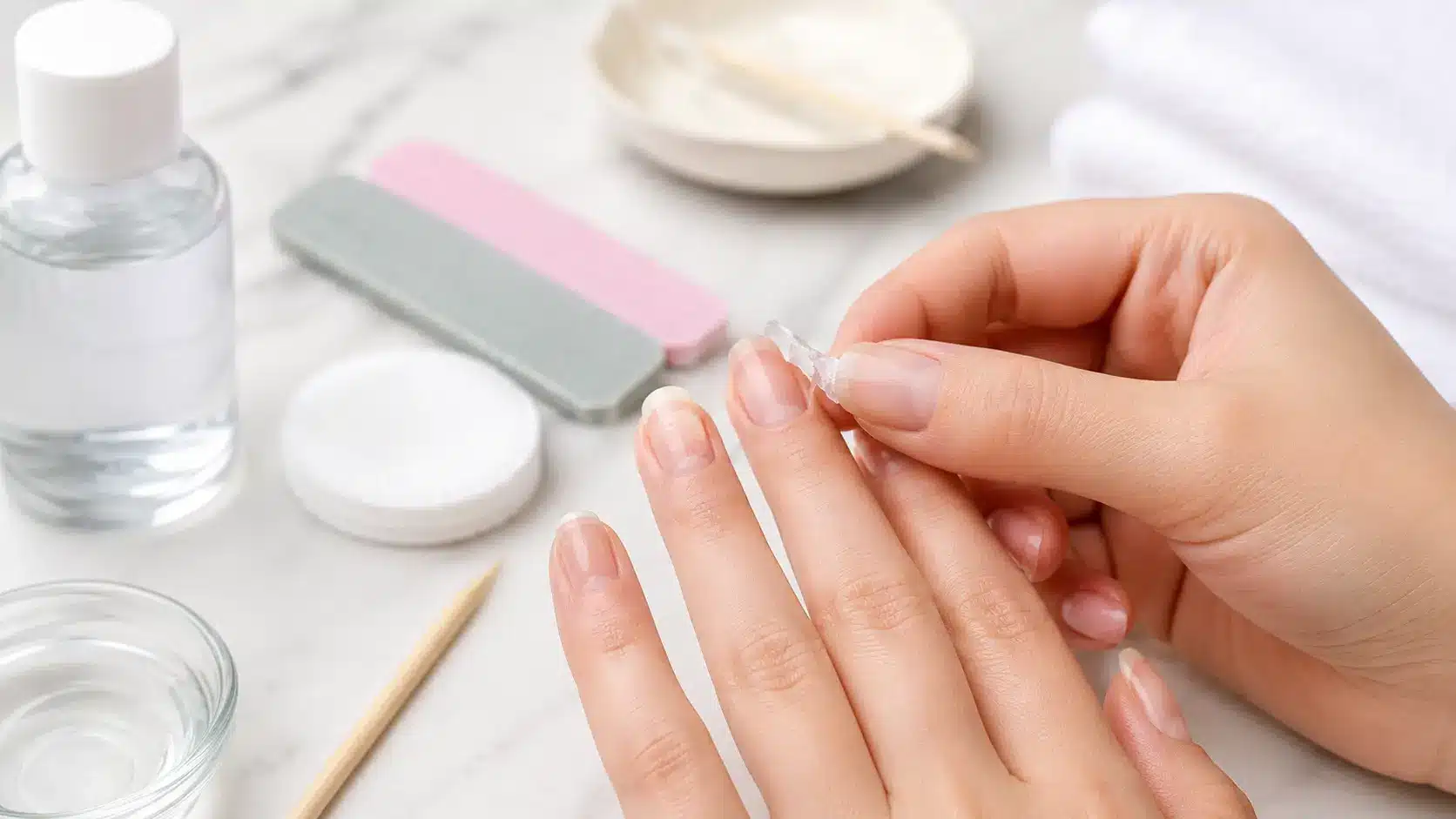

Nail glue holds press-on nails in place like nothing else, but once those nails come off, you are left with a sticky, stubborn mess on your natural nails.
Picking or peeling it off may be tempting, but it can seriously damage your nails. The right removal method makes all the difference between healthy nails and weak, peeling ones.
From acetone soaks to simple kitchen oils, there are safe and easy ways to clean up nail glue at home without causing harm. Read on to find the method that works best for you.
Why Nail Glue is Hard to Remove
Nail glue is made from cyanoacrylate, the same base ingredient found in super glue, which forms an almost instant bond when it contacts moisture on your nail.
When cyanoacrylate comes into contact with your nail, it reacts with moisture and forms a very strong bond almost instantly.
That is why it holds press-ons in place for days and does not simply wash off. The stronger the adhesive bond, the more important it is to use the proper removal method.
Why Peeling or Scraping Can Damage Nails
According to the American Academy of Dermatology, even small habits like picking at your nails can damage the nail plate, so aggressive removal methods make things far worse.
This leads to thinning, peeling, and weak nails that break easily. Always dissolve the glue, not force it off.
Taking a few extra minutes to remove nail glue correctly can help keep your natural nails healthy and strong.
The best removal method depends on how much glue is left and how sensitive your nails are. Start with the gentlest option first, then move to stronger methods only if needed.
Method 1: Soak nails in warm xsoapy water
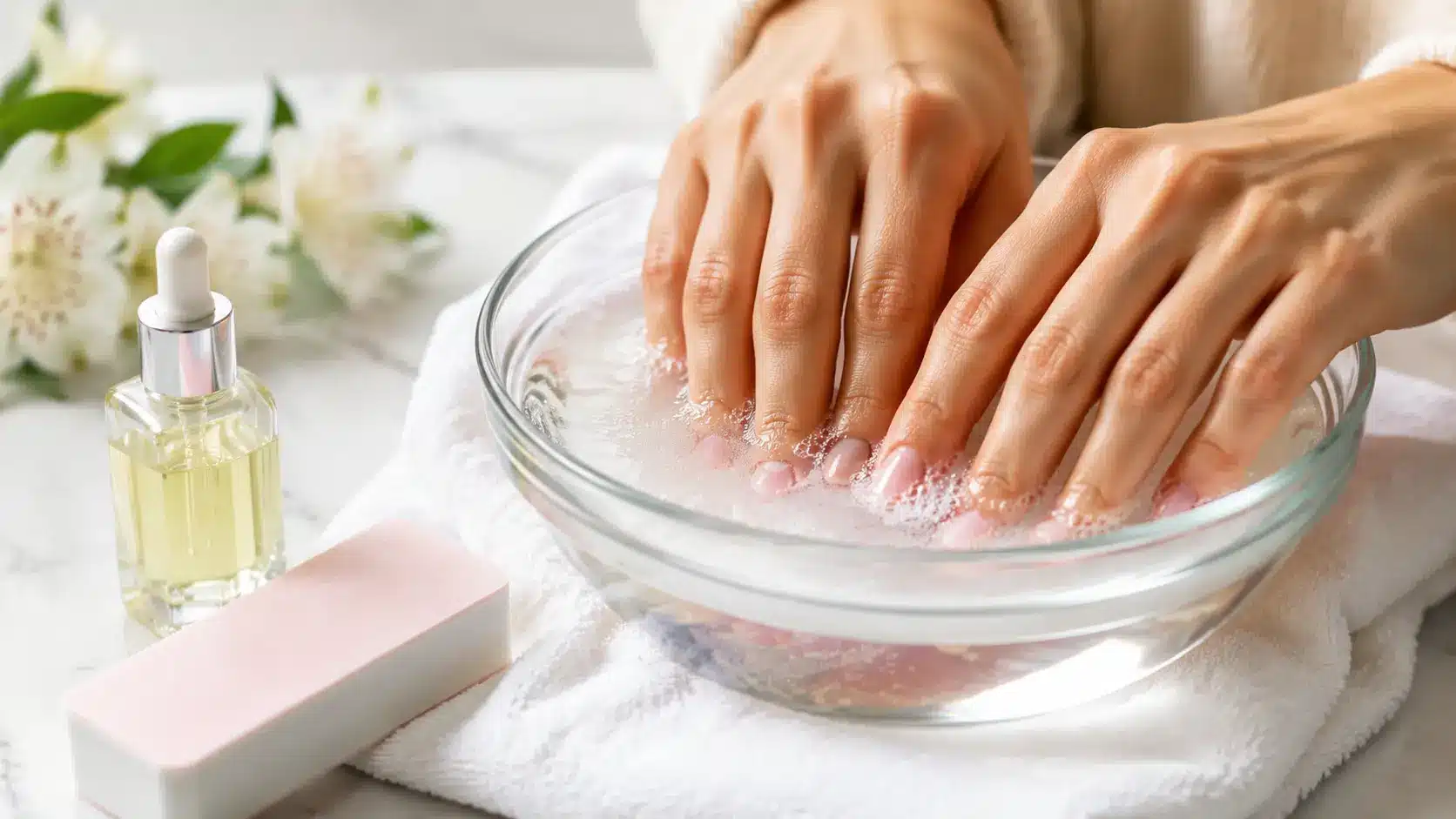
This is the gentlest way to remove nail glue. It works best for fresh or light glue residue left behind after removing press-ons.
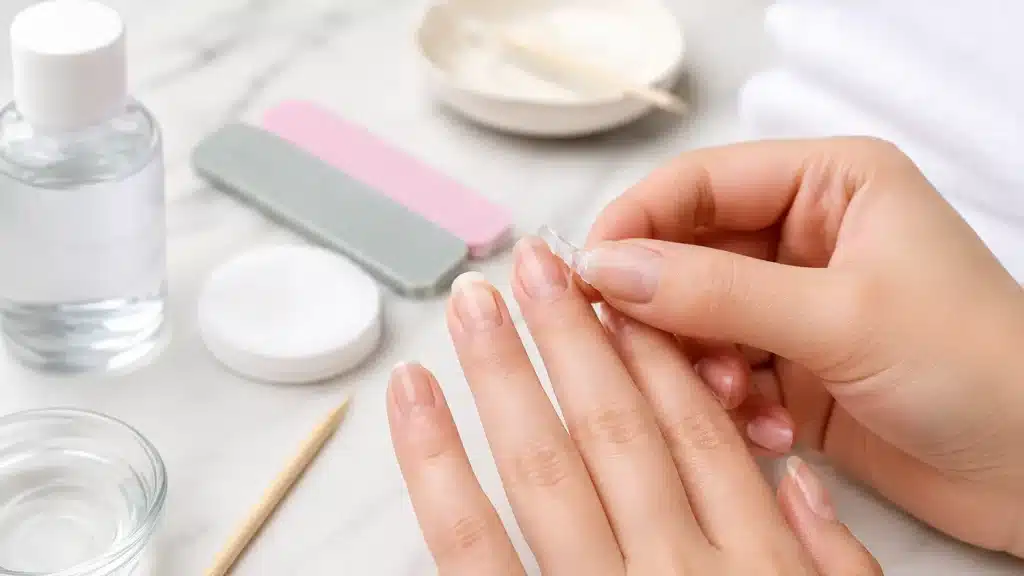
Supplies Needed:
- Bowl
- Warm water
- Dish soap
- Nail buffer
- Moisturizer or cuticle oil
Steps:
- Fill a bowl with warm water and add a few drops of dish soap.
- Soak your nails for 15 to 20 minutes.
- Gently buff the surface to remove softened glue.
- Rinse your hands thoroughly.
- Apply moisturizer or cuticle oil.
- If glue remains, soak for another 10 minutes and repeat.
This method is gentle and safe, but it takes time. It may not fully remove thick or hardened glue.
Method 2: Use acetone nail polish remover
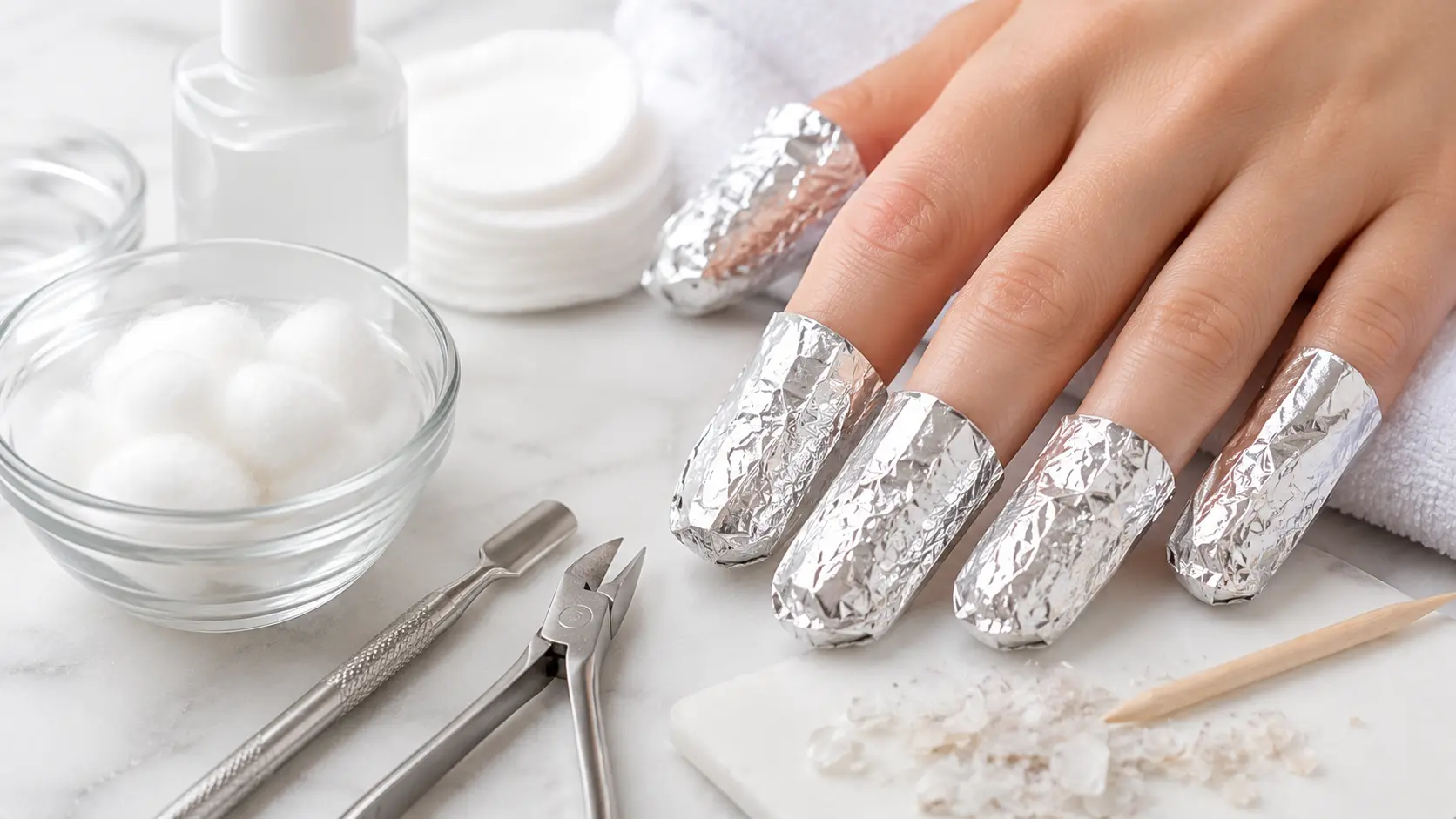
Acetone is the quickest and most effective solution for stubborn nail glue. It breaks down the adhesive so it can be removed with minimal effort.
Supplies Needed:
- Pure acetone nail polish remover
- Cotton balls
- Aluminum foil
- Cuticle stick
- Cuticle oil or hand cream
Steps:
- Soak a cotton ball in pure acetone.
- Place it directly on the glued nail.
- Wrap a small piece of aluminum foil around the nail to hold the cotton ball in place.
- Leave it on for 10 to 15 minutes.
- Remove the foil and cotton ball.
- Use a soft cuticle stick to gently push away the loosened glue.
- Wash your hands and apply cuticle oil or hand cream.
Never scrape hard. Work in a well-ventilated area and avoid inhaling acetone fumes.
Method 3: Try cuticle oil or olive oil
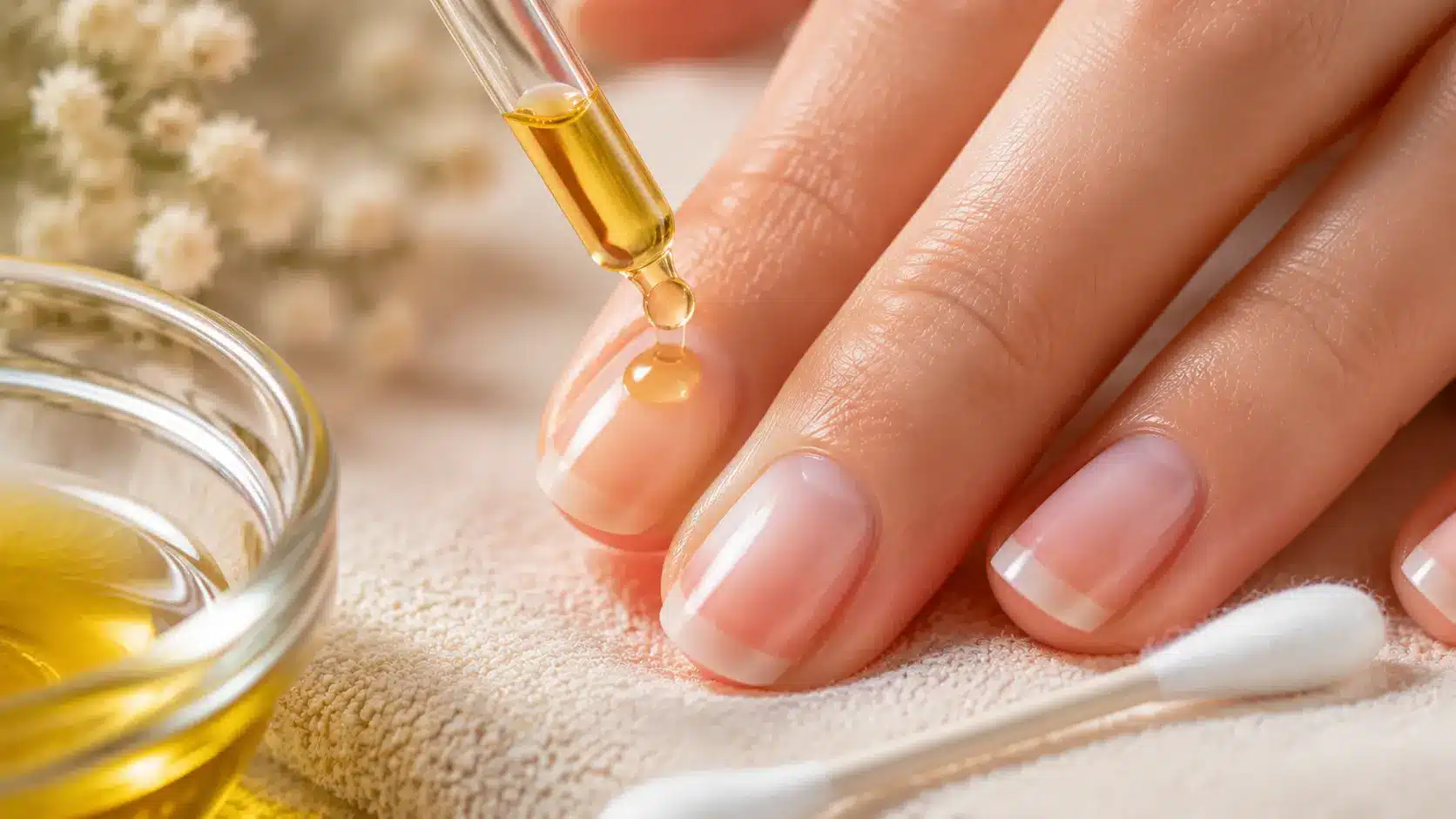
Oil-based methods are ideal for people with dry or sensitive skin. They loosen glue gradually while helping keep nails and cuticles moisturized.
Supplies Needed:
- Cuticle oil, olive oil, coconut oil, or mineral oil
- Cotton swab or soft toothbrush
Steps:
- Apply a generous amount of oil over the glued area.
- Let it sit for several minutes.
- Gently rub the glue with a cotton swab or soft toothbrush.
- Continue until the glue begins to loosen.
- Wash your hands and reapply moisturizer if needed.
This method takes longer but is very gentle on nails and skin.
Method 4: Use a nail glue remover
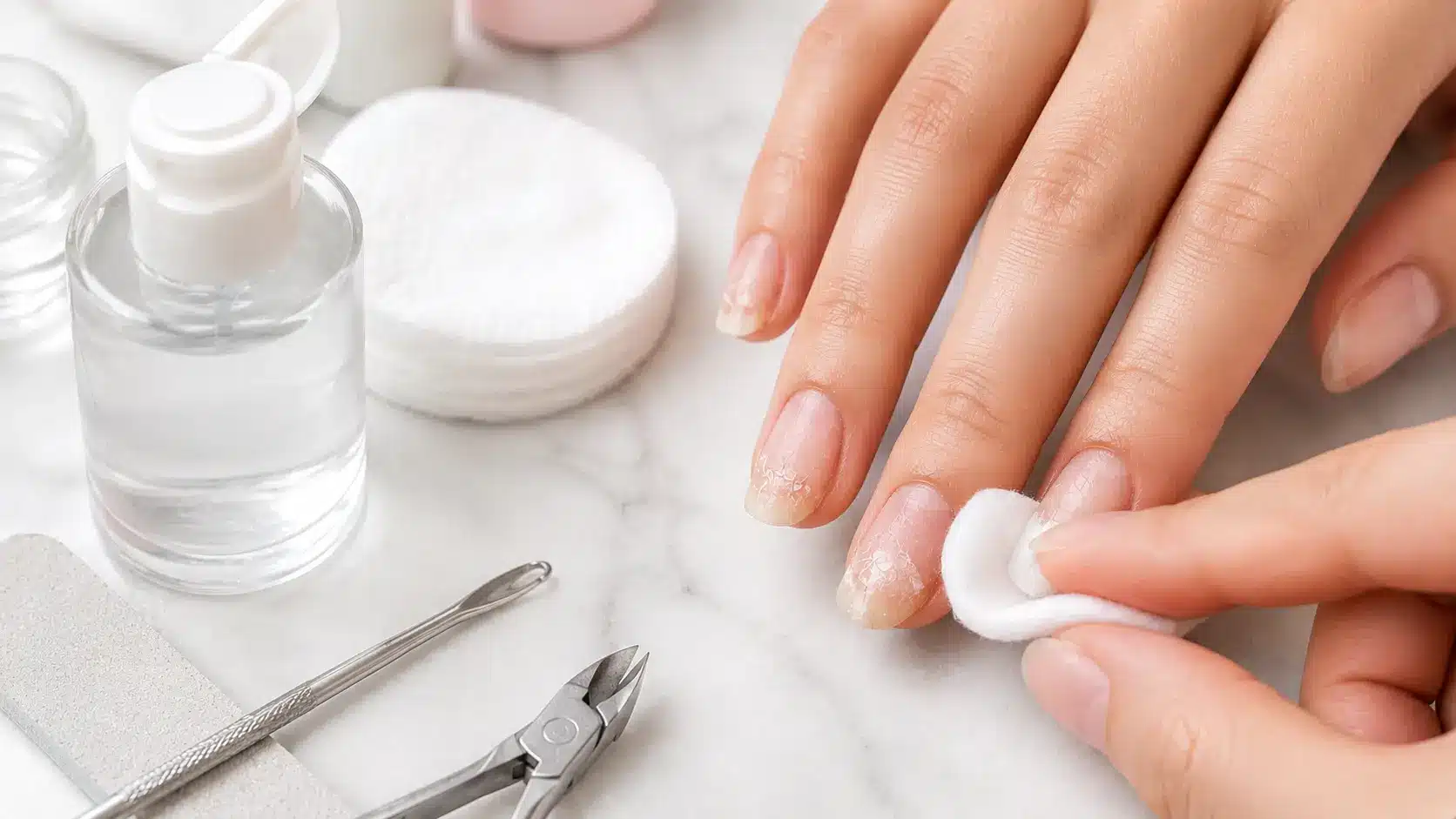
Nail glue removers are designed specifically to dissolve adhesive residue. They are often less drying than pure acetone and easy to use at home.
Supplies Needed:
- Nail glue remover
- Cotton pad or applicator (if required by the product)
Steps:
- Read and follow the manufacturer’s instructions.
- Apply the remover to the glued area.
- Allow it to sit for the recommended amount of time.
- Wipe away or gently lift the softened glue.
- Repeat if necessary.
For sensitive skin or nails, try a nail glue remover before moving on to stronger methods like acetone.
Method 5: Buff away leftover residue
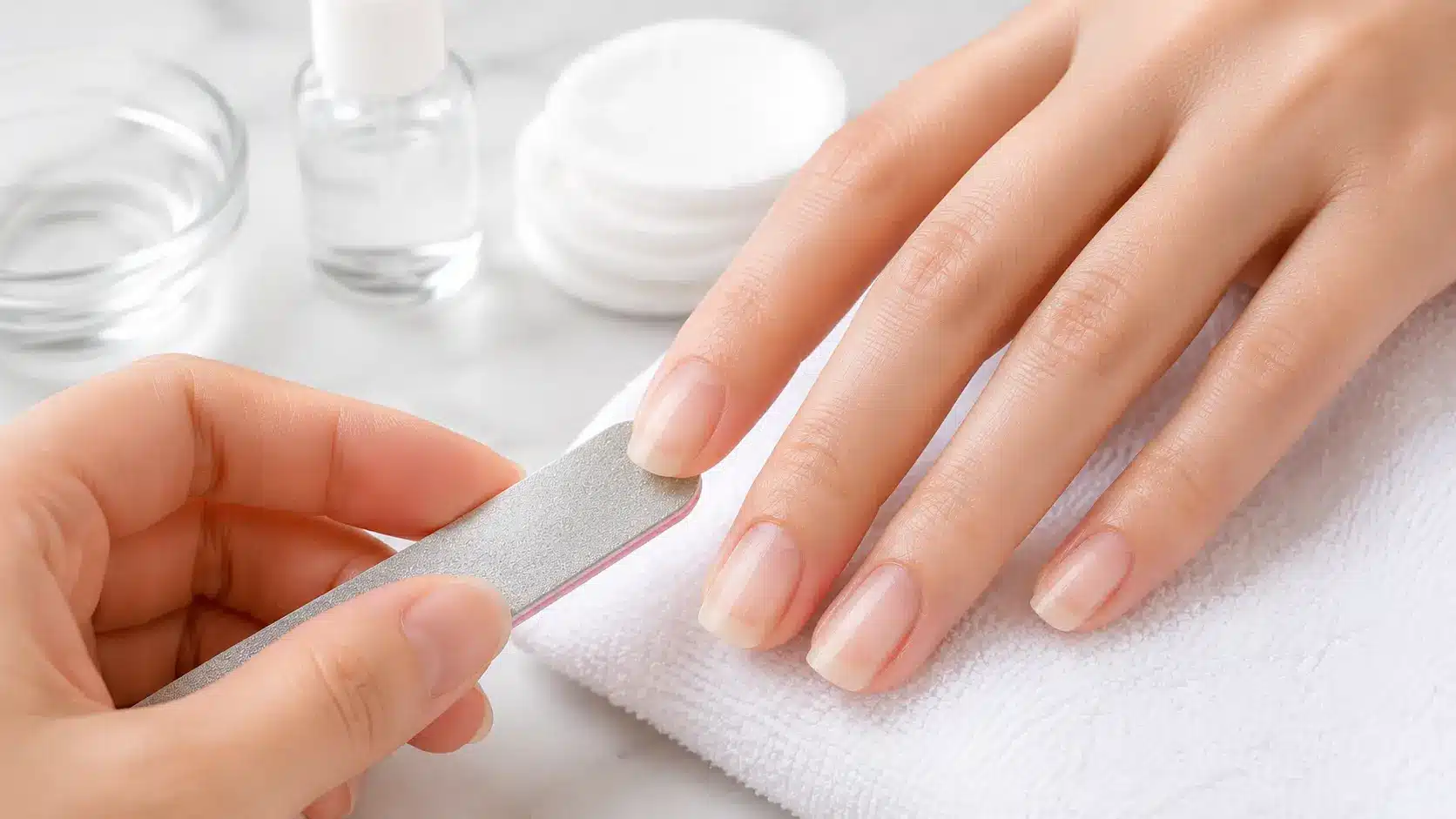
Buffing can help remove small traces of glue that remain after soaking. It should only be used gently to avoid thinning the natural nail.
Supplies Needed:
- Fine-grit nail buffer
Steps:
- Make sure the glue has already been softened.
- Use a fine-grit nail buffer with light pressure.
- Buff using gentle, even strokes.
- Stop as soon as the nail surface feels smooth.
Avoid excessive buffing, as over-buffing can thin and weaken the natural nail plate.
How to Remove Press-On Nail Glue After Taking Off Press-Ons
Removing leftover press-on nail glue is usually easier than removing the nails themselves, but patience is still important.
If glue is still attached to your natural nails, start with the acetone method. Soak for 10 to 15 minutes, then gently push the softened glue off with a cuticle stick.
If glue is trapped near the cuticles, use a cotton swab dipped in acetone or oil. Work slowly around the cuticle area. Do not dig or push hard into the skin.
If the glue has hardened for several days, older, dried glue needs a longer soak. Try 20 to 25 minutes with acetone-wrapped foil, or repeat the oil method over two sessions. Hard glue loosens with time, not force.
How to Remove Nail Glue Without Acetone
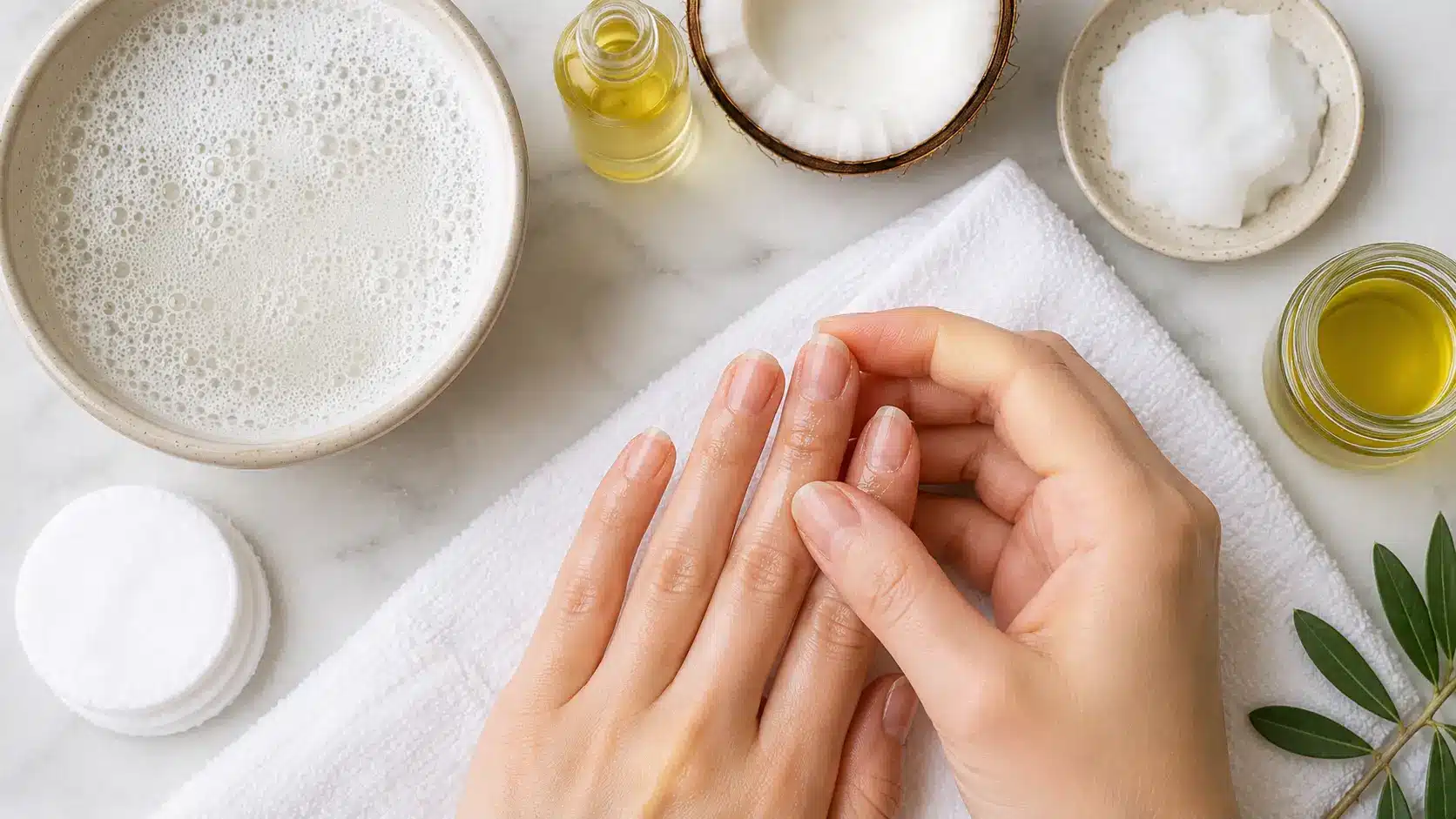
If you prefer to avoid acetone, several gentler alternatives can help loosen nail glue without drying out your nails as much.
- Warm water and soap: Soak for 20 to 30 minutes in warm soapy water, then gently buff. Takes patience but works for light residue.
- Coconut oil or olive oil: Apply, let sit, and work off gently. Best for small amounts of glue or glue near the skin.
- Petroleum jelly: Apply a generous amount of petroleum jelly to the affected area. Rub in circular motions for a few minutes until you notice the nail glue begins to loosen, then wash thoroughly with soap and water.
- Commercial non-acetone removers: Look for products labeled “nail glue remover” or “press-on remover” at beauty supply stores. These often contain gentle solvents that break down cyanoacrylate without the dryness of acetone.
These methods may take longer, but they can be effective for removing nail glue while being gentler on your nails and surrounding skin.
Mistakes to Avoid When Removing Nail Glue
One of the biggest mistakes people make is peeling nail glue off with their fingers. This can pull away layers of the natural nail, leaving it weak, thin, and prone to breaking.
Using metal tools aggressively is another common problem, as they can scratch or gouge the nail plate. If you need to lift softened glue, use a wooden or rubber-tipped cuticle stick and apply only light pressure.
Excessive filing and buffing can also damage your nails by removing healthy layers along with the glue.
Finally, do not skip moisturizer after removal. Most nail glue removal methods can be drying, so applying cuticle oil and hand cream helps restore moisture and keeps your nails and skin healthy.
What to Do if Nail Glue Will Not Come Off
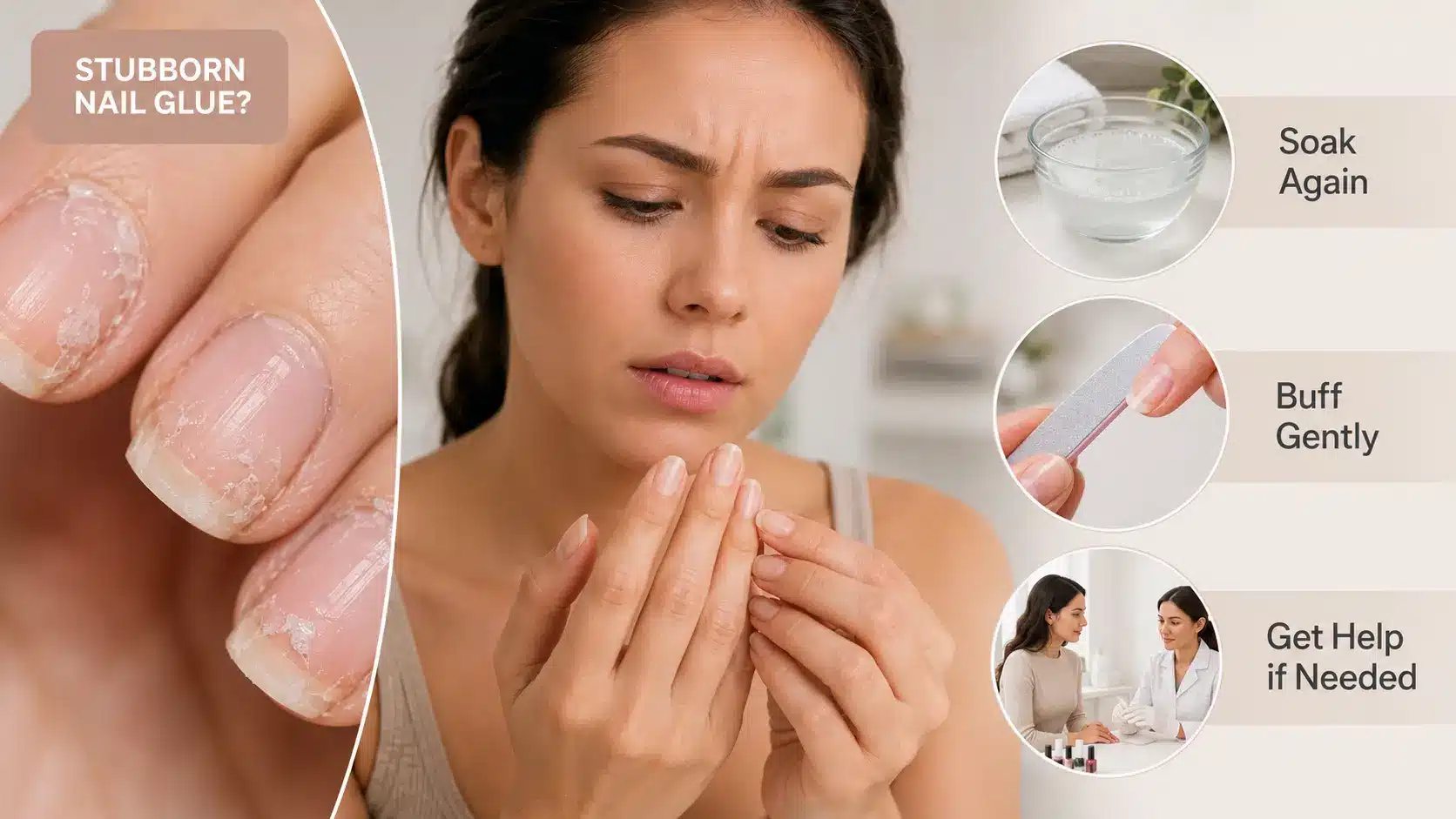
Stubborn nail glue can take more than one attempt to remove, especially if it has been on the nails for several days.
Repeat the soaking process: Sometimes one soak is not enough. Do a second round with acetone and foil for another 10 to 15 minutes. Be patient.
Combine soaking with gentle buffing: Soak to soften, then lightly buff. Alternate between the two until the glue is gone.
When to seek professional help: If the glue will not budge after multiple attempts, or if your nail looks red, swollen, or painful, visit a nail technician or dermatologist. Forcing it out yourself can cause more damage than the glue itself.
In most cases, patience and repeated gentle removal methods will work better than trying to force the glue off.
Nail Care After Removing Nail Glue
Once the glue is removed, a little aftercare can help your nails recover faster and stay healthy.
- Rehydrate nails and cuticles: Apply cuticle oil daily after removal. A thick hand cream at night helps restore moisture to the nail plate and surrounding skin.
- Strengthen weakened nails: Mayo Clinic recommends applying a nail hardener and rubbing moisturizer into your cuticles regularly, so follow these healthy nail tips for a week or two after removal. Look for formulas with keratin or biotin.
- How long to wait before applying new press-on nails: Give your nails at least a few days to recover. With proper application and removal, press-ons can last 7 to 14 days without harming your natural nails. If your nails feel thin or sore, wait longer before reapplying.
Healthy, well-moisturized nails are less likely to peel, split, or become damaged the next time you apply press-on nails.
Can Nail Glue Damage Natural Nails?
Short-term use usually causes only temporary dryness. Repeated use can weaken natural nails, and aggressive removal methods can cause lasting damage to the nail plate.
The real damage comes from improper removal, not the glue itself. The removal process can wear down natural nails, which can be over-filed, causing changes and damage to the nail surface.
Signs your nails need a break include peeling, splitting, unusual thinness, or soreness around the nail bed. Take at least a week off from all nail products and focus on moisturizing.
Final Thoughts
Removing nail glue does not have to be stressful or damaging. Warm soapy water, acetone, coconut oil, and petroleum jelly are all solid options, depending on how much glue remains and how sensitive your nails are.
The most important rule is never to force or peel the glue off. Always soak first, work gently, and moisturize when you are done.
Give your nails a short break before your next set of press-ons. Treat them with a little care now, and they will stay strong and healthy for every manicure ahead.
Frequently Asked Questions
Can Rubbing Alcohol Remove Nail Glue?
Rubbing alcohol may help loosen small amounts of fresh nail glue, but it is not as effective as acetone. For thick or fully cured glue, stronger removal methods are usually needed.
How Long Does Nail Glue Stay on Natural Nails?
Nail glue can remain attached to natural nails for several days or even weeks if it is not removed properly. The exact duration depends on the type of glue, application method, and daily exposure to water and oils.
Can You Paint Over Leftover Nail Glue?
Yes, you can apply nail polish over small traces of leftover glue if the surface is smooth. However, removing the residue first usually gives a cleaner finish and helps the polish last longer.