


For acne, clogged pores, and oily skin, salicylic acid is one ingredient that tackles all three. It goes deep into your pores, clears out buildup, and keeps breakouts from coming back.
But using it the wrong way can dry out your skin or make things worse. Knowing the right steps, the right amount, and what to avoid makes a real difference.
Read on to find out what salicylic acid does for your face, how to use it safely, and how to get the best results without irritating your skin.
What is Salicylic Acid?
Salicylic acid is a beta-hydroxy acid (BHA) known for its ability to exfoliate the skin and clear clogged pores.
Unlike many other exfoliating acids that work only on the skin’s surface, salicylic acid is oil-soluble, allowing it to penetrate deep into pores where excess oil, dead skin cells, and debris tend to build up.
Because it works both on the surface and within the pores, salicylic acid is one of the most effective ingredients for managing acne-prone, oily skin.
What Does Salicylic Acid Do for Your Face?

Its unique ability to exfoliate and penetrate pores provides several benefits for the skin:
- Removes dark spots and dead skin cells that sit on top of your skin
- Unclogs pores filled with oil and debris
- Reduces excess oil over time
- Calms mild inflammation around breakouts
- Supports smoother, more even skin texture
These benefits make salicylic acid a popular ingredient for improving skin clarity, reducing breakouts, and maintaining a healthier-looking complexion.
Benefits of Using Salicylic Acid on Your Face
Salicylic acid gets inside pores and dissolves the buildup that causes breakouts. It is especially useful for blackheads, whiteheads, and the kind of small, bumpy acne that sits just under the skin.
Because it is oil-soluble, it dissolves the plugs that form blackheads and whiteheads more effectively than most surface-level products.
Regular use can reduce the amount of oil your skin produces throughout the day. Your skin will feel less greasy, and your pores may look smaller over time.
The gentle exfoliation keeps your skin surface smooth and soft. Over a few weeks, rough patches and uneven texture tend to even out.
Clean pores look smaller. As salicylic acid keeps them clear, you may notice your pores appearing tighter and less visible.
Who Should Use Salicylic Acid?
Salicylic acid is not a one-size-fits-all ingredient, but it can be highly effective when matched with the right skin type.
Understanding whether your skin is likely to benefit from it can help you avoid unnecessary irritation.
Best Skin Types
It tends to deliver the best results for skin types that struggle with excess oil and clogged pores.
- Oily skin: It cuts through excess sebum and keeps pores clear.
- Acne-prone skin: It targets the root cause of most breakouts.
- Combination skin: It can be used on oily zones without disturbing drier areas.
Skin Types That Should Be Careful
While beneficial for many people, some skin types require a slower, more cautious approach.
- Dry skin: Salicylic acid can make dryness worse if overused. Start with a low concentration and use it only a few times a week.
- Sensitive skin: It may cause redness or stinging. A 0.5% cleanser is a safer starting point.
- Compromised skin barrier: If your skin is already irritated, flaky, or raw, hold off until it heals.
Choosing the right concentration and frequency for your skin type is the key to getting the benefits of salicylic acid without unwanted irritation.
How to Use Salicylic Acid on the Face Step by Step
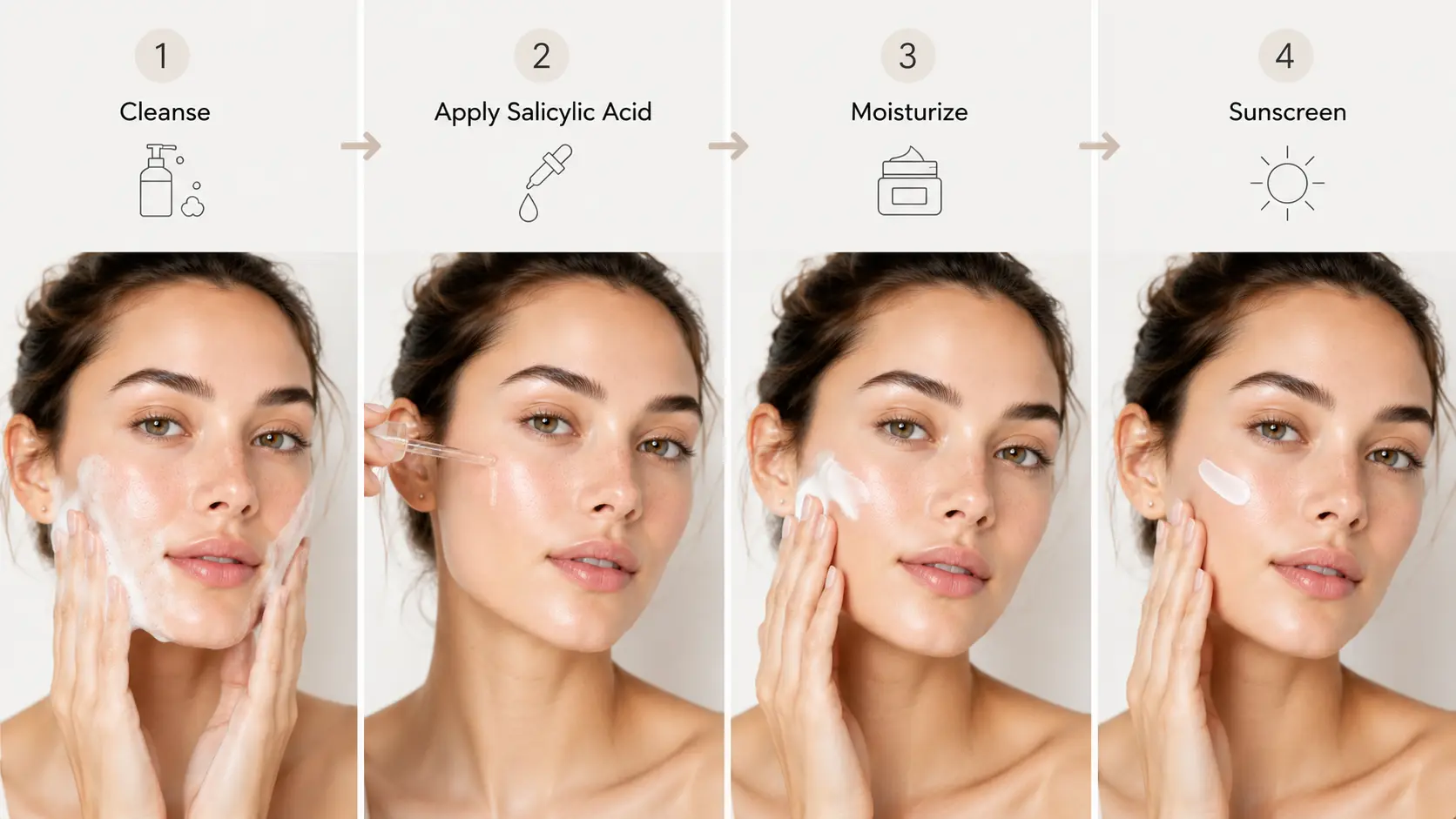
A simple, consistent routine will help you get the most benefit from salicylic acid while reducing the risk of irritation.
- Step 1: Cleanse Your Face: Wash your face with a gentle, non-stripping cleanser. Pat dry. Your skin should be clean before applying any active ingredient.
- Step 2: Apply Salicylic Acid Product: Apply a thin layer of your salicylic acid product to your face or just the affected area. Less is more. You do not need to pile it on.
- Step 3: Follow with Moisturizer: This step is not optional. Salicylic acid can dry out your skin, so always follow with a good moisturizer. Look for something with ceramides or hyaluronic acid to keep your skin barrier healthy.
- Step 4: Use Sunscreen During the Day: Salicylic acid makes your skin more sensitive to the sun. Apply SPF 30 or higher sunscreen every morning, even on cloudy days.
Example Morning Routine: Cleanser (with or without salicylic acid) > Moisturizer > Sunscreen
Example Night Routine: Gentle cleanser > Salicylic acid serum or toner > Moisturizer
How Often Should You Use Salicylic Acid?
If you are new to salicylic acid, start by using it 2 to 3 times a week and give your skin time to adjust before increasing the frequency.
Once your skin is comfortable with it, you can gradually move to using it every other day while monitoring for any signs of irritation.
Some people can eventually use salicylic acid daily, especially if their skin is oily and the tolerate it well.
However, if your skin is dry or sensitive, it is usually better to stick with a lower concentration and use it only a few times a week. The best approach is to increase usage gradually and let your skin’s response guide your routine.
Choosing the Right Salicylic Acid Product
Salicylic acid comes in several forms, and the right choice depends on your skin type, experience level, and skincare goals.
- Salicylic Acid Cleanser: Great for beginners. The acid stays on your skin for a short time, so the risk of irritation is lower. Good for daily use.
- Salicylic Acid Toner: Works well for oily skin. Applied after cleansing, it gives a deeper clean. Best at 1%-2%.
- Salicylic Acid Serum: Stays on the skin longer, so it works harder. Best for targeting acne and enlarged pores.
- Spot Treatment: Concentrated and used directly on a pimple. Best for active breakouts only.
- Chemical Peel: Higher-strength versions are used occasionally. Best for experienced users or for professional use.
The table below provides a quick comparison to help you choose the option that best fits your needs.
| Product Type | Best For | Strength |
|---|---|---|
| Cleanser | Beginners | 0.5% to 2% |
| Toner | Oily Skin | 1% to 2% |
| Serum | Acne and Pores | 1% to 2% |
| Spot Treatment | Active Pimples | Up to 2% |
| Peel | Advanced Users | Higher strengths |
Selecting the right product and strength can make salicylic acid both more effective and more comfortable to use over the long term.
What Percentage of Salicylic Acid Should You Use?
The best salicylic acid strength depends on your skin type and experience level. 0.5% salicylic acid is the gentlest option and works well for sensitive, dry, or beginner users.
1% salicylic acid offers a good balance between effectiveness and gentleness for most skin types.
2% salicylic acid is often considered the sweet spot, providing strong pore-clearing and acne-fighting benefits while remaining suitable for regular use.
Higher concentrations, ranging from 7% to 10% or more, are typically used in professional peels or prescribed treatments under a dermatologist’s guidance.
Can You Use Salicylic Acid With Other Skincare Ingredients?
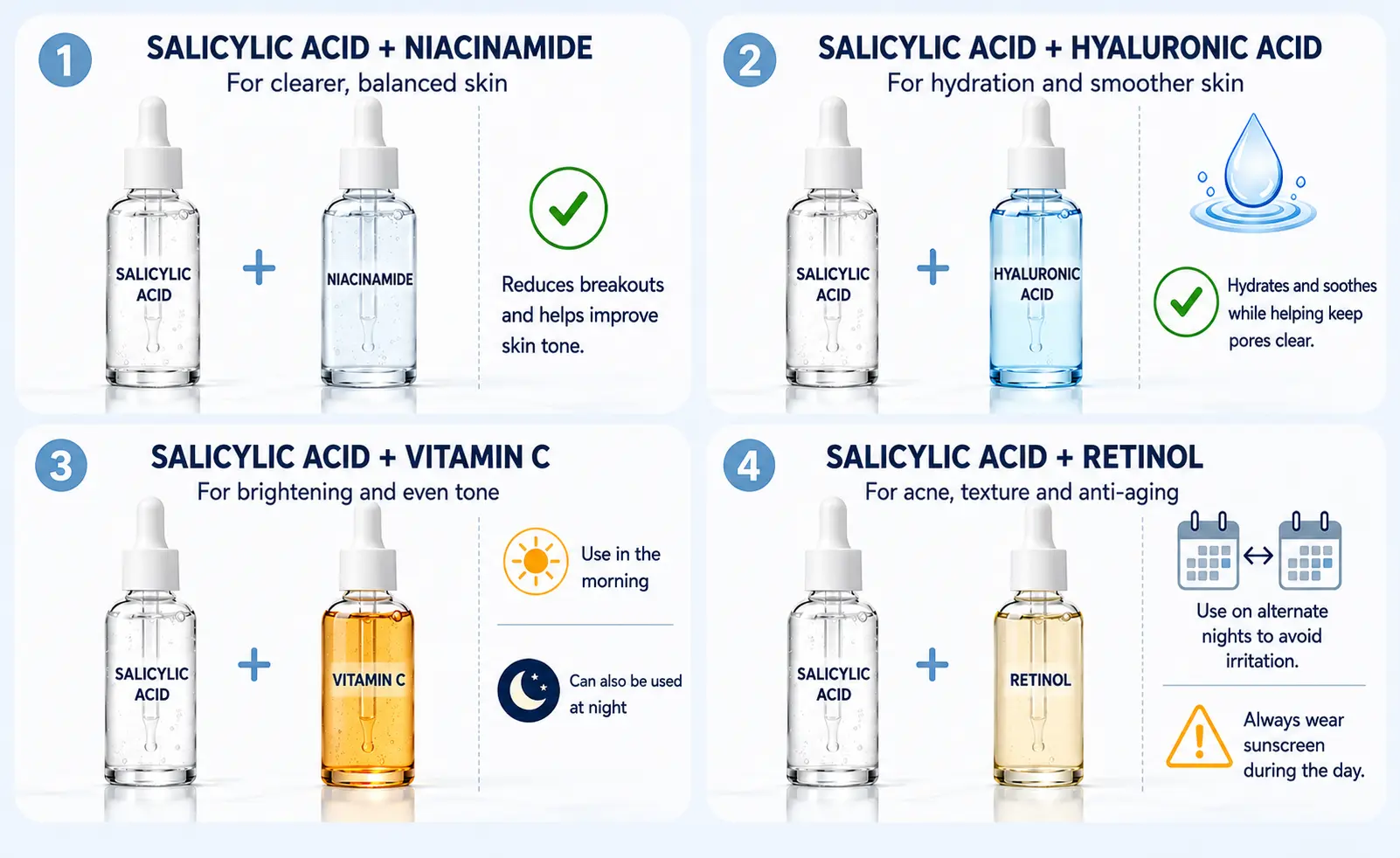
Salicylic acid can work well with several popular skincare ingredients, but some combinations require a little extra care to avoid irritation.
Salicylic Acid and Niacinamide
Using niacinamide and salicylic acid together is generally considered safe. Using them together is generally well tolerated and unlikely to cause irritation. A simple approach is to use niacinamide in the morning and salicylic acid at night.
Salicylic Acid and Hyaluronic Acid
A great pairing. Hyaluronic acid adds moisture back into the skin that salicylic acid may dry out. You can use them in the same routine without any issues.
Salicylic Acid and Vitamin C
Apply vitamin C in the morning to maximize its benefits against environmental damage, and apply salicylic acid at night. Combining them in the same step can cause irritation.
Salicylic Acid and Retinol
Dermatologists advise against layering salicylic acid and retinol in the same step, as combining them increases the risk of dryness, flaking, and redness. The safest approach is to use them on alternate days.
More experienced users may apply salicylic acid in the morning and retinol at night, but this should only be tried once your skin has built up tolerance to both ingredients.
Common Mistakes When Using Salicylic Acid
Even a highly effective ingredient like salicylic acid can cause problems if it is used incorrectly.
- Using Too Much Too Soon: Starting with daily use right away is the fastest way to damage your skin barrier. Build up slowly.
- Skipping Moisturizer: Salicylic acid strips oil. Without moisturizer, your skin will dry out, get irritated, and may even produce more oil to compensate.
- Forgetting Sunscreen: Exfoliated skin burns faster. Skipping SPF while using salicylic acid puts your skin at real risk of sun damage.
- Mixing Too Many Active Ingredients: Stacking salicylic acid with retinol, strong vitamin C, and AHAs all at once is too much. Your skin will likely react badly.
- Over-Exfoliating: More does not mean better. Using salicylic acid too often leads to redness, peeling, and a weakened skin barrier.
Avoiding these common mistakes will help you get better results while keeping your skin healthy and balanced.
Possible Side Effects of Salicylic Acid
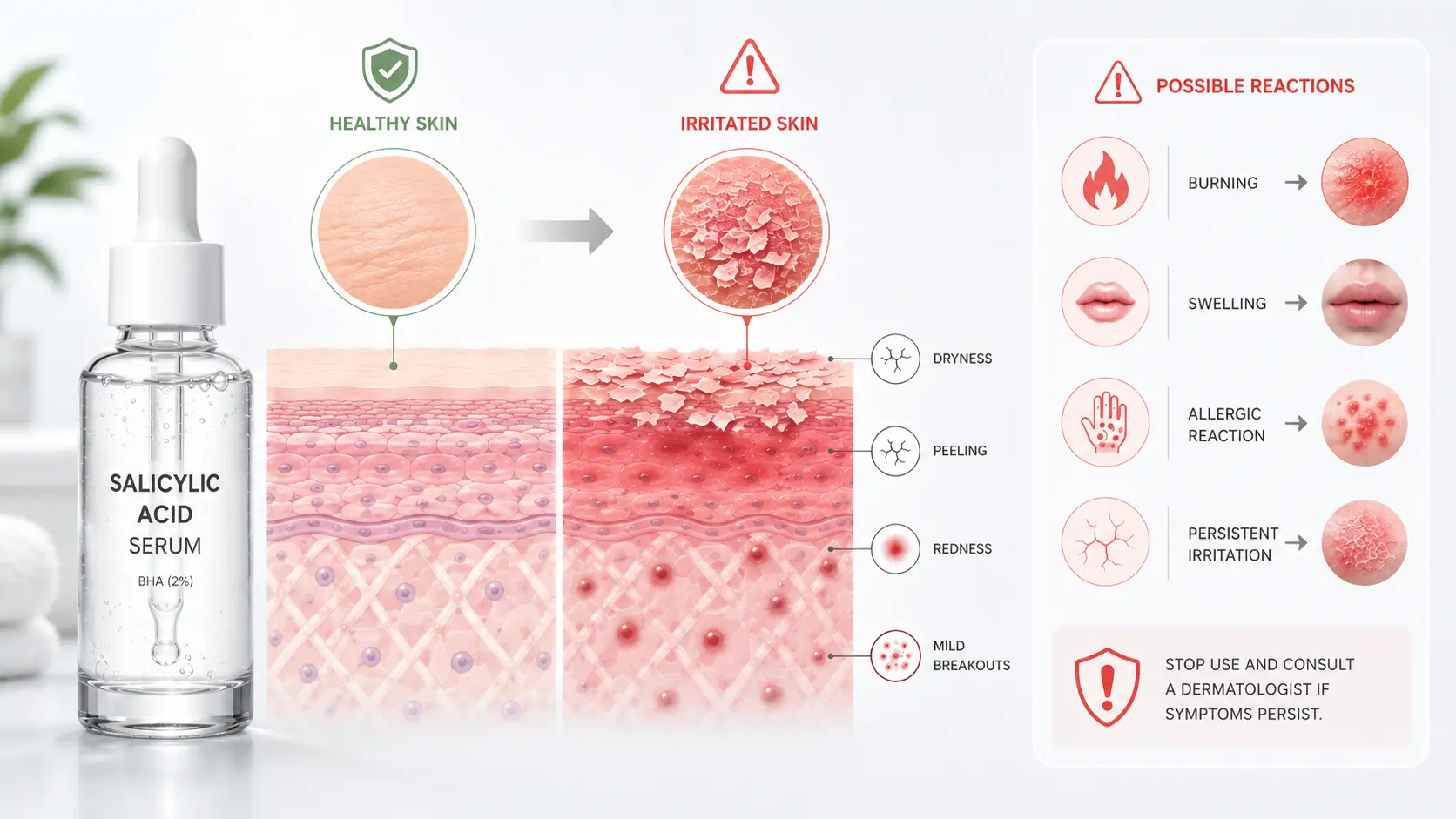
Salicylic acid is generally safe, but it can cause dryness, peeling, redness, and irritation, especially when you first start using it.
Some people may also experience temporary purging, where breakouts worsen for 4 to 6 weeks before improving.
In rare cases, allergic reactions such as swelling, hives, or severe redness can occur; discontinue the product immediately.
When You Should Stop Using Salicylic Acid
While mild dryness and peeling can be normal, certain reactions are signs that your skin is not tolerating the ingredient well.
- Severe or worsening irritation
- Persistent redness that does not go away after a few days
- A burning sensation that starts immediately after application
- Swelling or signs of an allergic reaction
If you experience any of these symptoms, stop using the product, simplify your skincare routine, and consult a dermatologist if the reaction does not improve.
Online Communities About Salicylic Acid
Real people often share useful insights about what worked, what didn’t, and what mistakes they made when using salicylic acid. These experiences can help set realistic expectations before you add it to your routine.
“2% salicylic acid is highly potent. Most people simply cannot tolerate using salicylic acid every day… Use it 2–3x per week at night max to start with.” Reddit
“Using high concentrations of both ingredients at the same time… Overloading actives increases irritation and delays recovery.” Quora
“Salicylic acid works in a couple of days to 1 week max… As for the dryness, you can use a barrier cream or just any good moisturiser afterwards.” Reddit
As you can see, experiences vary from person to person. The most common advice is to start slowly, avoid over-exfoliating, moisturize consistently, and give the ingredient several weeks before deciding whether it is working.
How Long Does Salicylic Acid Take to Work?
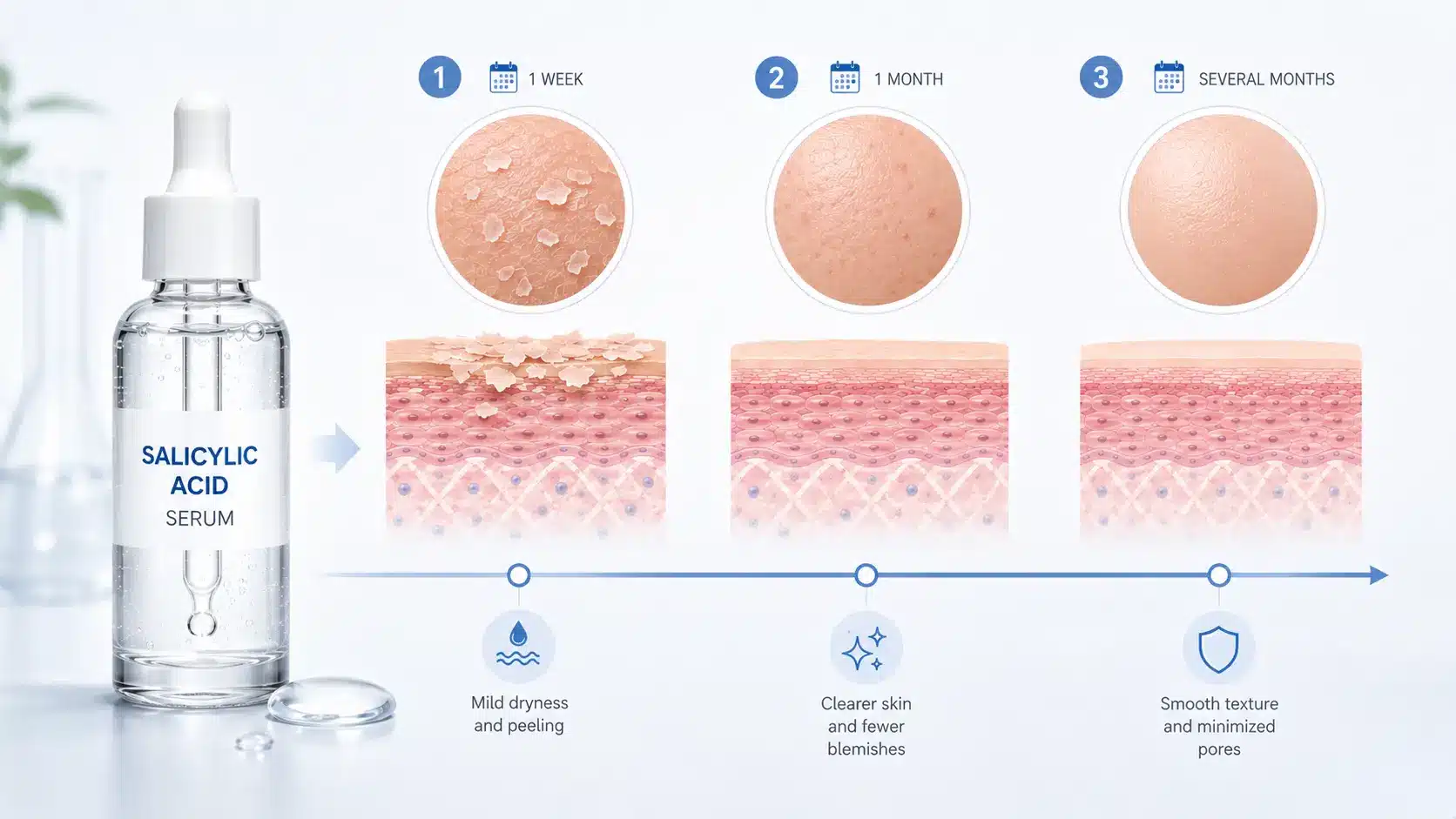
Salicylic acid delivers results gradually, so consistency is more important than expecting overnight changes.
- First Week: You may notice some dryness or peeling. Your skin is adjusting. Some people experience minor purging.
- After One Month: Most people notice early changes within 1 to 2 weeks of use. For clear, visible results, continue using it consistently for 4 to 6 weeks. Those dealing with more severe acne may need 8 to 12 weeks to see optimal improvement.
- Long-Term Results: Consistent use over several months leads to noticeably smoother texture, fewer breakouts, and smaller-looking pores.
Patience and regular use are key, as the best results tend to appear gradually over time.
Conclusion
Salicylic acid works best when you use it with patience. Start with a low concentration, give your skin time to adjust, and always follow up with moisturizer and sunscreen.
You do not need to use it every day to see results. A few times a week is enough to start clearing pores, reducing oil, and smoothing out your skin.
Most people notice a real difference within 4 to 6 weeks of steady use. Stick to the basics, avoid overloading your routine, and let salicylic acid do what it does best.
Frequently Asked Questions
Can Salicylic Acid Help with Fungal Acne?
No, salicylic acid does not treat fungal acne directly because fungal acne is caused by yeast rather than clogged pores. However, it may help reduce excess oil and improve overall skin texture.
Is Salicylic Acid Better than Benzoyl Peroxide?
Neither is universally better because they work in different ways. Salicylic acid unclogs pores and exfoliates, while benzoyl peroxide targets acne-causing bacteria.
Can You Use Salicylic Acid Around the Eyes?
It is generally best to avoid applying salicylic acid too close to the eyes because the skin there is thinner and more sensitive. If the product accidentally gets into your eyes, rinse thoroughly with water.