
As a personal stylist, I have always believed hair can completely change the way an outfit comes together. The right texture and volume can elevate even the simplest look from forgettable to magnetic.
For years, I relied on a curling iron and multiple products to create soft, beachy waves, but the results never lasted more than a day.
When clients and fellow stylists started embracing wavy perms for a low-maintenance, lived-in texture, I got curious.
After weeks of research and more than a few hesitations about damage, I finally booked the appointment. Here is exactly what happened.
My Hair Before the Wavy Perm
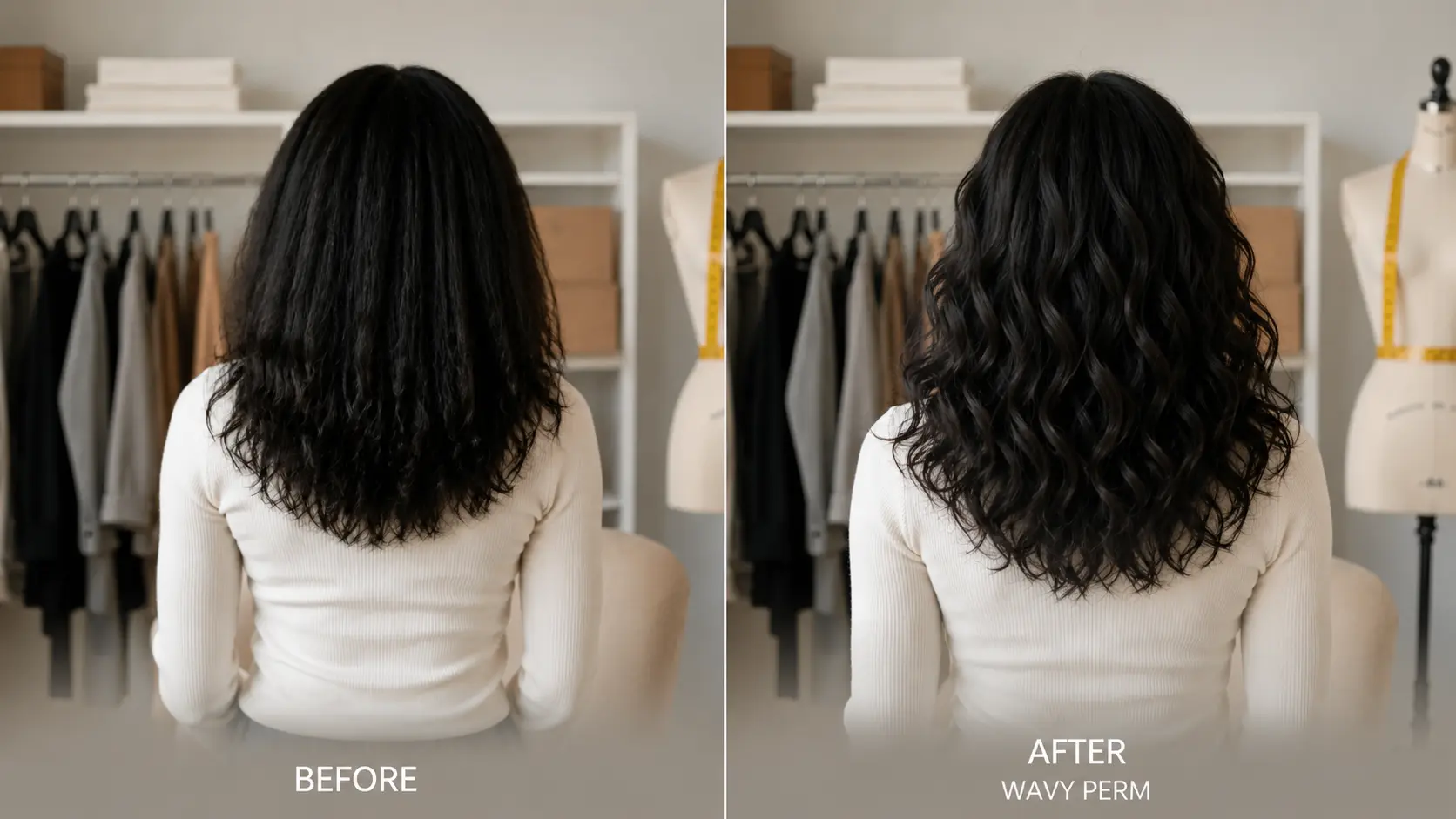
Before getting a wavy perm, my hair was naturally straight with very little texture or movement. While it was easy to manage, I often found myself reaching for heat tools to create the soft waves I wanted.
My Natural Hair Type
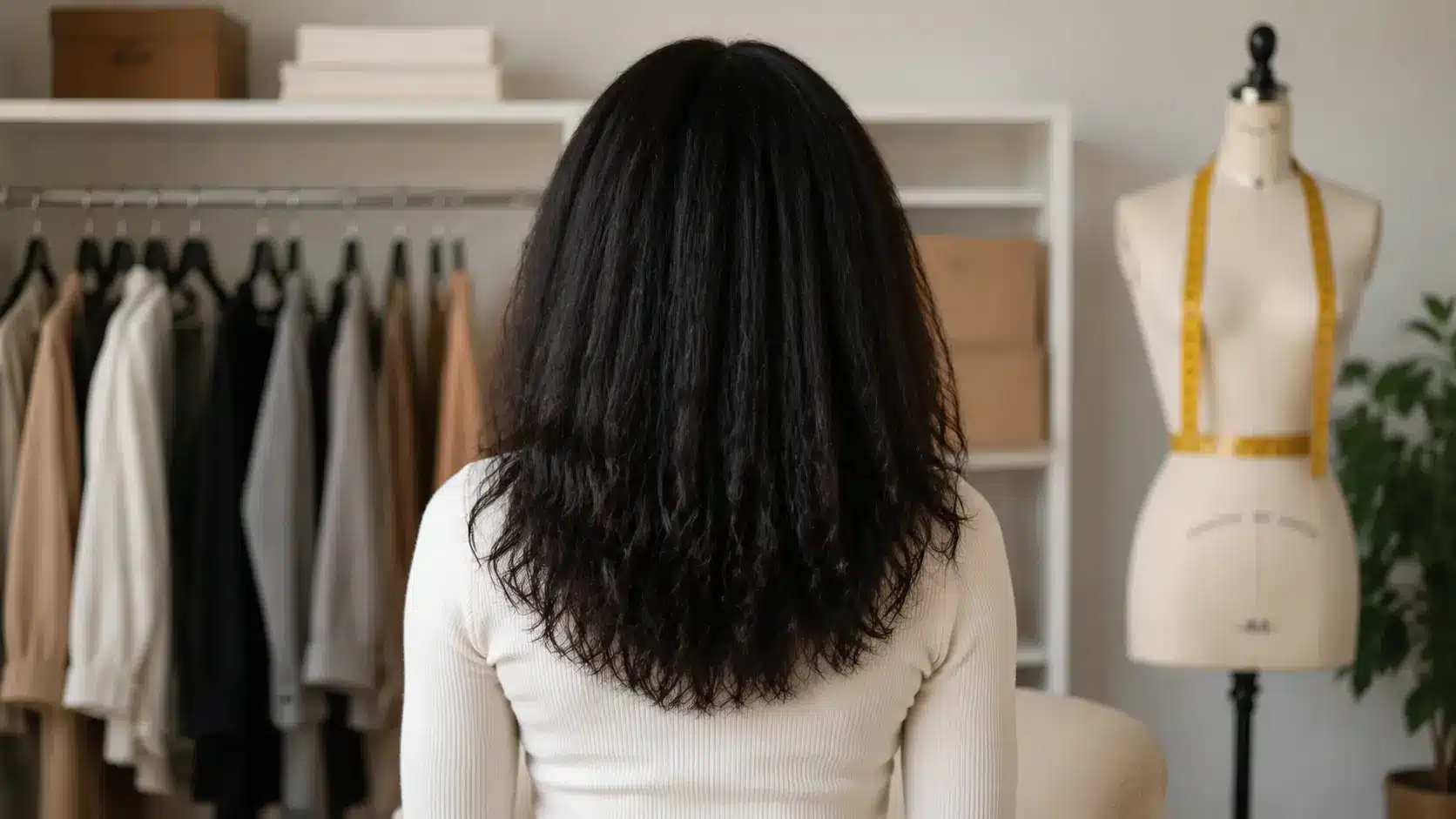
My natural hair is a 3B curl pattern, tight, springy coils that shrink up significantly when dry.
While I love my natural texture, the coils have always been on the tighter side, which made it harder to achieve the loose, flowing wave look I was drawn to without significant manipulation.
My hair is medium density with fine-to-medium strands. It has always been relatively healthy because I take the whole “less heat, more moisture” approach seriously.
I deep-condition weekly, avoid sulfates, and trim every 8 weeks.
Going into the perm appointment, my hair was in genuinely good condition, and that mattered a lot, as I would soon learn.
What Is a Wavy Perm?
Before I get into my experience, let me break down what a wavy perm actually is, because there is a lot of confusion around this term, especially for people who only associate perms with the tight, structured curls of the 1980s.
A wavy perm is a chemical hair treatment that permanently restructures the bonds in your hair to create a new wave or curl pattern.
The process involves applying a waving solution to the hair while it is wrapped around rods or rollers.
The solution breaks down the disulfide bonds in the hair’s cortex, essentially the bonds that give your hair its natural shape.
A wavy perm typically lasts three to six months, depending on your hair type and how consistently you follow an aftercare routine. According to Healthline, the longevity comes down to how well you care for your waves after leaving the salon.
Wavy Perm vs Traditional Perm
A traditional perm uses smaller rods and stronger solutions to create defined, tight curls. The classic perm look, what most people picture when they hear the word “perm”, falls into this category.
A wavy perm uses larger rods and typically a gentler formula. The result is a softer, more natural-looking wave. Some stylists also use body wave techniques, which create even looser movement.
The two approaches share the same chemical process but deliver very different outcomes.
Not All Wavy Perms Are the Same: Here Are the Types Worth Knowing
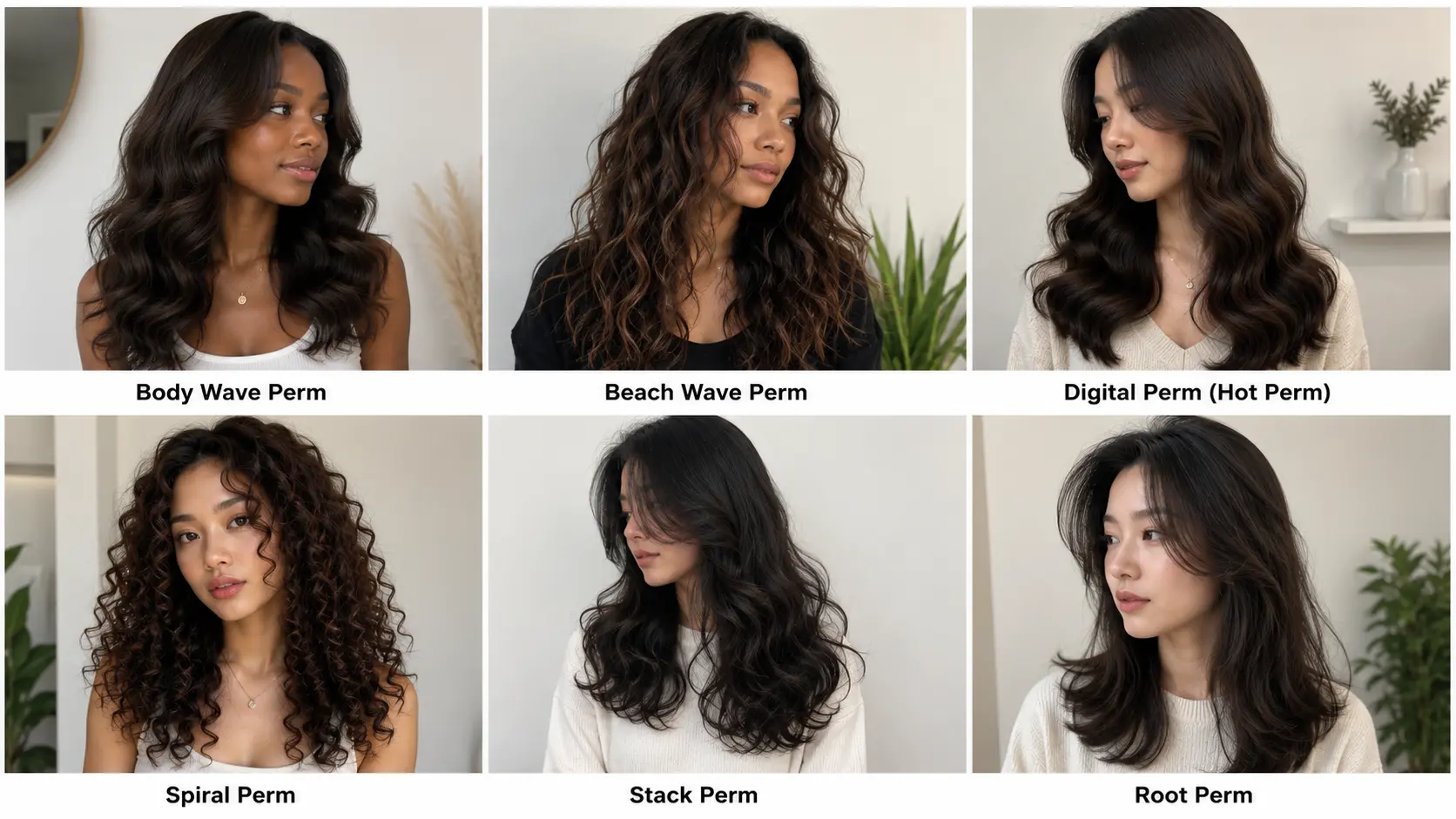
This is something I wish someone had explained to me before I walked into the salon. When people say “wavy perm,” they are actually describing a whole family of techniques that produce different results.
Body Wave Perm
The body wave is the loosest and most subtle of the wavy perm options. It uses large rods and a gentle formula to add soft movement and volume without creating defined waves.
If your goal is simply more body and bounce rather than an actual wave pattern, this is the one to ask about. It is also often the most forgiving option for fine or fragile hair.
Beach Wave Perm
The beach-wave perm is probably the most popular option right now, and it is the one most people picture when they search for wavy-perm inspiration photos.
It creates loose, textured waves that mimic the kind of effortless, slightly undone look you get from a day at the ocean.
Stylists typically use a mix of rod sizes and sometimes a spiral-wrapping technique to create an organic, non-uniform wave pattern. This is the option I went with.
Digital Perm (Hot Perm)
A digital perm uses heated rods connected to a machine that regulates temperature throughout the process.
Unlike traditional cold perms, the digital perm creates waves that are more defined when dry and softer when wet, the opposite of a traditional perm.
It tends to produce a more polished, flowing wave and is particularly popular for achieving Hollywood-style glamour waves. It is also typically more expensive due to the equipment and time involved.
Spiral Perm
A spiral perm uses long, thin rods applied vertically to create defined corkscrew curls.
Not technically in the “wavy” category, it sits on the spectrum and is worth mentioning because people sometimes confuse it with other perm styles.
If you want defined, bouncy ringlets rather than soft waves, this is the direction to go.
Stack Perm
A stack perm focuses on the mid-lengths and ends of the hair while leaving the roots straight. The result is volume and curl in the lower half of the hair with a sleeker appearance at the crown.
It works particularly well for people with layers who want movement at the ends without altering the overall shape too dramatically.
Root Perm
A root perm is applied only to the roots to add lift and volume at the scalp. It is not about creating waves throughout the length; it is purely about making flat, limp roots look fuller.
It is a great maintenance option for people who want to keep a little extra body between full perm appointments.
Why I Finally Decided to Get One
After months of styling my hair with curling tools, I wanted a longer-lasting way to achieve soft, natural-looking waves. A wavy perm seemed like a practical option, so I decided it was finally time to see if it could deliver the results I was looking for.
The Inspiration Photos I Brought
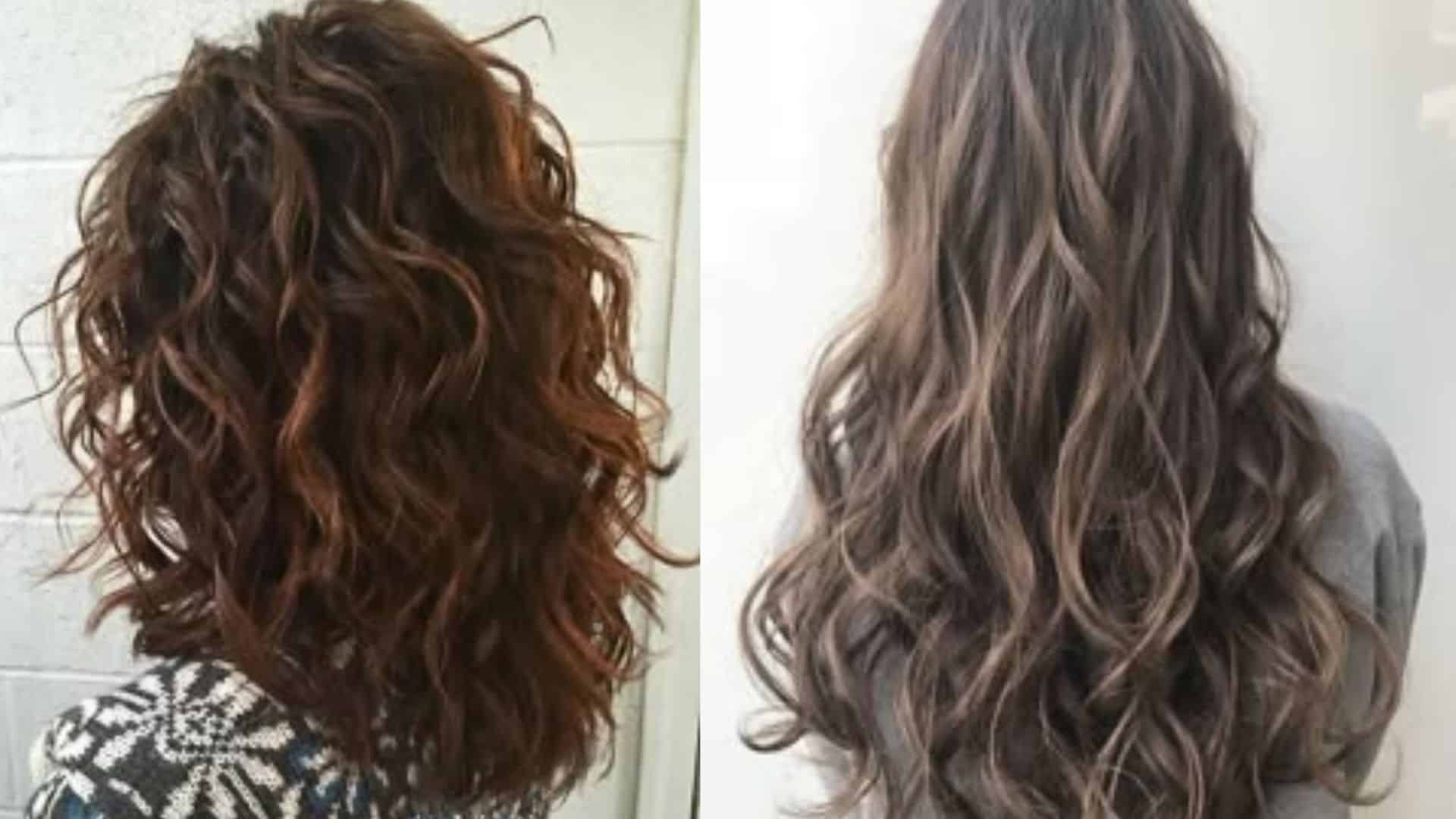
I came to my consultation with a folder of saved photos, a very stylish thing to do, I know. The images I gravitated toward all had a few things in common: soft, lived-in waves that were not perfectly uniform, enough volume to make the hair look full without being poufy, and a general sense of effortlessness.
I specifically looked for inspiration photos of women with hair textures similar to mine rather than straight-haired models, because I knew the results would look different on my hair than on someone starting from a completely straight base.
Questions I Asked Before BookingBefore I committed, I asked my stylist a lot of questions. I wanted to know how my curl pattern would interact with the perm solution. My stylist was refreshingly candid. She told me that on tighter curl patterns, a wavy perm sometimes works more to reshape than to dramatically add waves, that results are not always perfectly predictable, and that aftercare would be essential. |
What It Costs
In my area, the appointment came to $285, which included the consultation, the perm service, and the post-treatment conditioning.
Prices vary significantly depending on your location, the salon, hair length, and the specific technique.
Generally speaking, a wavy perm from a skilled stylist in a major US city runs anywhere from $150 to $400 or more.
My Wavy Perm Results
Walking out of the salon, my hair looked tighter than I had hoped. The waves were more defined and compact than the soft, beachy result I was picturing.
My stylist had prepared me for this; she reminded me not to wash my hair for at least 48 hours to allow the bonds to fully set, and that the waves would relax and open up over the following days and weeks.
One Week Later
After the first wash, things shifted noticeably. The waves loosened, the texture looked more natural, and the result started to resemble what I had envisioned.
My hair had more movement and volume than before, and the overall shape felt more cohesive. I could see the potential.
One Month Later
One month in, I was genuinely happy. The waves had settled into a soft, relaxed pattern that looked much more natural on my hair type than I had expected.
My wash-and-go routine improved significantly; I could diffuse my hair or let it air-dry and end up with a result I actually liked without any additional styling tools.
Three Months Later
Three months out, the perm was still very much present, though the roots had grown in naturally and the texture at the new growth was different from the treated sections.
This is the growing-out reality that nobody talks about enough; more on that below. The mid-lengths and ends still held the wave pattern well, and I was still happy with the overall result.
Wavy Perm Upside and Downsides
| Pros | Cons |
|---|---|
| Adds natural-looking texture and movement | Requires dedicated aftercare and product adjustment |
| Significantly reduces daily heat styling | Initial cost can be high depending on location and stylist |
| Results can last four to six months | Results vary based on hair type and starting texture |
| Creates lasting volume and dimension | Growing out the perm requires patience and strategic styling |
| Consistent texture without daily manipulation | The first few days post-appointment require a no-wash adjustment period |
| Works with air drying for a truly effortless routine | Humidity and weather can affect daily results |
How I Care for My Wavy Perm
I wash my hair twice a week, no more. Over-washing strips the porosity of the hair, and it needs to maintain its pattern and softness.
I use a sulfate-free shampoo and always follow with a moisturizing conditioner, spending extra time on the mid-lengths and ends.
Products I Use: After washing, I apply a leave-in conditioner while my hair is still soaking wet, then follow with a wave-enhancing cream and a light-hold gel to define the pattern without crunchiness. I then diffuse on low heat or air dry, depending on how much time I have.
I avoid anything with alcohol high on the ingredient list; it dries out permed hair quickly. I also use a deep conditioning mask once a week to keep the hair from feeling brittle or straw-like.
Styling Tips That Help My Waves Last
- Scrunch product into the hair rather than raking it through
- Diffuse using a low heat, low speed setting with your head tilted forward
- Avoid touching the hair while it is drying, as this disrupts the wave pattern and creates frizz
- Refresh second-day hair with a light mist of water and a tiny amount of product, then scrunch and let it reset
- Sleep on a satin pillowcase and loosely gather hair on top of your head before bed
My Honest Verdict
I would do it again. For my lifestyle, my hair goals, and the amount of time I wanted to spend on styling each morning, a wavy perm was the right call.
It gave me a consistent texture, reduced my tool dependency, and, honestly, made me feel more like myself on a day-to-day basis.
That said, I went in informed, I had genuinely healthy hair, and I found a skilled stylist I trusted. All three of those things mattered.
A wavy perm is not a simple decision or a low-stakes appointment, but when the conditions are right, the results can be genuinely worth it.
Frequently Asked Questions
How Long Does a Wavy Perm Last?
A wavy perm usually lasts four to six months, depending on hair type, aftercare, and hair growth.
Does a Wavy Perm Damage Your Hair?
It can cause damage, but the risk is lower when hair is healthy and properly cared for by an experienced stylist.
Can You Brush a Wavy Perm?
Avoid brushing it dry. Use fingers or a wide-tooth comb on wet, conditioner-coated hair.
How Much Does a Wavy Perm Cost?
In the U.S., a wavy perm usually costs $150 to $400 or more, depending on the salon and hair length.