


The flexbone offense has outlasted decades of passing revolutions, spread formations, and air-raid philosophies, not by keeping up, but by refusing to play the same game.
While defenses evolved to stop what everyone else was running, the flexbone kept punishing teams that forgot how to count.
Built on option reads, compression, and controlled chaos at the mesh point, this system turns defensive discipline into a liability.
Knowing how it works means knowing why a team with smaller, less recruited players can control a game from the opening drive to the final whistle. Here’s how.
What is the Flexbone Offense?
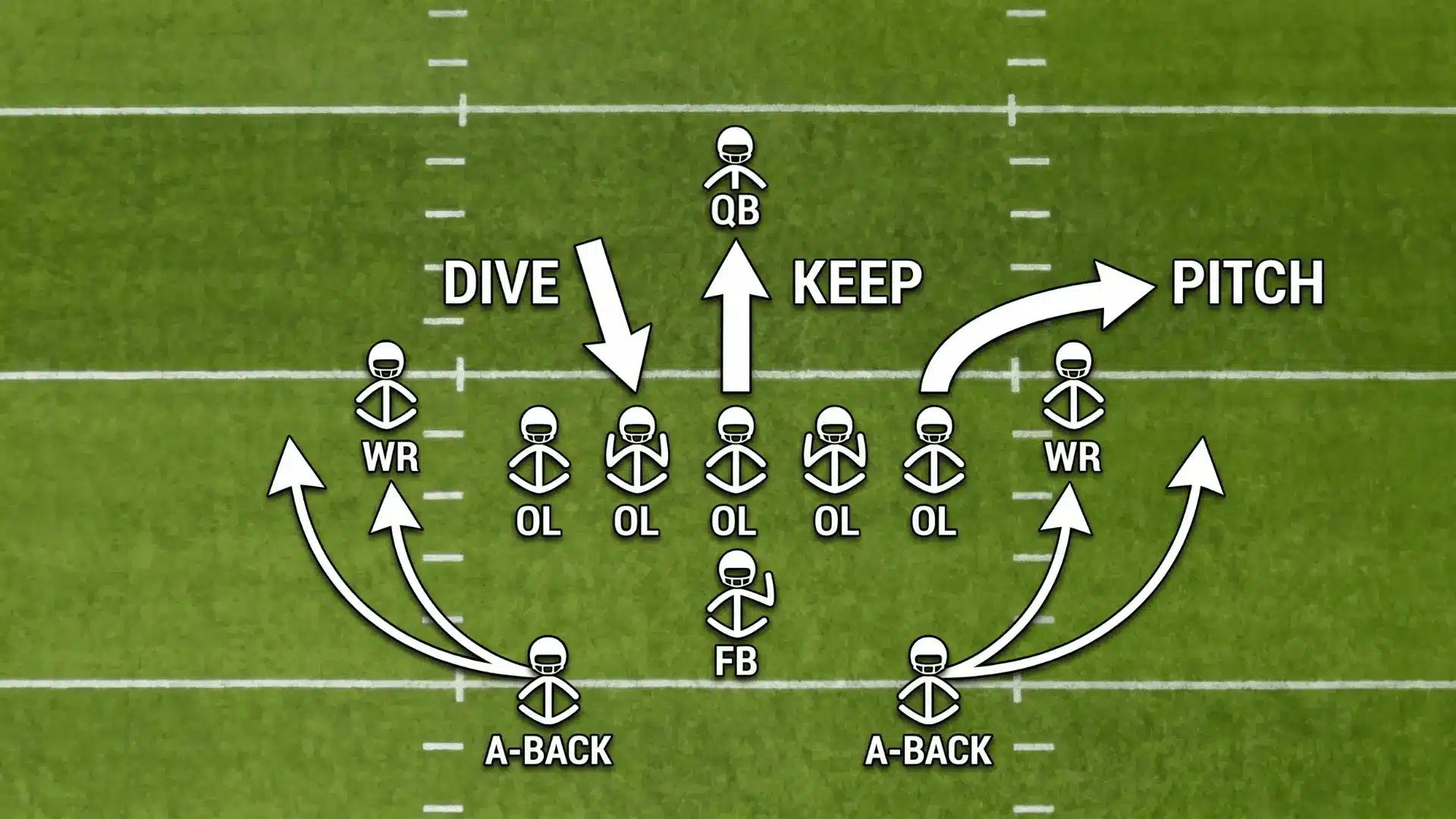
The flexbone offense is a run-heavy football system built from a formation with a quarterback under center, a fullback directly behind the quarterback, two A-backs positioned outside the tackles, and two wide receivers aligned in tight splits.
It is designed around option football, motion, and compressed formations that force defenders into difficult assignment decisions before and after the snap.
Unlike modern spread systems that create space by widening the offense, the flexbone compresses players close to the formation. That tight alignment helps the offense account for more defenders near the line of scrimmage without needing to block every one of them directly.
The Personnel Grouping
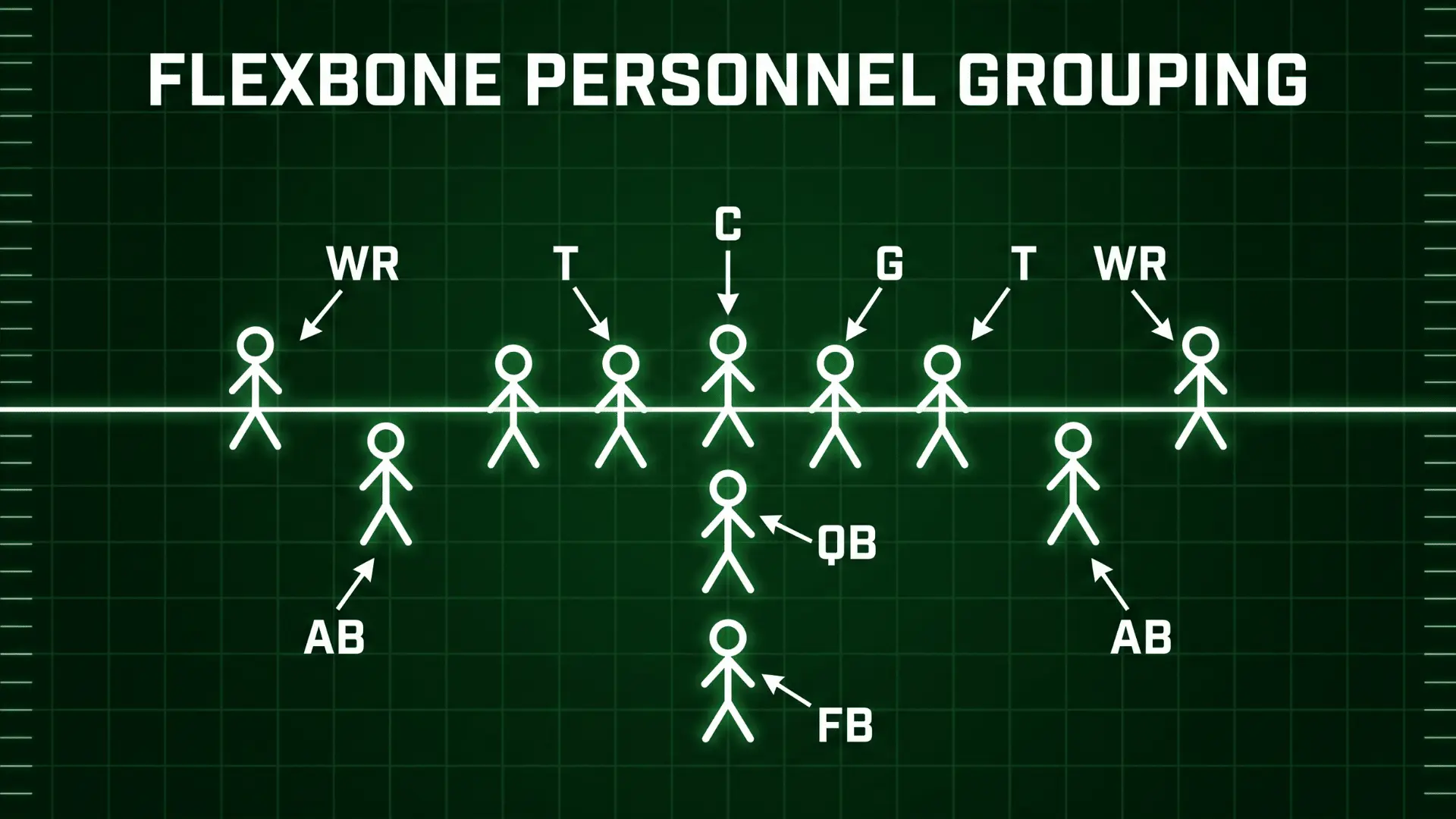
The flexbone offense uses a structured alignment with each position serving a specific role:
- Quarterback: Lines up under center and reads defenders to decide between handoff, keep, or pitch.
- Fullback: Positioned directly behind the quarterback, attacks inside gaps as the primary dive threat.
- A-Backs (Slotbacks): Align just outside the tackles, handle motion, edge blocking, ball carries, and pitch options.
- Wide Receivers: In compressed splits, support perimeter blocking and force defenders to stay tight to the formation.
The “flex” alignment of A-backs creates better angles for motion, option reads, and perimeter blocking, making the system distinct from the wishbone while maximizing leverage against the defense.
Where the Flexbone Came From
The flexbone’s modern form traces directly to Paul Johnson, who developed and popularized the system during his time as head coach at Georgia Southern in the 1980s before installing it at Navy and later Georgia Tech.
Johnson’s version of the offense moved the traditional wishbone halfbacks closer to the line of scrimmage, creating the A-back alignment that defines the flexbone today. That adjustment changed how the defense had to account for the perimeter and turned a power-run system into an option-and-angles offense.
The Navy, Army, and Air Force have run variations of this system ever since, using it as a structural solution to competing against programs with larger rosters and more recruited talent.
How the Flexbone Differs From Other Run-Heavy Systems?
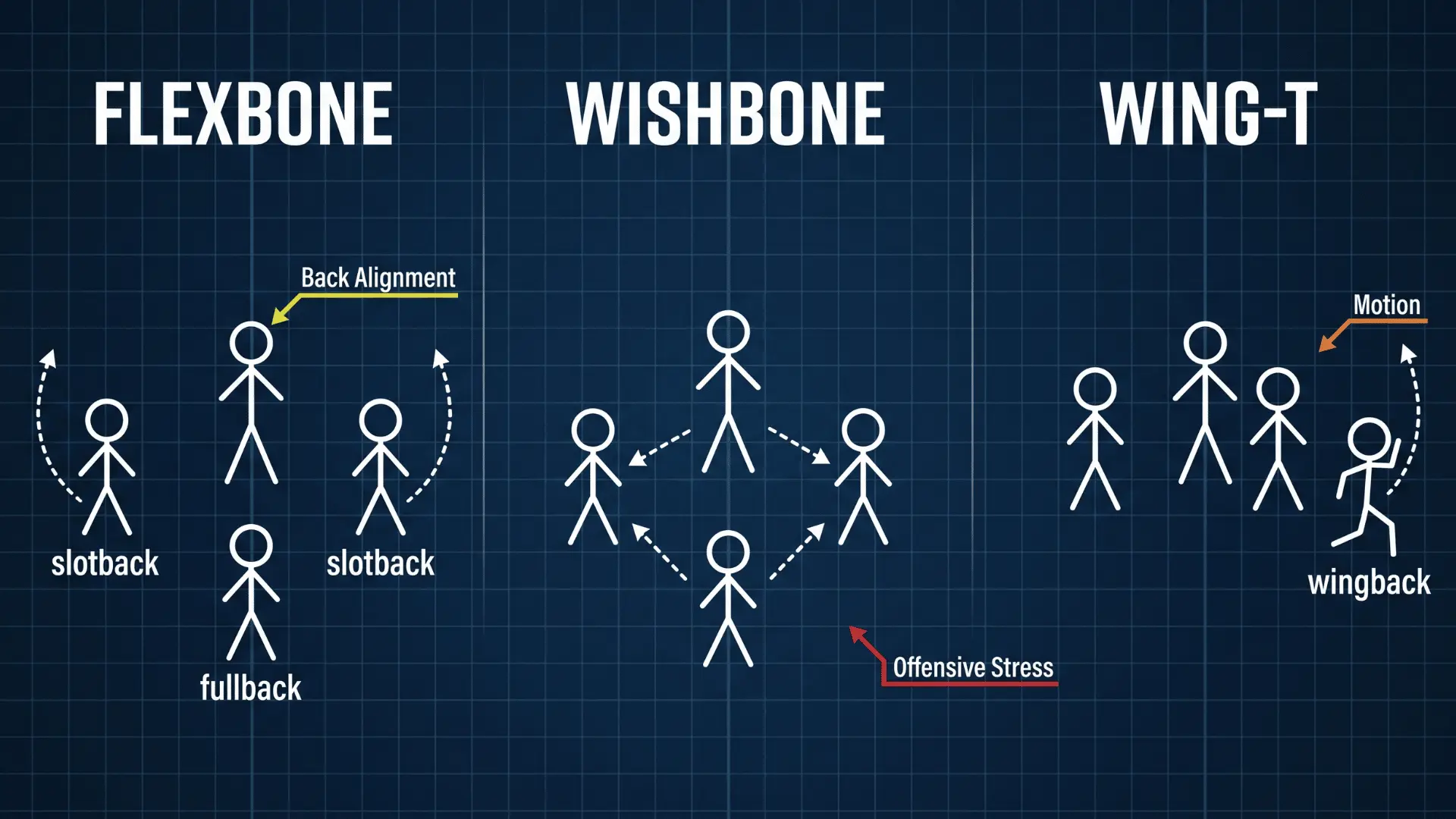
The alignment and motion of the backs define how the flexbone stresses the defense compared to similar systems.
| Feature | Flexbone | Wishbone | Wing-T (Contrast) |
|---|---|---|---|
| Outside Back Alignment | A-backs align wider outside the tackles | Halfbacks align deeper behind the fullback | Mostly static backfield; alignment varies with an unbalanced line |
| Backfield Motion | Motion-ready; can move before snap | Minimal motion; traditional backfield | Limited motion; relies on misdirection |
| Offensive Stress | Creates horizontal pressure, option reads, and assignment conflict | Primarily downhill, inside runs | Uses misdirection to disguise the ball carrier |
| Option Threats | Immediate perimeter and pitch options | Inside running emphasis | Deception-focused; not read-based option |
| Formation Balance | Symmetric backfield | Traditional backfield depth | Often, an unbalanced line |
| Defensive Manipulation | Forces defenders to react to motion and reads | Relies on numbers at the point of attack | Relies on tricking defenders through misdirection |
By widening the A-backs and using motion, the flexbone creates assignment conflicts and option reads, making it distinct from both the traditional wishbone and the misdirection-focused Wing-T.
The Triple Option and How the Series Works
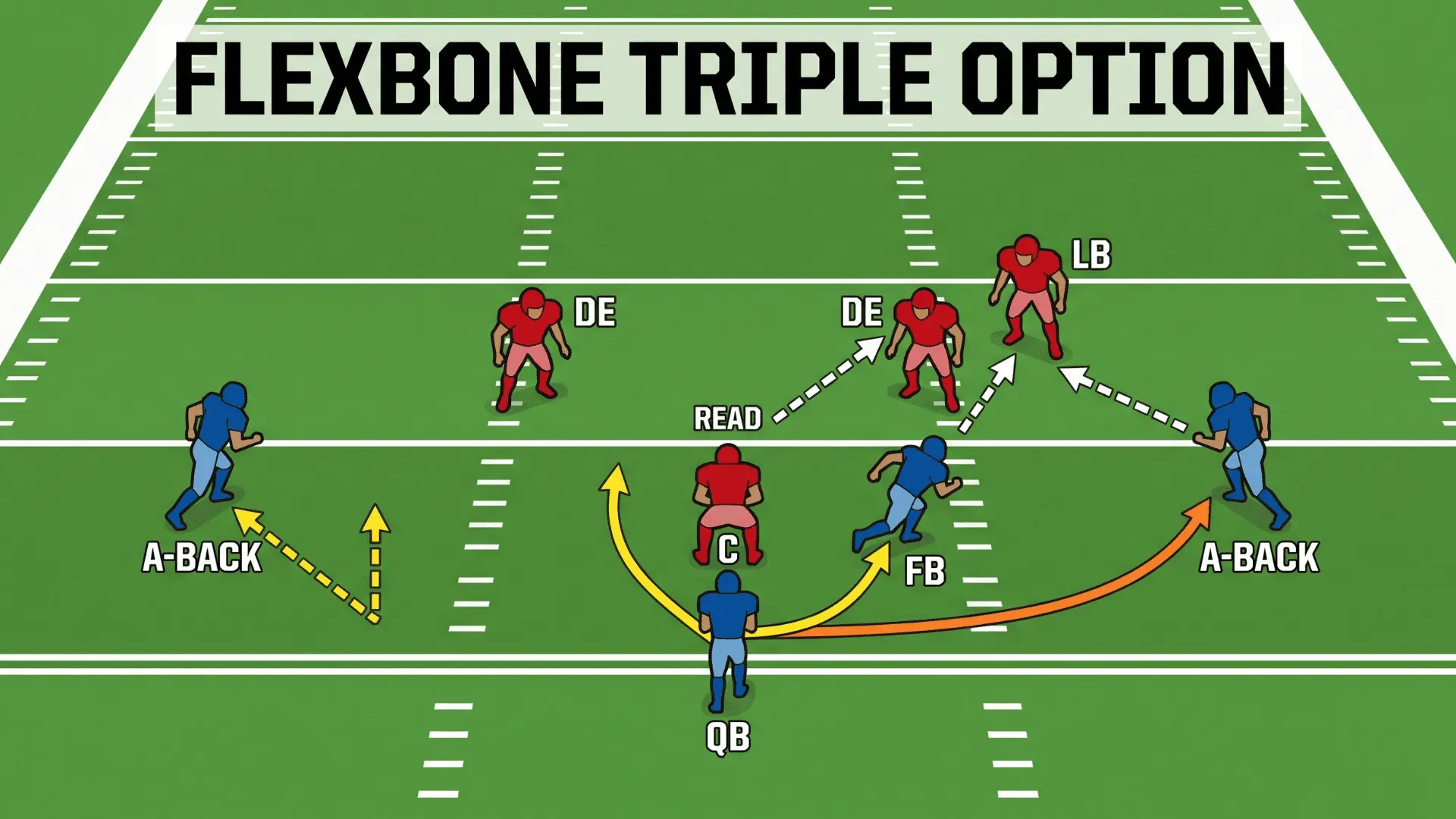
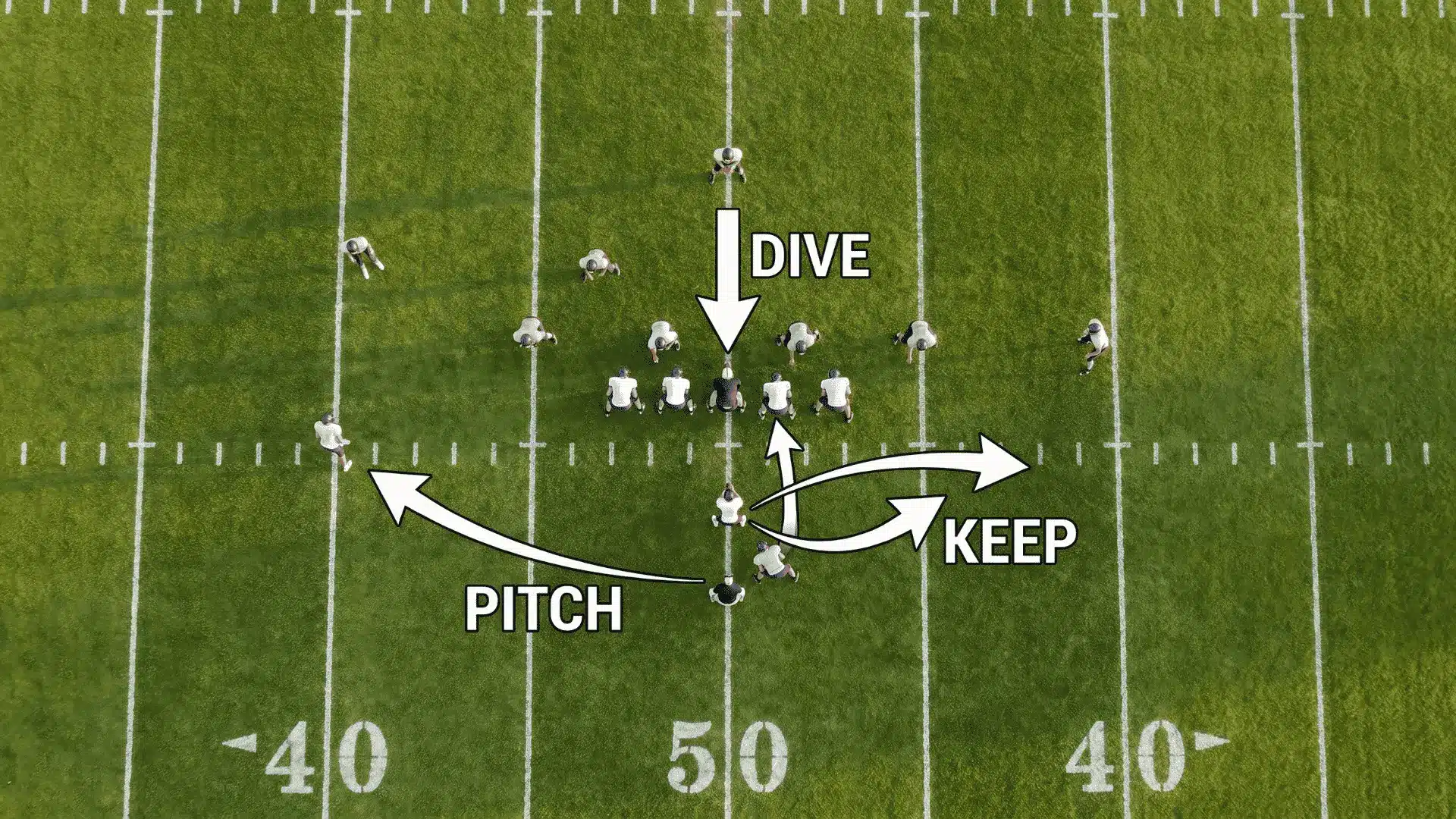
Triple option football is built around a structured read system where the quarterback makes three sequential decisions…
- Hand off to the fullback on the dive
- Keep the ball
- Pitch to the A-back
The offense intentionally leaves specific defenders unblocked to force them into a choice, creating conflicts the quarterback can exploit.
The flexbone is a series-based offense, not a collection of isolated plays. Each sequence looks similar at the snap but manipulates the same defender differently over multiple plays, making the fullback dive a critical foundation for the option.
1. Zone Dive
The zone dive is the first part of the triple option. The quarterback reads the inside defender and either hands the ball to the fullback or keeps it.
If defenders respect the dive, it opens space for later phases. If ignored, the mesh point gets crowded, and option reads become easier for the defense to predict.
The mesh… the moment the quarterback rides the ball into the fullback’s stomach has to last long enough for the read defender to commit.
Too short and the quarterback pulls prematurely; too long and the window to keep or pitch closes.
That timing is where most option mistakes happen, and it is why repetition at the mesh point dominates practice time in flexbone programs.
2. Keep Decision
Next, the quarterback reads the unblocked defensive end. If the defender crashes inside, the quarterback keeps the ball and attacks the edge.
If the defender stays wide, the ball goes to the fullback. This decision follows a fixed sequence, not improvisation.
3. Pitch Phase
After keeping the ball, the quarterback moves toward the perimeter with the A-back trailing for a potential pitch.
Timing is critical: a rushed or delayed pitch can fail. The phase exploits defenders who overcommit to the quarterback.
4. Midline Option
A variation in which the quarterback reads an interior lineman rather than the defensive end. This is used against disciplined defenders who refuse to commit. It opens inside lanes while keeping the same assignment conflict principle.
This system ensures each defender faces one difficult choice per play, allowing the offense to control spacing, leverage, and defensive reactions without relying on raw power.
5. Outside Veer
The outside veer shifts the point of attack to the perimeter.
Instead of reading the defensive end on the interior, the quarterback reads a defender aligned further outside, and the blocking scheme stretches horizontally rather than attacking inside gaps.
It works best against defenses that load the box to stop the interior dive, giving the offense a way to punish aggressive interior pursuit by attacking the edge with the same option read principles.
Formation, Alignment, and Compression
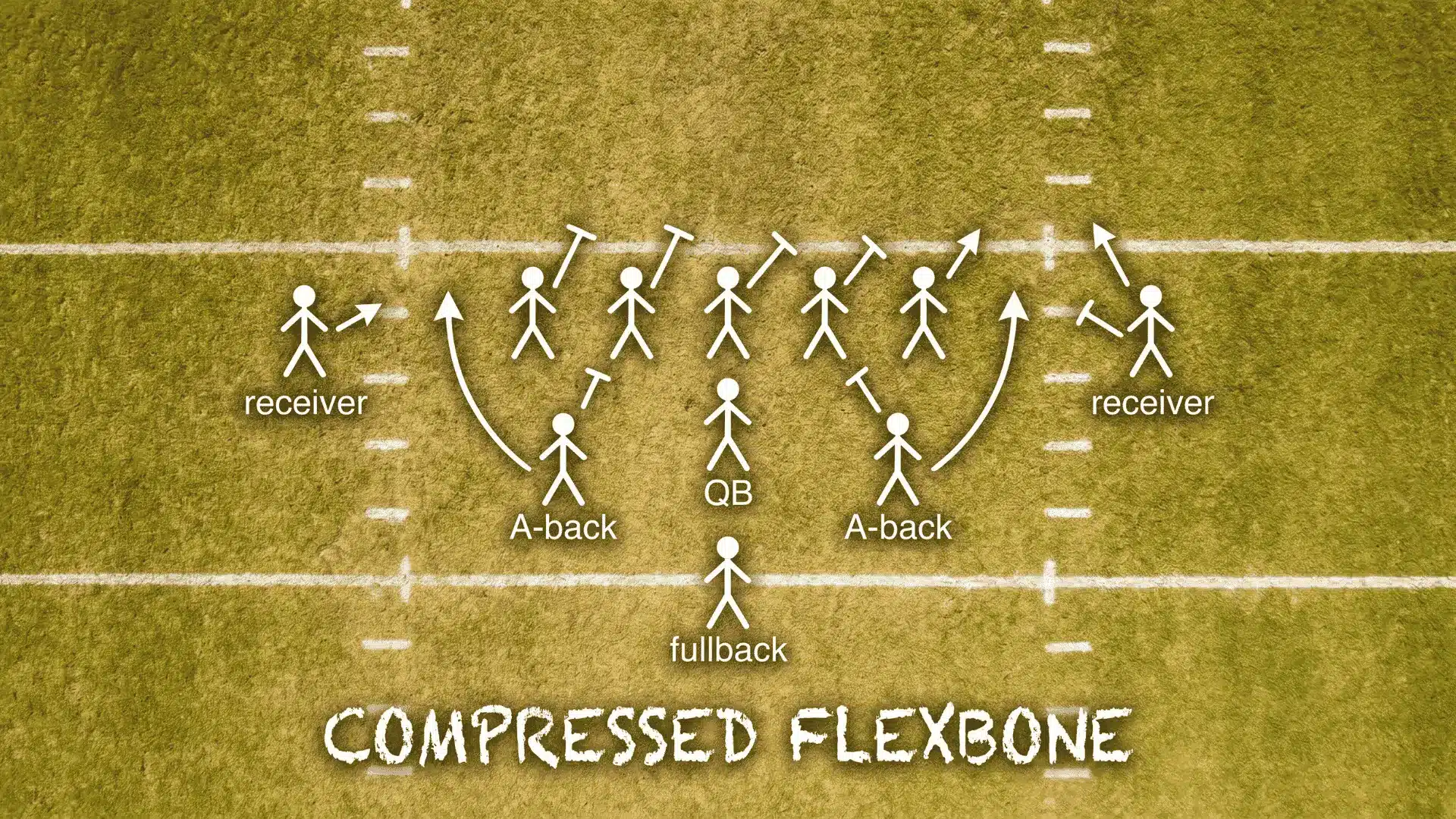
In the flexbone offense, receivers and slotbacks line up close to the formation instead of near the sidelines.
This compression improves box counts, blocking angles, and option leverage against the defense. It forces defenders to cover both perimeter and interior responsibilities, creating conflicts that the offense can exploit.
Slotback Positioning
A-backs, or slotbacks, line up just outside the offensive tackles. Their position forces defenders into a structural problem with no clean answer:
- If the defense spreads out to match the slotbacks, the offense gets better numbers inside for fullback dives.
- If the defense packs the box to stop the dive, slotbacks get cleaner motion paths and pitch lanes to the perimeter.
That tension is the point. Compressed receiver splits shorten motion distances and keep the option game fast, while the tight formation gives smaller linemen better blocking angles than they would get in a wider alignment.
Compression works best when defenses commit extra resources near the formation.
Elite man-coverage cornerbacks or aggressive safeties who can hold their assignments while defending the perimeter can reduce this advantage, which is why quarterback reads and execution discipline matter more against those looks than in any other game situation.
Formation Variants
These formations adjust the flexbone setup to attack different defensive looks while keeping the same core option principles.
- Flex Formation: The base setup; QB under center, fullback behind, A-backs outside the tackles, compressed receivers. Balanced alignment threatens both sides equally and gives the offense no tendency to tip.
- Spread/Trips Formation: Widens one side with additional receivers, stretching the defense horizontally. Creates passing angles and pulls a defender away from the box while keeping the option structure intact.
- Heavy Formation: Adds size to one side through a tight end, an extra tackle, or an unbalanced line. Used in short-yardage situations or against a strong defensive front when the offense needs to win at the point of attack rather than around it.
Each variant changes the surface look without changing the reads. Defenders have to prepare for all three, but the quarterback’s decision-making process stays the same.
What Does the Flexbone Require to Work?
The flexbone offense relies on disciplined execution, precise quarterback reads, and linemen who understand leverage and angles. Elite size or star players are not necessary.
1. The Quarterback
The quarterback drives the offense at the mesh point, where he and the fullback meet for the dive.
Timing is critical: reading the correct defender, holding the mesh just long enough, and completing the dive, keep, or pitch without hesitation. Predetermined reads or slow reactions break the option’s effectiveness.
2. A-Backs and Fullback
A-backs manage motion, perimeter blocking, pitch options, and open-field runs. Their speed and versatility support the quarterback’s decisions.
The fullback is the primary inside dive threat. Consistent, reliable gains here force defenders to respect the dive, keeping the option series effective.
The offense depends on defenders believing the dive can hurt them, not just explosive athleticism.
3. Offensive Line
Flexbone linemen succeed through angles, leverage, and positioning rather than raw power. Angle blocking opens lanes and isolates defenders, allowing smaller linemen to handle larger opponents.
Poor technique collapses the mesh point and disrupts option timing, making disciplined footwork and positioning essential.
Success in the flexbone depends on precise reads, disciplined execution, and coordinated teamwork, not sheer size or athleticism.
4. The Passing Game
The flexbone is a run-first offense, but the passing game is not optional; it is what makes the run game work at full effectiveness.
Why It Works
The primary passing tool is play action. Because the fullback dive and the option series look identical at the snap to passing plays, defenders who have learned to respect the run freeze for a split second.
That freeze creates separation downfield and gives the quarterback a clean window off the fake.
What It Attacks
The most effective play action concepts in the flexbone target:
- A safety rotated out of position by run support
- A linebacker drawn into the box to stop the dive or pitch
- A cornerback holding outside leverage who loses track of the receiver behind him
A wide receiver running a post or slant behind a linebacker committed to stopping the pitch can turn a second-and-long into a first down. Not because the pass is complex, but because the run game already put the defense in a bad position.
Why It Has to Exist
The passing game does not need to be high-volume. It needs to threaten.
A defense that stops respecting the pass can load the box, press A-backs out of their motion lanes, and strip away the assignment conflicts the entire system depends on.
Even used sparingly, the passing game prevents that by keeping safeties honest and linebackers off the line so the option can function.
Strengths and Vulnerabilities of the Flexbone
The flexbone offense uses structure and timing to create advantages while forcing defenders into constant tough decisions.
-
Time of Possession Control: The flexbone keeps the ball longer by forcing defenders into repeated assignment decisions, slowing the game and wearing down the defense.
- Assignment Conflicts: Each play creates choices for defenders on the dive, quarterback keep, or pitch, which compound pressure and increase the chance of mistakes.
- Mental Wear on Defense: A linebacker who has to correctly read dive-or-keep forty times in a game will eventually misfire. The flexbone doesn’t need the defender to be wrong often; one blown assignment per drive is enough to generate a first down or break a long run.
- Effective Against Aggressive Defenses: Fast, penetrating defenders can be manipulated into attacking the wrong phase, creating opportunities elsewhere.
- Passing Game Dependence: The offense’s passing relies on defenders respecting the dive and option structure; falling behind forces predictable passes and reduces effectiveness.
- Challenge from Disciplined Defenders: Defensive ends who can control multiple gaps remove the forced-choice advantage, slowing the option and limiting leverage.
- Front-Seven Importance: Athletic and disciplined defensive front-seven players can neutralize the structural conflict the flexbone relies on, making execution key for the offense.
Wrapping Up
The flexbone offense works because it removes blocking assignments, not adds them.
By leaving specific defenders unblocked and forcing them to choose, the offense turns individual decisions into structural advantages.
Advantages that compound over a full game as defenders tire of making perfect reads on every snap. It rewards discipline over size, angles over power, and repetition over improvisation.
That combination is why it endures at every level of football, where execution and preparation can close the gap between unequal rosters.
Frequently Asked Questions
What colleges still run the flexbone?
Navy is the most well-known college program still using the flexbone offense today. Some service academies and smaller programs also use it because the system helps offset size disadvantages.
Why does the flexbone work with smaller offensive linemen?
The flexbone uses angle blocking and leverage rather than relying solely on physical strength. Smaller linemen can succeed because the system creates favorable blocking geometry and leaves some defenders unblocked by design.
What makes the triple option hard to defend?
The triple option forces defenders to choose between stopping the dive, quarterback keep, or pitch on every play. One wrong assignment can immediately create an open running lane.
Why do service academies use the flexbone?
Service academies use the flexbone because it rewards discipline, conditioning, and execution more than raw size. The offense also controls time of possession and limits defensive exposure.


