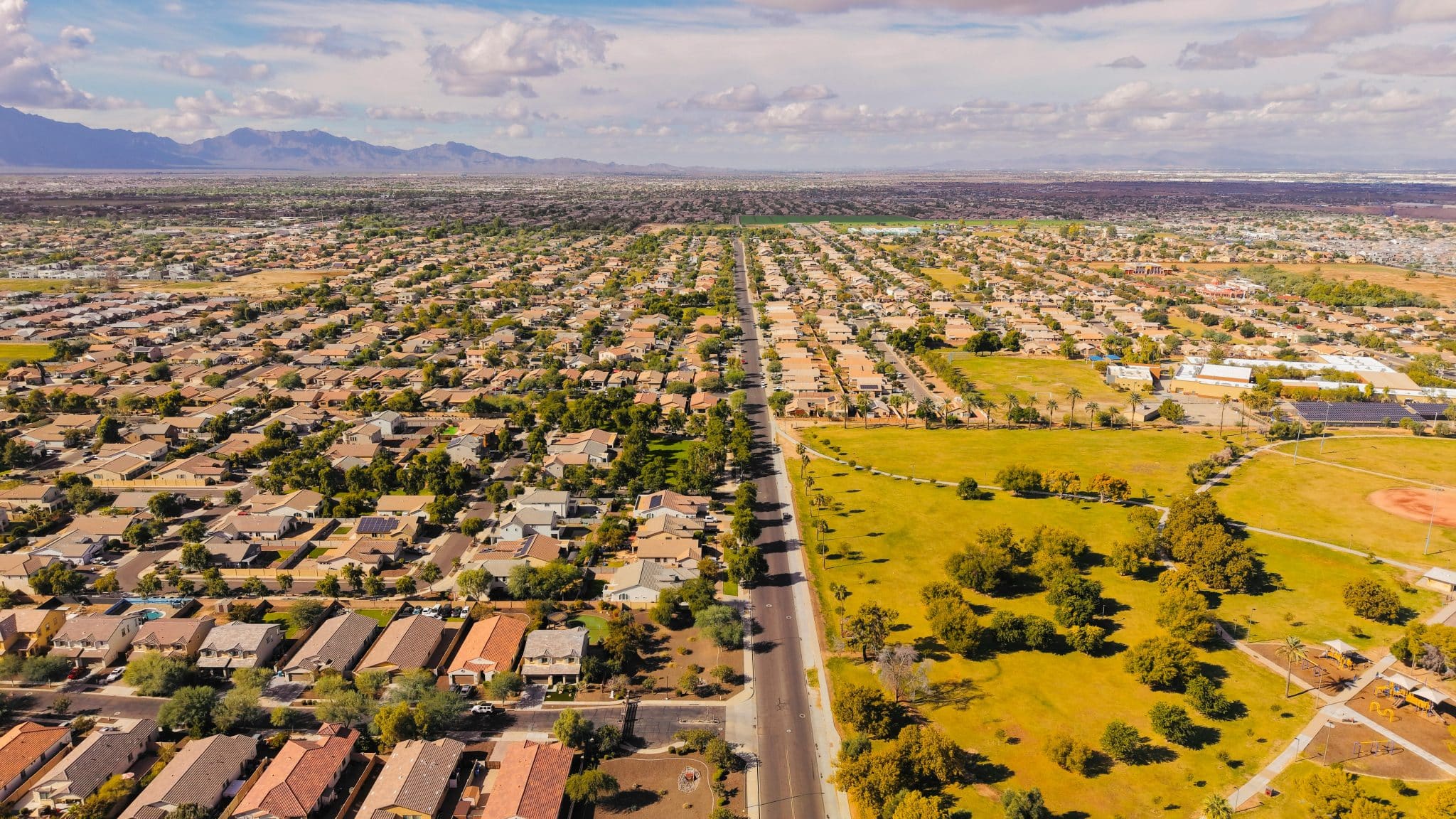

Phoenix has spent the better part of the last decade in the national spotlight for all the right real estate reasons: strong job growth, a warm climate, relatively affordable housing compared to coastal cities, and a steady stream of transplants from California, Washington, and beyond. But as the market has cooled from its post-pandemic highs, prospective buyers are right to ask whether Phoenix still delivers on that promise. The short answer is that it depends on what you are looking for. The longer answer, as the 2026 data is starting to show, is more nuanced than either the boom-era enthusiasm or the correction-era hand-wringing might suggest.
Where the Market Stands Right Now
According to current Phoenix, AZ real estate listings and market data, there are 8,008 active listings in the city with 496 new properties hitting the market recently. The median list price sits at $475,000, with homes averaging $286 per square foot and a median size of 1,689 square feet. Those figures tell a story of a market that has stabilized considerably after the volatility of 2021 and 2022.
One of the more telling indicators is days on market. Homes in Phoenix are currently taking an average of 73 days to sell, up from 58 days at the same point last year. That 15-day increase reflects a meaningful shift in negotiating dynamics. Sellers who grew accustomed to receiving multiple offers within days of listing are now operating in a market that rewards patience on the buyer side and demands realistic pricing on the seller side.
The volume of price reductions in the market, with nearly 1,940 active listings showing a reduced price, reinforces that sellers are adjusting to meet buyer demand rather than the other way around.
What the Sales Data Actually Shows
Despite the slower pace, buyer activity in Phoenix is picking up in volume. Some 6,907 homes were sold in March 2026, a notable increase from 5,554 homes sold during the same month last year. That 24 percent jump in transactions tells a story that the headlines about rising days on market might obscure: buyers are active, they are just more deliberate.
This combination, more sales but slower timelines, suggests Phoenix has moved from a frantic seller’s market into something closer to a balanced one. Inventory remains substantial, giving buyers room to compare options, negotiate on price, and conduct proper due diligence without the pressure of a 48-hour decision window. For first-time buyers especially, that represents a meaningful improvement in conditions over what the market looked like two or three years ago.
Affordability: The Bigger Picture
At $475,000, the Phoenix median list price is above the national median of roughly $436,000 as of early 2026, according to Redfin’s national housing market data. That gap has narrowed considerably as coastal markets have appreciated and Phoenix has plateaued, and it is worth noting that the Phoenix median buys substantially more space and amenity than comparable prices in Los Angeles, Seattle, or Denver.
The affordability equation in Phoenix also has to account for mortgage rates, which remain elevated by historical standards. The national average on a 30-year fixed mortgage is hovering around 6.2 percent, meaning that even at a stabilized price point, monthly payments are meaningfully higher than they were when rates were sub-3 percent. Buyers who stretched to purchase at peak prices in 2021 and 2022 bear the brunt of that reality, but for those entering the market fresh in 2026, the combination of moderated prices and ample inventory offers more reasonable terms than many expected.
Who Benefits Most in This Market
The current Phoenix market favors a few specific buyer profiles. Those with strong cash positions or large down payments gain the most leverage, since sellers with price-reduced listings are often motivated and responsive to well-structured offers. Buyers relocating from higher-cost markets, particularly in California and the Pacific Northwest, still find Phoenix’s price-per-square-foot compelling even at current levels.
Investors evaluating long-term rental demand will find Phoenix’s fundamentals intact. The metro area continues to attract corporate relocations and infrastructure spending, and the population pipeline from more expensive western cities shows no signs of stopping. The Phoenix market trends page on Movoto tracks these conditions in real time, and the current data suggests that while appreciation may be modest in the near term, the structural demand drivers remain in place.
Buyers on tighter budgets face a more challenging landscape. Affordability constraints are real, and the price-reduced inventory, while helpful, does not change the fundamental math of a market where median prices sit well above $450,000. Those buyers may find better value in Phoenix’s outer ring suburbs, where prices soften and inventory is proportionally higher.
School Districts and Neighborhood Considerations
For families with children, Phoenix sits within the Maricopa County R-1 School District, which encompasses 410 elementary schools, 311 middle schools, and 192 high schools. The sheer scale of that system means school quality varies considerably by neighborhood, and buyers with school-age children would be well-served to research specific district boundaries as part of their neighborhood evaluation. Resources like GreatSchools.org can help filter neighborhoods by school ratings, which is worth cross-referencing against listings in any given area of interest.
The Bottom Line
Phoenix in 2026 is not the slam-dunk opportunistic market it was in 2015, nor is it the overheated, offer-waiving frenzy of 2021. What it is, increasingly, is a functional and relatively transparent market where buyers have options, sellers are realistic, and the data is available to support informed decisions.
The fundamentals that made Phoenix attractive remain: job growth, population inflow, livability, and a price point that still competes favorably with the coasts. The conditions that make 2026 a better buying environment than recent years are real: more inventory, longer timelines, and more motivated sellers. Whether that adds up to “a good place to buy” depends on your budget, timeline, and long-term goals, but the data makes a reasonable case that for the right buyer, the answer is yes.