

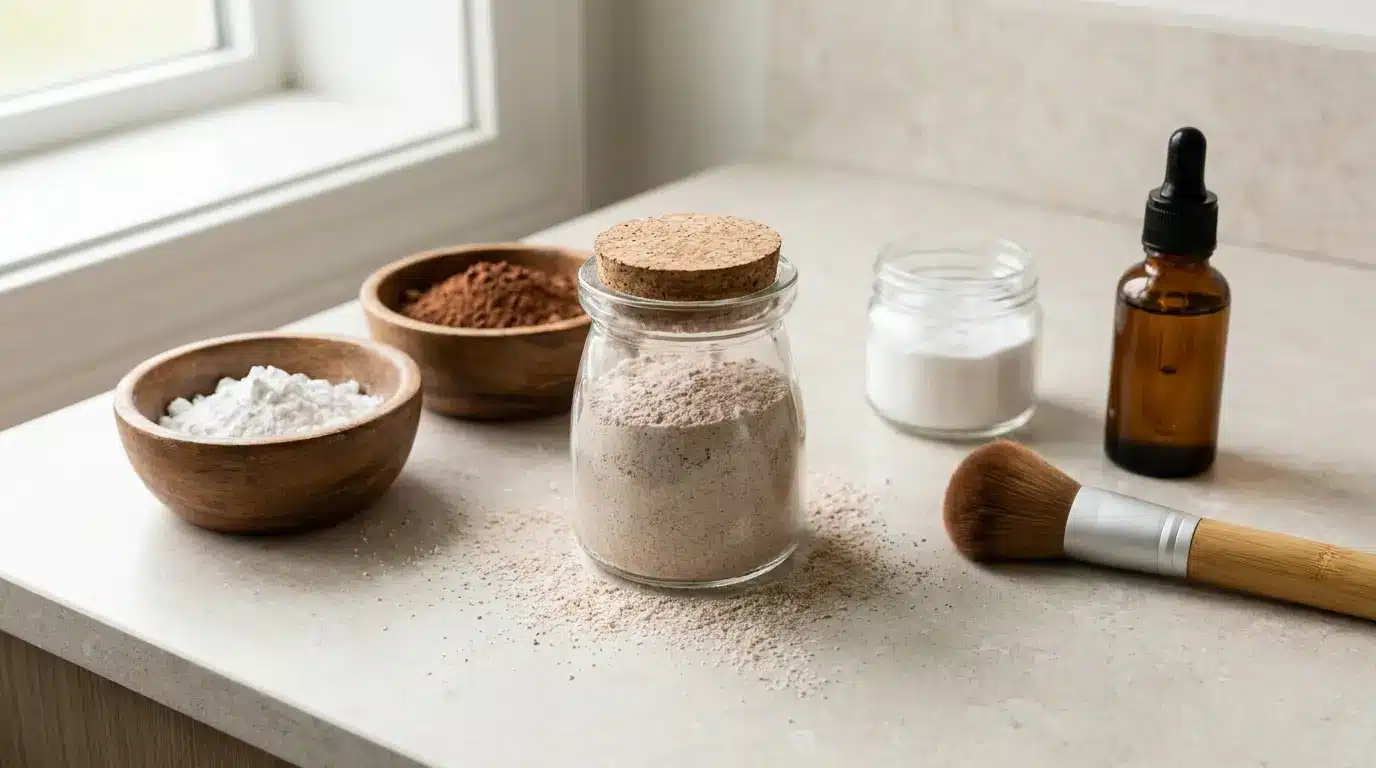

Oily roots always seem to show up at the worst time, right before you’re heading out the door. DIY dry shampoo offers a simple way to refresh your hair using a few basic ingredients you may already have at home.
To see if it was actually worth making, I mixed six different homemade dry shampoo recipes over three weeks, using ingredients such as arrowroot powder, cornstarch, cocoa powder, and kaolin clay.
I tested each one on second- and third-day hair, comparing how well it absorbed oil, how much residue it left behind, and how long my hair stayed looking fresh.
Some blends worked surprisingly well, while others felt too powdery or left a noticeable white cast. Below, I’ll share what worked, what didn’t, and the recipes I’d actually use again.
What Is DIY Dry Shampoo?
DIY dry shampoo is a homemade powder that absorbs excess oil from your scalp, making your hair look fresher without using water.
It doesn’t clean your hair like a regular shampoo, but it helps reduce greasy-looking roots between washes.
Most recipes use simple ingredients like arrowroot powder, cornstarch, or cocoa powder that you may already have at home.
It’s best used as a quick refresh to extend the time between regular hair washes, not as a replacement for shampoo.
Does DIY Dry Shampoo Actually Work?
Yes, it works, but only for certain situations. Dry shampoo works by soaking up oil at the roots, so hair looks fresh rather than flat and shiny.
Powder-based formulas like cornstarch and arrowroot draw moisture and oil out of the hair shaft, which is why they leave hair feeling dry and matte.
Homemade versions work best on slightly oily roots, second- or third-day hair, and when you’re trying to stretch out a hairstyle a little longer. They are not built to handle heavy grease or thick product buildup.
| Situation | DIY Dry Shampoo Performance |
|---|---|
| Slightly oily roots | Works well |
| Very greasy hair | Moderate results |
| Heavy product buildup | Not enough |
During my testing, the arrowroot and cornstarch blend kept the roots that were lightly oily-looking fresh for most of the day.
It struggled once my hair became very greasy, especially after workouts, where a regular shampoo was still the better option.
Benefits of Making Homemade Dry Shampoo
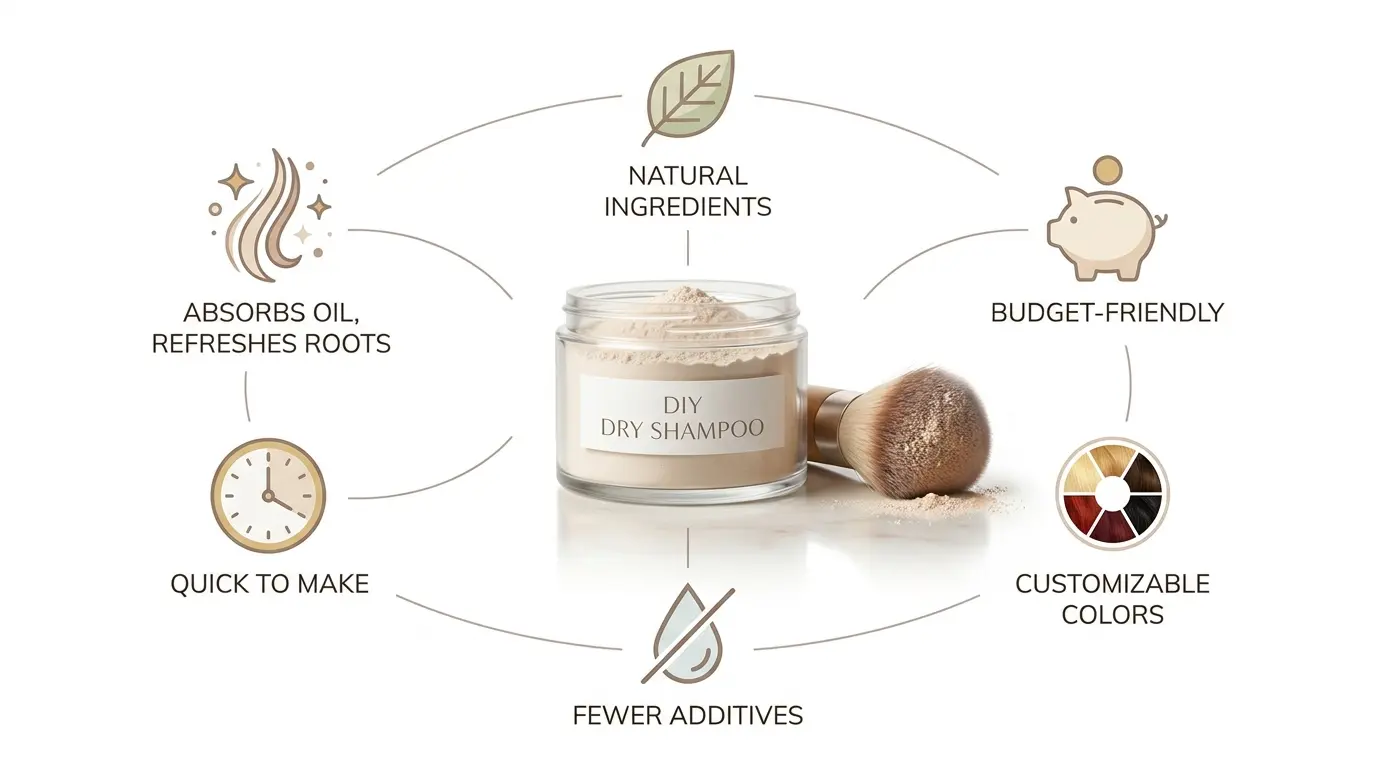
Homemade dry shampoo has become a popular alternative for people looking to refresh their hair without spending much.
It offers a few practical advantages that make it worth trying, especially if you like simple, customizable beauty products.
- Uses simple pantry ingredients such as arrowroot powder, cornstarch, and cocoa powder, all easy to find.
- Costs much less than buying commercial dry shampoo, especially if you use it several times a week.
- It can be customized for different hair colors to reduce white residue and blend more naturally.
- Lets you choose exactly what goes into the formula and avoid unnecessary additives or fragrances.
- Takes only a few minutes to mix, with no special tools or complicated preparation required.
- One small batch lasts for multiple uses, making it convenient to keep on hand between wash days.
- Helps absorb excess oil and refresh flat roots, allowing you to stretch the time between hair washes.
The biggest benefit I noticed wasn’t that my hair looked freshly washed. It was that my roots looked less shiny, and I could comfortably skip washing for another day.
While homemade dry shampoo isn’t a complete replacement for washing your hair, it can be an inexpensive and effective way to keep your roots looking fresher between shampoos.
Best Ingredients for DIY Dry Shampoo
The ingredients you choose can affect how well your homemade dry shampoo works. Matching them to your hair color and scalp type usually gives the best results.
| Ingredient | Best For | Benefit |
|---|---|---|
| Arrowroot powder | Sensitive scalp, light hair | Absorbs oil gently without feeling heavy |
| Cornstarch | Blonde or light hair | Helps reduce greasy-looking roots |
| Cocoa powder | Brown or dark hair | Blends into darker hair and reduces white cast |
| Activated charcoal | Dark hair | Adds natural pigment for a better color match |
| Rice flour | Fine hair | Absorbs oil while adding light volume |
| Kaolin clay | Oily scalp | Soaks up excess oil and leaves hair feeling fresher |
Experimenting with small batches can help you find the ingredient blend that works best for how your strands are naturally shaped, your color, and your scalp type
Ingredients You Should Avoid
Not every ingredient recommended online is a good choice for homemade dry shampoo. Some can irritate your scalp or make your hair feel worse over time.
- Too Much Baking Soda: A small amount can help absorb oil and odor, but too much may dry out your scalp. This can lead to irritation, flaking, or even increased oil production.
- Talcum Powder: Talc absorbs oil but has raised ongoing health concerns due to possible contamination. Arrowroot powder or cornstarch is a safer alternative for most people.
- Artificial Fragrance: Artificial fragrances can irritate sensitive scalps. If you want a scent, add just a drop or two of an essential oil instead.
- Too Many Essential Oils: Using too many essential oils may cause irritation or sensitivity. A small amount is enough, especially if you have a sensitive scalp.
If your scalp becomes itchy or irritated after using DIY dry shampoo, stop using it and switch to gentle formulas made for reactive skin until it settles.
Best Homemade Dry Shampoo Recipe
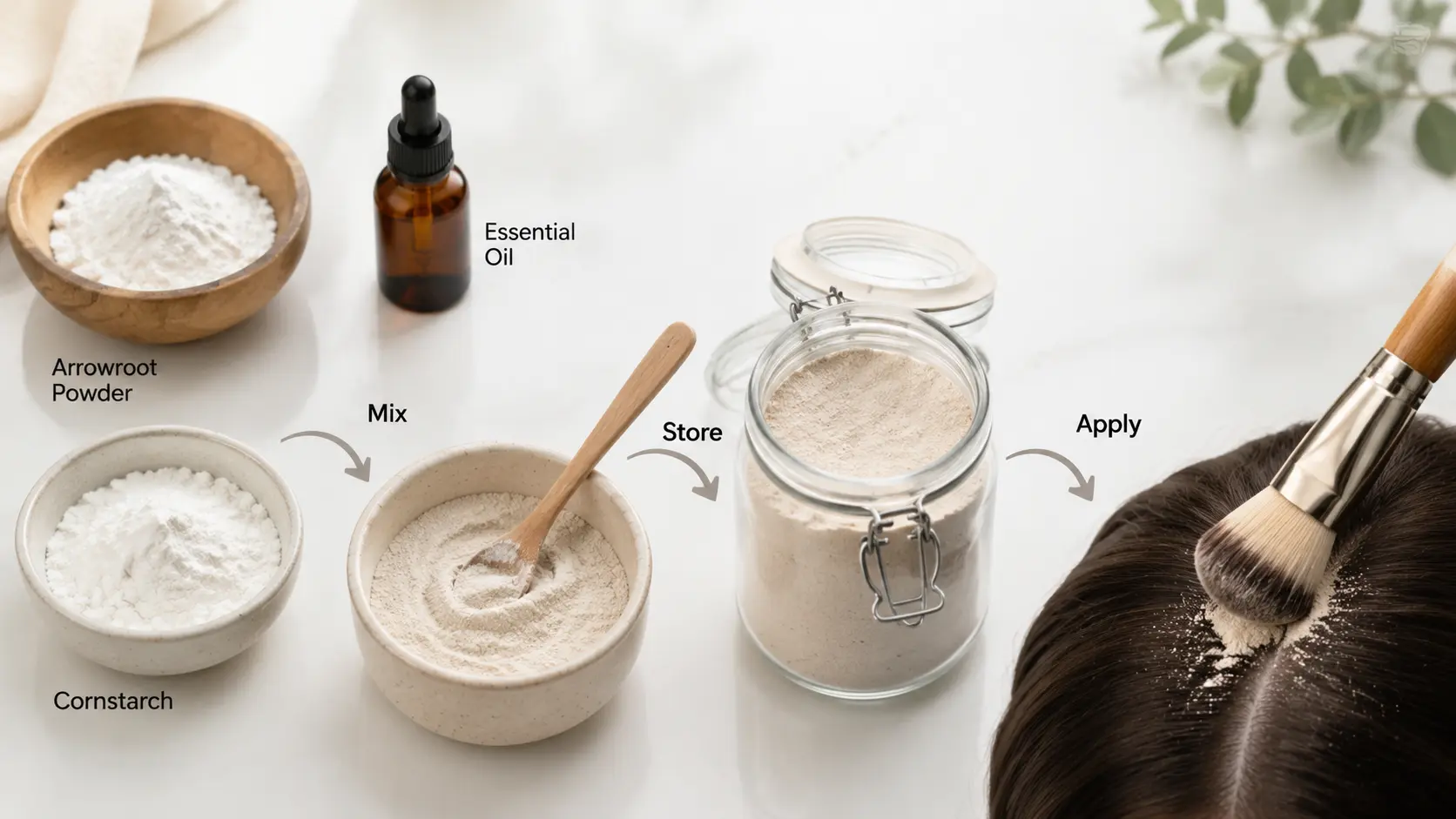
Out of all the recipes I tried, this one gave me the most consistent results. It absorbed oil without making my hair feel chalky and was also the easiest to brush out.
It works well for most hair types and helps absorb light to moderate oil. You can also customize it later by adding ingredients that better match your hair color or scalp needs.
Ingredients
- Arrowroot powder
- Cornstarch
- Essential oil (optional)
How to Create
- Mix the arrowroot powder and cornstarch in a small bowl or jar.
- Add a few drops of essential oil if desired.
- Stir until evenly combined.
- Store the mixture in an airtight container.
- Apply a small amount to your roots, massage it in, and brush away any excess.
How to Apply DIY Dry Shampoo Correctly
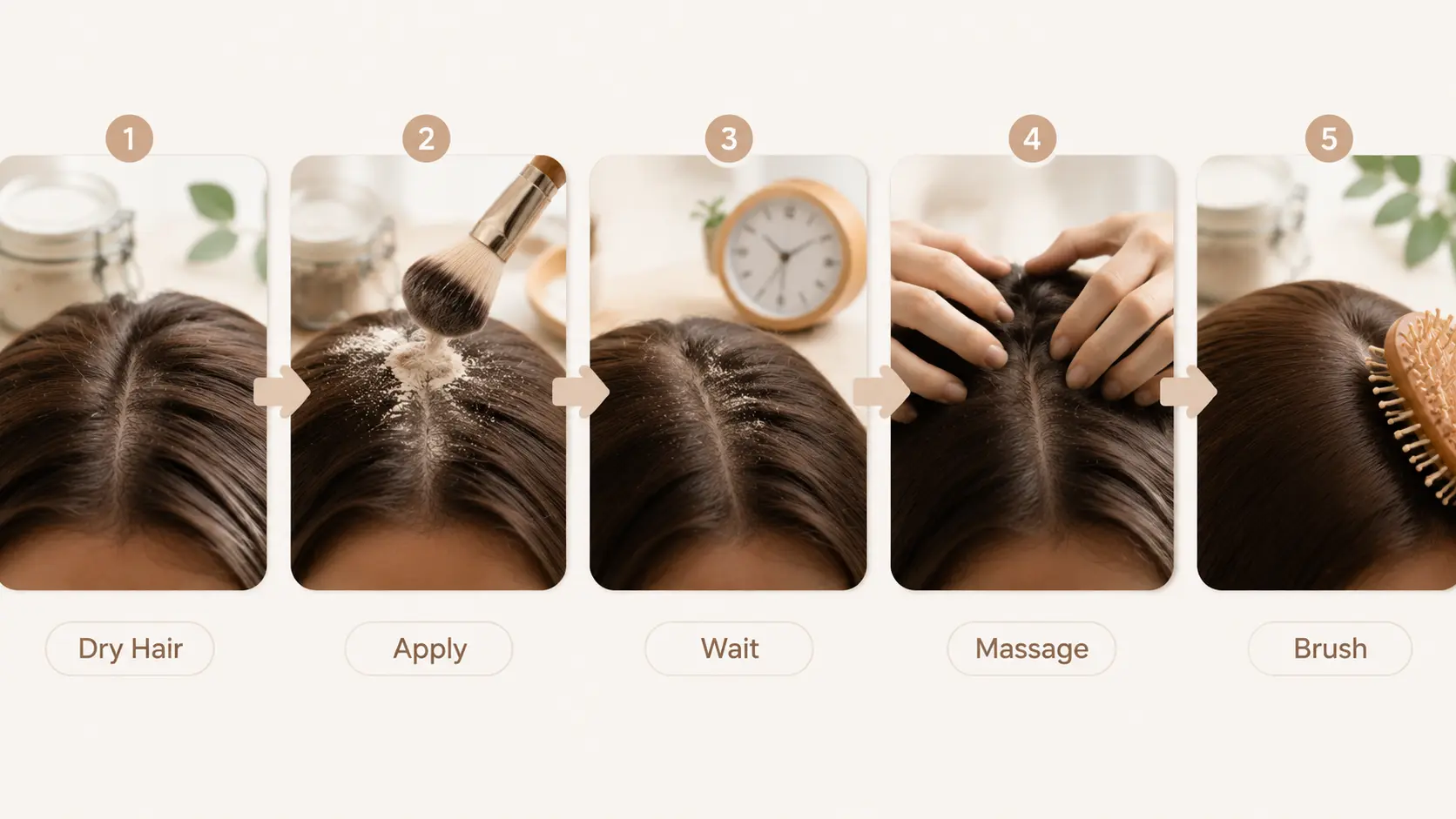
Applying homemade dry shampoo the right way helps it absorb more oil and blend into your hair more easily. A few simple steps can make it look much more natural.
- Start With Completely Dry Hair: Apply DIY dry shampoo onlyto hair that is completely dry. Damp roots can cause the powder to clump rather than absorb excess oil.
- Apply a Small Amount: Use a makeup brush or your fingertips to dust a light layer onto your roots. Start with less than you think you need, since you can always add more.
- Let It Sit for a Few Minutes: Leave the powder on your roots for about 2 to 5 minutes. This gives it enough time to absorb oil before you blend it in.
- Massage It Into the Scalp: Use your fingertips to gently massage the powder through your roots. This helps distribute it evenly and prevents patchy spots.
- Brush Away Any Excess: Brush your hair thoroughly to spread the powder and remove any leftover residue. Your roots should look fresher without visible buildup.
Using too much product is one of the most common mistakes with DIY dry shampoo. A light application usually gives the best and most natural-looking results.
The first time I used homemade dry shampoo, I applied far too much, and my hair felt powdery for hours. Using about half that amount gave much better results.
DIY Dry Shampoo Recipes for Different Hair Types
You can adjust a homemade dry shampoo recipe based on your hair color and scalp type. Small changes to the ingredients help it blend more evenly and absorb oil more effectively.
DIY Dry Shampoo for Dark Hair: When I tested the basic recipe on dark hair, the white residue was noticeable in bright lighting. Mixing in a little cocoa powder blended much better and looked more natural. For very dark or black hair, a tiny pinch of activated charcoal can create a closer color match.
DIY Dry Shampoo for Blonde Hair: Blonde and light-colored hair usually works well with the basic recipe as it is. Arrowroot powder and cornstarch blend naturally into hair to create a lighter shade without adding extra pigments.
DIY Dry Shampoo for Oily Hair: If your scalp gets oily quickly, mix a little kaolin clay into your basic recipe for extra oil absorption. A small pinch of baking soda can also help, but use it sparingly since frequent use may dry out your scalp.
Is Homemade Dry Shampoo Safe?
For most people, homemade dry shampoo is safe when used occasionally. Using it two or three times a week is generally fine, but daily use can lead to buildup, dryness, and scalp irritation.
If you have a sensitive scalp, start with a simple ingredient like arrowroot powder and patch test before trying other ingredients.
It can also be used on curly hair, especially for those already following a low-frequency wash routine, but apply it lightly to avoid residue and buildup.
If your scalp feels itchy, heavy, or greasy even after applying it, it’s time for a regular shampoo. Homemade dry shampoo is best used to refresh your hair between washes, not to replace them.
Who Should Try DIY Dry Shampoo?

Homemade dry shampoo works best for people who want a quick and affordable way to refresh their hair between washes.
It’s especially useful if you prefer simple ingredients or don’t want to rely on commercial products every time your roots get oily.
- Budget-conscious users looking for a low-cost way to stretch out washes
- Natural beauty enthusiasts who prefer to control what goes on their scalp
- Travelers who need something lightweight and easy to pack
- Busy mornings when there isn’t time for a full wash and blow-dry, especially if you’re already reducing overnight friction on your strands to stretch out styles longer.
- Emergency hair fixes before last-minute plans or unexpected outings
If these situations sound familiar, keeping a small batch on hand can be a practical solution. It takes only a few minutes to make and can save you time when you need a quick refresh.
Who Should Skip It?
DIY dry shampoo isn’t the best option for every hair or scalp type. In some cases, it may not provide sufficient oil control or may worsen existing scalp problems.
- Very oily scalp, where powder alone may not absorb enough oil
- Heavy product buildup that needs regular shampoo to remove
- Active scalp conditions, such as dermatitis or severe dandruff
- Daily dry shampoo users, since frequent use can increase buildup over time
In these situations, washing your hair with water and shampoo is usually the better choice. A clean scalp is healthier than repeatedly adding more powder on top of existing buildup.
Common DIY Dry Shampoo Mistakes
Using too much powder is one of the most common mistakes, as it can leave hair looking dull and cause product buildup instead of making it look fresh.
Choosing ingredients that don’t match your hair color can also leave a noticeable white or dark residue, so it’s important to pick the right blend for your shade.
Another mistake is using DIY dry shampoo too often. It’s designed to refresh your hair between washes, not replace regular shampoo, and daily use may lead to buildup and scalp irritation over time.
Why Is My Homemade Dry Shampoo Not Working?
If your DIY dry shampoo isn’t giving the results you expected, a small adjustment may be all it needs. The table below covers some common problems and simple fixes.
| Problem | Possible Cause | Fix |
|---|---|---|
| Hair still looks greasy | Too little powder | Apply a small amount more and let it sit for a few minutes |
| White residue | Wrong ingredient for your hair color | Switch to a tinted formula that matches your hair |
| Hair feels heavy | Too much product | Brush thoroughly to remove excess powder |
| Scalp feels irritated | Sensitivity to an ingredient | Stop using it and try a gentler formula |
I noticed the white residue was much worse when I rushed and brushed the powder out immediately. Waiting three to five minutes before brushing made a noticeable difference.
Sometimes what looks like leftover residue is actually mineral buildup from tap water rather than the powder itself, so it helps to rule that out first.
Small adjustments to your ingredients or application method can often make homemade dry shampoo work much better.
How Often Can You Use Homemade Dry Shampoo?
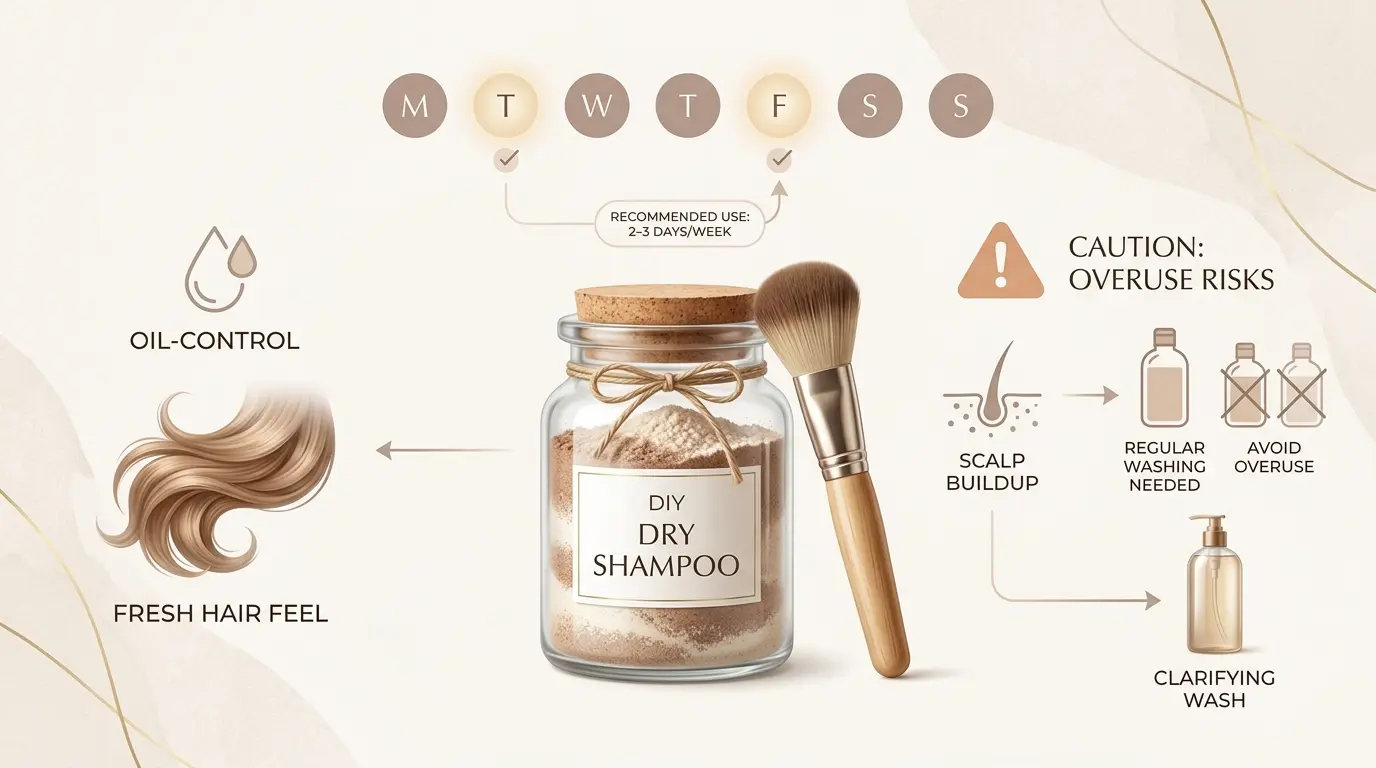
Most people can use homemade dry shampoo two to three times a week between regular washes without any issues. It works best as a quick way to refresh oily roots rather than as a replacement for shampoo.
Using it too often can lead to product buildup, dryness, and an itchy scalp, especially if you don’t wash your hair regularly. Pay attention to how your scalp feels after each use.
If your hair starts to feel heavy, your scalp becomes irritated, or you notice visible buildup, it’s time for a proper wash with water and shampoo instead of adding another layer of dry shampoo.
DIY Dry Shampoo vs Store-Bought Dry Shampoo
Both homemade and store-bought dry shampoos can refresh oily hair between washes. The right choice depends on your budget, convenience, and ingredient preferences.
| Feature | DIY Dry Shampoo | Store Bought |
|---|---|---|
| Cost | Lower | Higher |
| Ingredients | Customizable | Fixed formula |
| Convenience | Requires mixing | Ready to use |
| Hair color options | Adjustable | Limited |
DIY dry shampoo is a great option if you want a low-cost, customizable solution. Store-bought products are more convenient but usually cost more over time.
Final Thoughts
After trying several homemade recipes, I found that the simplest one actually worked best. Arrowroot powder with a little cornstarch gave me reliable results, while adding too many ingredients usually made the powder harder to blend and left more buildup.
People with very oily scalps or active scalp conditions may want to stick with regular washing instead.
Choosing the right powder for your hair color and using it in moderation makes a real difference in how well it performs.
With a few pantry ingredients and a little patience, DIY dry shampoo can become a simple, reliable part of your hair care routine between washes.
Frequently Asked Questions
Can Homemade Dry Shampoo Expire?
Yes, homemade dry shampoo can expire, especially if it contains essential oils or is exposed to moisture. Store it in an airtight container in a cool, dry place, and make a fresh batch every few months for the best results.
Can I Use Baby Powder Instead of Homemade Dry Shampoo?
Baby powder can absorb oil, but many people prefer arrowroot powder or cornstarch because they are simpler and easier to customize. If you choose baby powder, check the ingredients before using it on your scalp regularly.
Can Homemade Dry Shampoo Add Volume to Hair?
Yes, homemade dry shampoo can make flat roots look fuller by absorbing excess oil and adding light texture. It won’t replace a volumizing styling product, but it can give hair a quick lift between washes.


