

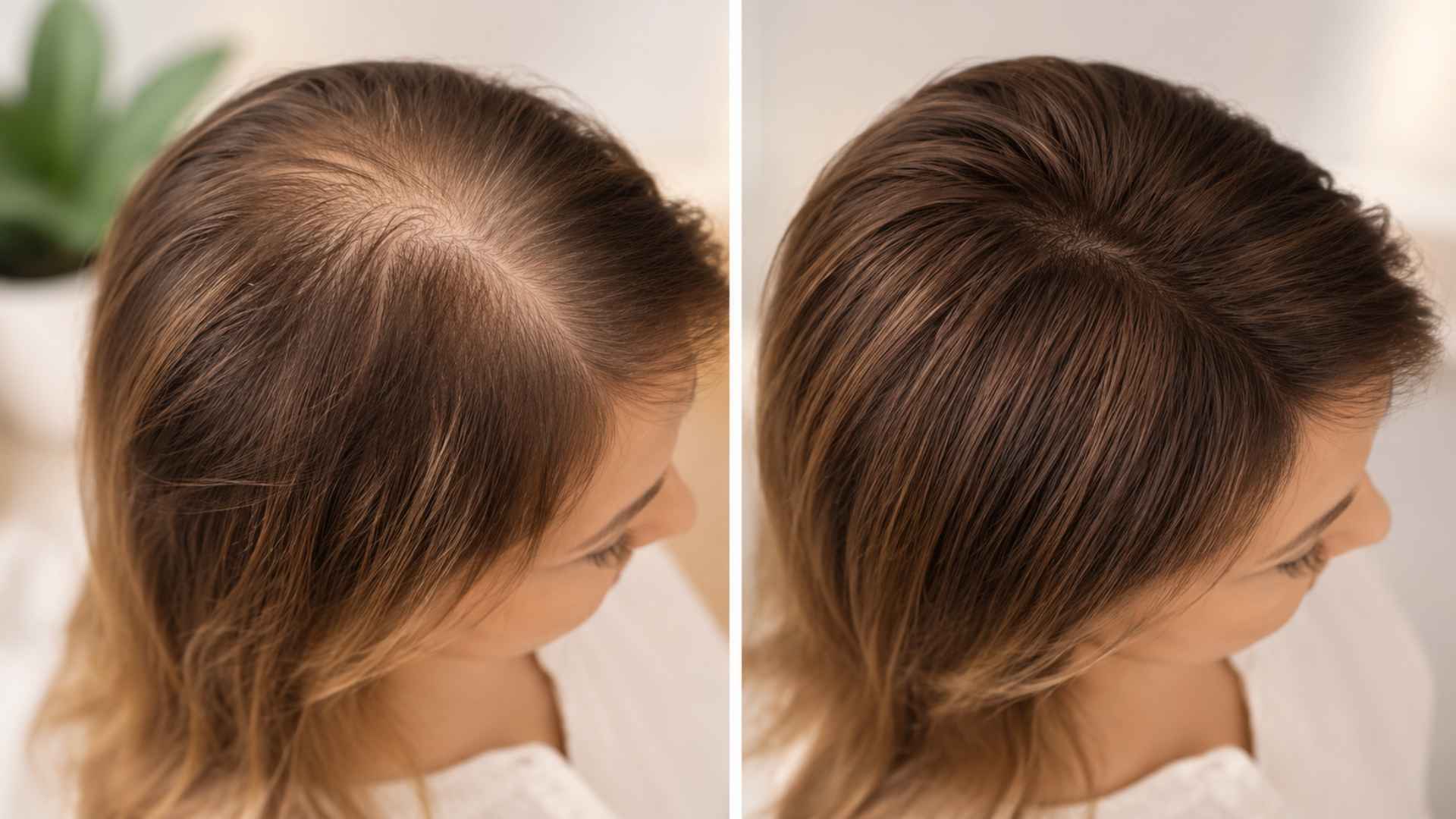

Thin hair is exhausting. It goes flat before lunch, loses all volume after one wash, and somehow, dry shampoo never quite saves the day.
Most advice out there either costs a fortune or just does not work. It is the same recycled tips that sound promising but deliver nothing.
Figuring out how to make hair thicker is not as complicated as it seems. The real fixes do not need a salon appointment or ten new products. They just need consistency and the right information.
Hair thickness comes down to two things. What each strand looks like right now, and what is happening at the scalp level underneath. Both respond well to simple daily changes.
What Causes Thin or Thinning Hair?
Thin hair doesn’t happen overnight. Before you fix the problem, you need to know what’s behind it. Here are the most common culprits.
- Genetics: If your parents had thin or fine hair, chances are you do too. It’s the most common cause and can’t be fully reversed, but it can be managed.
- Poor Nutrition: Low levels of iron, protein, biotin, or zinc directly weaken hair strands. What you eat shows up in your hair more than you think.
- Hormonal Changes: Pregnancy, postpartum recovery, thyroid issues, and menopause all disrupt the hair growth cycle, leading to noticeable thinning over time.
- Excess Heat & Chemical Damage: Frequent heat styling and chemical treatments break down the hair shaft, making strands thinner, weaker, and prone to snapping.
- Scalp Issues: Product buildup, dryness, dandruff, or irritation can affect scalp health and make hair look weaker or flatter.
- Stress: High stress can trigger telogen effluvium, a condition in which hair follicles prematurely enter the shedding phase, causing sudden, noticeable thinning.
Most of these causes are treatable. Once you identify what’s driving your thinning, the right fixes become much clearer and more effective.
How to Make Hair Look Thicker Right Now
You don’t need to wait months to see a difference. These quick, simple changes work immediately and require no special products or treatments.
1. Switch Your Hair Part
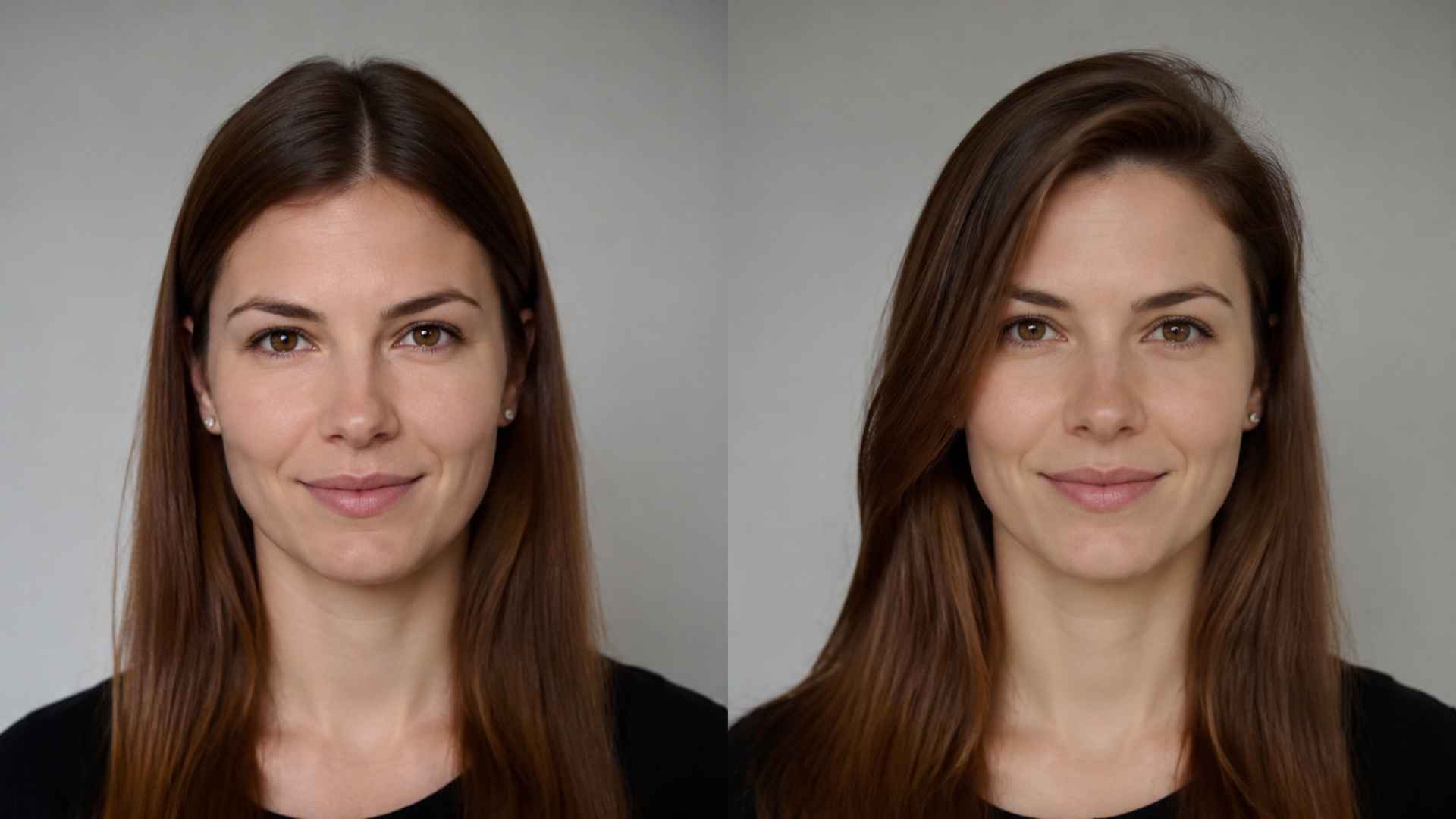
Your part has more power than you think. Moving from the center part to the side part instantly lifts the roots and creates natural volume at the crown.
The hair that was flat against your scalp now stands up, giving the appearance of much fuller, thicker hair without any product.
Note: Side parts work best for fine and straight hair types.
2. Use a Volumizing or Thickening Shampoo
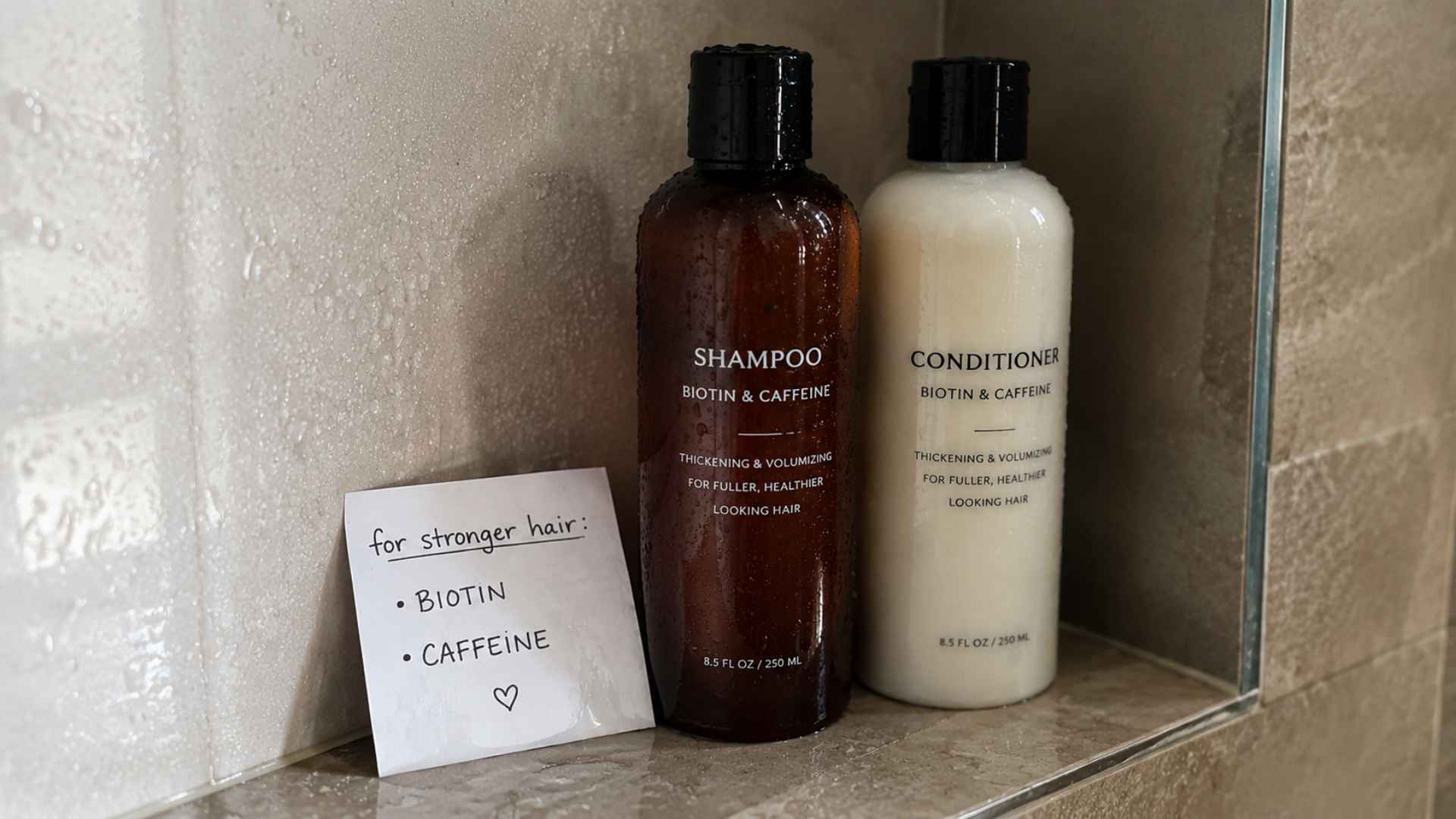
Look for hydrolyzed proteins, biotin, or caffeine on the label as these ingredients coat and plump each strand from the outside.
Avoid heavy silicones, as they build up over time and can make fine hair look flat and limp, even right after washing.
Note: Clarify your scalp once a week to prevent product buildup.
3. Try a Blunt Haircut
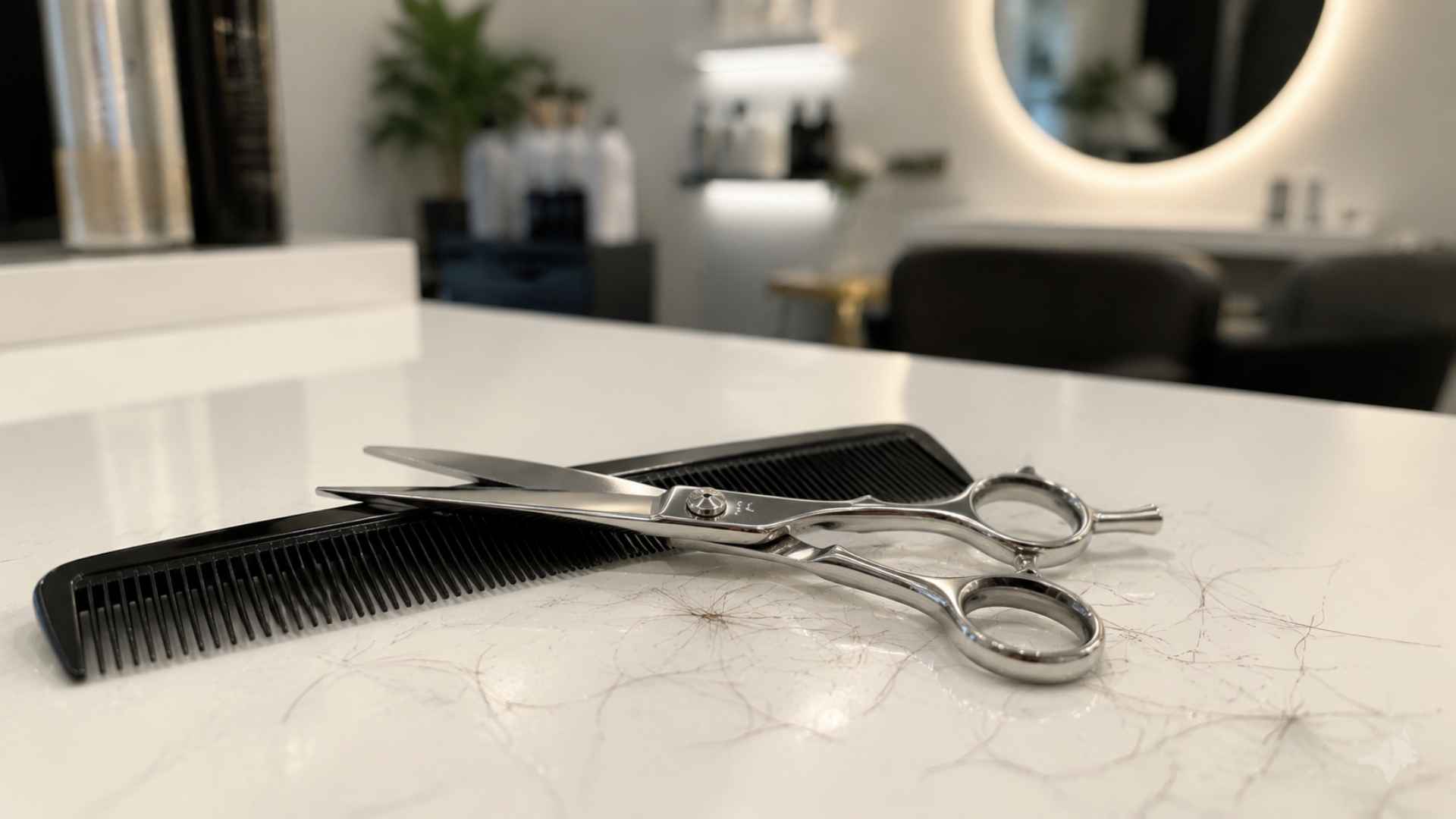
Blunt cuts keep all the hair at one length, making the ends look noticeably denser and fuller. A lob (long bob) sitting just below the collarbone is the easiest starting point. It works for almost every face shape and makes thin hair look intentional and styled.
Note: Ask your stylist specifically for a blunt, no-layer cut.
4. Blow Dry Upside Down

Flip your head upside down while drying to lift the roots right from the base. This works against gravity, creating a volume that lasts longer.
Finish with a round brush at the roots for extra grip. Let hair cool before flipping back up to lock in the lift.
Note: Always use a heat protectant before blow drying your hair.
5. Use Dry Shampoo at the Roots
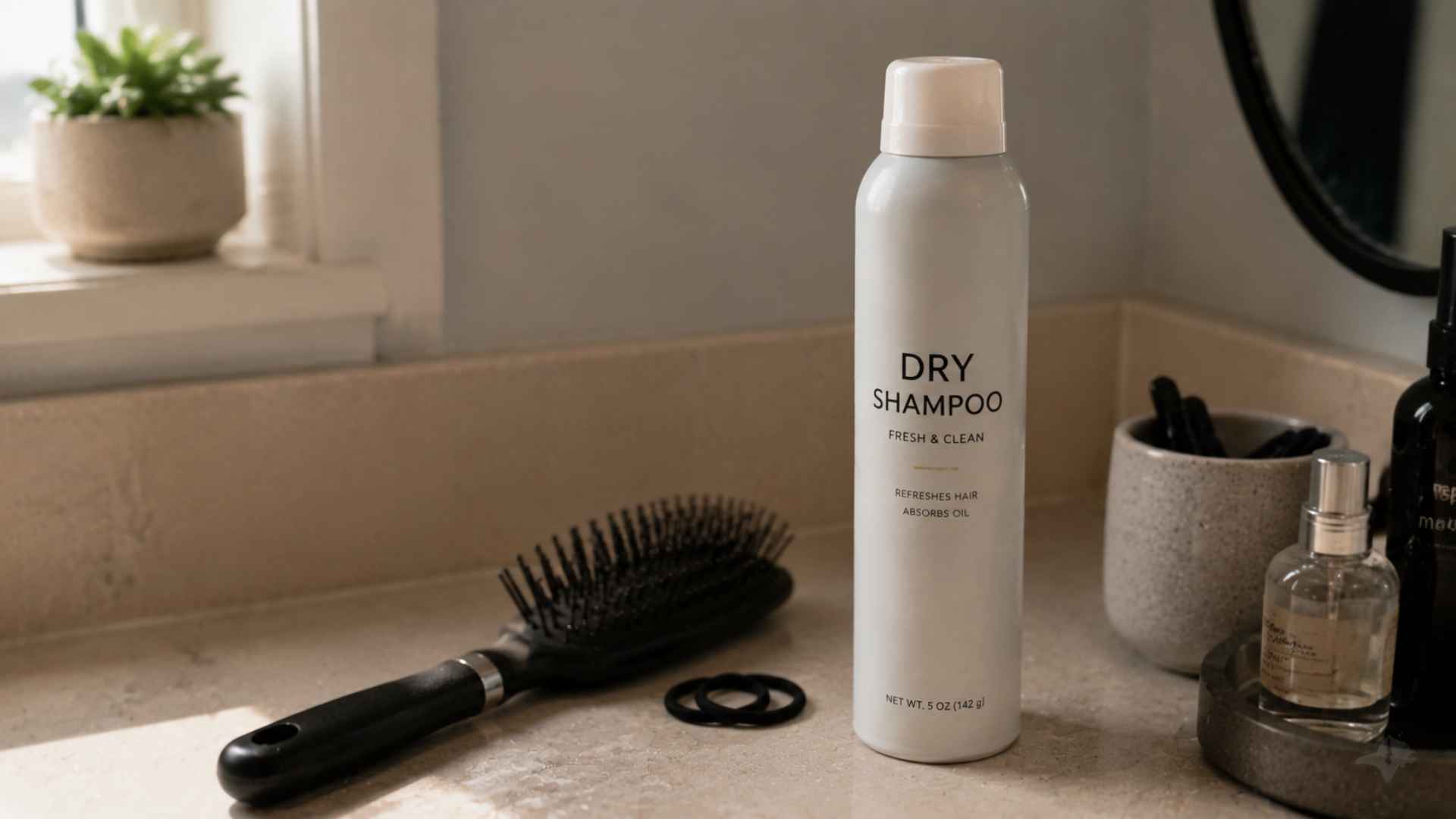
Dry shampoo adds texture and grip, giving fine hair something to hold onto between washes. It absorbs excess oil that makes hair look limp and flat.
Apply only at the roots and not the mid-lengths or ends to avoid a powdery, dull finish on the lengths.
Note: Spray dry shampoo the night before for best volume results.
How to Grow Thicker Hair Over Time (Proven Methods)
Quick fixes help, but real thickness comes from consistent habits. These methods work at the root level and deliver noticeable results over weeks and months.
6. Eat for Hair Thickness: The Right Nutrients
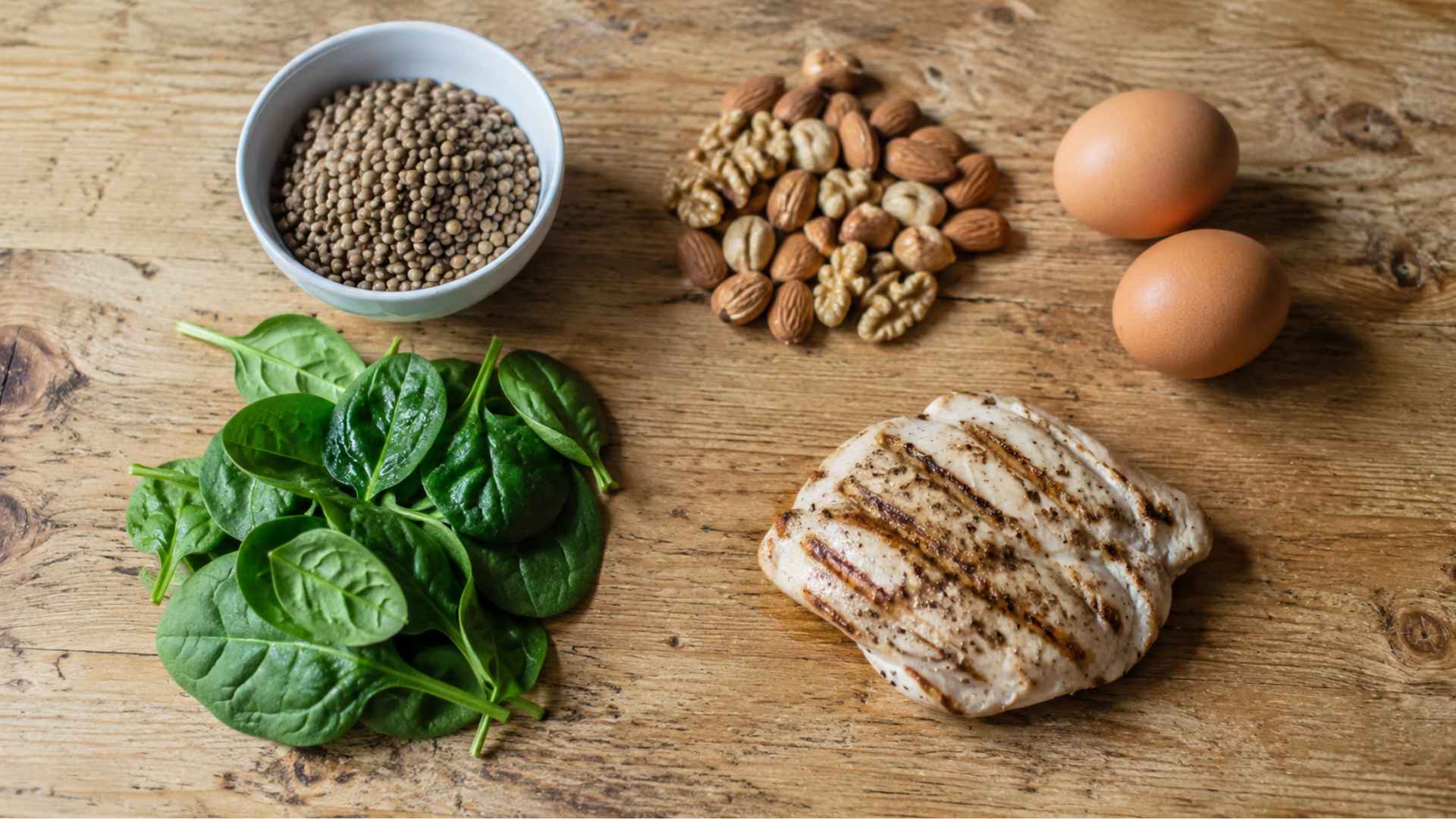
Hair is made of keratin, which is a protein. Without enough protein, iron, biotin, and zinc in your diet, hair becomes thin and sheds faster.
Eat eggs, lentils, chicken, spinach, and a handful of nuts daily. According to NIH research, nutrients such as phytochemicals and micronutrients play a direct role in follicle health and hair thickness.
Note: Start simple. One egg and a handful of nuts daily makes a real difference.
7. Massage Your Scalp Daily (4 to 5 Minutes)
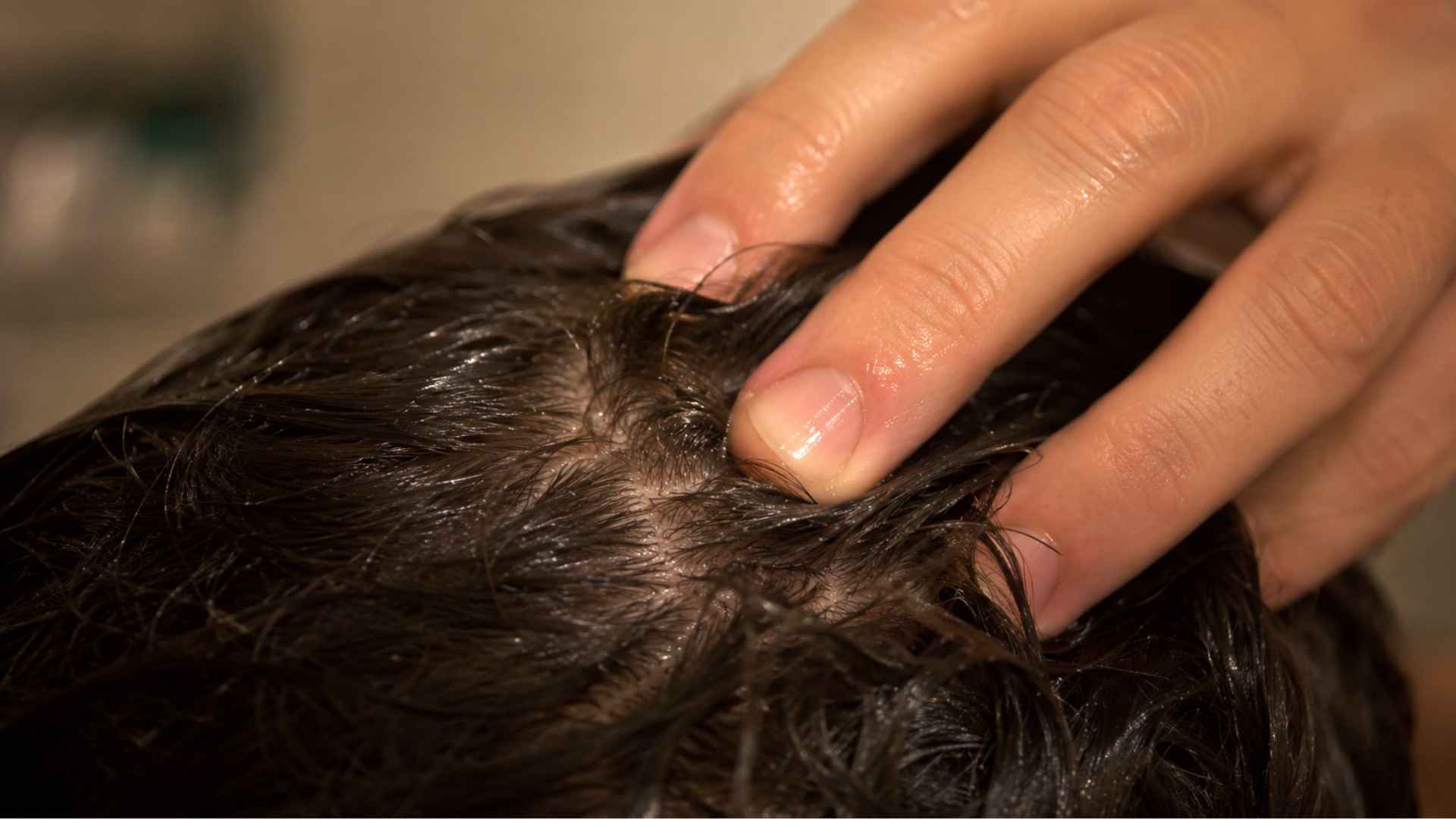
Scalp massage increases blood circulation to the hair follicles, delivering more oxygen and nutrients directly to the roots. Use your fingertips, not nails, in small circular motions.
Do it dry or with a light oil. A 2016 clinical study found that consistent daily scalp massage of just 4 minutes led to a measurable increase in hair thickness over 24 weeks.
A larger 2019 survey of nearly 1,900 participants further supported this, with 69% reporting hair loss stabilization or regrowth.
Note: Do it every morning before or after washing for best consistent results.
8. Try Rosemary Oil
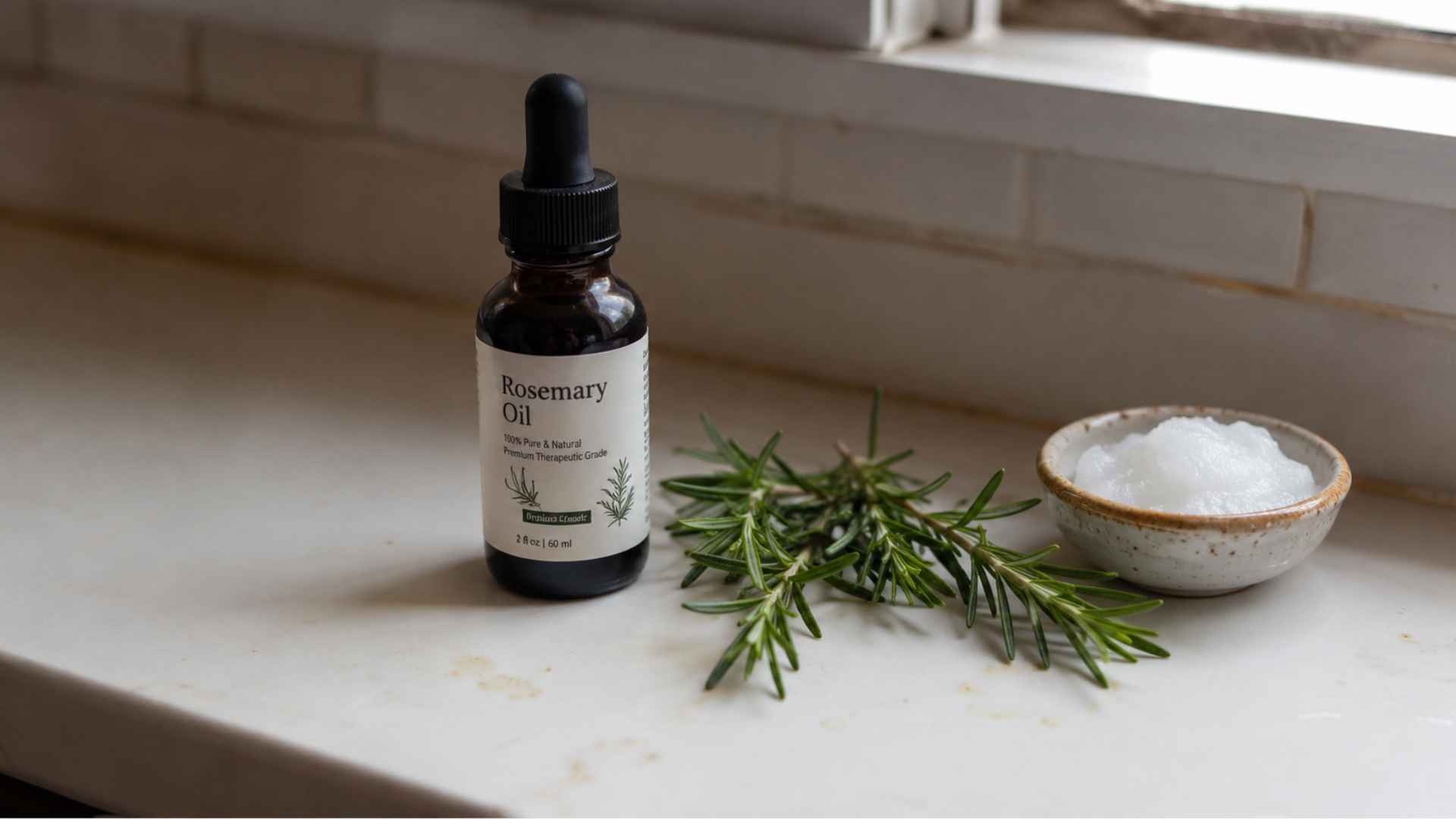
Rosemary oil has some early research behind it, including one trial comparing it with 2% minoxidil over 6 months, but more research is still needed.
Mix 2 to 3 drops with a carrier oil, such as coconut or jojoba oil, and apply directly to the scalp 2 to 3 times per week.
Note: Be consistent for at least 90 days before judging whether it is working.
9. Reduce Heat Styling
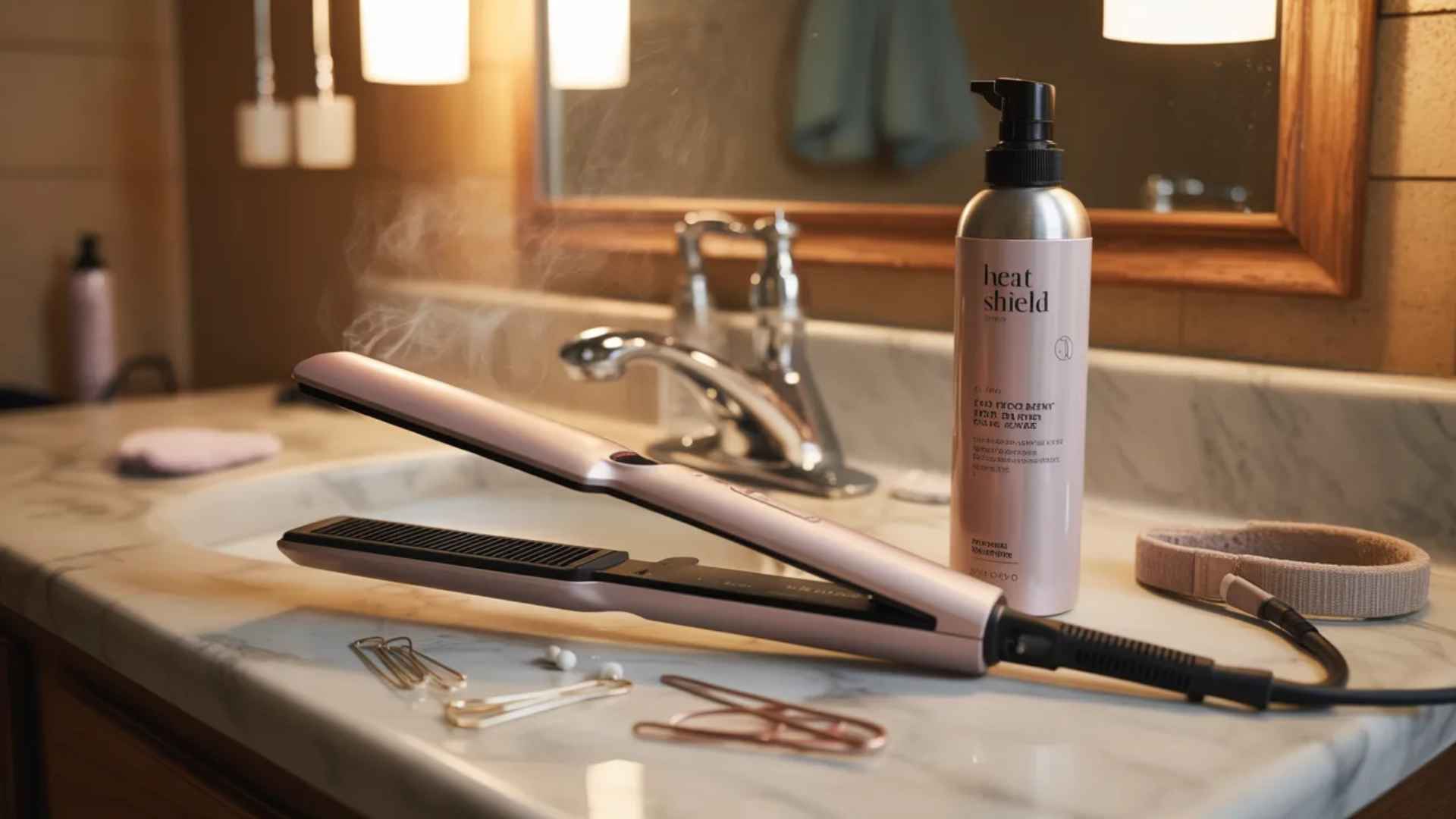
Heat damage to the outer cuticle layer of each strand makes hair look thinner, wispy, and rough over time. Limit heat styling to 2-3 times per week at most.
Always apply a heat protectant before using any hot tool. Lowering the temperature setting on your tools also significantly reduces long-term damage.
Note: Air drying even two extra days a week makes a visible difference over time.
10. Protect Hair at Night

Cotton pillowcases create friction against your hair while you sleep, causing breakage and frizz by morning. Switch to a silk or satin pillowcase to reduce that friction.
If switching pillowcases is not an option, wrap your hair in a loose braid or cover it with a silk scarf before sleeping.
Note: Silk pillowcases also reduce split ends and help retain hair moisture overnight.
11. Stop Overwashing Your Hair

Washing hair every single day strips away the natural oils that keep strands moisturized and protected. Without those oils, hair becomes dry and brittle, breaking more easily.
For most hair types, washing 2 to 3 times per week is ideal. If your scalp gets oily quickly, use dry shampoo in between wash days.
Note: Lukewarm water is gentler on the scalp compared to hot water while washing.
12. Consider Minoxidil or See a Dermatologist

For persistent thinning that does not respond to lifestyle changes, topical minoxidil is FDA-approved and widely recommended. It is available in 2% and 5% formulations; the 5% formulation is FDA-approved for both men and women and generally yields stronger results.
That said, severe or sudden hair loss needs a professional diagnosis before any treatment. If your hair has been thinning for over 6 months, a visit to a dermatologist is the right next step.
Learn more at the American Academy of Dermatology.
Note: Minoxidil requires consistent daily use. Stopping it reverses the results quickly.
Best Ingredients to Look for in Hair Thickening Products
Not every product on the shelf is worth your money. Knowing which ingredients actually work helps you make smarter choices without wasting time or budget.
| Ingredient | What It Does |
|---|---|
| Biotin | Supports hair strength in people with a confirmed deficiency. Limited benefit for those with normal biotin levels, fix the diet before supplementing |
| Caffeine | Stimulates follicles directly and slows DHT activity that causes thinning |
| Niacinamide | Improves scalp blood circulation and supports healthier follicle function |
| Keratin | Smooths the outer cuticle layer and adds immediate visible thickness to strands |
| Rosemary Extract | Stimulates new hair growth with research-backed results comparable to minoxidil |
| Hydrolyzed Protein | Fills microscopic gaps in the hair shaft and adds density to each strand |
Before buying any hair thickening product, flip it over and check the ingredient list. If none of these appear in the first five ingredients, it is worth reconsidering.
Common Hair Thickening Myths
A lot of hair advice on the internet is either outdated or simply not true. Here are four common myths worth dropping right now.
- Cutting hair makes it grow faster: Trims prevent split ends and breakage, but have zero effect on how fast or thick your hair actually grows.
- Brushing 100 strokes a day: This does more damage than good. Excess brushing causes friction, breakage, and frizz. Brush only when needed.
- Supplements alone won’t fix thinning hair: Biotin and hair vitamins only help if you have a deficiency. They will not override genetics, hormones, or an unhealthy scalp.
- Oiling your hair every day: Oil may cause buildup or irritation for some people, but the claim that it “clogs follicles” is not always true.
Fixing thin hair takes the right habits, not popular ones. Focus your time and money on what actually has evidence behind it and skip the rest.
Final Thoughts
Thicker hair doesn’t happen in a week. It builds slowly when you stop chasing shortcuts and start being consistent with the basics. Fix your washing routine.
Add a scalp massage. Eat better. Protect your hair at night. Small things, done regularly, add up faster than you think.
There is no single product that will do all of this for you. But the combination of everything covered in this blog? That actually moves the needle.
Pick two or three tips from this list and start today. You do not need to overhaul everything at once.
If this helped you, bookmark this page and come back to it. Already trying some of these? Drop a comment below and share what has been working for you.
Frequently Asked Questions
Can Thin Hair Actually Become Thick Again?
It depends on the cause. If your hair is thin due to breakage, poor nutrition, or scalp issues, yes, it can improve significantly. If genetics is the main reason, you can make it look and feel fuller, but you cannot fully change the natural thickness of each strand.
How Long Does It Take to See Results?
Most people notice a difference in 3 to 6 months with consistent effort. Hair grows roughly half an inch per month so patience is part of the process. Do not judge a routine by week two.
Does Biotin Actually Make Hair Thicker?
Only if your body is deficient in it. If your biotin levels are already normal, taking extra will not make a noticeable difference. Fix your diet first before reaching for supplements.












24 Responses
The top middle part of my hair is gone like a male. An African and 69years old this year. So I will try most of your advices.
Thank you very much and I hope to meet you very soon.
Your advice for how to thicken hair is very helpful I am suffering from thin hair and hair fall. I am trying some of your advice but where can I buy Biotin shampoo.
Santa, you can purchase Biotin shampoo at Sally’s
My hair has gotten .uch thinner in the past two or three years. I have had several iron transfusions in the past year. I take B12 shots monthly. I have pernicious anemia due to stomach stapling in 1974. My mom had very thick hair. My father had male pattern baldness. I am 70 years old in October. I take Biotin by mouth. Is there anything else I should try?
Thank you for the honest answers for hair growth, and hair care very much appreciated. Thank you again.
How do i fix very frizzy short hair. I have tried so many hair products and nothing works
I have very thin hair and getting thinner all the time what shampoo do you recommend that helps your hair to grow better
Trying 2 buy
Hi. My hair to much fooldown and yo much week hair
Where can I buy the biotin shampoo please?
A hair glue was used in top of my head and I lost my hair,that was a year ago. It is now starting to grow back.I used all oils and became depressed and stop eating like I should and now I realize that did not help. So now I feel better. Do you have any help or ideas to telli me to help me continue to promote hair growth.
Very good information
What about ageing men
Disappointing that there was no mention of DHT blockers in this article.
This is a very sensible and well-researched article. I started making all these changes about a year ago. TL;DR: they worked.
My blonde hair began drastically darkening and thinning in my mid-40s, starting with perimenopause and stress. GLP-1 when I got 60 was the coup des grace. I began getting bald patches.
I started trying to fix it last summer beginning with scalp massage (because it felt so nice) and reducing hair washing to no more than twice a week (because watching it go down the drain was so depressing).
I got a twofer of those cheap rubber scalp massage things on Amazon, one for my gym bag and one on my dresser. I thought they might tear out my hair, but not at all. My scalp loves it (you can also save time and make it easier by using one when washing your hair).
The two real game changers, I believe, were
1. Adding more protein to my diet (I needed to do it anyway; I was losing a lot of muscle along with GLP-1 weight), and
2. In the last three months, adding Korean scalp serum to my daily massage.
I’ve tried a few including spray versions, roller balls and the ones that have a kind of comb thingy (my favorite). But they all include rosemary, niacinamide, biotin, caffeine, various plant essences and sometimes even retinol. None have made my hair greasy.
When I’m done with my little three or four-minute serum massage, my scalp feels so incredible, and my hair is so full and silky!
Some of these serums are a better value than others, but none are especially costly. Just go on Amazon and look for Korean scalp spray or serum.
In short, using your tips I’ve seen gradual improvement with my hair over the past year, but the serums really kick-started the party. In the last couple weeks, suddenly my hair is getting compliments all over the place.
My hair stylist was the first to notice the bald patches were gone.
And now at 63, I can honestly say my hair is almost as thick as it was in my early 40s before menopause.
So your advice is spot-on. Patience. Consistency. Wash gently, rinse well, condition, air dry if you can, massage every morning with scalp serum, repeat.
Trust the process. It works.
I am 53 year old my hair are so weak thin every effort but not result .
Mildred
This article is amazing and packed full with information that anyone can use.
I have very thin, fine hair. Due to some health issues, I lost about 60% of my hair quite a few years ago.I’ve tried nearly everything on the list in this article and nothing has made it grow back. I plan to try a Korean hair growth serum next. If that doesn’t work then I’ll try rosemary extract. I would highly recommend Nisim shampoo. It stops it from falling out.
Thanks it helps .me think about my diet and the medication that I’m taking
Good advice
My hair started thinning I take blood pressure meds antidepressants I am a diabetic my used to be so thick you put a comb in it it would stay all day would not move thick hair coarse
Topforehead hair is gone my fore head is increased 4.5 i ches and hair bacame thin. My age is 60 years.Suggest some thing for me.