

Texas keeps pulling people in.
Whether the move is driven by a job at a Houston energy firm, a tech role in Austin, or a corporate transfer into one of the Dallas-Fort Worth headquarters campuses, the question of what to do with your car comes up fast.
Driving 1,500 miles across the country on a squeezed moving timeline is rarely the right call.
That is where Texas car shipping earns its keep, especially if you’re flying ahead of the truck carrying your furniture.
Car shipping usually wins on time, fuel, and vehicle wear.
Driving vs. Shipping: The Honest Math
A drive from Chicago to Austin runs roughly 1,150 miles.
New York to Houston is closer to 1,600.
Add fuel, two or three nights in hotels, meals, and the mileage you put on a car you might want to sell or trade later, and the gap between driving and shipping narrows quickly.
Most people who run the numbers honestly land on shipping when the trip clears about 700 miles.
Anything shorter and the cost difference starts favoring the drive.
The other variable people forget is time.
A cross-country drive takes three to five working days.
If you’re starting a job on Monday, that’s a real problem.
What Changes When the Destination Is Texas
Texas is one of the most active corridors in the country for vehicle transport, which is good news for both pricing and availability.
Carriers run constantly between California, the Midwest, and the Northeast into the major Texas metros.
That said, each city has its quirks.
Austin drivers prefer pickup and drop-off at large parking lots near I-35 or MoPac rather than inside the central core.
South Congress and the downtown grid aren’t built for 75-foot transporters.
Dallas-Fort Worth is probably the easiest delivery market in the state.
DFW sits at the crossroads of I-35, I-20, I-30, and I-45, so carrier capacity is rarely an issue.
Houston is harder because the size of the metro works against you.
Delivery from a yard near the Sam Houston Tollway out to The Woodlands or Sugar Land can add a day, and summer storms can shut down schedules without much warning.
Open vs. Enclosed Transport
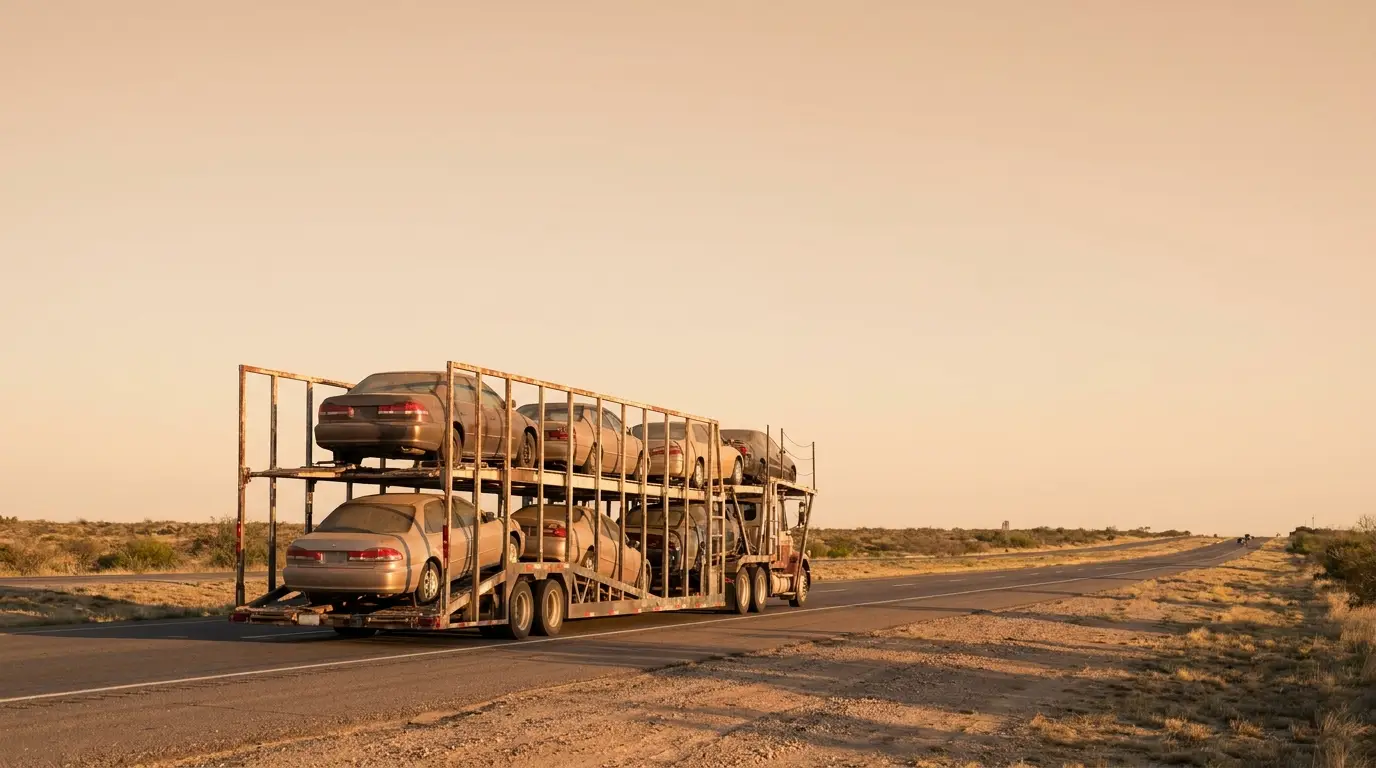
Open transport is what most people see on the interstate, with two-deck carriers hauling eight to ten cars at a time.
It’s cheaper, faster to book, and fine for daily drivers.
Enclosed transport runs roughly 40 to 60 percent more but protects against road debris, weather, and prying eyes.
If you’re shipping a leased BMW or a Tesla Model 3, open is usually the sensible choice.
For a classic Mustang or a Porsche 911, enclosed is the obvious call.
What Actually Drives the Quote
A few factors move the price more than anything else.
Distance and route popularity matter most: California to Texas is heavily trafficked, so per-mile rates are lower.
North Dakota to Houston, much less so.
Vehicle size and condition are the next big lever, since a pickup truck or SUV takes up more deck space than a sedan, and inoperable cars need a winch, which carriers charge extra for.
Season plays a bigger role than people expect.
January through March is the snowbird rush heading north, which loosens up southbound capacity.
Summer is the family-relocation peak, and pricing climbs with it.
Pickup flexibility is the last one: a two-day window is cheaper than “must pick up Tuesday morning.”
Most moves into Texas from the Midwest cost somewhere between $900 and $1,400 for a standard sedan on open transport.
Coast-to-coast runs closer to $1,200 to $1,800.
Timing the Pickup With Your Move
Order early, at least two weeks before you need the car gone.
Carriers don’t operate on rigid schedules.
They build loads as orders come in, and a truck doesn’t dispatch until it’s reasonably full.
Book three days out and you’re paying a premium to jump the line, with no real guarantee.
For corporate relocations, most employee mobility programs allow seven to ten business days door-to-door from anywhere in the lower 48.
Build that into the household goods timing so your car doesn’t arrive a week before you do, or worse, a week after your first day at the new office.
Choosing a Carrier Without Getting Burned
The car transport industry has a broker-and-carrier structure that confuses a lot of first-time shippers.
Brokers don’t own trucks.
They post your job to a load board and match you with a carrier.
Most legitimate moves go through brokers, and that’s fine, but verify two things before you put down a deposit.
Check for active MC and DOT numbers, searchable on the FMCSA SAFER database.
Ask for a real cargo insurance certificate, not just liability coverage.
National brokers such as RoadRunner, Montway, and Sherpa all post their authority publicly, and any reputable operator should do the same.
Ask for the assigned carrier’s name as soon as it’s matched.
Reviews of the broker tell you about communication.
Reviews of the carrier tell you about the truck actually showing up at your driveway.
Working with a provider that runs the I-10, I-35, and I-20 corridors regularly tends to mean fewer surprises on delivery day.
Inspection and Insurance at Both Ends
When the driver loads your car, you’ll sign a Bill of Lading that records existing damage.
Walk around with the driver, take photos in daylight, and don’t sign until both of you agree on what’s documented.
Do the same at delivery.
Damage claims that aren’t noted at drop-off are almost impossible to win after the truck pulls away.
Your personal auto policy does not cover the vehicle while it’s on the truck.
The carrier’s cargo insurance does.
Ask for the limits in writing.
$100,000 to $250,000 per vehicle is standard, and anything less is a flag.
A Few Texas-Specific Reminders
Heat matters in Texas more than people from cooler states realize.
A car parked on a transport deck in August can sit in 110-degree air for hours.
Don’t leave anything inside that melts, swells, or off-gasses.
Inspection and registration are on a tight clock.
Texas requires a vehicle inspection and registration transfer within 30 days of establishing residency.
Get it on the calendar before your temporary tags expire.
Toll tags are not universally interchangeable across the state.
TxTag, EZ TAG (Houston), and TollTag (Dallas/NTTA) each have their own coverage rules.
If you’ll be crossing between metros regularly, pick the one that matches your home base first and add the others as needed.
Final Thought
The move itself is enough work.
Handing the car off to a transporter that knows the lanes into Austin, Dallas, and Houston removes one moving piece from an already complicated week.
That leaves you free to focus on the apartment walkthrough, the kids’ school enrollment, or the first morning at the new office.