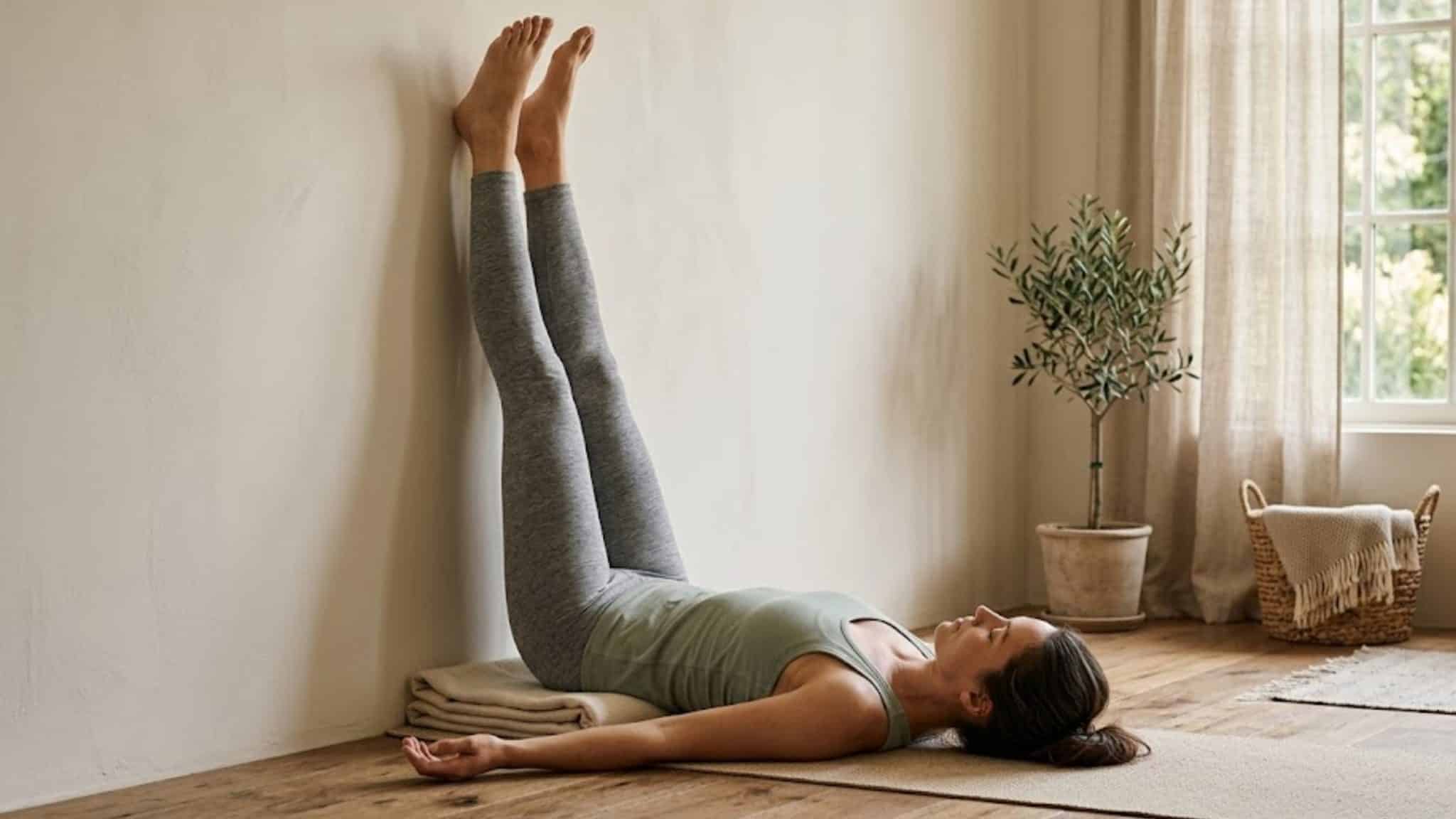

After a long day of sitting, standing, or rushing from one task to another, even your legs can start to feel tired and heavy. That is one reason many people turn to the legs up the wall yoga pose for a few quiet minutes of rest.
The pose is simple, beginner-friendly, and does not require special equipment or advanced yoga skills. Many of the leg-up-the-wall benefits are linked to relaxation, gentle recovery, and easing tension in the body.
From calming the mind to resting sore legs, this easy pose has become a favorite part of many wellness routines.
What is the Legs Up the Wall Yoga Pose?
The legs up the wall yoga pose, also called Viparita Karani, is a gentle position where you lie on your back with your legs resting vertically against a wall.
In traditional yoga, it is known as a restorative pose because it encourages relaxation and stillness. The pose focuses more on rest than intense stretching or movement.
Some people practice the full yoga version with props and controlled breathing, while others use it as an easy wall stretch after a long day.
Most people hold the pose for about 5 to 15 minutes, depending on comfort level and experience.
Legs Up the Wall Benefits that Make This Pose Worth Trying
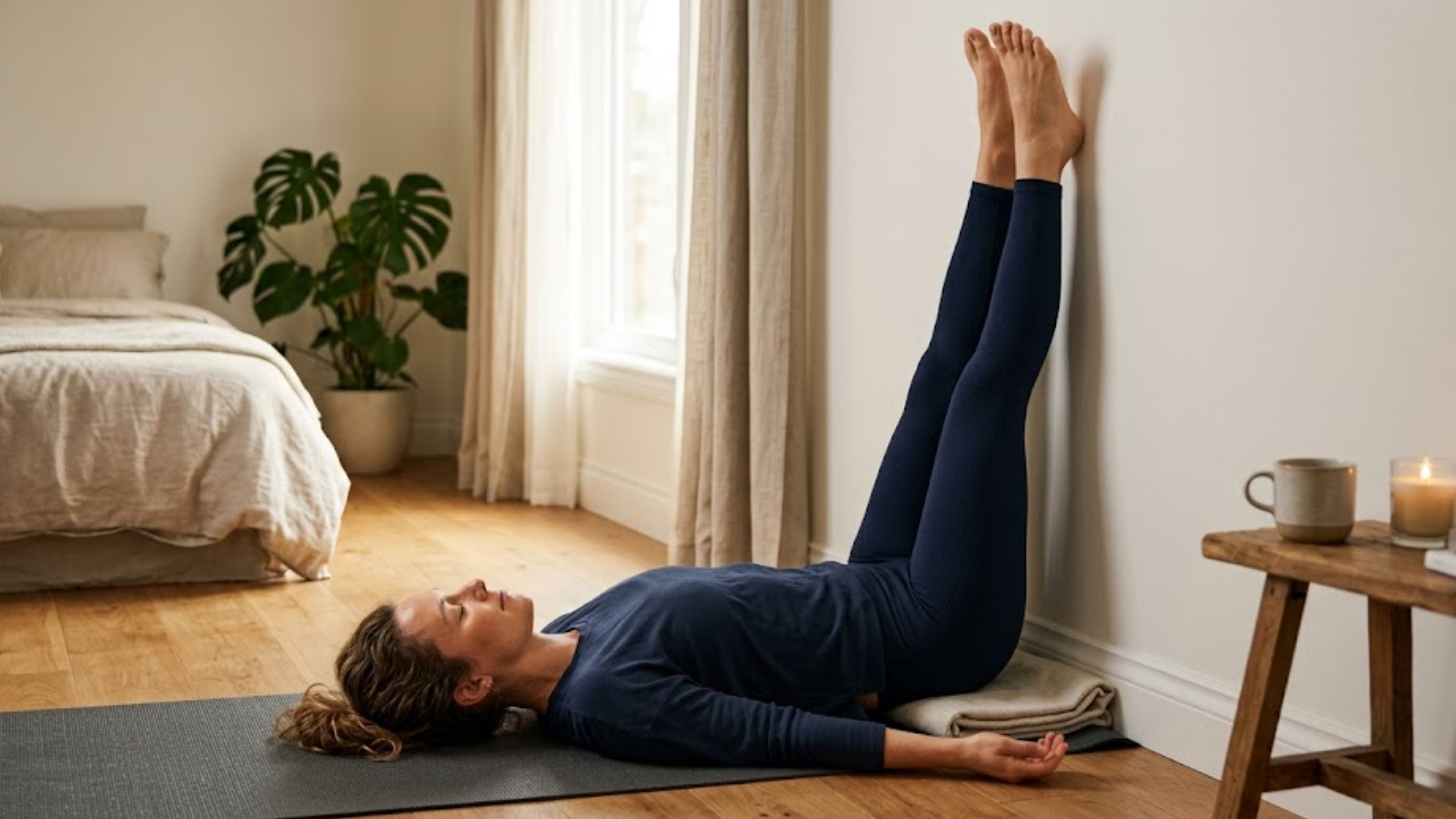
The legs up the wall yoga pose is popular because it is simple, relaxing, and easy for most people to practice at home. Even a few minutes in this position can help the body feel calmer and more rested.
1. Helps Relieve Tired and Swollen Legs
Keeping your legs raised against a wall may help reduce the heavy, tired feeling that often comes after standing or sitting for long periods.
Elevating the legs can support healthy blood flow and reduce pressure in the lower body. Many people use this pose after work, long walks, or travel because it gives the legs a chance to rest without much effort.
2. Encourages Relaxation and Stress Relief
The quiet and still nature of this pose can help the body relax after a stressful day.
Slow breathing and a comfortable position may lower physical tension and help the mind feel calmer.
Many restorative yoga poses focus on rest, and legs up the wall is often used to create a peaceful feeling during short breaks or evening routines.
3. May Improve Circulation
Raising the legs above heart level may help blood move more easily from the lower body back toward the heart. This can support normal circulation, especially after long periods of sitting or standing.
While the pose is not meant to treat circulation problems, some people notice their legs feel lighter and less stiff after holding the position for several minutes.
4. Helps Calm the Nervous System
The legs up the wall yoga pose is often linked with relaxation because it encourages slow breathing and stillness. These calming effects may help activate the parasympathetic nervous system, also known as the “rest and digest” system.
As the body relaxes, heart rate and muscle tension may also decrease, helping people feel more settled both physically and mentally.
5. Can Ease Lower Back Tension
This pose may gently reduce pressure on the lower back, especially after sitting for many hours during the day.
Lying flat on the floor with the legs supported can help relax the back muscles. Some people place a folded blanket or pillow under the hips for added comfort.
Keeping the body relaxed is more important than forcing a perfect position.
6. Supports Post-Workout Recovery
After exercise, many people use this pose to rest tired muscles and gradually slow the body down. Keeping the legs elevated may help reduce feelings of heaviness in the legs after running, walking, or strength training.
The pose also encourages deep breathing, which can help the body shift from active movement into a calmer recovery state.
7. Creates a Screen-Free Mental Break
Many people use the legs up the wall yoga pose as a short break away from phones, computers, and daily distractions.
Spending a few quiet minutes in this position may help the mind slow down and feel less overwhelmed. A calm room and reduced screen time can make the pose feel even more relaxing.
8. Requires No Equipment or Yoga Experience
One reason this pose is so popular is that it can be practiced almost anywhere with an empty wall and a little floor space. You do not need yoga equipment, gym machines, or previous yoga experience to try it.
Many people practice the pose at home after work, before bed, or during short breaks. Its simple setup makes it easy to include in daily routines.
9. Gentle Option for Beginners and Older Adults
The legs up the wall yoga pose is often recommended for beginners and older adults because it is low-impact and easy to adjust. The pose does not require strong balance, fast movement, or advanced flexibility.
Many people find it more comfortable than active stretching or standing yoga poses.
Small supports like pillows or folded blankets can also make the position feel easier on the body.
Did You Know?The legs up the wall yoga pose may help activate the parasympathetic nervous system, which is the part of the body linked with rest and relaxation. When your legs are raised, and your body stays still, muscles can relax, and breathing often slows. Many people also find the gentle leg elevation soothing after standing or sitting for long hours. The quiet stillness of the pose creates a short mental pause, helping the mind slow down for a few minutes without distractions. |
How to Do Legs Up the Wall Correctly without Straining Your Body?
The legs up the wall yoga pose should feel calm and comfortable, not painful or difficult. You do not need perfect flexibility to practice it correctly. Small adjustments can make the pose easier on your back, hips, and legs.
- Sit sideways next to a wall with one hip lightly touching it.
- Slowly lower your back to the floor as you swing your legs up against the wall.
- Keep your legs relaxed and slightly bent if your hamstrings feel tight.
- Rest your arms comfortably at your sides with your shoulders relaxed.
- Take slow, steady breaths and avoid lifting or tightening your neck.
- Stay in the pose for 5 to 15 minutes, then bend your knees before slowly getting up.
If your lower back feels uncomfortable, place a folded blanket or small pillow under your hips for support. The goal is to let the body relax instead of forcing a deep stretch.
Best Times to Practice Legs Up the Wall Pose
The legs up the wall yoga pose can fit easily into different parts of the day. Many people use it when their body feels tired, tense, or mentally drained. Practicing at the right time may help you feel more relaxed and comfortable.
| SITUATION | WHY IT HELPS |
|---|---|
| Before Bed | Encourages relaxation and slower breathing before sleep |
| After workouts | Helps tired legs rest after physical activity |
| After Standing All Day | May reduce heaviness and pressure in the legs |
| During Stressful Afternoons | Creates a short mental break and calming effect |
| After Travel or Long Flights | Helps relax stiff legs after long periods of sitting |
Even 5 to 10 minutes in the pose can feel refreshing after a busy day spent working, traveling, or sitting for long hours. The key is to stay comfortable, breathe slowly, and let the body relax naturally without forcing the position.
Who Should Try or Avoid Legs Up the Wall?
The legs up the wall yoga pose may work well for office workers, runners, frequent travelers, seniors, and people new to yoga.
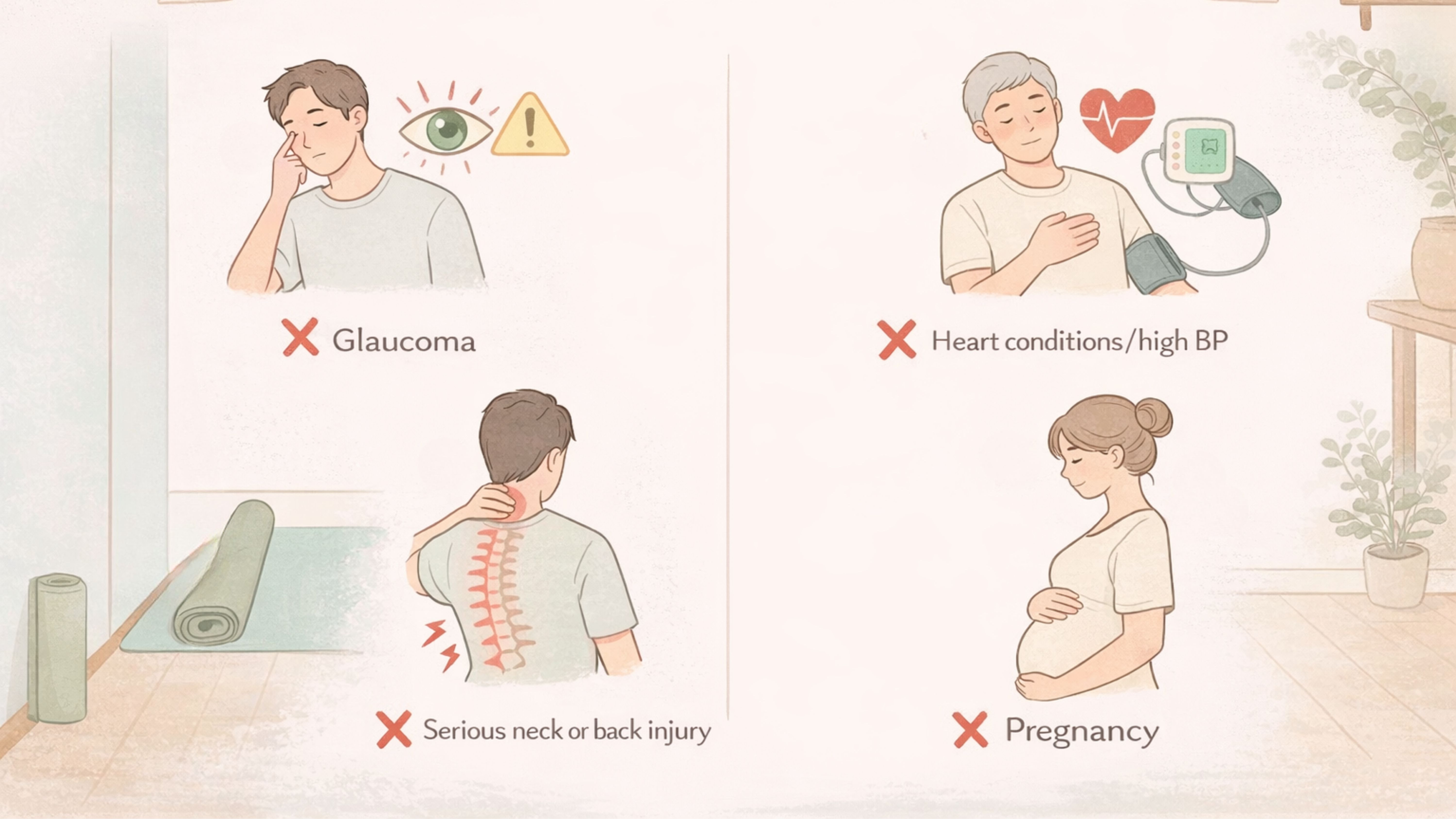
Many use it to relax tired legs, ease tension, and rest after long hours of sitting or standing. Some pregnant women also practice the pose, but it is safer to ask a doctor first, especially later in pregnancy.
Even though the pose is gentle, it is not right for everyone, and evidence suggests people with certain health conditions should exercise caution.
People with glaucoma, serious neck or back injuries, certain heart conditions, or uncontrolled high blood pressure should be careful.
If you feel pain, dizziness, or numbness during the pose, stop immediately and rest comfortably.
Common Mistakes that Can Ruin the Benefits
The legs up the wall yoga pose should feel restful and comfortable. Small mistakes can make the pose less relaxing and may cause unnecessary strain on the body.
- Sitting Too Close to the Wall → Move your hips slightly away from the wall if your lower back feels tight or uncomfortable.
- Holding Tension in the Shoulders → Relax your shoulders and let your arms rest naturally at your sides.
- Forcing Hamstring Flexibility → Keep a gentle bend in your knees instead of trying to keep the legs perfectly straight.
- Staying Too Long When Uncomfortable → Leave the pose if you feel numbness, pain, or pressure in your back or neck.
- Looking at Your Phone During the Pose → Put screens away and focus on slow breathing to help the body relax fully.
The pose works best when your body feels supported, relaxed, and free from unnecessary strain. Simple adjustments can make the experience more comfortable and help you stay in the pose longer without discomfort.
Final Thoughts
The legs up the wall yoga pose is a simple way to slow down and give the body a chance to rest. Many of the legs up the wall benefits are linked to relaxation, gentle recovery, reduced leg fatigue, and a calmer state of mind.
Since the pose is beginner-friendly and easy to practice at home, many people add it to their daily routine after work, exercise, or long hours of sitting.
Small adjustments can also make the pose more comfortable and relaxing over time. Have you tried this pose before? Share your experience or favorite relaxation tips in the comments below.
Frequently Asked Questions
Can You Do Legs Up the Wall Every Day?
Yes, many people practice the pose daily because it is gentle and low-impact. Short sessions of 5 to 15 minutes are usually enough for relaxation and comfort.
Is Legs Up the Wall Better Than Lying Flat?
Some people find the pose more relaxing than lying flat because the raised legs may reduce feelings of heaviness and pressure in the lower body. It also encourages stillness and slow breathing.
What Should You Wear During Legs Up the Wall Pose?
Wear loose and comfortable clothing that allows easy movement and relaxed breathing. Tight waistbands or stiff fabrics may make the pose feel less comfortable over time.