



Was the monarch behind the King James Bible secretly in love with the men of his court?
This centuries-old question continues to intrigue scholars and fuel debate around his close relationships with male courtiers.
James shared deep emotional bonds with companions like George Villiers and Robert Carr, sparking rumors that support the ongoing King James gay discussion in historical circles.
In this post, we analyse the evidence, court gossip, and context that place King James andthe history of homosexuality.
Historical Background of King James
To better understand the debates around King James’s personal life, it helps to look at key facts from his reign and the culture of his time:
- Born in 1566 in Scotland, James became King of Scotland as a child.
- In 1603, he inherited the English throne, becoming King James I and uniting England and Scotland.
- He strongly supported the Divine Right of Kings, believing his authority came directly from God.
- James married Anne of Denmark in 1589. They had eight children, but their marriage had both affectionate moments and periods of distance.
Contemporaries and Court Gossip
During his reign, King James I faced many rumors about his personal life, especially from political enemies.
One of the loudest critics was Anthony Weldon, who had been removed from court and held a grudge. His writings, made years after James’s death, were biased and based on gossip.
Still, some at court and foreign visitors noticed James showing strong affection to male favorites like George Villiers. He kissed them in public and used loving terms in letters.
Historians warn, however, that these gestures may reflect close friendships, not proof of a sexual relationship.
Primary Evidence
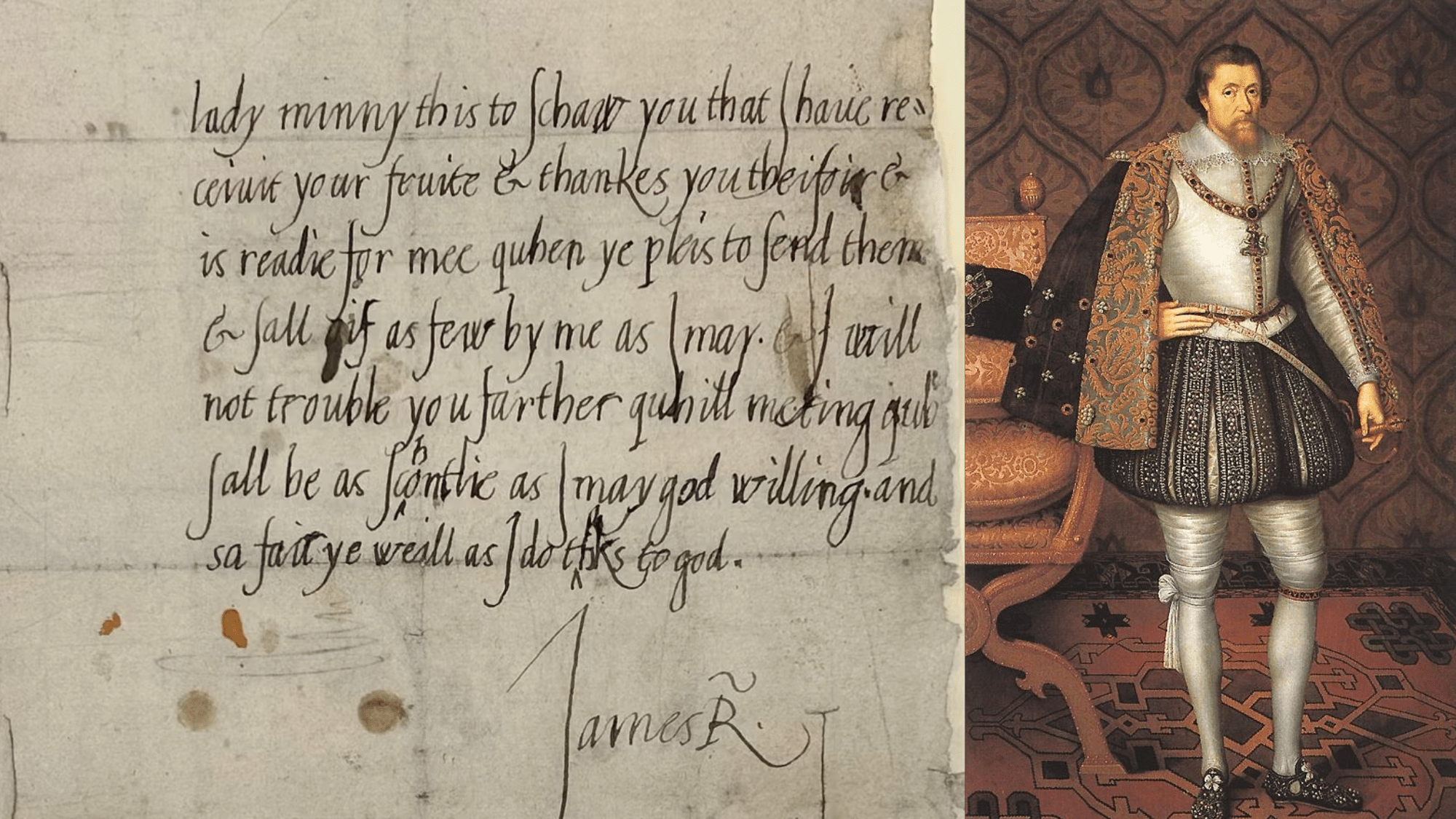
King James wrote deeply affectionate letters to his male favorites, especially George Villiers. He used phrases like my sweet child, wife,dear dad and husband.
In one letter, he confessed, I had rather live banished… with you than live a sorrowful widow’s life without you, showing strong emotional attachment.
James also displayed affection publicly, hugging, kissing, and praising his favorites. He once said, Christ had his John, and I have my George.
Robert Carr was seen kissing and fondling him and was granted roles like Gentleman of the Bedchamber, often involving overnight closeness.
Many historians believe these actions went beyond the typical male friendship of the time.
The Hypocrisy Debate
This clash between James’s public condemnations and private behavior has sparked ongoing debate among historians and scholars.
- King James I harshly condemned sodomy in his book Basilikon Doron, calling it one of the worst crimes a king must never pardon.
- Despite this, he showed open affection toward male favorites, leading to court gossip and accusations of same-sex relationships.
- Renaissance laws defined sodomy narrowly, usually as anal intercourse, so other intimate acts may not have been seen as sinful by James himself.
- Some historians say James may have believed he was above the rules, while others call him a hypocrite.
- This contradiction highlights how historical views of intimacy differ from today’s, making it challenging to define such relationships by modern standards.
Modern Historians’ Views on James’s Sexuality
Earlier historians often avoided discussing King James I’s possible same-sex relationships, calling them political alliances or deep friendships.
Since the 1980s, many scholars have reassessed the evidence, especially his letters and emotional attachment to his male companions at court.
Today, most experts believe James was likely gay or bisexual by modern standards, though some still urge caution due to the different norms of the 1600s.
Here’s what key historians say:
| Historian | View on James’s Sexuality |
|---|---|
| John Matusiak | Called James “homosexual,” but cautious on details. |
| Keith Coleman | Believed his male bonds were sexual. |
| Steven Veerapen | “Bisexual with a strong preference for men.” |
| Gareth Russell | James and Villiers were “passionate lovers.” |
| Benjamin Woolley | Letters too intimate to be just friendship. |
| David Bergeron | Described relationships as “erotic” and loving. |
While some caution against applying modern labels, the overall scholarly view is that James’s relationships went well beyond friendship.
Why It Matters: Gender, Power & Politics
King James I’s close relationships with young male favorites, especially his favored young courtiers, who held remarkable sway over court affairs. These weren’t just friendships; they influenced who got power, money, and important roles in government.
- James gave his favorites high-ranking titles and lavish rewards, like when Villiers became Duke of Buckingham.
- These men gained enough influence to make political decisions, choose ministers, and shape royal policies.
- Nobles who felt excluded became angry, leading to court rivalries and divisions.
James made his personal favoritism visible, which shaped how power and influence flowed at court.
But this came at a cost. James’s deep attachment to his favorites often led to biased decisions, loss of authority, and criticism of his leadership.
His personal feelings sometimes mattered more than what was best for the kingdom.
In the end, his private relationships influenced public politics, showing how gender, emotion, and power were deeply connected in his reign.
Final Thoughts
King James I’s personal life continues to interest because it touches on power, love, secrecy, and identity, all timeless themes.
Seen as a ruler shaped by his time or as someone who quietly defied social norms, his story reminds us how complex historical figures can be.
As readers, it’s important to approach the past with curiosity and empathy, not judgment. Our understanding of sexuality has changed, but human emotions remain deeply relatable.
Studying James helps us see how private lives can quietly shape the course of history.

















One Response
He may have been attracted to men, but obviously did not interact sexually. That is strength. That is obedience to the Word.