


There is something almost magical about a perfectly styled ear. You have probably scrolled past someone on Instagram and stopped mid-thumb just to stare at their ear full of earrings, wondering how they pulled it all together so effortlessly.
It looks intentional, artistic, even a little luxurious. But here is the thing: ear stacking is not reserved for fashion insiders or people with a drawer full of fine jewelry. It is a skill anyone can learn, and once you understand the basics, it becomes one of the most fun and personal ways to express your style.
This guide will walk you through everything you need to know, from choosing the right pieces to building combinations that feel balanced, not chaotic.
What Is Ear Stacking and Why Is Everyone Doing It?
Ear stacking, sometimes called an “earscape,” is simply the art of wearing multiple earrings at the same time across different piercings. Instead of wearing one pair and calling it a day, you mix and match hoops, studs, huggies, and cuffs to create a layered, curated look.
The trend has been growing for years and shows no signs of slowing down. Why? Because it is deeply personal. Your ear stack is like a tiny gallery of your taste. No two people build theirs the same way, which is exactly what makes it so appealing.
Beyond aesthetics, ear stacking gives you incredible flexibility. You can go minimal on a Monday and bold by Friday using the exact same collection of earrings, just rearranged.
Understanding Your Ear: The Foundation of a Good Stack
Before you start buying earrings, it helps to understand the anatomy of the ear and how different piercings work together.
The Most Common Piercing Placements
Lobe: The most common spot. Most people have one or two lobe piercings, and this is usually where stacking begins.
Second and third lobe: Moving up the lobe, these piercings let you add dimension without going into cartilage territory.
Helix: The upper outer edge of the ear. A helix piercing looks stunning with a small hoop or a delicate stud.
Tragus: The small flap of cartilage near your ear canal. It is subtle but adds a cool, unexpected detail.
Conch: The inner cartilage of the ear. A conch piercing can hold a larger hoop and creates a dramatic focal point.
Forward helix: Sits at the top inner edge of the ear. Great for tiny studs that peek out like little stars.
You do not need all of these to build a great stack. Even two or three piercings give you plenty to work with.
The Building Blocks of a Great Ear Stack
Think of your ear stack the way a designer thinks about an outfit: you need a hero piece, supporting pieces, and accents. Each plays a different role.
Start With a Focal Point
Your focal point is the earring that draws the eye first. This could be a bold hoop in your first lobe, a drop earring, or a statement stud. Whatever you choose, build everything else around it.
If your focal point is large and eye-catching, keep the surrounding pieces smaller and simpler. If your focal point is delicate, you have more freedom to layer interesting shapes alongside it.
Work in Proportions
A well-stacked ear follows a loose visual rule: go larger at the bottom and smaller as you move up. A bigger hoop or stud at the lobe, a medium piece at the second lobe, and a tiny stud or cuff at the helix creates a natural flow that feels balanced and intentional.
This does not mean you can never break the rule, but when you are just starting out, proportion is your best friend.
Mix Shapes, Not Everything at Once
One of the most common mistakes beginners make is mixing too many different metals, sizes, and styles at the same time. The result feels cluttered rather than curated.
A better approach: pick one or two variables to play with. For example, mix shapes (hoops with studs) but keep the metal consistent. Or mix metals but keep the shapes simple. Constraints actually make styling easier and the result more polished.
The Role of Small Gold Hoops in Any Ear Stack
If there is one piece that belongs in virtually every ear stack, it is a small hoop. Hoops bring movement and a sense of softness that studs alone cannot achieve. They catch the light, frame the face, and add a touch of elegance without overpowering everything else.
Small hoops are especially versatile. They work in the lobe, the second lobe, the helix, and even the conch. They pair beautifully with diamond studs, plain ball studs, and huggie earrings. They translate across styles too, from sleek and minimal to boho and layered.
When choosing hoops for your stack, quality matters more than quantity. A pair of well-made small gold hoop earrings in solid 14k gold will last for years, will not irritate your skin, and will look as good on day one as they do a decade later. Solid gold does not tarnish, does not flake, and ages beautifully. It is the kind of piece you reach for every single day without thinking twice.
Consider keeping one reliable pair of small gold hoops as your anchor piece, the one that goes in first and stays in longest. Everything else builds around it.
How to Build Your First Ear Stack Step by Step
Starting from scratch can feel overwhelming, especially when you see fully curated ears online. But building a stack is a process, not a one-day project.
Step 1: Audit What You Already Own
Go through your jewelry box and lay everything out. Group pieces by type: hoops, studs, drops, cuffs. Then look at what metals you have and which pieces genuinely make you happy when you wear them.
This gives you a clear starting point and often reveals that you already have more to work with than you thought.
Step 2: Identify Your Style Direction
Are you drawn to clean, minimalist looks? Or do you prefer something a bit more textured and eclectic? Your answer shapes every decision that follows.
Some style directions to consider:
- Minimalist: Small studs, thin hoops, consistent metal tones. The focus is on quality over quantity.
- Romantic: Pearls, tiny drops, delicate chains, soft shapes.
- Edgy: Mixed metals, geometric shapes, asymmetrical placement, ear cuffs.
- Boho: Mismatched sizes, natural stones, layered hoops of different diameters.
You do not have to pick just one, but having a direction helps you make intentional choices.
Step 3: Build a Core Set First
Before adding statement pieces, build a core set of three to five earrings that work together effortlessly. These are your everyday pieces.
A simple core set might look like this: one pair of small gold hoops, one pair of tiny diamond or plain gold studs, and one pair of huggies. These three alone give you multiple stacking combinations and a foundation to build on.
Step 4: Add One Statement Piece at a Time
Once your core is solid, introduce one statement piece at a time and see how it fits. A longer drop earring, a bold ear cuff, or a chunky hoop can all elevate your stack when they have a clean backdrop to work against.
Resist the urge to buy five statement pieces at once. Add slowly, wear each combination a few times, and see what feels right.
Mixing Metals: Yes or No?
For a long time, the rule was to keep metals consistent. Yellow gold with yellow gold, silver with silver. That rule has relaxed considerably.
Mixing metals can look incredibly sophisticated when done thoughtfully. The key is to have one metal dominate and use the other as an accent. For example, a mostly gold ear stack with one silver cuff feels intentional. A 50/50 split between gold and silver can feel unresolved.
Rose gold sits beautifully between yellow gold and silver, making it an easy bridge metal if you want to mix.
If mixing metals feels like too much at first, start with a consistent metal palette and experiment once you are comfortable with proportions and shapes.
Caring for Your Stacked Earrings
Building a beautiful ear stack is one thing. Keeping it looking great is another.
Daily Habits That Make a Difference
- Clean your earrings regularly with a soft cloth and mild soap. Gold especially benefits from a gentle polish every few weeks.
- Remove earrings before swimming, exercising, or sleeping when possible. This is especially true for more delicate pieces.
- Store earrings in a way that prevents tangling. Small compartmentalized trays or earring organizers work well for collections.
- For new piercings, follow your piercer’s aftercare instructions carefully. A fresh piercing needs time to heal before you experiment with different earrings.
Investing in Quality Pays Off
One thing experienced jewelry lovers will tell you is that a few high-quality pieces outlast a drawer full of low-quality ones. Solid gold earrings, in particular, are worth the investment. They are hypoallergenic, durable, and do not require the constant maintenance that plated pieces do.
If you are building a collection you want to wear for years, not seasons, it is worth choosing pieces made from real materials. The small gold hoop earrings from Enea Studio, for example, are crafted in solid 10k and 14k gold from recycled materials, backed by a workmanship guarantee, and designed to be worn every day for life. That kind of quality changes the way you think about getting dressed.
Common Ear Stacking Mistakes to Avoid
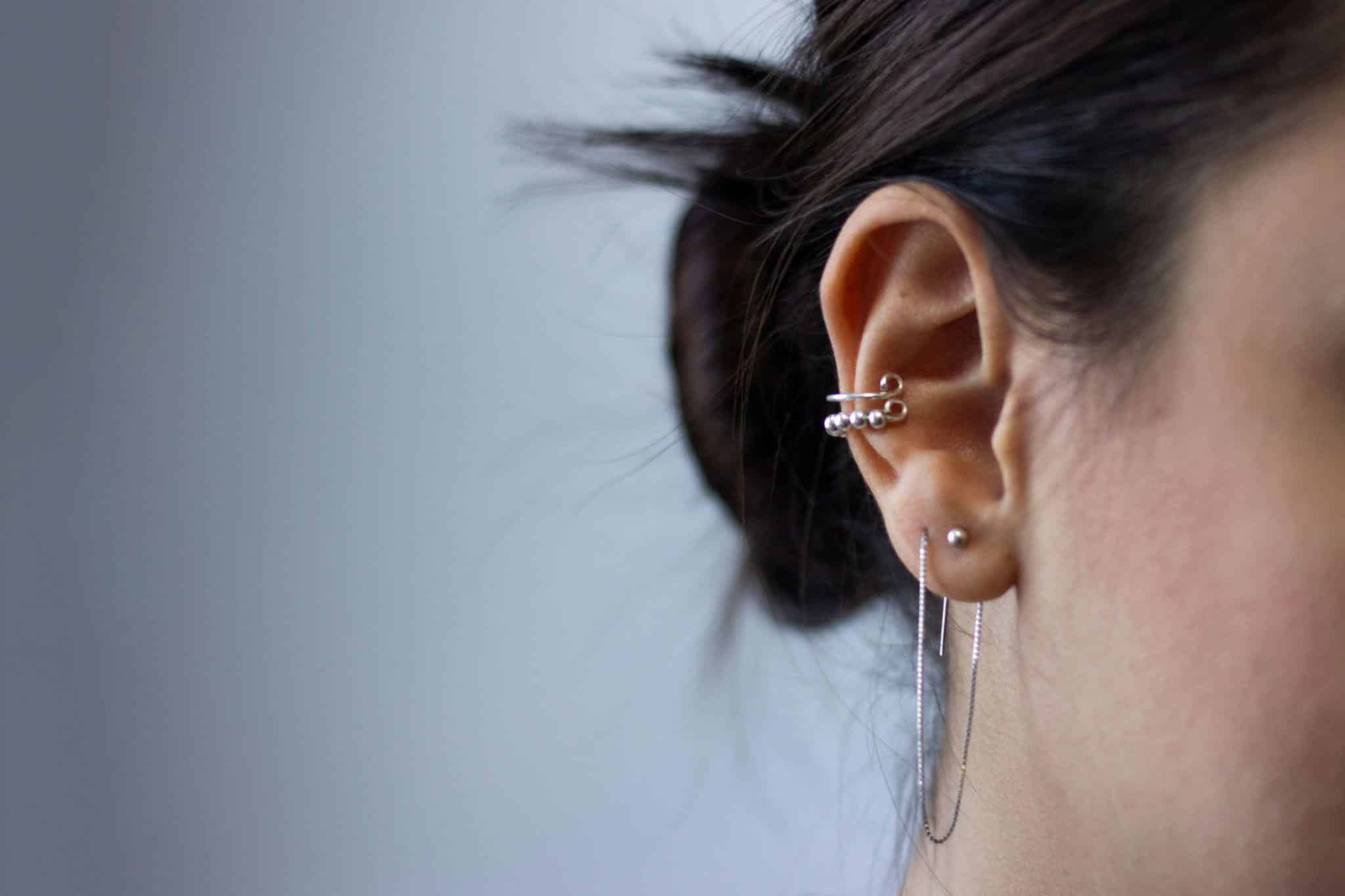
Even with the best intentions, a few missteps can throw off the whole look. Here are the ones to watch for:
Overcrowding the ear: More is not always more. If every piercing is filled with a statement piece, nothing stands out. Leave some breathing room.
Ignoring scale: A very large hoop next to a very small stud in adjacent piercings can look unbalanced. Think about the visual weight of each piece.
Forgetting the other ear: Your second ear does not need to be a mirror image, but it should feel connected. Many people go slightly simpler on one side, which creates an intentional asymmetrical look.
Buying pieces that do not work together: Before purchasing something new, hold it next to what you already own. Does it feel like it belongs in the same collection?
Neglecting comfort: A beautiful stack that pulls or irritates your ears after an hour is not worth it. Comfort matters as much as aesthetics.
Conclusion
Ear stacking is one of those rare styling techniques that rewards patience and intention. You do not need a huge collection or dozens of piercings to do it well. You need a few pieces you genuinely love, a sense of proportion, and the willingness to experiment.
Start simple. Build your core. Add slowly. And remember that your ear stack is always a work in progress, something that grows and evolves with your taste over time.
The most beautiful stacks are not the ones with the most earrings. They are the ones that feel unmistakably like the person wearing them. That is the real art of it.