
Supporting a bigender friend means understanding that they experience two distinct gender identities, which may fluctuate between masculine and feminine feelings, or exist simultaneously.
Being a good ally requires active learning, respectful communication, and ongoing support.
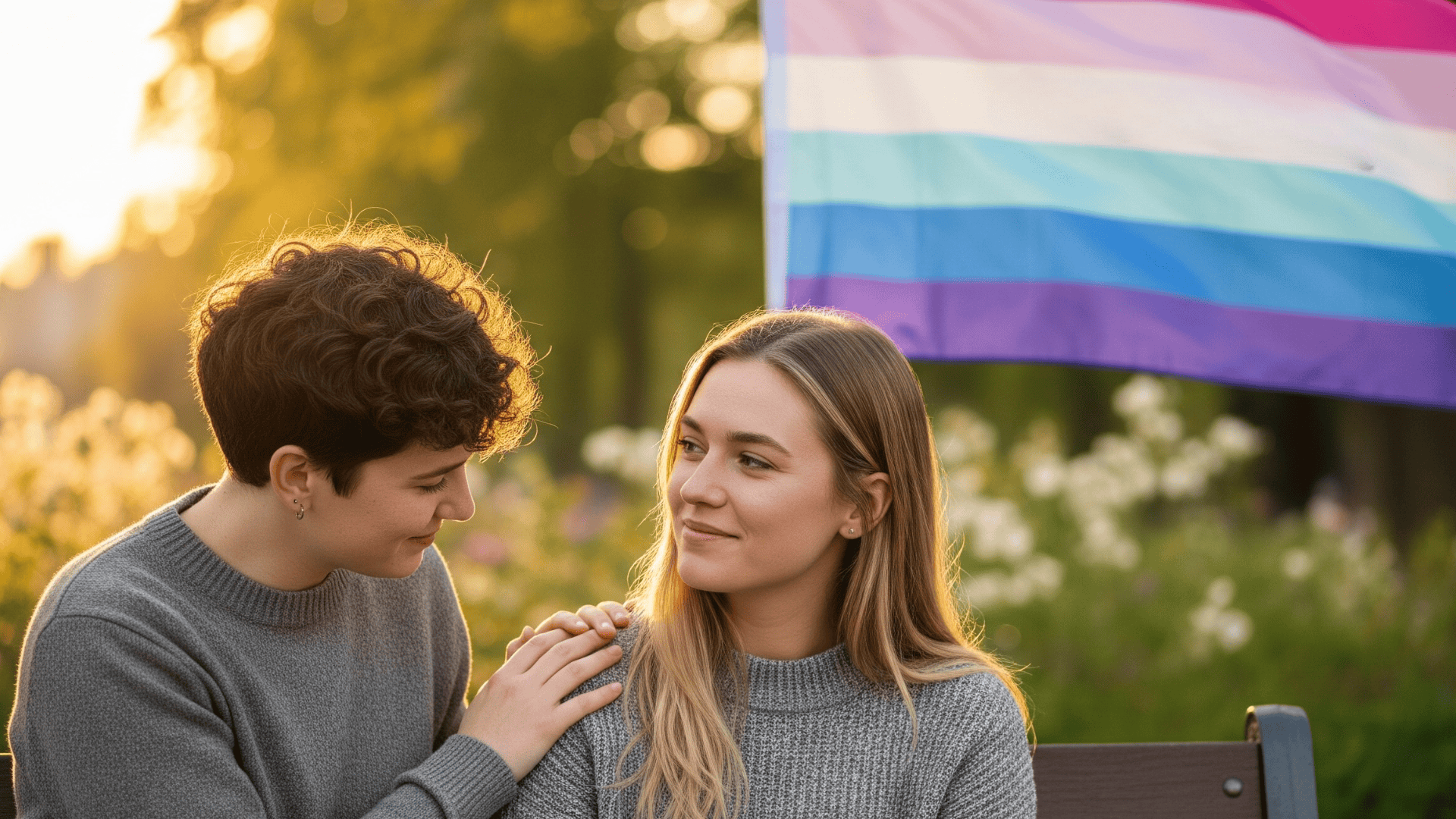
The bigender flag, with its pink, purple, blue, and white stripes, represents the spectrum of gender experiences and serves as an important symbol of visibility and pride.
Your friendship can make a significant difference in their life by providing acceptance, validation, and practical support.
Understanding the meaning behind symbols like the bigender flag helps create a more informed and inclusive environment for your friend.
Building a Supportive Friendship
Being a supportive friend to someone who is bigender involves several key areas of focus.
The following practical tips will help you provide meaningful support while strengthening your friendship and creating a more inclusive environment for everyone.
1. Listen and Validate Their Experience
The foundation of supporting any friend is listening without judgment.
When your bigender friend shares their experiences, practice active listening by focusing completely on what they’re saying rather than planning your response.
Ask open-ended questions like “How can I better support you?” rather than making assumptions about their needs.
You might not fully grasp what it feels like to experience multiple gender identities, but you can still affirm that their feelings are real and important.
2. Respect Pronouns and Names
Using correct pronouns and names shows basic respect for your friend’s identity.
Some bigender individuals use they/them pronouns, while others might prefer he/him, she/her, or alternate between different pronouns depending on how they’re feeling or presenting that day.
If your friend uses different pronouns in different contexts, ask them to clarify when and where to use each set. When others make mistakes with pronouns or names, politely correct them.
A simple “Actually, they use they/them pronouns” can help normalize respectful language while supporting your friend.
3. Educate Yourself on Gender Diversity
Take responsibility for your own education rather than expecting your friend to explain everything about bigender identity and the broader LGBTQ+ community.
Research reputable sources, read articles about gender diversity, and learn about the symbols and flags that represent different identities.
Understanding the bigender flag’s meaning and symbolism can deepen your appreciation for your friend’s community and identity.
4. Support Their Gender Expression
Gender expression includes clothing, hairstyles, mannerisms, and other ways people present their gender to the world.
Your bigender friend’s expression might change frequently, reflecting their fluid gender experience, and this is completely normal and healthy.
Offer genuine compliments when they share excitement about their appearance or try new styles. Support their choices whether they’re presenting more masculine, feminine, or androgynous.
5. Create and Advocate for Inclusive Spaces
Use your voice and privilege to make spaces more welcoming for your bigender friend and other LGBTQ+ individuals.
Knowing the Bigender legal rights is important so that you know when and how to protect their rights or simply help them realise their own rights.
This might mean speaking up when someone makes inappropriate jokes, advocating for gender-neutral bathrooms, or educating others about bigender identities.
If you notice them being excluded or treated poorly, address the situation directly but sensitively.
6. Maintain Confidentiality and Safety
Never “out” your friend by sharing their identity with others without explicit permission.
Coming out is a personal decision that should always be controlled by the individual, not their friends or family members.
Ask your friend about their comfort level regarding disclosure in different situations. They might be out to some people but not others, or they might feel safe in certain environments but not in others.
Respect these boundaries completely and be aware of the safety concerns your friend might face.
How to Offer Practical Support

These practical forms of support show your commitment to their well-being beyond just emotional encouragement.
- Medical appointment support: Accompany them to healthcare visits or help find LGBTQ+-friendly healthcare providers
- Bureaucratic assistance: Support navigating processes like changing names or gender markers on official documents
- Shopping companionship: Help with everyday activities like shopping for clothes that match their gender expression
- Community connections: Assist in finding inclusive social groups and activities where they feel welcomed
- Resource sharing: Share local LGBTQ+ organizations, supportive businesses, or online communities you discover
Proactively look for helpful information rather than waiting to be asked, showing tremendous care and support. You can join online communities for bigender support to educate yourself and find the resources to support your friend.
Celebrate Their Identity
Acknowledge important milestones in your friend’s journey, whether that’s coming out anniversaries or personal achievements related to their identity.
Participate in Pride events together if they’re interested, and learn about the significance of symbols like the bigender flag that represent their community.
Share educational content about bigender identity and LGBTQ+ rights (with their permission), and speak positively about gender diversity in your conversations with others.
“The more I accept myself as a genderless human being, in a way, the more I’m loving my body” – Sam Smith
Moving Forward Together
Supporting a bigender friend requires patience, learning, and genuine care.
The most important elements are listening without judgment, respecting their identity and choices, and being willing to grow as you learn more about their experiences.
Your friendship can provide invaluable support in a world that doesn’t always understand or accept gender diversity.
By educating yourself, advocating for inclusion, and celebrating their identity, you help create a more accepting environment for all LGBTQ+ individuals.
How do you plan to better support LGBTQ+ friends in your life? Share your thoughts in the comments below, and let’s discuss ways we can all become better allies and create more inclusive communities.