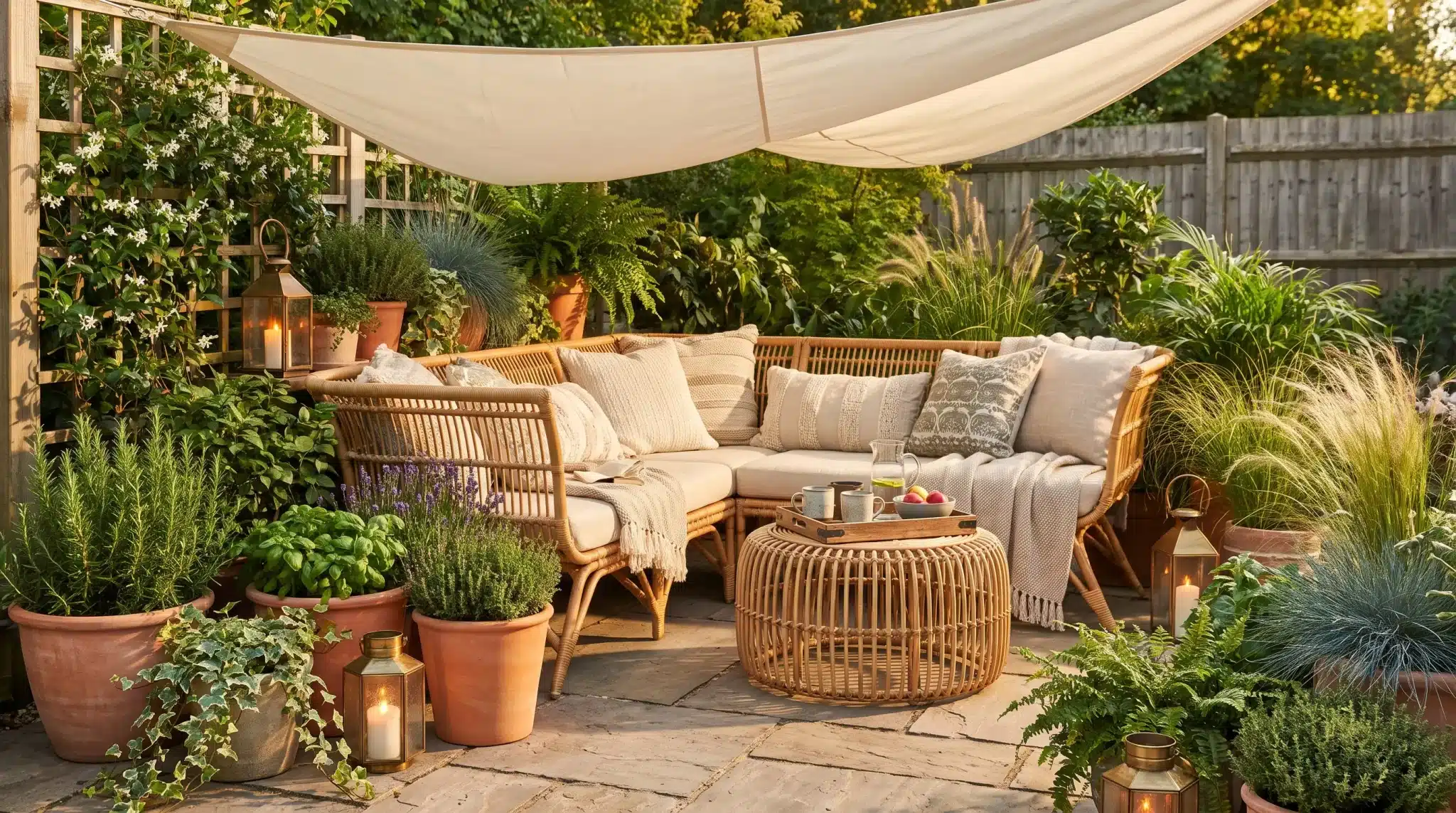

A patio can be much more than a place to store the barbecue or hang washing. With the right layout, materials and planting, even a small paved area can become a comfortable garden retreat—a space for slow breakfasts, evening drinks, reading or simply enjoying the outdoors.
Rattan furniture is particularly well suited to this transformation. Its relaxed texture softens hard paving, while modern designs offer the comfort and practicality needed for everyday use. The key is not to fill the patio with matching pieces, but to create a layered setting that feels considered, welcoming and connected to the rest of the garden.
1. Start by Defining How You’ll Use the Space
Before choosing furniture, decide what you want the patio to do. A dining area requires a different arrangement from a quiet reading nook, while a family-friendly space may need flexible seating and room to move around.
Consider the activities that matter most:
- Outdoor meals and entertaining
- Morning coffee or relaxed reading
- Evening conversations
- Container gardening or growing herbs
Once you understand the patio’s primary purpose, it becomes easier to select the right scale of furniture. A compact bistro set may be ideal for two people, whereas a larger corner sofa could make better use of a broad, underused terrace.
2. Choose Furniture That Suits the Patio’s Proportions
A common mistake is treating a patio as though it has unlimited space. Oversized furniture can restrict movement and make even a generous area feel cramped. Equally, very small pieces may look lost on a large expanse of paving.
Measure the available area and leave clear pathways around doors, steps and access points. As a general guide, allow enough space to pull out dining chairs comfortably and avoid positioning furniture where it will obstruct garden maintenance.
Rattan works well because it is available in many forms, from compact chairs and coffee tables to modular sofas. Look for pieces with open frames or raised legs if you want to preserve a sense of space.
3. Create a Comfortable Seating Arrangement
A garden retreat should invite people to sit down. Comfort is therefore just as important as appearance. Arrange seating so that it encourages conversation rather than pointing everyone in the same direction.
For a sociable patio, place sofas or armchairs around a central coffee table. On narrower spaces, a bench along one wall can provide generous seating without taking up too much floor area. If you regularly entertain, consider modular furniture that can be rearranged when guests arrive.
Cushions add softness and colour, but they should be made from outdoor-suitable fabrics or stored indoors when the weather changes. Neutral upholstery creates a calm foundation, while a few patterned cushions can introduce personality without overwhelming the setting.
4. Add Shade Without Losing Light
A patio exposed to direct sun can become uncomfortable during the warmest part of the day. Adding shade makes the area more usable and also helps protect cushions and furniture from unnecessary weathering.
A simple parasol is often the most flexible option, particularly for dining areas. Pergolas, retractable awnings and sail shades can provide a more permanent solution. Alternatively, train climbing plants over a frame for living shade that becomes more attractive as the seasons progress.
Think about the direction of sunlight before installing anything. A shaded corner in the morning may be fully exposed by late afternoon, so observe the patio at different times before deciding where cover is needed.
5. Use Planting to Soften Hard Edges
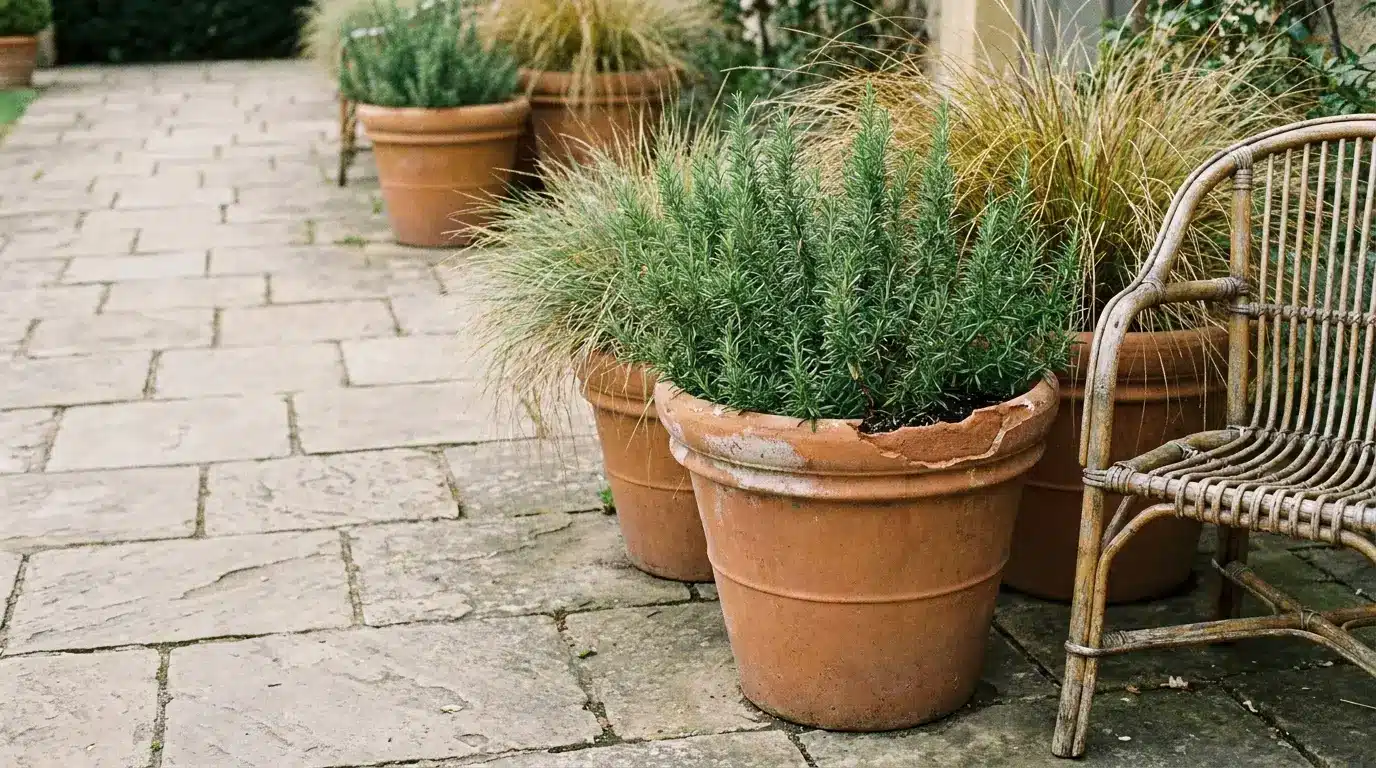
Paving, brick walls and fences can make a patio feel stark. Plants introduce movement, scent and seasonal interest, helping the space feel like part of the garden rather than an isolated outdoor room.
Large pots placed at the corners can frame the seating area, while smaller containers can define its edges. Ornamental grasses are useful for adding height and gentle movement, whereas herbs such as rosemary, thyme and mint bring fragrance as well as practical value.
For a cohesive look, repeat a small number of pot materials or colours. Terracotta creates a warm, traditional feel; glazed ceramics add colour; and simple grey or charcoal planters suit contemporary patios.
6. Introduce Layered Outdoor Lighting
Good lighting can completely change how a patio feels after sunset. Rather than relying on one bright fixture, use several softer sources at different heights.
Wall lights can illuminate doorways and boundaries, while lanterns or table lamps create a warmer atmosphere around seating. Solar lights are useful for marking paths and planting beds, although their brightness varies considerably, so choose quality fittings and position them where they receive plenty of daylight.
Avoid placing lights directly at eye level or using harsh white bulbs. Warm-toned lighting is generally more relaxing and complements the natural texture of rattan particularly well.
7. Combine Textures and Natural Materials
The most inviting patios usually include more than one material. Rattan brings woven texture, but it becomes even more effective when paired with timber, stone, linen-look fabrics, ceramics or metal accents.
A wooden serving tray, stone-topped table or jute-style outdoor rug can add depth without making the space feel busy. If you are looking for inspiration, collections of elegant woven furniture for outdoor spaces can demonstrate how different rattan forms and finishes work together in a relaxed garden setting.
The goal is balance. Too many smooth surfaces can appear cold, while an excess of competing textures can look untidy. Choose a dominant material, then use smaller accessories to provide contrast.
8. Make the Patio Feel Connected to the Garden
A patio feels more spacious when the transition into the garden is gradual. Avoid creating a hard visual boundary between paving and planting wherever possible.
Position pots near steps, allow trailing plants to spill over walls or use a narrow border of gravel and greenery between the seating area and lawn. Repeating colours from the garden in cushions or accessories can also create continuity.
If the patio is overlooked, layered planting can offer privacy without making the area feel enclosed. Bamboo, pleached trees, tall grasses and climbing plants all provide screening, but choose varieties suited to the available light and the amount of maintenance you are prepared to undertake.
9. Plan for Practicality and Long-Term Care
A beautiful patio still needs to function in real life. Leave space for storing cushions, keep frequently used items within reach and choose finishes that are easy to clean.
Rattan furniture should be checked according to its construction. Synthetic outdoor rattan is generally designed to withstand changing conditions, but it still benefits from being covered or stored during prolonged poor weather. Brush away leaves and dirt regularly, clean spills promptly and follow the manufacturer’s guidance for cushions and frames.
It is also worth considering how the space will work outside summer. A fire pit, outdoor heater or weather-resistant throw can extend its use into cooler evenings, provided these are positioned safely and used according to local guidance.
A Patio With Purpose
Turning a basic patio into a garden retreat does not require a complete redesign. Thoughtful furniture placement, layered planting, comfortable fabrics and suitable lighting can make a significant difference. Rattan provides a versatile foundation, but the most successful spaces reflect the way you actually live.
Start with one clear purpose, work with the proportions of the patio and add detail gradually. The result should feel effortless: a garden room that is practical enough for everyday use, yet inviting enough to make you want to stay outside a little longer.