
Have you ever looked at your backyard or outdoor corner and wished it felt more peaceful instead of just another unused space? A few simple changes can turn even a small area into a calming retreat where you can slow down and relax.
Zen gardens are not about adding more decorations, but about creating balance with natural materials, thoughtful layouts, and simple designs.
Here, you’ll find inspiring zen garden ideas for different spaces, including small yards, patios, indoor corners, and easy designs you can create at home.
What Is a Zen Garden and What Is It Actually Doing?
A zen garden is a symbolic representation of nature, not a reproduction of it, and that distinction is the whole point.
Karesansui, meaning “dry landscape,” is the most common style in Japanese gardens. It uses raked sand or gravel to represent water and stones to symbolize mountains or islands. A simple layout can suggest an entire natural scene.
What produces the calming effect isn’t the presence of natural materials; it’s their reduction. A zen garden works by removing everything unnecessary until the eye has somewhere to rest.
This logic is scale-independent. The principle that governs a temple garden in Kyoto governs a shallow tray of sand on a desk.
Easy Zen Garden Ideas For Your Backyard and Home
A zen garden does not require a large space or complex landscaping. From small backyard zen garden design to indoor setups, simple elements can create a calm, balanced space.
1. Create a Traditional Karesansui Rock Garden
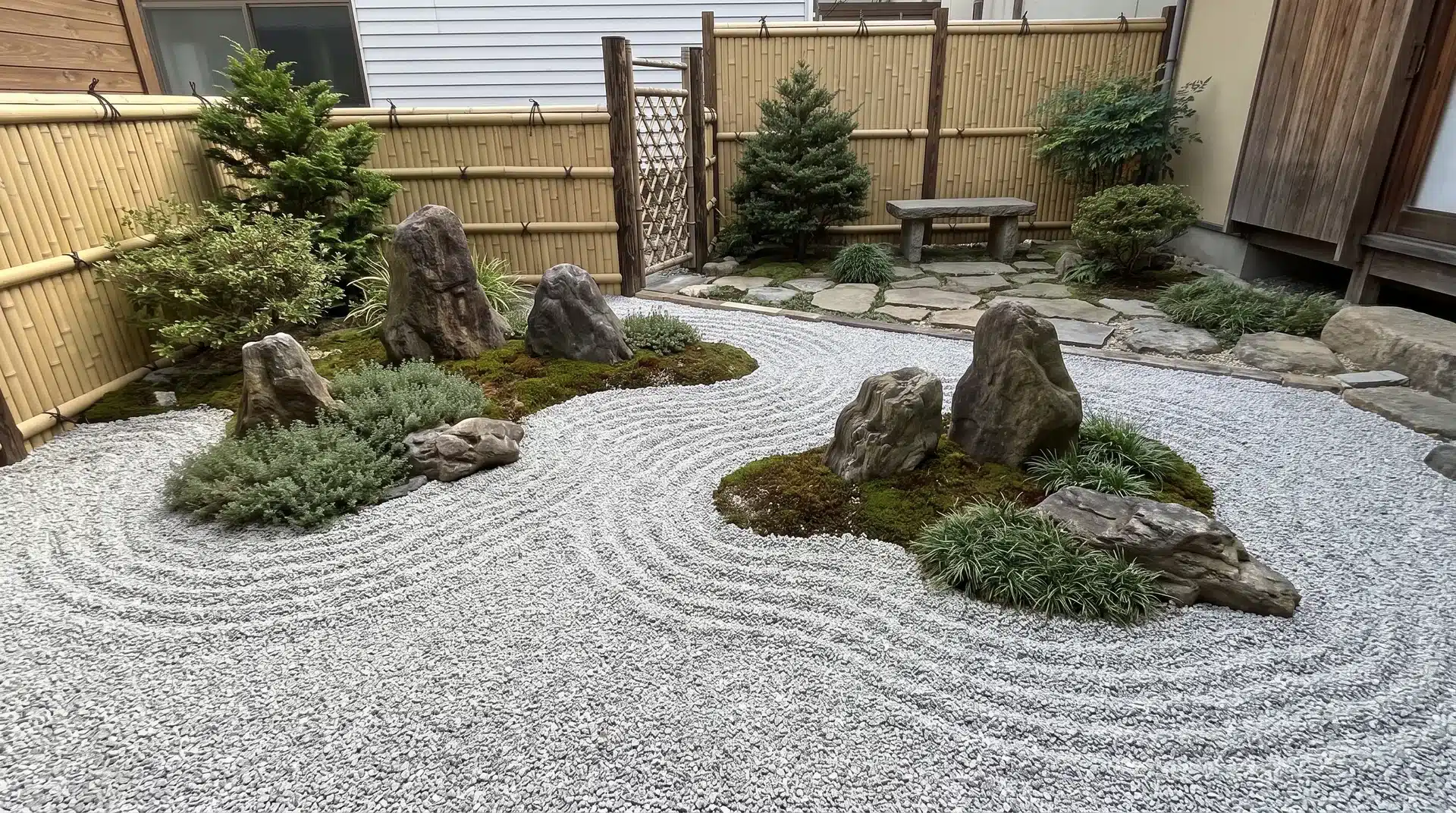
A Karesansui garden uses rocks, gravel, and empty space to represent natural landscapes like mountains and flowing water.
To make this garden, start with a flat area covered in fine gravel or sand. Place larger rocks in groups of three or five, then rake curved patterns around them to create a water-like effect. Keep the design open so each element has room to stand out.
This is one of the best easy zen garden design options because it needs very little maintenance once installed.
2. Add a Stone Pathway Garden
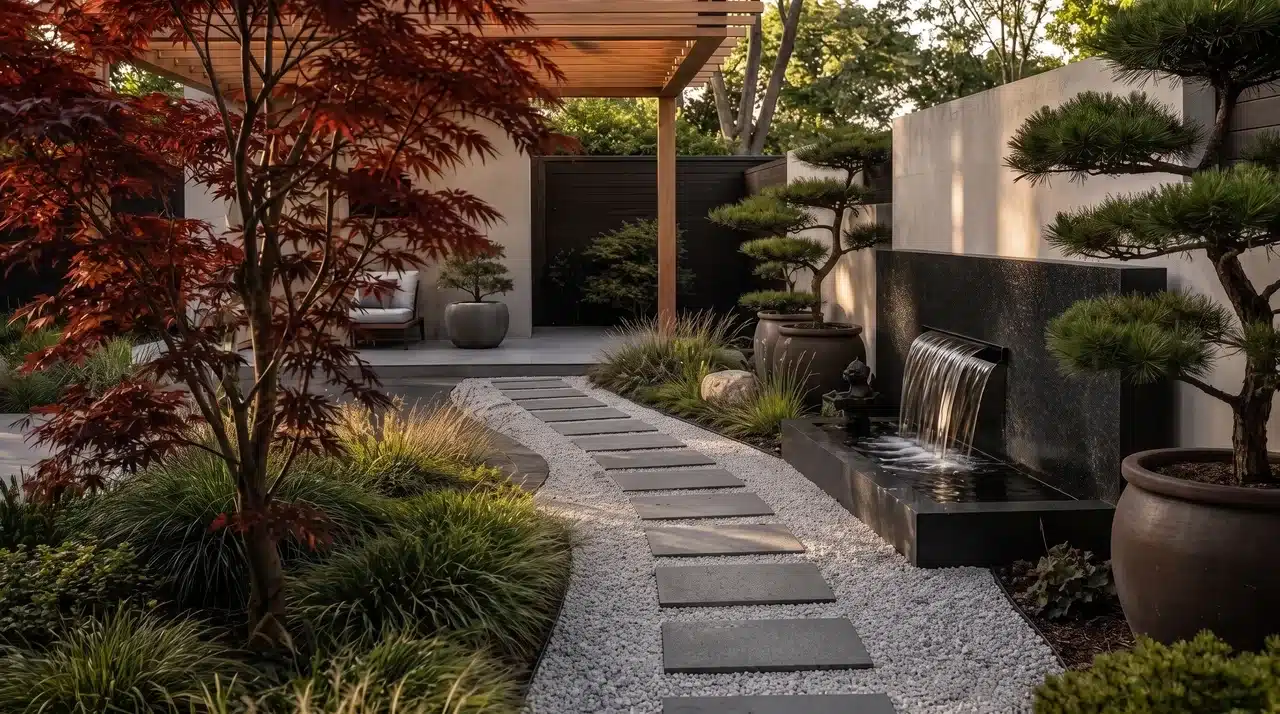
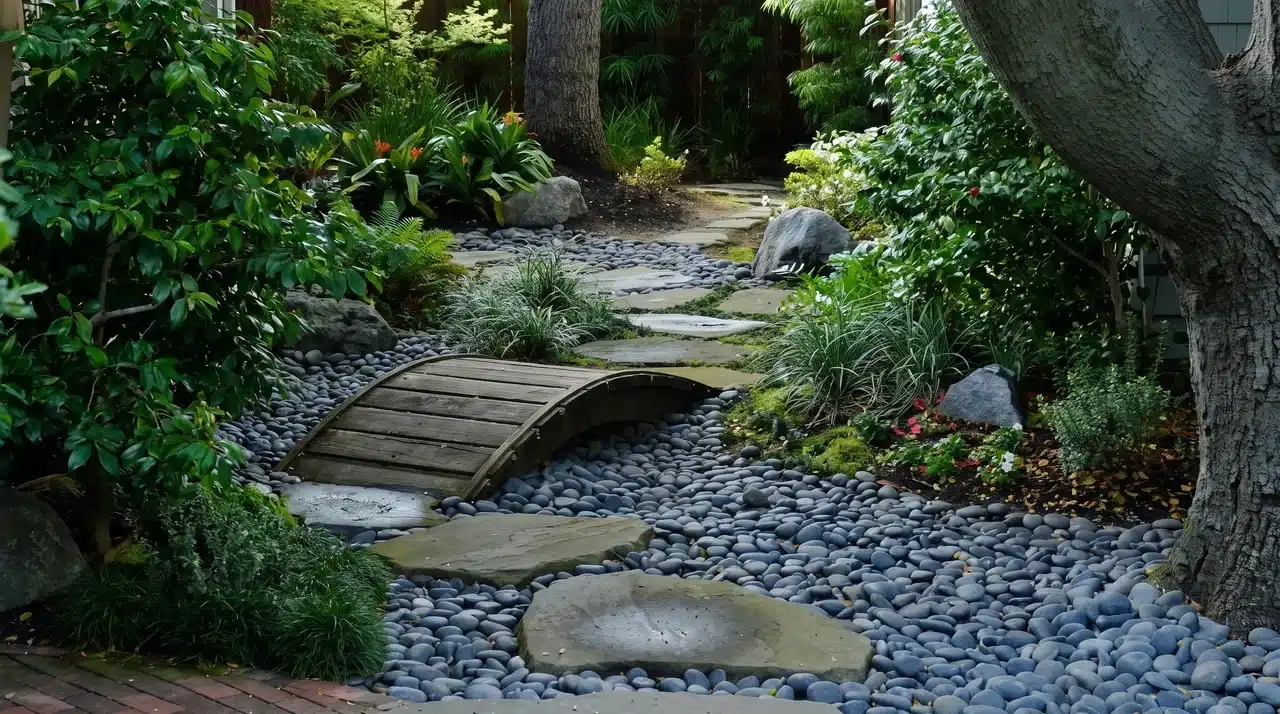
A stone pathway creates a sense of movement through the garden while keeping the design simple and natural. It gives the space a slower, more intentional feeling as you walk through it.
To make this garden, place flat stepping stones across gravel, moss, or low-growing plants. Leave small gaps between stones to create a natural look rather than a perfectly straight walkway.
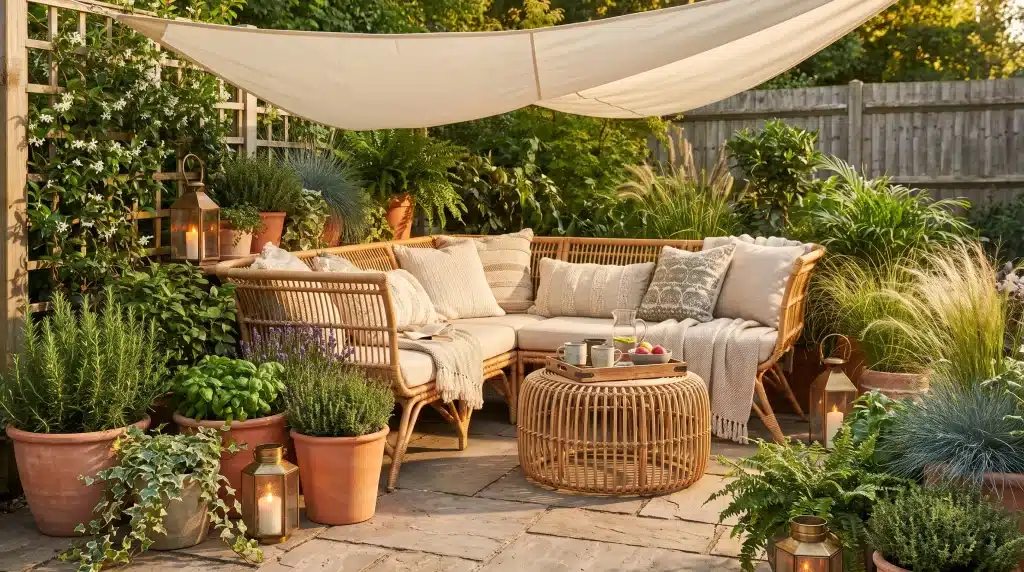
The garden combines natural stone, ornamental grasses, sculpted evergreen plants, and a Japanese maple tree under a warm wooden pergola.
3. Create an Indoor Moss Zen Garden
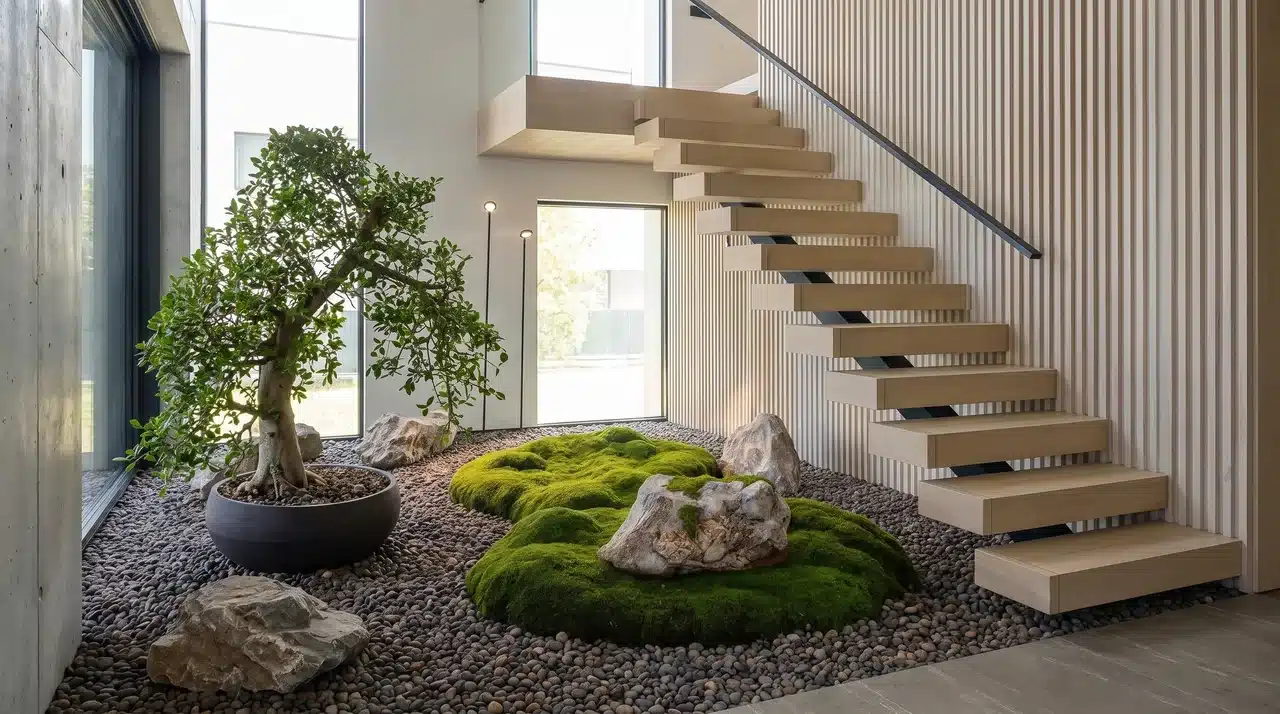
An indoor moss zen garden brings the calm feeling of nature into your home by combining soft textures, natural stones, and simple plant arrangements
To create this garden, lay a base of smooth river stones and place a raised mound of moss as the main feature. Add a few natural rocks around the moss to create balance, then include a small bonsai or potted tree to bring height and structure to the space.
Keep the arrangement simple so each element has room to stand out A moss garden is a good choice if you want a peaceful look without spending much time on plant care.
4. Add a Tsukubai Water Basin Feature
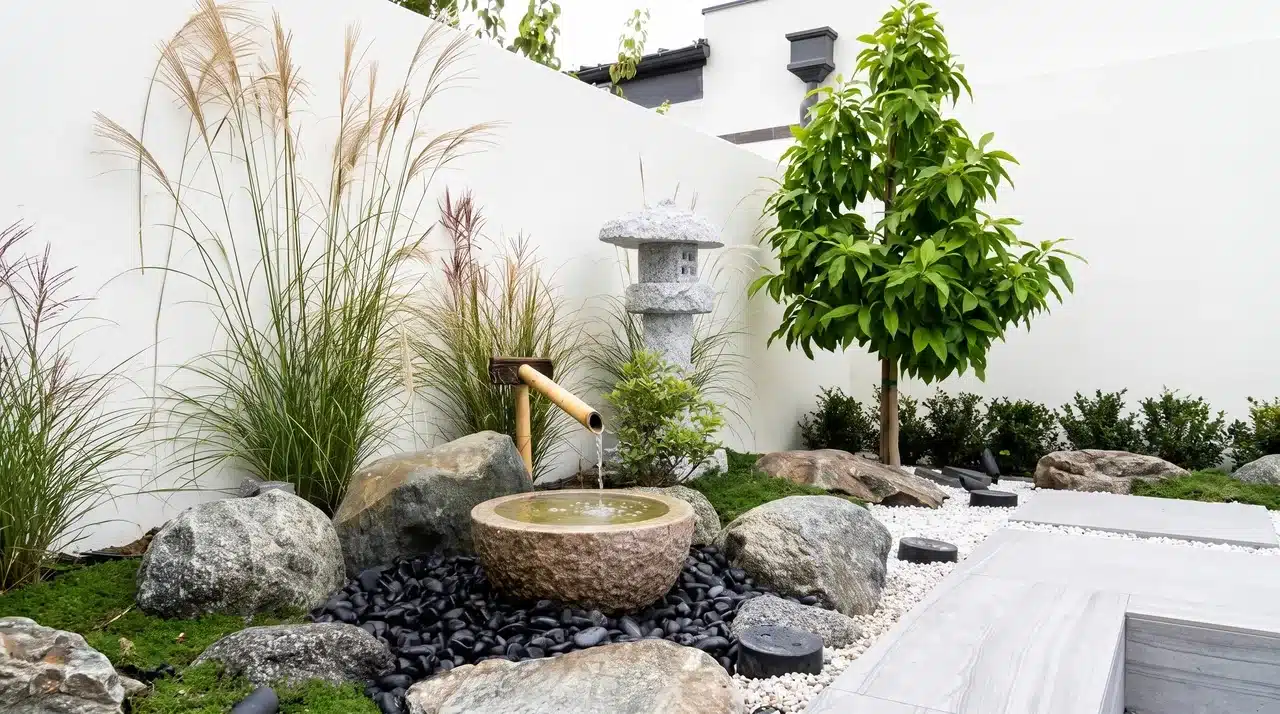
A Tsukubai water basin adds a traditional Japanese element to a zen garden by bringing together stone, water, and natural textures in one simple feature.
To make this garden, place a natural stone basin in a gravel area and add a bamboo water spout that gently flows into the bowl. A stone lantern or carefully placed plants can add height while keeping the design simple.
This idea works well for an easy zen garden design because a small water feature can create a strong visual impact without requiring a large space
5. Build a Courtyard Zen Garden
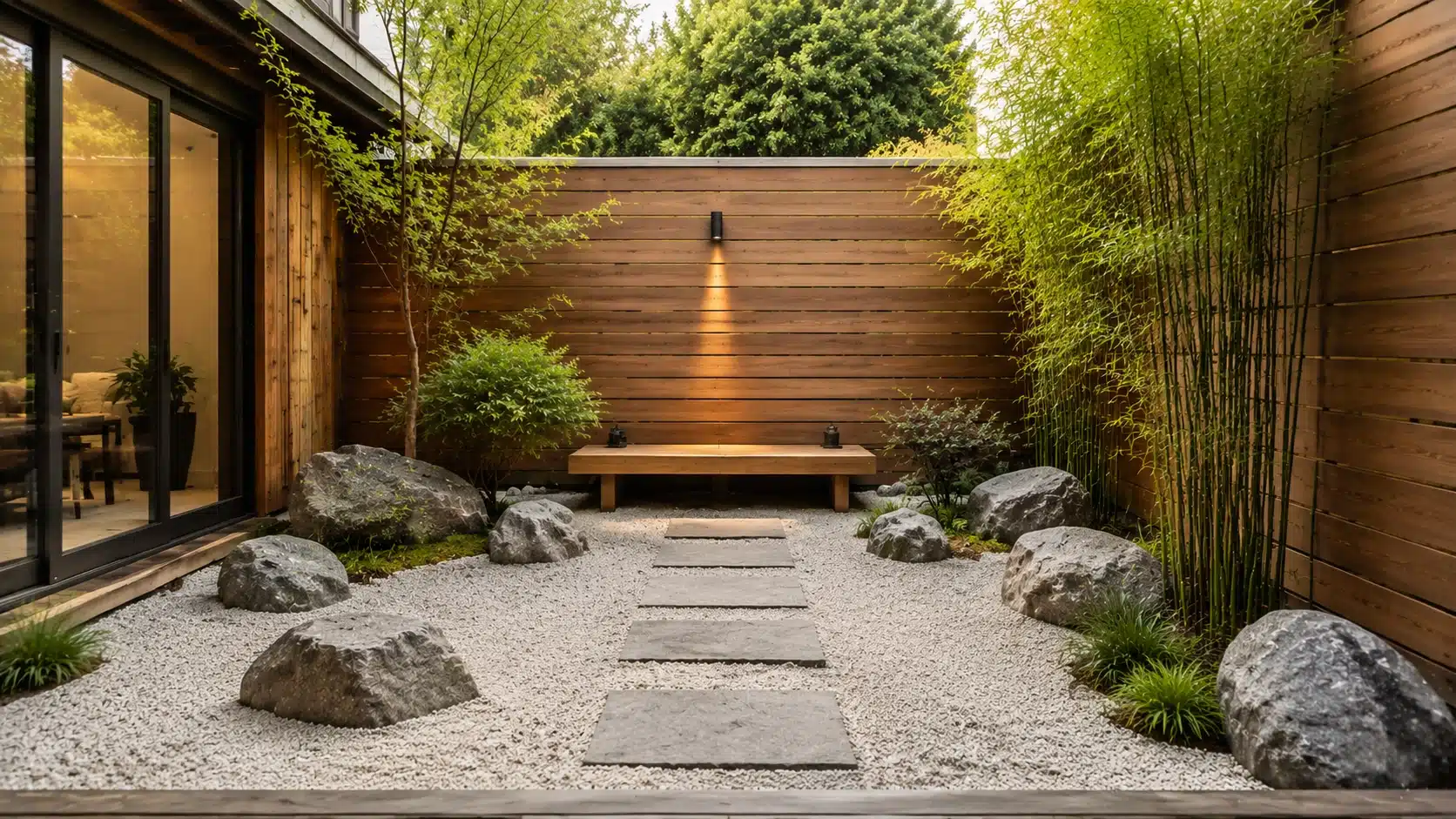
A courtyard can become a peaceful escape when designed with fewer elements and careful placement. This idea works well for homes with limited outdoor space.
To create this garden, choose one main feature, such as a rock arrangement, a tree, or a water element. Add gravel around it and use simple borders to define the space.
This approach works especially well for a small backyard zen garden because it creates a relaxing area without taking up much space.
6. Create a Japanese Tea Garden-Inspired Space
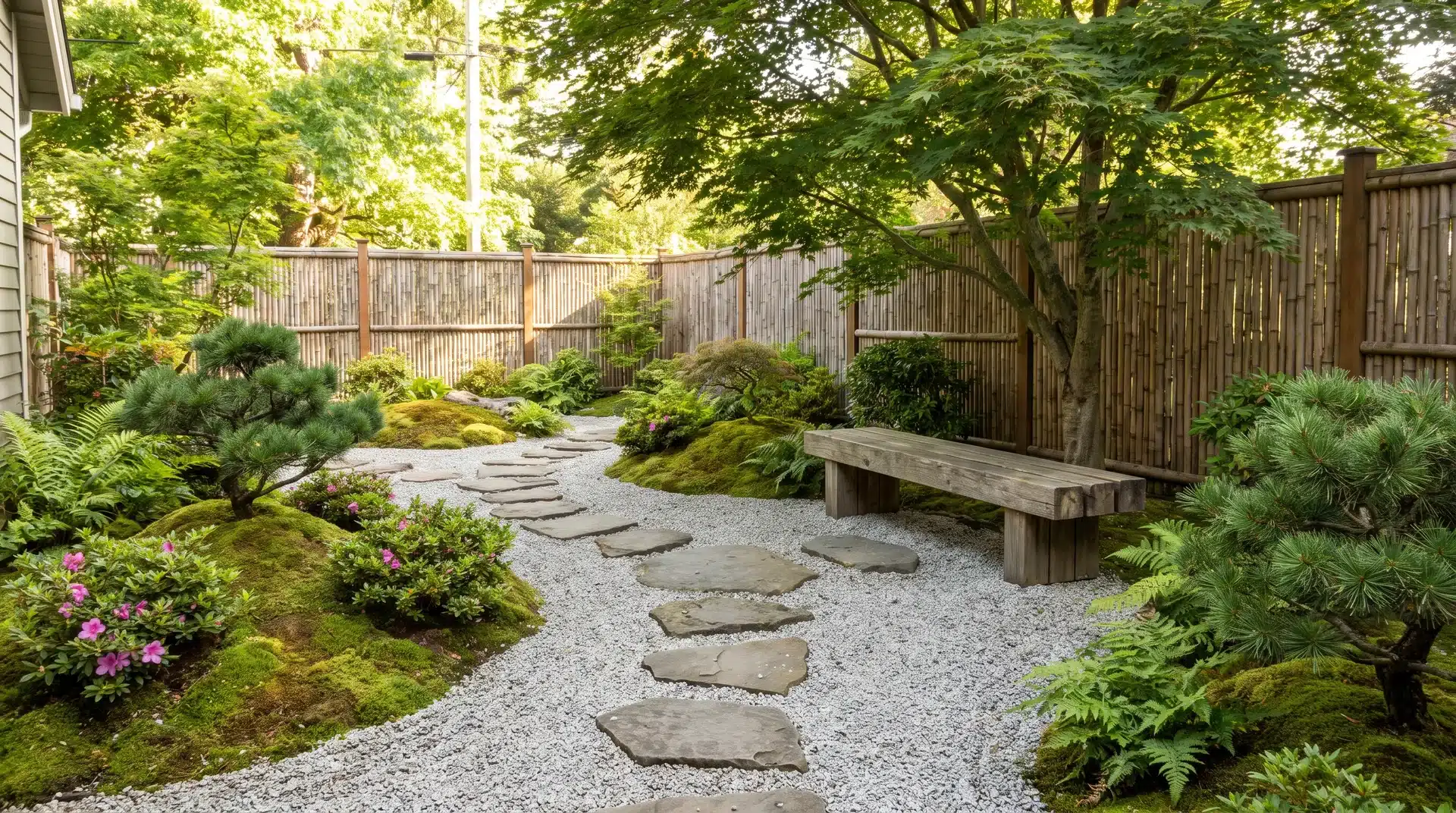
A tea garden focuses on creating a peaceful path and a quiet place to pause. It combines natural materials with a simple layout that encourages slow movement.
To make this garden, add a stone pathway, a small seating area, and plants with different textures. Keep decorations to a minimum and let natural materials be the main attraction.
Choose materials like wood, stone, and gravel to keep the garden feeling warm and connected to nature.
7. Add a Stone Lantern Focal Point
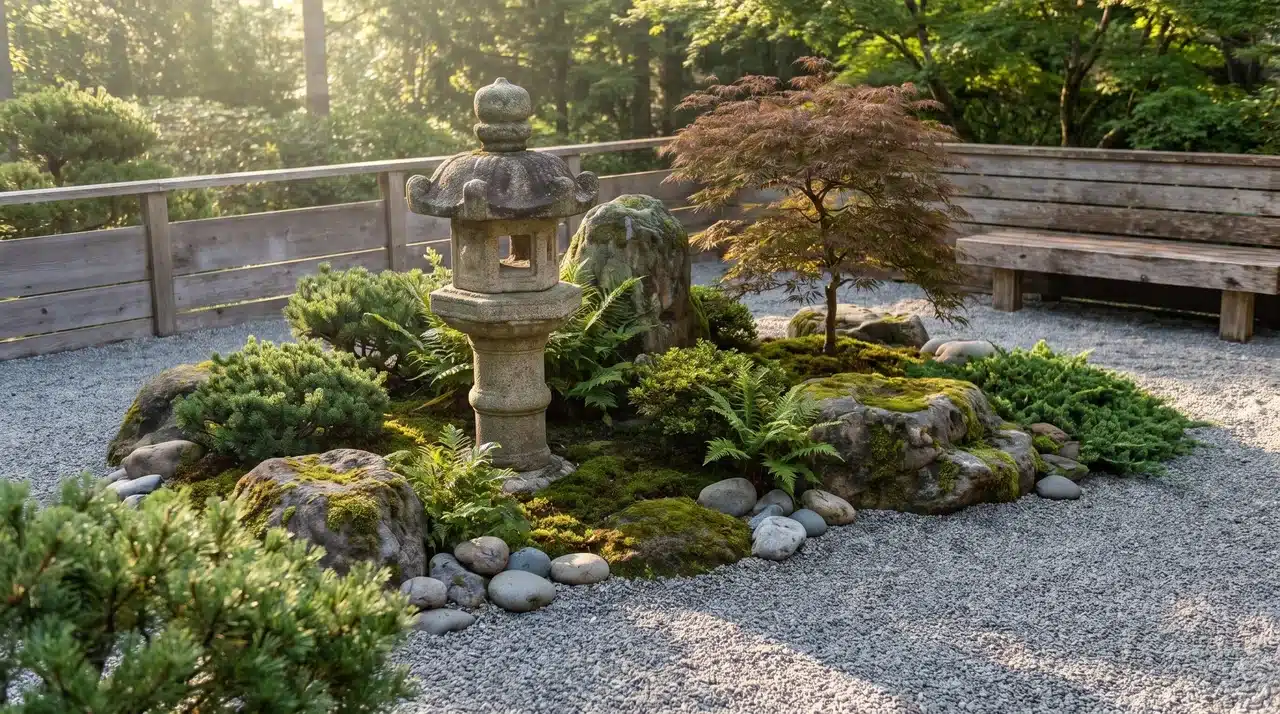
Stone lanterns are traditional elements that add height and character to a Zen garden. They work best when used as a single focal point rather than scattered throughout the space.
To create this garden, place a lantern near a pathway, a rock arrangement, or a plant grouping. Surround it with gravel or low greenery so it feels naturally placed.
Soft lighting around the lantern can also make the garden more enjoyable in the evenings.
8. Create a Miniature Tabletop Zen Garden
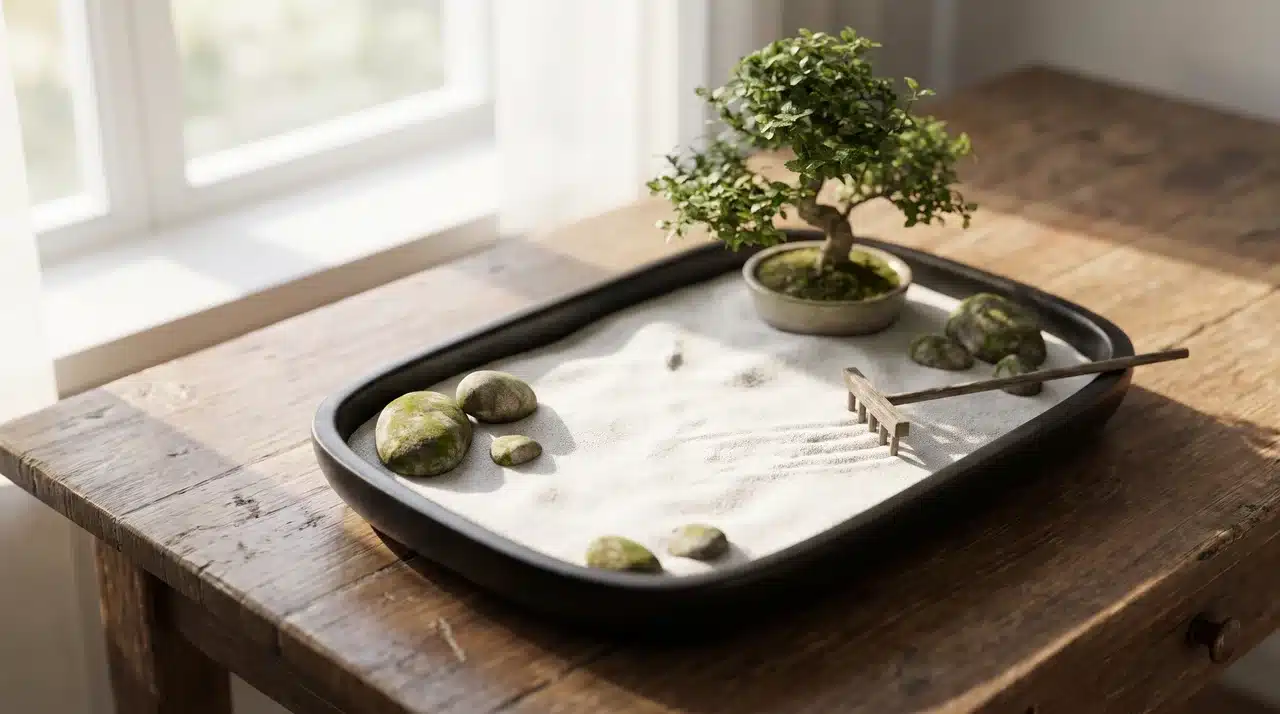
A tabletop zen garden brings the same calming elements into a small indoor space. It is a simple option for apartments, offices, or rooms without outdoor areas.
To make this garden, use a shallow tray filled with sand or fine gravel. Add small stones, a tiny rake, and a miniature plant or a piece of moss.
Keep the design simple because the empty space is what creates the peaceful effect.
9. Add a Japanese Maple Focal Point
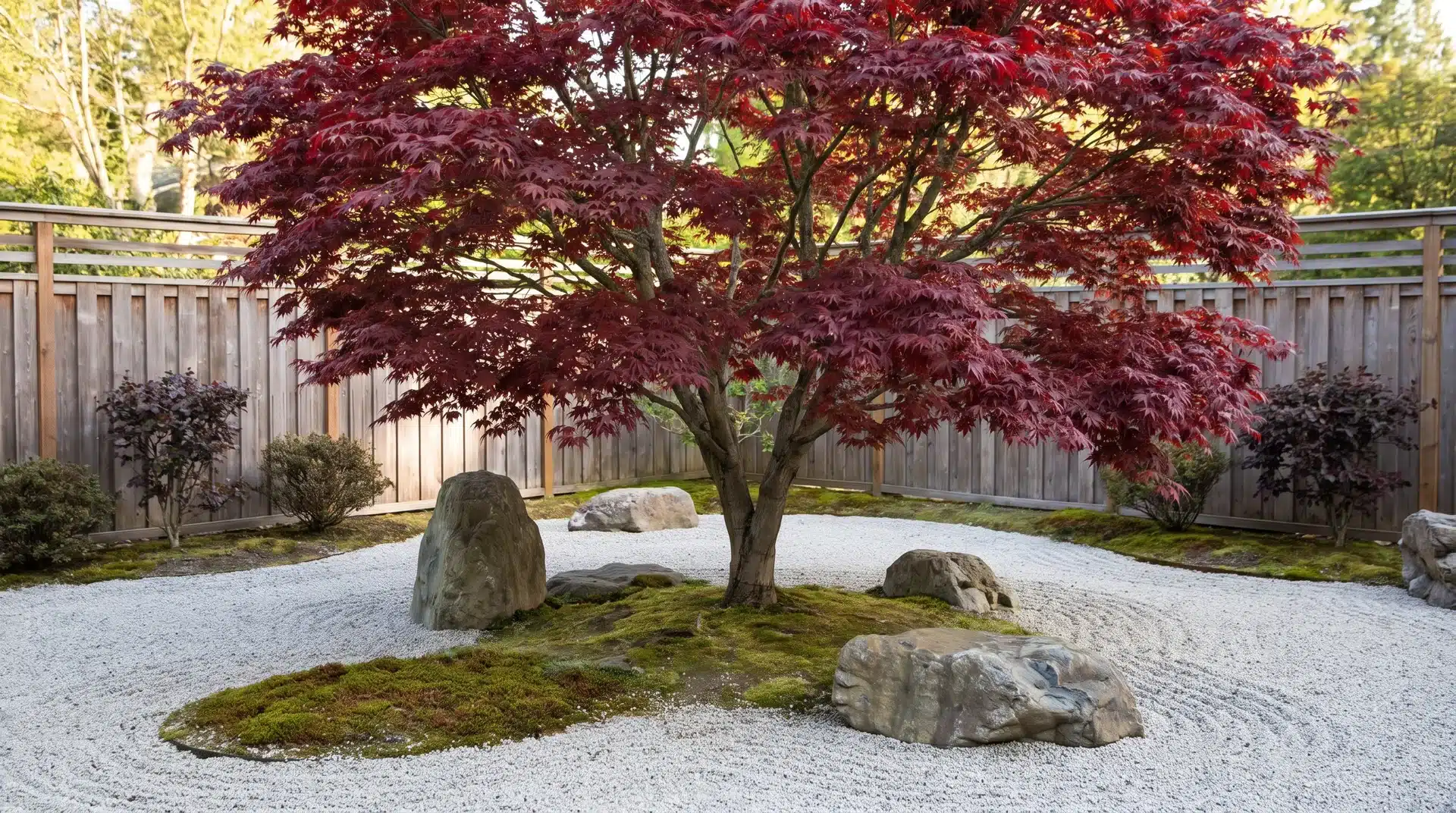
A Japanese maple can become the centerpiece of a zen garden because of its elegant shape and seasonal color changes.
To make this garden, plant the tree in an open area and surround it with gravel, stones, or simple ground cover. Avoid adding too many competing plants nearby.
The tree should feel like the main artwork of the garden rather than one element among many.
10. Make a Zen Garden with a Privacy Screen
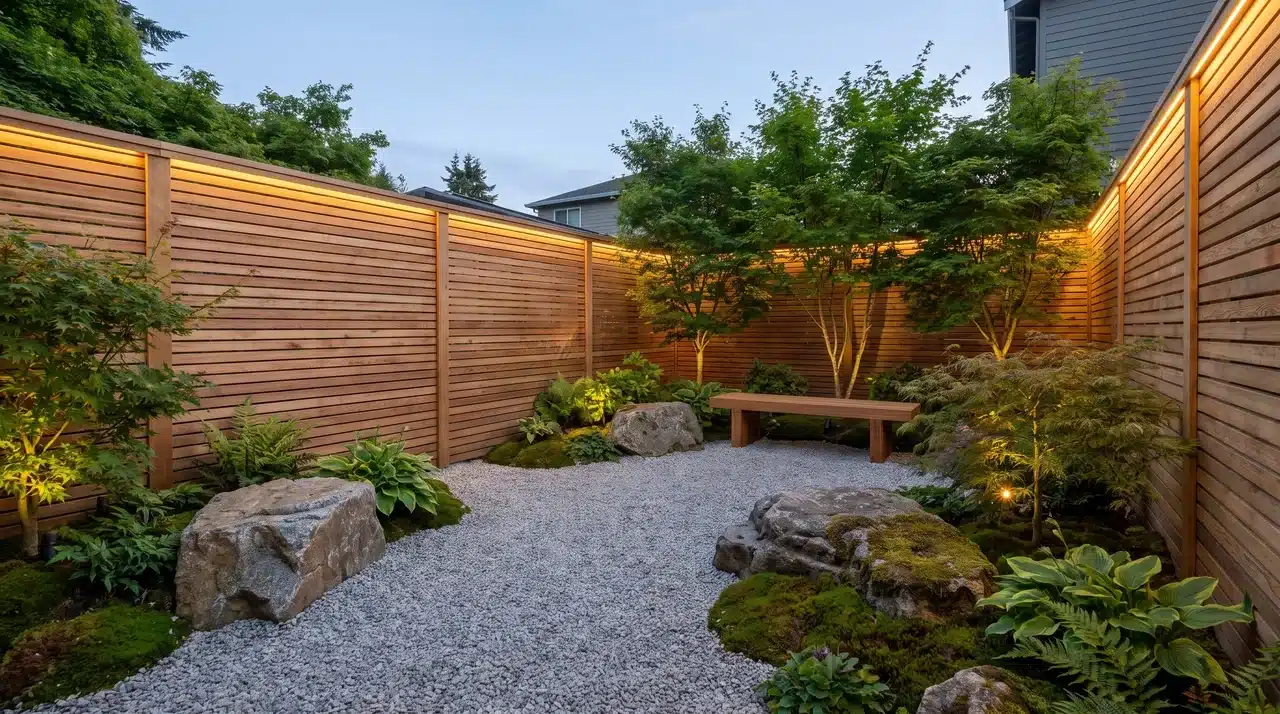
A privacy screen can turn an open outdoor area into a quiet personal retreat. It helps block distractions while making your zen garden feel more secluded, peaceful, and connected to nature.
To make this garden, install a natural wood, bamboo, or slatted privacy screen around the garden edges.
Add a simple gravel area, carefully placed rocks, and a few low-maintenance plants in front of the screen to soften the look. Keep the design open and avoid adding too many decorations.
11. Design a Reflection Pond Zen Garden
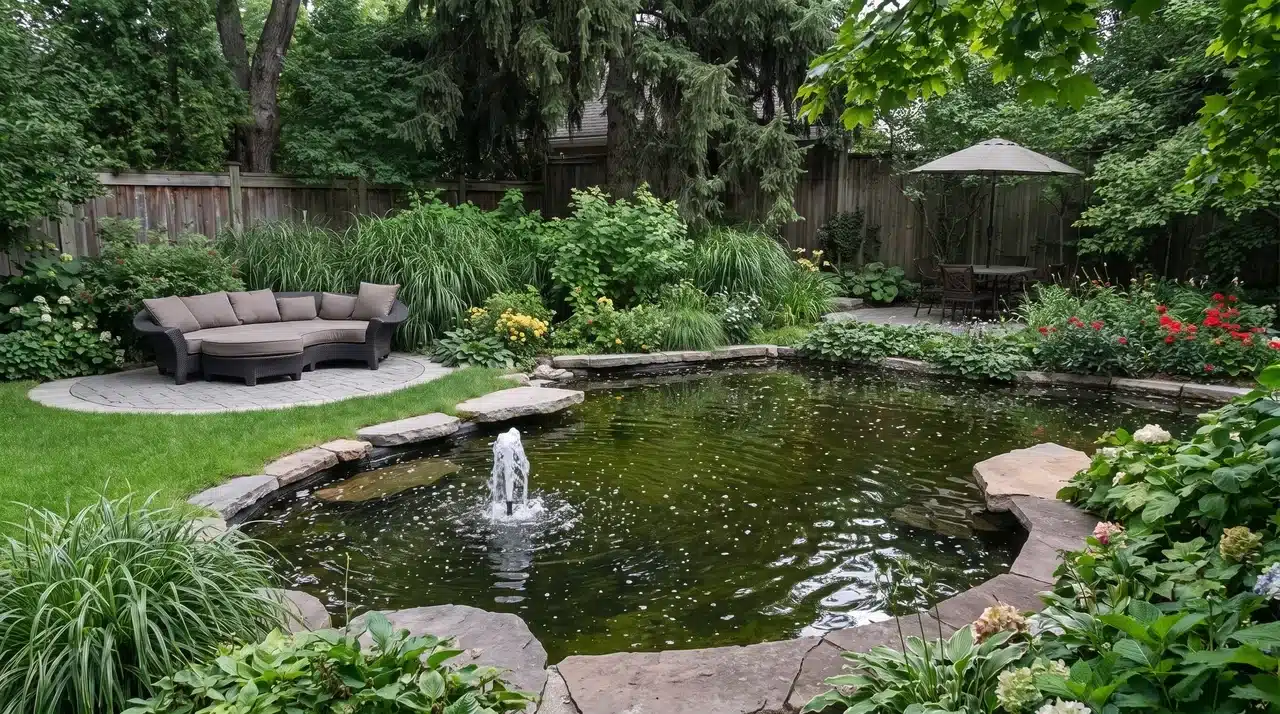
A reflection pond adds water, movement, and a peaceful surface that changes throughout the day. It can become the main feature of your garden.
To make this garden, install a small pond or water container and surround it with natural stones and a sofa. Add simple plants along the edges without completely hiding the water.
Keep the design balanced so the pond feels like part of the landscape rather than a separate decoration.
12. Design an Indoor Zen Mountain Garden
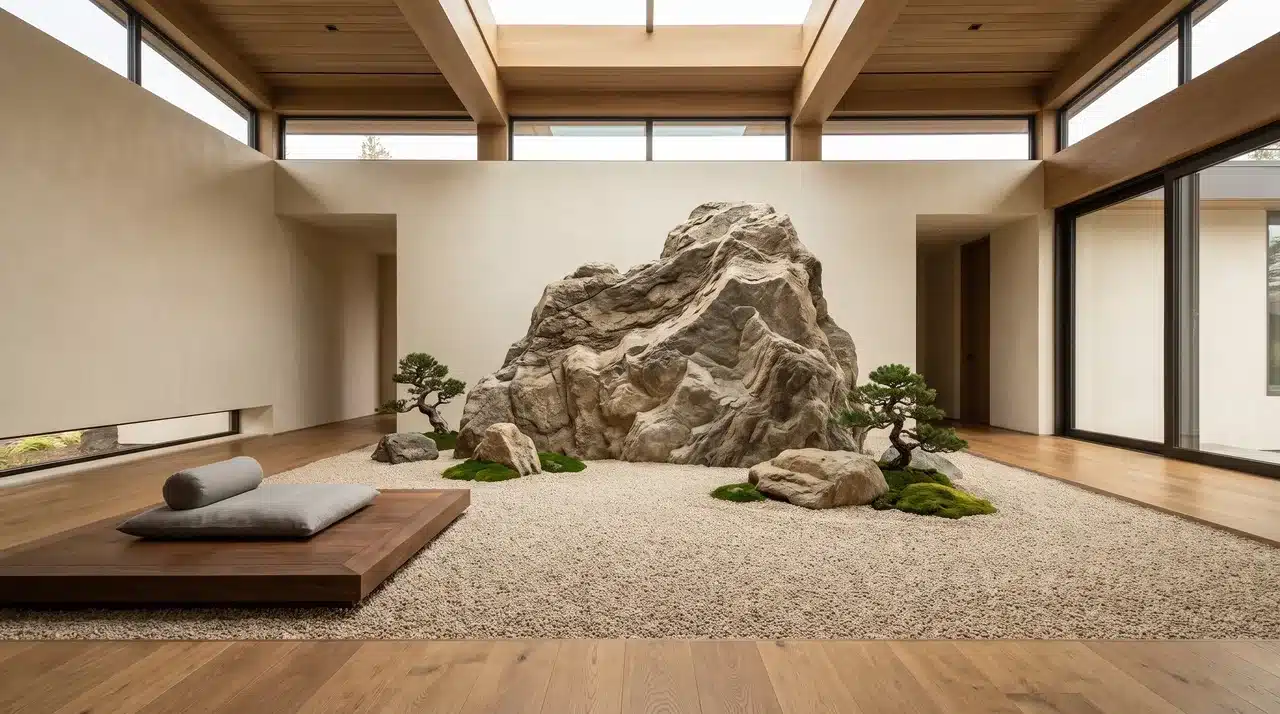
An indoor zen mountain garden turns a quiet room into a meditative retreat by making one large mountain-inspired feature the center of the space.
To create this garden, create one raised, mountain-like formation using natural stone, a sculpted rock mound, or a large, textured installation placed in the center or slightly off-center of the room.
Surround it with a clean bed of light gravel, a few large stones, soft moss, and very limited greenery so the mountain remains the main focus.
13. Design a Balcony or Patio Zen Space
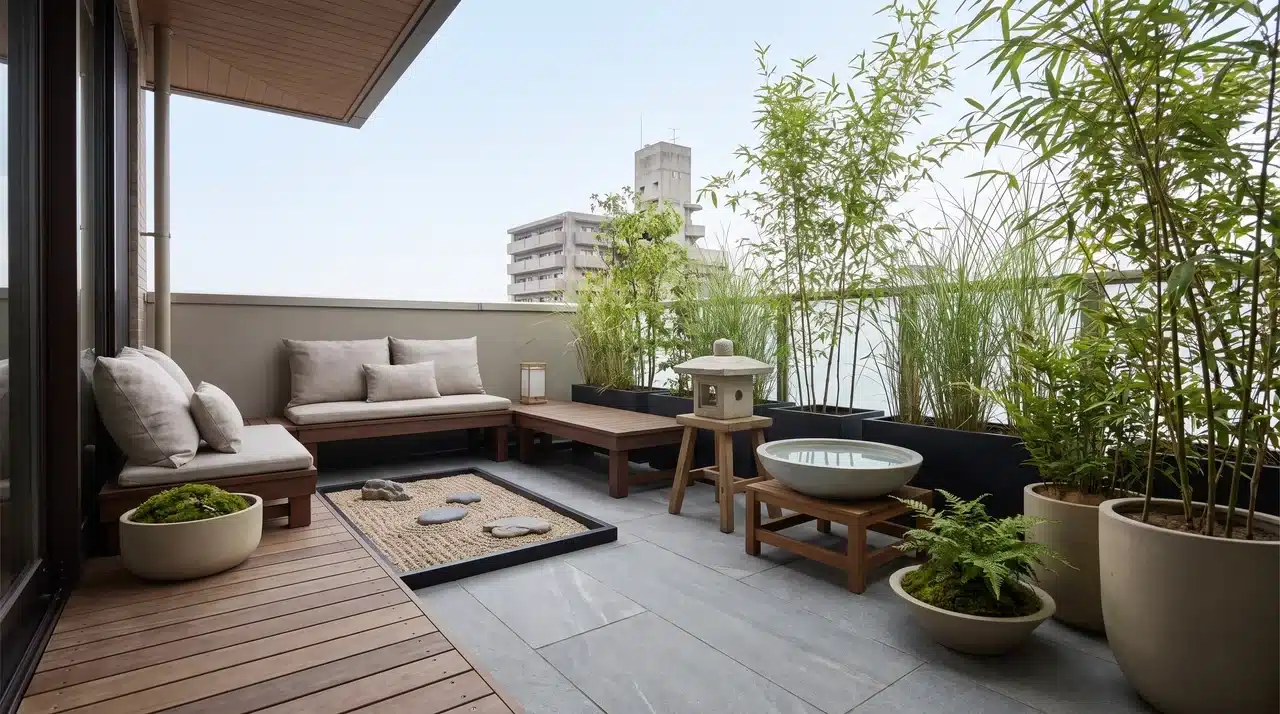
A balcony or patio can become a peaceful zen retreat even with limited space. By using simple materials, natural textures, and a few carefully chosen elements, you can create a relaxing corner without a full backyard.
To make this garden, start with a small gravel tray, wooden decking, or stone tiles as the base. Add a few potted plants, smooth stones, a small water feature, or a simple lantern to create a balanced look. Keep the arrangement open and avoid filling every corner with decorations.
14. Create a Zen Meditation Corner
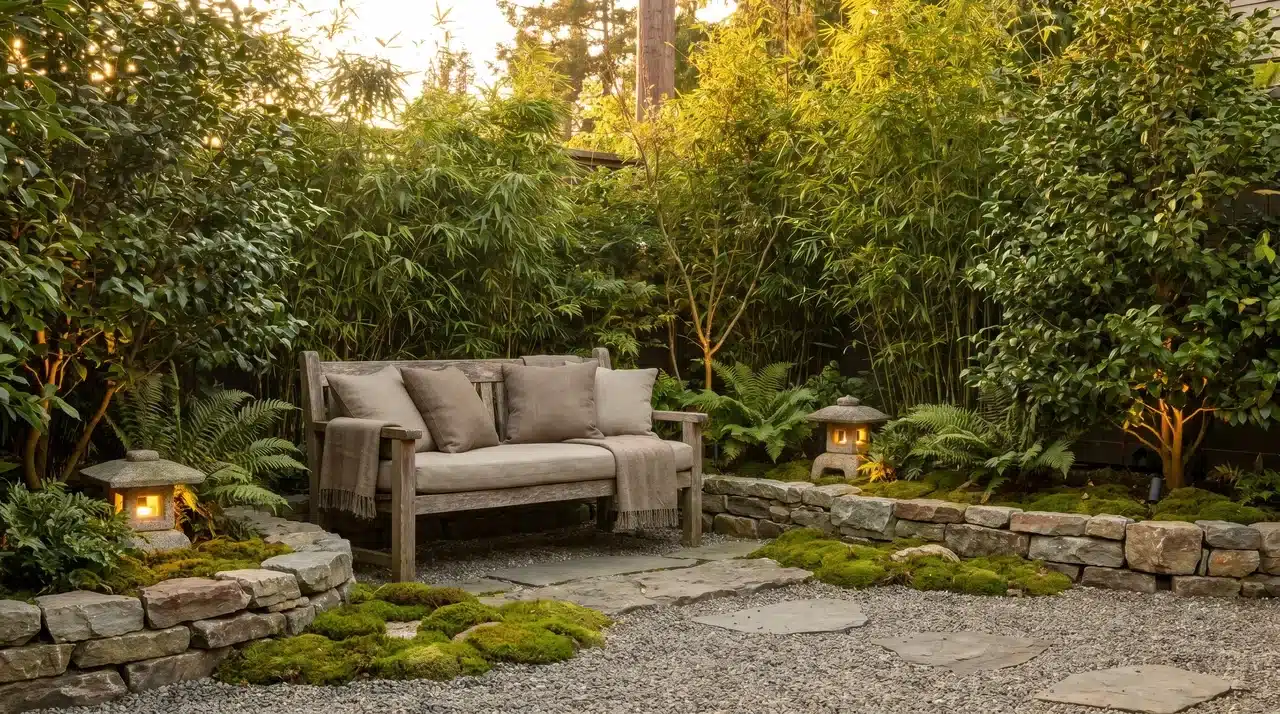
A meditation corner turns your garden from a space you only look at into one you can actually spend time in.
Choose a quiet spot and add simple seating, such as a bench, a wooden platform, or an outdoor cushion. Place it near calming features such as plants, rocks, or water, and keep the area free from too many decorations.
Even a small unused corner can become a peaceful place to sit, slow down, and relax with the right setup.
15. Create a Modern Minimalist Zen Garden
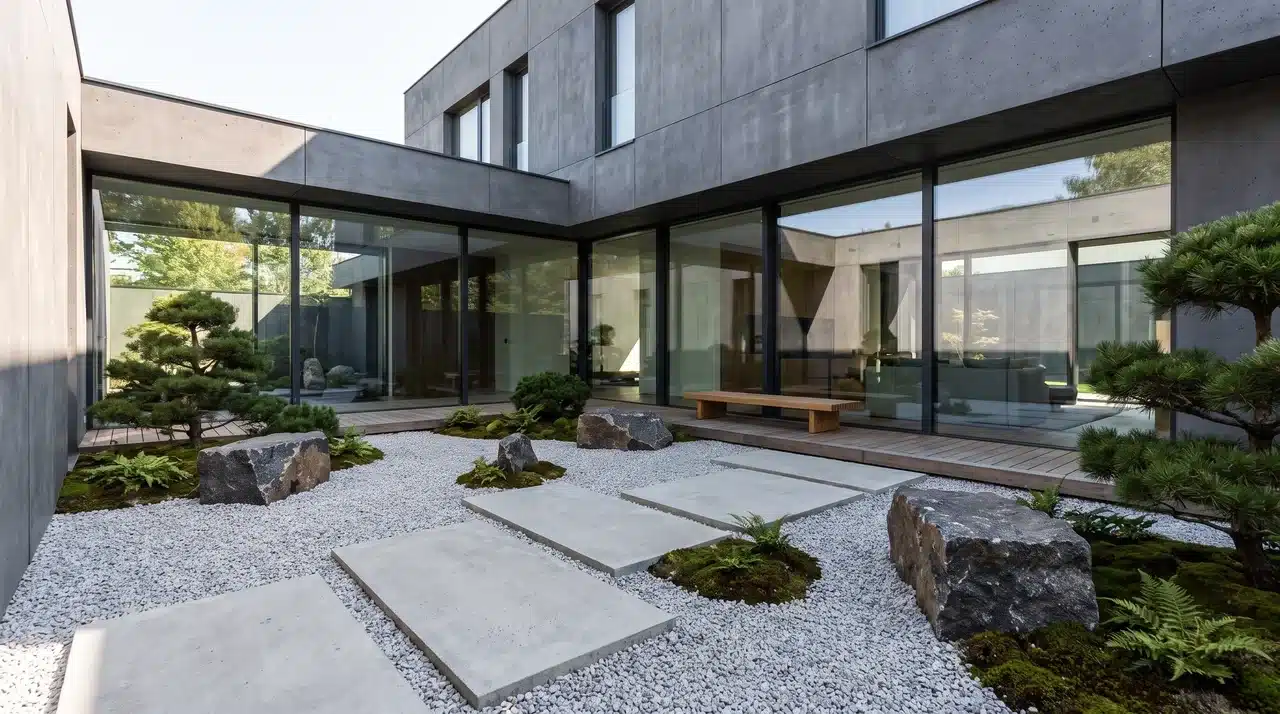
A modern zen garden combines traditional ideas with clean lines and contemporary materials. It is ideal if you prefer a simple look that matches modern homes.
To create this garden, use materials such as concrete, gravel, and stone, along with carefully selected plants. Focus on straight lines, open areas, and a limited color palette.
The key is restraint. A few well-chosen features will create more impact than filling the space with decorations.
How to Choose the Right Zen Garden Style for Your Space?
The best zen garden style depends on your available space, climate, budget, and how much maintenance you want to handle. Choose elements that match your lifestyle instead of copying a design that may not suit your home.
- Start With Your Available Space: Large yards can support pathways, ponds, and bigger rock arrangements, while small areas work better with simple gravel layouts, container plants, or a few carefully placed stones.
- Choose Based On Maintenance Needs: Gravel gardens need occasional raking, while moss gardens require moisture and shade. If you want an easy zen garden design, choose low-maintenance materials like stone, gravel, and drought-tolerant plants.
- Check Sunlight and Weather Conditions: Observe how much sunlight your garden receives before choosing plants. Shade-loving options like moss and ferns work well in darker areas, while succulents and hardy plants suit sunny spaces.
- Match The Garden With Your Home Style: Traditional zen gardens pair well with natural stone, wood, and simple landscaping, while modern homes often look better with clean lines, neutral materials, and minimal designs.
- Decide How You Want To Use The Space: A meditation corner, a decorative garden, or a relaxing backyard retreat will each require a different layout. Plan around the purpose of the garden before adding features.
Choosing the right style helps you create a zen garden that feels natural, peaceful, and easy to enjoy for years to come.
Common Mistakes to Avoid When Creating a Zen Garden
A zen garden works best when every element has a purpose. Avoiding these common mistakes will help you create a space that feels balanced, peaceful, and easy to maintain.
- Adding Too Many Decorative Elements: Filling the garden with too many statues, colors, or ornaments can make the space feel busy instead of calm. Choose a few meaningful features and let empty space be part of the design.
- Choosing Plants That Do Not Suit Your Climate: Using plants that need conditions your garden cannot provide often leads to extra maintenance and poor growth. Pick plants that match your sunlight, soil, and weather conditions.
- Ignoring Drainage and Water Flow: Poor drainage can damage plants, create muddy areas, and affect gravel or stone arrangements. Plan how rainwater will move through the garden before adding materials.
- Making The Design Too Complicated: A zen garden does not need many features to feel complete. Too many pathways, plants, and structures can take away from the simple feeling that makes these gardens relaxing.
- Using The Wrong Size Elements: Large rocks, plants, or decorations can overwhelm a small garden, while tiny features may disappear in a large yard. Choose elements that match the scale of your space.
Avoiding these mistakes will help your zen garden stay simple, natural, and enjoyable for years.
Conclusion
Creating a zen garden is about finding balance through simple elements like stones, gravel, plants, water features, and thoughtful layouts. From small backyard spaces to indoor meditation areas, the right design can help create a peaceful place to slow down and relax.
Whether you want easy zen garden design ideas or inspiration for a larger retreat, these options show that any space can become more calming with the right approach.
Start by choosing one idea that fits your space, then build your zen garden step by step with elements that bring you peace.
Frequently Asked Questions
How Do You Create a Zen Garden for Beginners?
Start with three things: a container or defined area, a raking medium (fine gravel or sand), and one stone as a focal point. Add a single architectural plant only if the space allows. Keep the layout asymmetric, rake a simple concentric pattern around the stone, and resist adding more elements until you understand what each one is doing.
What Is the Best Plant for A Zen Garden?
Japanese maple, bamboo, and moss are the most commonly used because each has a strong, legible silhouette and requires minimal visual management. The right choice depends on your climate and scale: moss suits shaded, small spaces; bamboo suits screens and larger areas; Japanese maple works as a single specimen focal point in mid-sized gardens.
Can a Zen Garden Work in A Small or Indoor Space?
Yes, and the constraint often produces better results. A shallow tray, fine white sand, a small rake, and one or two polished stones are a complete desktop zen garden. The same design principles that govern a full garden apply at tray scale: one focal point, subordinate elements, and a raked pattern that suggests movement.
What Is the 70/30 Rule in Japanese Gardening?
The 70/30 rule refers to the proportion of open space to planted or decorated space; roughly 70% of the garden should be empty or unadorned ground (gravel, sand, moss) and 30% should carry the focal elements. It enforces the visual restraint that produces calm and prevents the over-filling that is the most common mistake in Western interpretations of the style.