

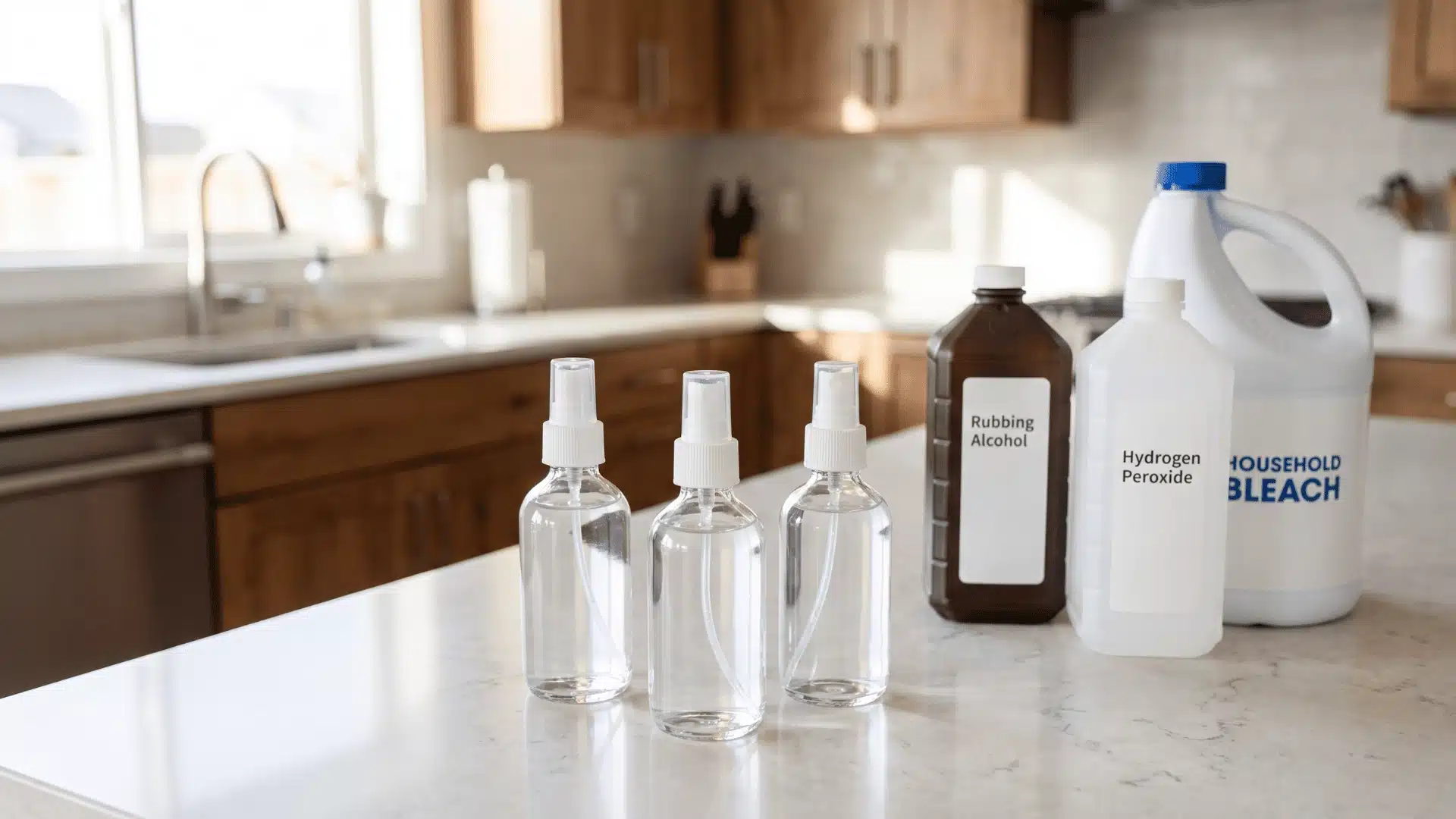

A homemade disinfectant spray can seem simple. Mix a few household ingredients, spray the surface, and wipe it clean. But many popular recipes do not contain enough of the right active ingredient to kill harmful germs.
That matters when you are cleaning kitchen counters, bathroom surfaces, door handles, or areas exposed to illness. A spray may smell strong and remove dirt without actually disinfecting the surface.
This guide explains which DIY disinfectant spray formulas work, how to mix them correctly, how long surfaces must stay wet, and which ingredient combinations you should avoid.
What Does “Disinfect” Actually Mean, and Why Do Most DIY Disinfectant Spray Recipes Get It Wrong?
Disinfecting means killing a defined threshold of pathogens on a surface, not just making it look clean.
That distinction matters more than most recipes let on. Cleaning removes visible dirt and grease. Sanitizing reduces the number of microbes present. Disinfecting goes further; it kills bacteria and viruses at levels that reduce the risk of infection.
Most of what circulates online as a “natural disinfectant spray” doesn’t meet that bar.
Vinegar can kill some bacteria, but not many common illness-causing germs like Salmonella, Staphylococcus aureus, and norovirus. Wiping a cutting board with vinegar after raw chicken may feel thorough, but it is not enough.
You don’t need commercial products to disinfect effectively. You need proven active ingredients at the right concentration. Three affordable, easy-to-find options can do the job; the rest of this covers them.
The Three DIY Disinfectant Spray Formulas That Actually Work
Not every surface needs the same formula. The right choice depends on the material, the type of contamination, and the surface’s sensitivity to chemicals. These three options cover most household needs.
Isopropyl Alcohol DIY Antibacterial Spray (70%)
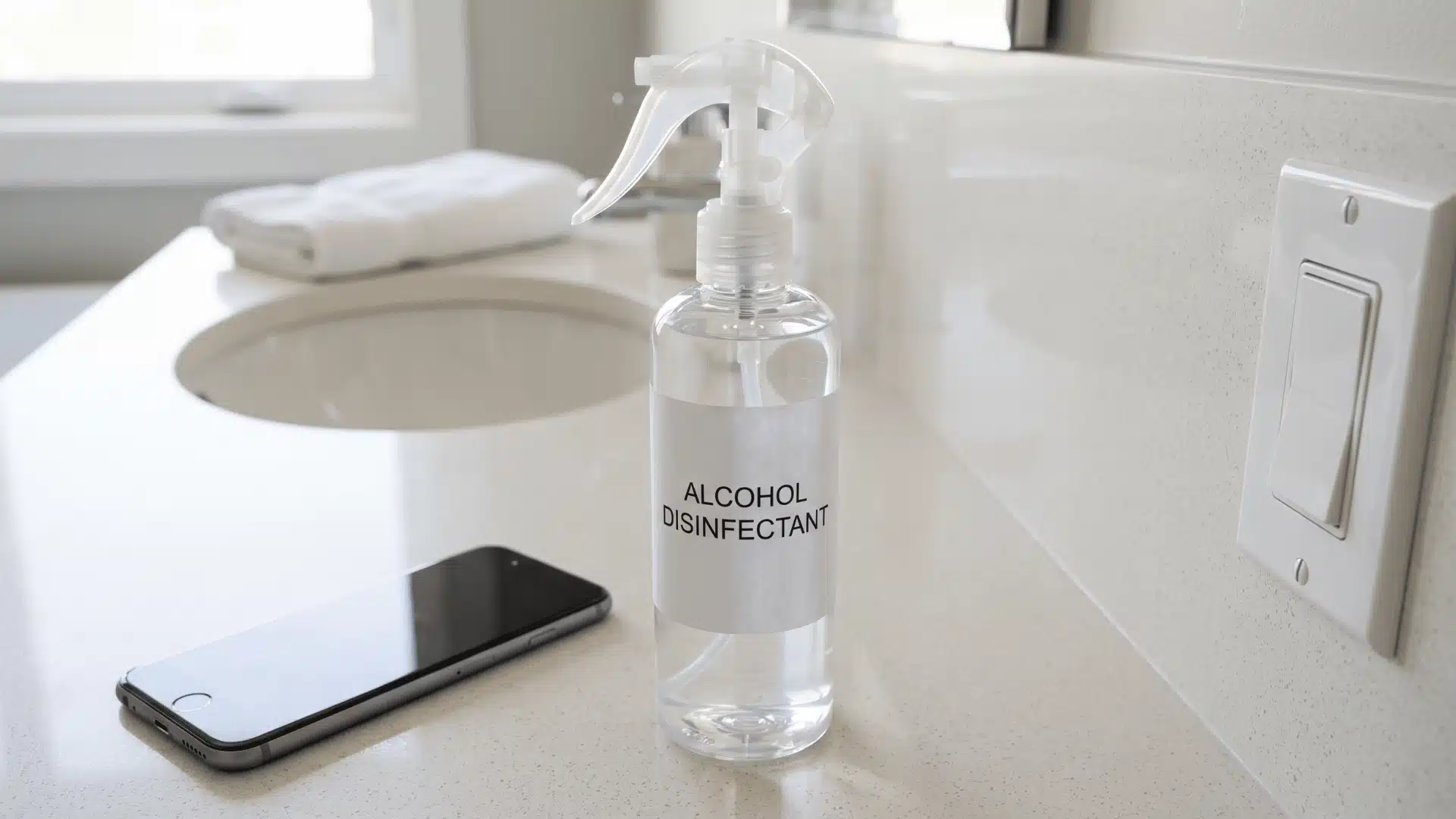
This is the most versatile formula. It works on bathroom counters, door handles, light switches, toilet seats, phones, and most hard surfaces you touch regularly.
The ratio is straightforward: 3 parts 70% isopropyl alcohol to 1 part distilled water.
You might assume 91% isopropyl would work better, higher concentration, stronger kill, but it doesn’t.
The water in 70% isopropyl slows evaporation. That gives the alcohol time to penetrate the cell wall and denature the proteins inside. At 91%, the alcohol evaporates too fast. It’s off the surface before the process completes.
Store this in a glass or metal spray bottle, because some plastics degrade with prolonged exposure to alcohol.
Hydrogen Peroxide Natural Disinfectant Spray (3%)
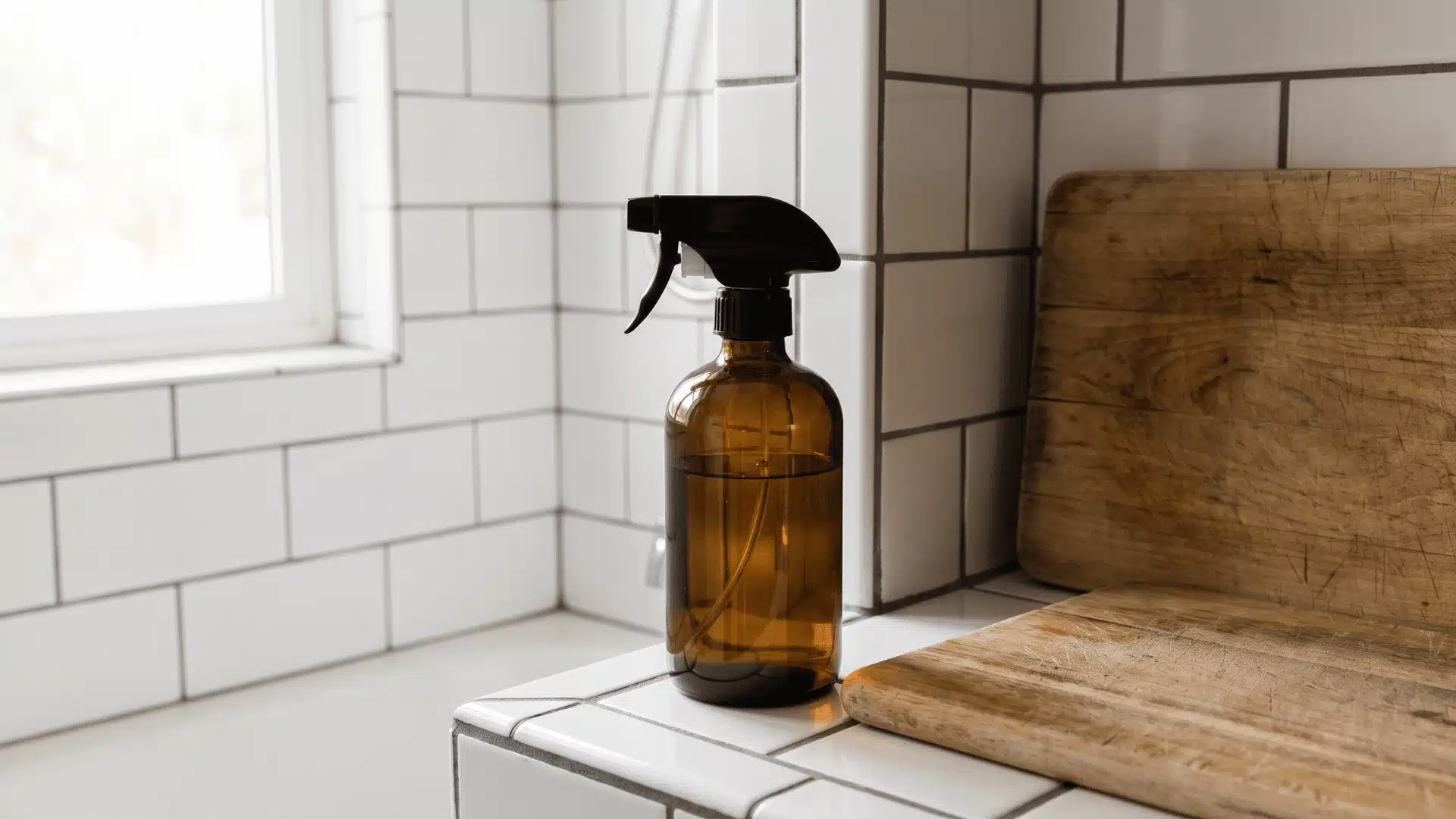
This one works well on shower tiles, grout, mildew-prone areas, and cutting boards. It’s gentler on surfaces than bleach and leaves no residue.
The ratio: 1 part 3% hydrogen peroxide to 1 part distilled water.
Storage also plays a major role. Hydrogen peroxide is light-sensitive, and exposure can slowly break it down, reducing the amount of active ingredient available to kill germs.
Keep the spray in a dark or opaque bottle, preferably one that blocks light. Avoid pouring it into a clear plastic bottle and storing it on a sunny counter, because it may look normal while becoming less effective over time.
Bleach Solution
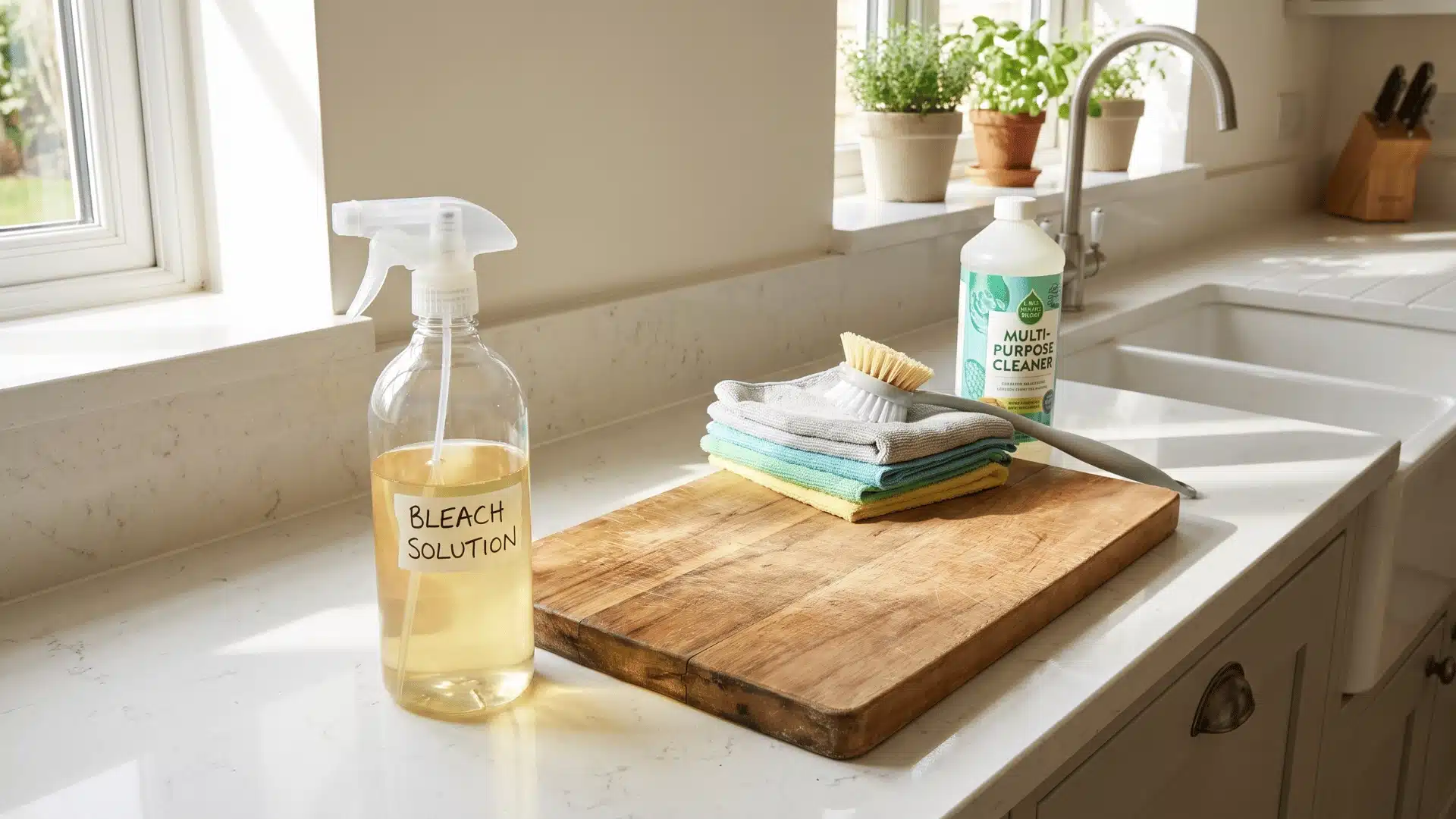
Use this for heavy contamination, surfaces that have come into contact with raw meat, bodily fluids, or illness. It’s the strongest option, but it comes with the most constraints.
The ratio: 4 teaspoons of regular household bleach per quart of water.
Mix this solution fresh each time you need it. Once bleach is diluted with water, it begins to break down and lose strength, especially when exposed to heat, light, or air. After about 24 hours, a batch you made yesterday may no longer have enough active chlorine to disinfect properly.
Use it where its strength is needed, such as high-risk areas or surfaces that can handle it. For everyday cleaning, a milder disinfectant may be a better option that protects your surfaces while still reducing germs.
Why Contact Time is the Step Most DIY Antibacterial Spray Users Skip

Most people spray a surface, wipe it right away, and move on. That removes dirt, but it does not fully disinfect the surface.
Disinfectants work by damaging pathogens. Some break apart the outer cell membrane, while others destroy the proteins the pathogen needs to survive and function.
Neither process happens instantly. The surface must stay visibly wet for the full contact time listed for the formula.
Once the surface dries, the chemical reaction slows or stops. Some pathogens may be killed, but enough can remain to make the surface unsafe.
The surface must remain visibly wet throughout the full contact period. Contact time varies by formula.
- Isopropyl alcohol needs at least 30 seconds of visible wetness.
- Hydrogen peroxide needs a full minute.
- A bleach solution also needs 1 minute, but only on a surface that’s already been cleaned. Bleach doesn’t penetrate grease or residue effectively.
There’s another way this can go wrong. If you spray a disinfectant onto a surface that’s still wet from a different cleaner, you dilute the active ingredient.
The concentration drops below the threshold needed to work. Rinse the surface and let it dry before applying your disinfectant spray if you’ve used anything else first.
Safety, Storage, and Combinations to Avoid
These formulas are effective because they’re chemically active. That’s also why a few basic rules matter.
Never mix disinfectant formulas in the same bottle. And if you’ve used one product on a surface, rinse it off before applying another.
The most common mistake worth flagging: combining vinegar and hydrogen peroxide. You’ll see this presented online as a stronger natural disinfectant spray. It isn’t. Mixing them produces peracetic acid, which is an irritant and no more effective than either ingredient used correctly on its own.
Surface compatibility matters too. Acid-based formulas, anything with vinegar or citrus, will etch natural stone like granite and marble over time. Bleach damages metals and colored grout with repeated use. Match the formula to the surface, not just the mess.
A few storage and labeling basics worth following:
- Store isopropyl-based DIY disinfectant spray in glass or metal; not all plastics hold up to prolonged alcohol exposure
- Keep hydrogen peroxide in a dark or opaque bottle to prevent photodegradation
- Mix bleach solution fresh daily; diluted bleach loses potency within 24 hours
- Label every bottle with its contents and the date you made it
If you have pets, check the ASPCA Household Cleaner Guide before using any new formula around them. Some ingredients that are safe for humans cause serious harm to animals.
Conclusion
A reliable DIY disinfectant spray depends on more than mixing strong-smelling ingredients in a bottle. Concentration, contact time, and surface compatibility all matter.
Once you understand those basics, choosing between alcohol, hydrogen peroxide, and bleach becomes much easier.
Clean the surface first, follow the correct ratio, keep it wet long enough, and store each formula properly.
Use the right recipe for the job, label your bottle clearly, and disinfect with confidence instead of guesswork.
Frequently Asked Questions
Does vinegar work as a natural disinfectant spray?
Vinegar kills some bacteria at full strength but does not disinfect against the pathogens that cause the most common household illnesses, Salmonella, Staphylococcus aureus, and norovirus. It’s a cleaner and mild deodorizer. For actual disinfection, use 70% isopropyl alcohol, 3% hydrogen peroxide, or a diluted bleach solution instead.
Is 91% isopropyl better than 70% for a DIY antibacterial spray?
No. Seventy percent isopropyl is more effective because the water content slows evaporation. That gives the alcohol time to denature bacterial proteins and disrupt viral membranes. At 91%, evaporation happens too fast; contact time is often insufficient to complete the process, particularly on room-temperature surfaces.
Can I add essential oils to my DIY disinfectant spray?
You can add them for scent, but they don’t meaningfully increase the disinfecting power at the concentrations used in these recipes. Tea tree oil has some antimicrobial properties in lab studies, but the amounts needed to replicate that effect are far higher than a few drops per bottle. Treat them as fragrance only.
How do I disinfect fabric or soft surfaces at home?
The formulas here are designed for hard, non-porous surfaces. For fabric, a diluted 70% isopropyl spray can sanitize but may affect color or texture. Check the care label first, test on a hidden area, and allow it to dry fully. Bleach-based solutions should not be used on fabric unless it is specifically bleach-safe.


