


Close to 26 million Americans relocated in 2024, according to U.S. Census Bureau data. Most of them had a budget in mind: the moving truck, the security deposit, maybe a professional crew for the heavy furniture. Those are the numbers people write down.
The American Moving and Storage Association puts the average cost of a long-distance household move at $4,300. That figure covers the truck, the labor, and the miles. It does not cover the gap between lease end dates, the question of what to do with a car, the repair bill from the old landlord, or the stretch of weeks where two security deposits are tied up at the same time.
These are the costs that arrive after the move is already underway.
When the Lease Timing Doesn’t Work Out
Apartment leases typically end on the last day of the month. New leases start on the first. The handoff looks clean on a calendar.
Finding a place in a new city from a distance rarely goes that smoothly. A lease signed in mid-October for a November 1 start leaves a narrow window: vacate the old place, get across the country, accept keys, and coordinate furniture delivery. If the new unit isn’t ready, or the old landlord schedules the move-out inspection late, belongings need somewhere to go in the meantime.
Storage costs range from $45 to $450 per month depending on market and unit size, with the national average around $200, per pricing data from Neighbor, a peer-to-peer storage marketplace. A three-week storage run, which is not unusual when move-in and move-out dates don’t align, adds $150 to $350. Climate-controlled units for furniture, electronics, or anything sensitive to temperature run higher.
Portable storage containers, offered by companies like PODS and U-Pack, are another option. A container is delivered to the old address, loaded over several days, then held at a facility until the new place is ready. Cross-country container moves typically start at $1,500 to $3,000, and the flexible hold period can solve the timing gap without requiring a second truck rental.
The complication grows when neither a storage unit nor a container is available on short notice in the destination market. That can turn one move into two: a truck to get belongings into storage, then another truck to move them to the apartment. Doubling the labor and rental costs for even a partial load adds $500 to $1,000 depending on volume.
Your Car Is a Separate Budget Line
For moves under 300 miles, driving the car makes sense. For anything longer, the math changes.
A 1,800-mile drive runs roughly $200 to $300 in gas for a standard sedan at current fuel prices, plus $150 to $250 in hotels if the driver stops overnight. Add meals, and the option that seemed free ends up costing $400 to $600 before accounting for wear on the vehicle. Older vehicles or those approaching high mileage add one more variable: a breakdown mid-route can cost $500 to $1,500 in towing and repairs and add days to the timeline.
Beyond the direct costs, cross-country driving takes two to three days of full travel time. For someone starting a new job within a week of arriving, that time rarely fits. For someone between jobs, it still carries a cost: those are days that could go toward settling in, handling paperwork, or getting the new place functional.
Open transport averages $1,205 per vehicle and enclosed transport averages $1,804, based on pricing data from more than 258,000 actual shipments from Sherpa Auto Transport. Open carriers are the exposed multi-car trailers common on interstate highways. Enclosed transport uses covered trailers that protect vehicles from road debris, weather, and UV exposure. The cost difference by vehicle type runs from $1,193 for sedans to $1,472 for pickup trucks on the open carrier side.
Cross-country shipments take around 10 days, which means the car is unavailable for up to two weeks after drop-off. Anyone without a second vehicle will need alternative transportation at the destination during that window. That cost, whether rental cars or ride-shares, belongs in the budget. Households moving with two vehicles sometimes drive one and ship the other, which solves the availability problem but leaves one driver handling a long solo road trip.
What the Old Landlord Actually Keeps
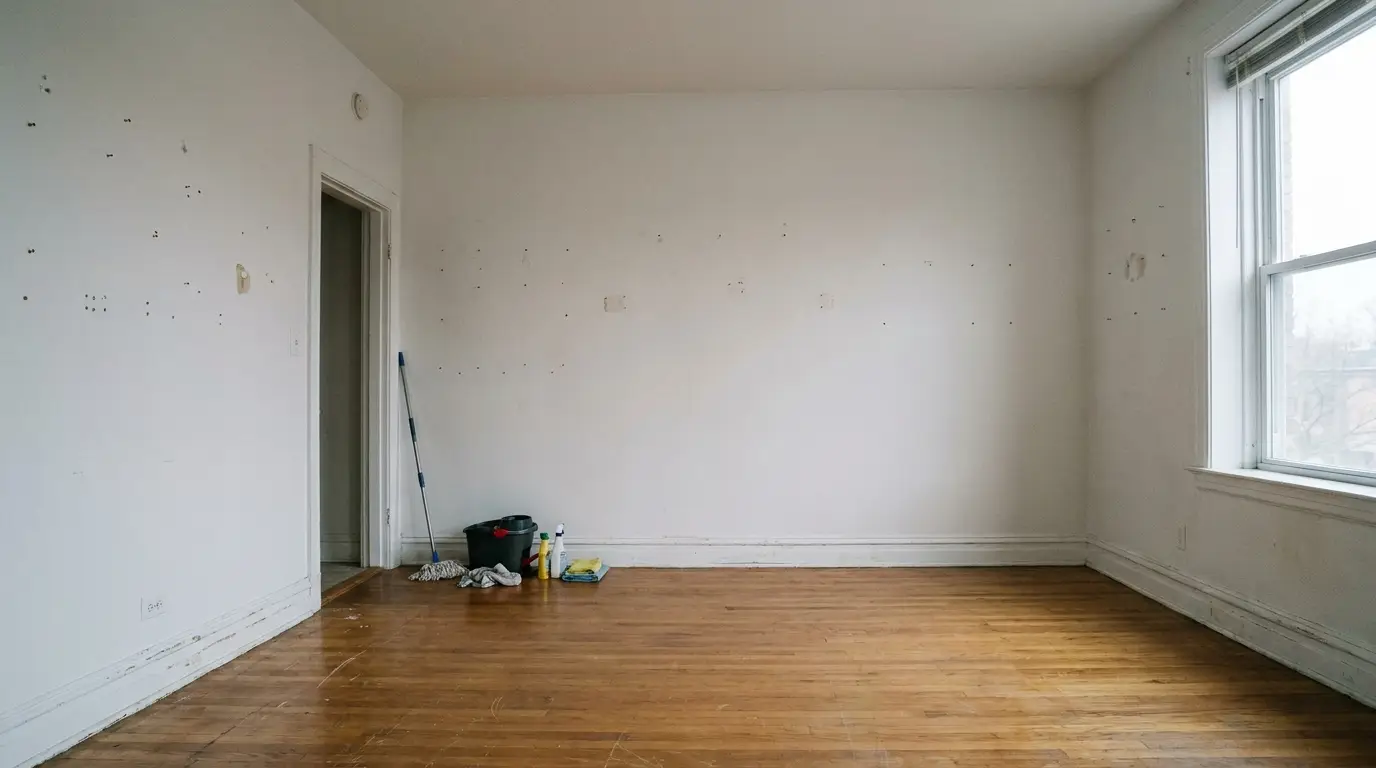
Most renters expect their security deposit back. Under state law, landlords are required to return it, minus documented deductions, within a set window. That window is 14 days in some states, 30 in others. The deposit comes back. It often doesn’t come back in full.
Move-out cleaning runs $100 to $300 for a one-bedroom unit, more for larger apartments. Many landlords require professional cleaning regardless of how clean the unit appears. Nail holes in walls, scuffed baseboards, and worn door hardware can trigger deductions of another $100 to $300, even when the damage falls within what tenants consider normal wear and tear. Carpeting is a frequent dispute point: landlords and tenants often disagree on whether staining constitutes damage or use. Professional carpet cleaning runs $150 to $300; replacement, if the landlord decides it’s warranted, can run $500 or more.
Move-out charges arrive in the weeks after the move, when the financial picture is already under pressure. By that point, the new security deposit has been paid, the truck has been returned, and any credit card balance from moving supplies and temporary hotels is still active. A $400 deduction from the old deposit lands in a different context than it would have two months earlier.
State-by-state variation in landlord-tenant law affects how long the wait is. California requires itemized accounting within 21 days. Texas gives landlords 30 days. Knowing the specific rules for the state being vacated sets realistic expectations for when the money comes back. Documenting the condition of the old unit with timestamped photos before handing over keys is the most reliable protection against disputed deductions.
Two Months of Deposits in Play at Once
Security deposits are the largest single upfront cost in most rentals outside of rent itself. In most markets, that means one to two months’ rent paid upfront at the new place, plus first month’s rent. For a $1,800-per-month apartment, the total due before the moving truck arrives is $5,400.
The old deposit is not accessible during that window. Landlords have up to 30 days in most states to return it, and many take the full time. The gap between paying out the new deposit and receiving the old one back typically runs four to six weeks.
For a two-bedroom apartment in a mid-range market, that window can mean $4,000 to $7,000 in cash tied up simultaneously. The money does come back, but not in time to offset the new lease costs. Treating the old deposit as unavailable for at least a month, and confirming the moving budget can absorb both deposits at the same time, is the step most people skip when doing their initial math.
If the landlord at the old place is willing to do a walk-through inspection before the move-out date and provide a preliminary estimate of deductions, the cash flow picture becomes clearer earlier. Not all landlords will do this, but it is worth asking before signing the new lease rather than after the old one has been vacated.
The Line Items Worth Adding Before Signing a Lease
Financial advisors typically recommend building a 15 to 20 percent contingency on top of any relocation estimate. For a $10,000 move that includes movers, a car shipment, and first month’s rent plus deposit, that means keeping $1,500 to $2,000 accessible and uncommitted. That recommendation assumes a real estimate exists in the first place.
The line items worth adding explicitly before any long-distance move: storage fees if the timing creates a gap, typically $150 to $350 for a short run; professional auto transport if the destination is more than 500 miles away, ranging from $1,200 to $1,800 depending on carrier type; move-out cleaning and repair charges at the old place, usually $200 to $600; and the double-deposit window, which may require $4,000 to $7,000 in liquid cash to be available at the same time.
None of these are unusual. They appear in most long-distance moves. Writing them into the budget before the truck is booked, rather than after, is the difference between a move that lands close to expectations and one that doesn’t.