


Introduction
Celebrity branding is in the midst of a systemic realignment characterized by accelerated digital distribution cycles, shifting fan identity behaviors, and the further fracturing of attention among short-form platforms.
Traditional celebrity marketing was once based on the tried-and-tested formula of uniform merchandise and one-way street promotional campaigns. While the model still exists, it has been weakened as fan communities are becoming more focused on participation, identity signaling, and co-created cultural expression.
Platforms such as TikTok, Instagram Reels, and YouTube Shorts have compressed cultural lifecycles to an extreme degree. Viral moments can now emerge and fade within hours, forcing both brands and production partners to rethink how physical merchandise stays aligned with real-time cultural relevance.
As a result, fan expectations are increasingly shaped by:
- Personalized and identity-driven engagement
- Limited-run and time-sensitive product releases
- Co-created or community-influenced merchandise concepts
- Physical products functioning as identity signals in digital environments
In this environment, value is no longer defined purely by ownership, but by participation and timing.
1. Why Traditional Celebrity Merchandise Is Losing Strategic Impact
The traditional types of merchandise, such as T-shirts, posters, and mugs, are still widely available, but their purpose in terms of fan engagement has changed significantly.
Differentiated identities are limited
Mass-market merchandise can struggle to capture the minutiae of fan identities. As fan bases split into smaller groups, the generic brands are now working less as emotionally meaningful representational objects and more as interchangeable goods, dyed in the emotional colours of any fandom they get affiliated with.
Identity signaling more than ownership
Contemporary fans have become more interested in being seen and in belonging to a community than in amassing items. Modern fandom is increasingly about visibility and belonging, not accumulation. Merchandise is now mainly intended for use in communicating statements:
- Fans community membership
- Participation in shared cultural moments
- Identity signaling across social platforms
This shift reframes merchandise as a communication layer within fan ecosystems rather than a standalone product category.
2. Why Fast Customization Is Becoming a Structural Requirement
Celebrity Culture Moves at Algorithmic Speed
A single viral clip, performance moment, or interview highlight can generate global demand in a very short timeframe. In some cases, engagement peaks form within hours before rapidly declining.
However, traditional manufacturing systems are not always structured to respond within these compressed attention windows.
Structural Constraints of Legacy Production Systems
Conventional suppliers in the promotional product industry typically face several limitations:
- Extended production lead times
- High minimum order quantities (MOQs)
- Limited flexibility in artwork revision cycles
- Inventory risk during trend-driven campaigns
Compared with more agile manufacturers emerging in the customization sector, these constraints often create a gap between cultural speed and production responsiveness.
Rapid Customization as an Adaptive Production Model
In response, rapid customization systems are increasingly positioned as an operational bridge between digital culture and physical goods.
These systems generally support:
- Faster iteration cycles aligned with trending content
- Small-batch and limited-edition production models
- Flexible artwork proof adjustments
- Multi-format campaign execution across different product types
Rather than functioning as static inventory pipelines, merchandise production is gradually evolving into a responsive infrastructure layer connected to cultural timing.
3. High-Impact Product Categories in Fan Engagement Systems
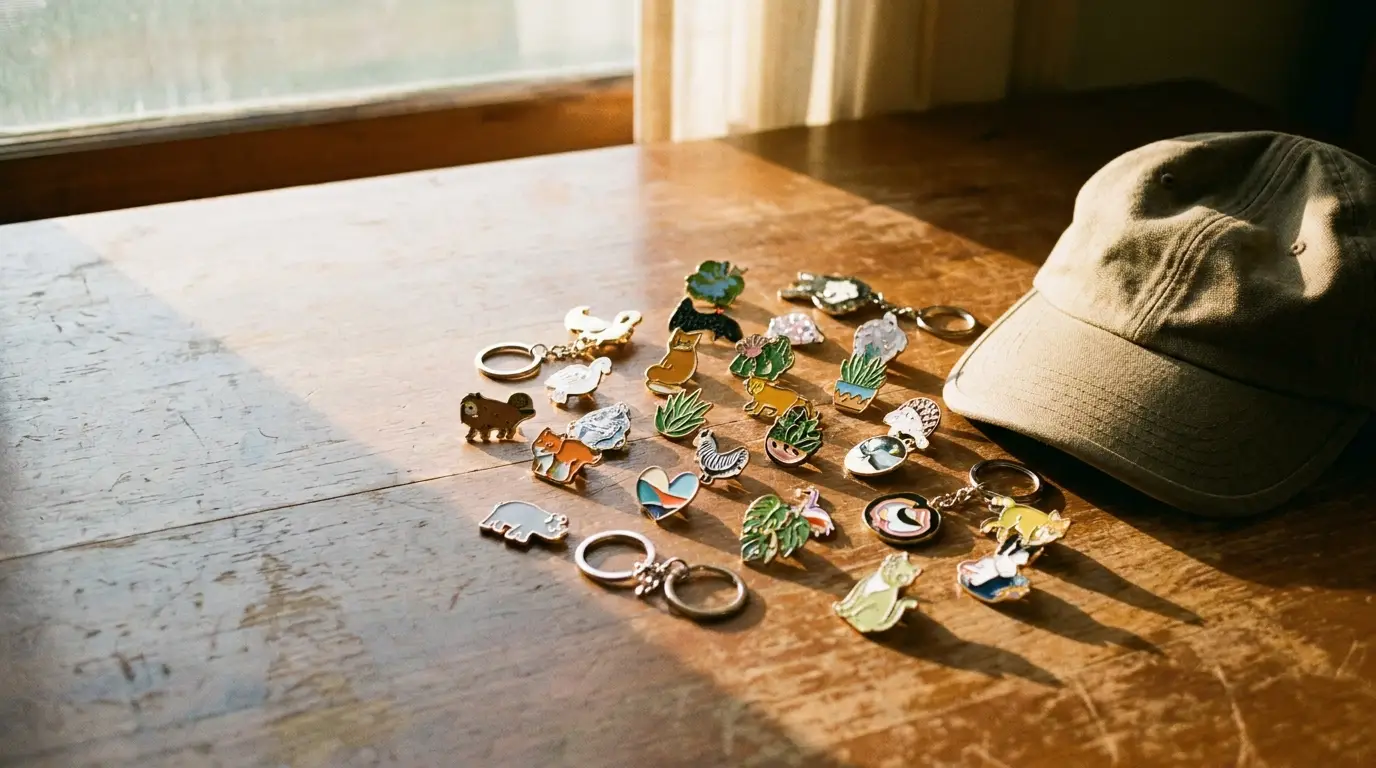
Certain product categories consistently perform well within fan-driven ecosystems due to their symbolic and functional characteristics.
Custom Enamel Pins
Custom enamel pins are widely used in collectible series-based campaigns and often function as identity markers within fan communities. Many brands now work with a Custom Pin Maker to quickly turn trending cultural moments into limited-edition fan collectibles.
Personalized Lanyards
Frequently used in concerts, conventions, and VIP access systems, lanyards combine operational function with symbolic participation value.
Custom Keychains
Custom keychains maintain long-term visibility in daily environments, reinforcing continuous identity expression beyond digital platforms. A reliable Keychain Maker supports scalable production for personalized fan merchandise and promotional campaigns.
Custom Caps
Caps sit at the intersection of fashion and fandom, particularly in visually driven social media ecosystems where wearable identity signals matter.
4. How Production Infrastructure Supports Real-Time Fan Campaigns
As fan engagement becomes increasingly tied to live cultural events, production partners are evaluated less on catalog breadth and more on responsiveness, workflow design, and iteration speed.
Across the promotional products industry, suppliers vary significantly in how they address these operational demands. While many continue to rely on traditional production cycles, others have developed more integrated digital-to-manufacturing workflows designed for faster campaign execution.
Within this landscape, some established customization manufacturers operating at scale have increasingly focused on reducing friction in the pre-production process. Publicly available operational information associated with GSJJ, for example, indicates the availability of 24-hour global customer support designed to facilitate communication across multiple time zones.
During business hours, inquiry responses may be handled in as little as five minutes, depending on request volume and complexity. In expedited design scenarios, initial 2D or 3D artwork proofs may be delivered within approximately three hours as part of the design validation process.
These timeframes refer specifically to customer communication and pre-production workflow stages rather than physical manufacturing or delivery timelines. Their primary purpose is to shorten the transition between concept development and design approval.
Compared with suppliers that rely on longer sequential processes, workflow structures of this type are increasingly discussed as one approach to aligning physical merchandise production with rapidly evolving digital engagement cycles.
Rather than functioning solely as manufacturers, suppliers operating within these systems are increasingly viewed as infrastructure layers supporting fan-driven commerce ecosystems.
5. Future of Celebrity Branding
Personalisation powered by AI
Artificial intelligence is set to enhance personalization in fan engagement with adaptive product suggestions and the generation of context-aware merchandise influenced by user preferences and cultural trends.
Community-led design systems
Fans are having more say in the design of the products they buy, with fansourcing now a key means of cultural production.
Hybrid physical-digital products
Merch that adds digital layers to the fan experience, building value beyond just physical ownership of goods.
Experience-centric ecosystems
Celebrity branding is becoming ecosystem-engagement branding, where the merch is just one piece in a larger participation system and not the end product.
FAQ
What is personalized celebrity branding?
It is about branding techniques that focus on tailored fan experiences, identity expression, and participation over the mass-produced merchandise alone.
Why is fan engagement customization a big deal?
Customization enhances emotional relevance, identity signaling, and speed of reaction to cultural trends.
How does rapid customization help in marketing campaigns?
It provides brands and creators with the opportunity to convert viral cultural moments into physical, limited-edition products in brief engagement windows.
Which products are most effective for fan engagement?
The core group of high sellers is pins, personalized lanyards, keychains, and caps, which are best sellers because of the symbolic and practical nature of the objects.
Conclusion
Celebrity branding in 2026 has nothing to do with static ownership of merch but is more about involvement, identity, and experience.
With digital platforms distorting cultural timelines, the ability to convert viral moments into tangible, limited, and meaningful physical products is taking on the appearance of a structural advantage.
In the end, the fate of celebrity branding will be determined not just by what people buy but by what they can do to participate, share, and co-create in increasingly fluid cultural systems.


