
The choice of book printing method and binding materials impacts both the final product’s look and its durability. Authors and teams have the option to choose from various printing methods, such as digital and offset; this depends on the project type. Here are a few details about book printing that may be useful to know before you start your first print run:
Defining Book Printing Basics
The type of book printing you require depends on different factors, including page count and intended use. Independent authors, artists, and companies may partner with printing service providers to print their books. Some printing companies offer more than one method for book printing, and these include digital and offset printing.
By partnering with a printing company, people can move projects to the printing stage without a formal publisher. Printing services produce various types of books this way, from poem collections to product catalogs. Smaller teams may use digital book printing and softbound methods for limited print runs; this includes internal materials such as project presentations and training manuals. Theater companies are able to use digital printing for playbill booklets and promotional materials.
Before completing the printing stage of a project, some details to finalize may include:
- Paper choice: Interior and cover stocks influence weight, texture, and how a book holds up over time.
- Page count: Certain bindings and formats work better within specific page ranges.
- Color setup: Projects may use full color, grayscale, or black-and-white themes depending on layout needs and visual priorities.
- Trial and short printing runs: Smaller print quantities are often used to test content, update editions, or support time-sensitive distribution.
Explaining Offset Printing Methods
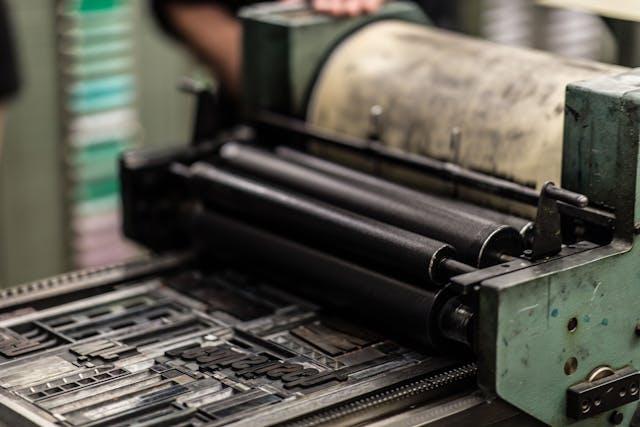
Offset printing begins by creating plates for text and images. These plates transfer ink onto a rubber sheet, which then applies the image to paper. The printing service provider makes the plates, aligns the colors, and tests sheets, which are usually reviewed before the full run begins. Because of this process, offset printing usually takes a little longer to get started. Once the plates are set up, they can be used to print large volumes of pages at a fast speed. If you are planning on printing in bulk or have a project with a higher page count, offset printing helps you keep similar standards and patterns between books. This method can be used on a variety of papers, including typical paper, cardstock, and thicker materials, and it helps maintain color fidelity and image resolution. Offset printing is ideal for those who need to print a large volume of books with consistent coloring and quality. It is the method often chosen by professional publishers because of its balance of quality and speed.
Exploring Digital Printing Methods
Digital printing transfers files directly from a computer to the printing press. The setup may not require mechanical steps in advance, so this makes it a suitable option for shorter book printing runs. Digital printing has a relatively faster turnaround than other analog printing options. Some digitally printed books are designed for projects under a time constraint or short-term distribution. Short digital printing runs make it easier to review the printed results; this allows you to test formats before committing to a large production run.
Using digital printing may be a practical solution for those who prefer printing copies on demand instead of in bulk. Short printing runs also allow you to add updates or revisions when needed. Projects that use digital book printing techniques may include mailing catalogs, event lookbooks, and booklet-style publications. You are able to use this type of printing for both black-and-white and full-color books; this makes digital printing a versatile option.
Some people may use digital printing as a testing and refinement step before committing to large-scale offset printing. It allows you to check details like color balance, paper feel, and binding behavior without having the whole setup offset printing requires. Once all the project details have been sorted out, the primary focus of the book printing may shift to consistency and high-volume production.

Choosing Durable Book Binding
Binding methods impact how well a book holds together over time. Paperback books made with perfect binding tend to be portable and durable. This format enables books to be lighter and easier to handle, and it makes it a practical option for projects intended for circulation or repeated use. Perfect binding also supports a wide range of printing sizes and page counts. You can choose from a variety of finishes, shines, and paper types, but paperback book printing can only be of text or graphics.
Use Book Printing Services
Brands, educators, and independent creatives can partner with printing service providers, so they can make books that bring their projects to life. Some printing service providers also offer additional finishing elements, such as foil stamping. These can be added to create eye-catching titles and accents on the cover and inside the book. Explore which available book printing options fit your project.