
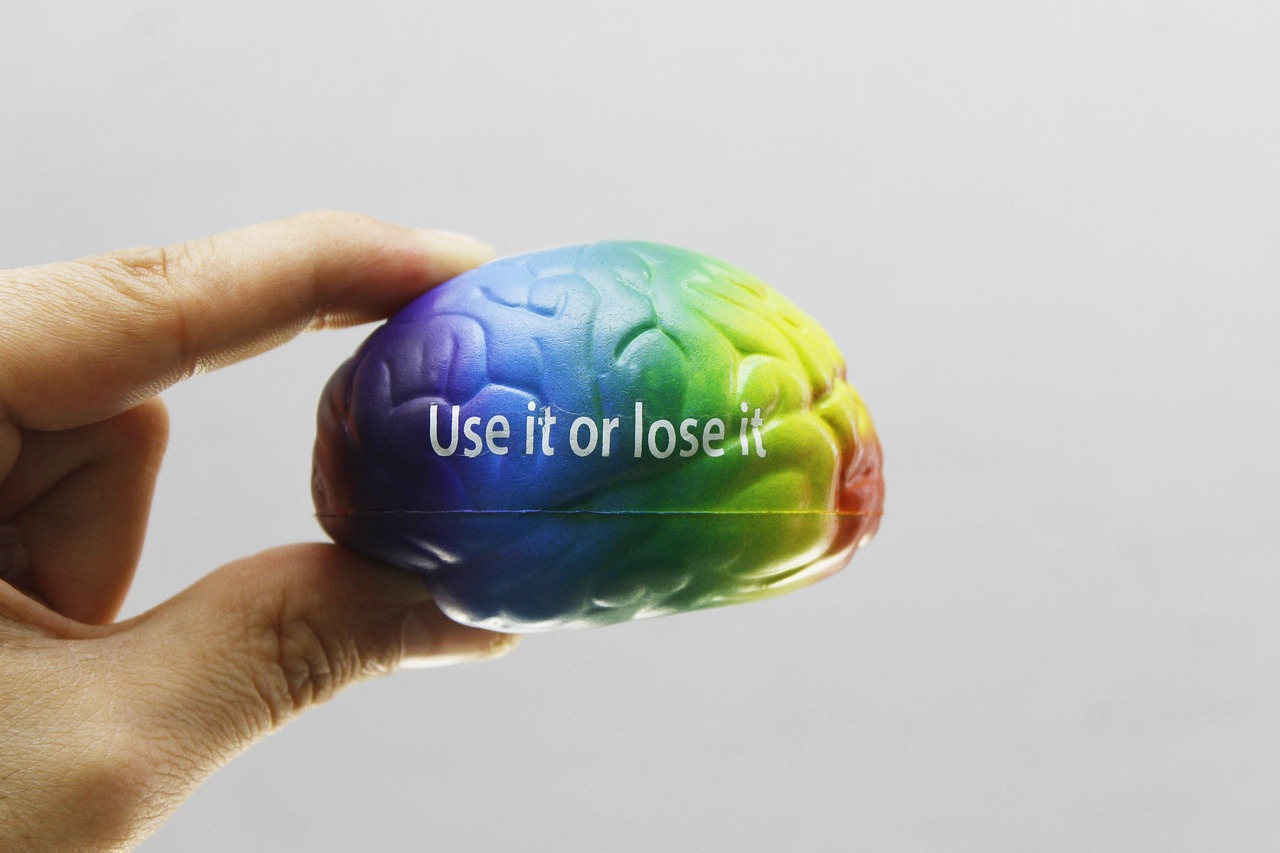

Your brain requires daily exercise alongside your body. Fail to give your brain regular workouts and you may experience cognitive decline, memory loss and an increased chance of dementia.
Exercising the brain involves carrying out mentally demanding tasks that help to build and strengthen neural pathways. 30 minutes per day is all you need for a successful cranial workout – but just what types of activities make great 30 minute brain exercises? Below are 10 examples.
Chess
This board game has been played for centuries and is often regarded as one of the best brain workouts. Chess enhances strategic thinking and problem solving by requiring players to plan several moves ahead and anticipate opponents’ actions. Studies also show that chess can boost memory and concentration, as recalling patterns and positions strengthens neural pathways over time. You can play chess using a physical board or you can play it online – either against other players or a computer. Games can take over 30 minutes, but you can always abandon them and go back to them.
Language learning
Speaking another language is a great skill to have and the learning process can be excellent for boosting brainpower – it stimulates plasticity and helps build new neural connections. Research shows that knowing two languages can improve multitasking abilities, while the process of learning new vocabulary can enhance memory recall. When choosing a language to learn, select one that you think will be useful so that you’re motivated to keep learning. You can sign up for 30-minute language learning lessons, or download language learning apps to help self-teach yourself.
Dancing
Dancing is as much of a mental exercise as it is a physical exercise – especially choreographed dancing. It engages multiple brain regions and can help boost co-ordination, spatial awareness and memory. It’s also a great stressbuster for clearing the mind of other concerns, flooding the body with feelgood endorphins. Try learning steps and routines to your favourite songs by copying dances on TikTok or YouTube, or by coming up with your own dance moves (a great way to exercise your creative skills!).
Card games
Different card games can test our brain in different ways. Some of the most challenging games like Bridge and Poker can help sharpen decision-making and probability assessment. Other games like Rummy help to improve our pattern recognition skills. Most card games don’t take any longer than 30 minutes. Don’t have anyone to play cards with? Try out various Solitaire variants like Klondike and Spider Solitaire, which can be played with a physical deck of cards or digitally.
Memory games
Memory games are typically social activities that require remembering patterns, sequences and pairs. Examples include The Shopping List game (players take it in turns to recite a shopping list while adding a new item each time), The Tray Game (items are removed from a tray and you must work out which items are missing) and card games like Concentration (find pairs by turning up face-down cards and remembering their position). On top of boosting our short-term memory, these games are excellent for building focus and attention span. People of all ages can enjoy memory games as the rules tend to be quite simple.
Word puzzles
Solving word puzzles can help improve language processing skills and grow your vocabulary, while also developing skills like pattern recognition. One of the most popular word puzzles is the crossword – many of which are designed to be completed within half an hour. You can also try word searches and anagram solving puzzles (board games like Scrabble also involve anagram solving). Buy yourself a word puzzle activity book or explore free word puzzles online.
Number puzzles
Commonly paired with word puzzles are number puzzles like sudokus. These puzzles are a test of logical reasoning and mathematical thinking, helping the brain process patterns and deduce solutions systemically. They’re also good activities for enhancing concentration and cognitive flexibility, reducing mental fatigue by training us to sustain our attention (setting time limits can further help prevent concentration from wandering). You can find these puzzles online or in activity books. The majority of them can be easily completed within 30 minutes.
Reading a book
Many of us don’t realise just how great the mental benefits of reading are. On top of being a popular source of entertainment and stress relief, reading can help improve our visualization and emotional understanding skills through imagination and character relationships. Reading is also one of the best ways to build vocabulary and comprehension skills, plus it can boost long-term memory retention. Half an hour is enough time to read 1 or 2 chapters – consider picking up a book every day when you have a spare 30 minutes and within a couple weeks you’ll have finished it (that’s potentially 26 books per year!). Physical books can be particularly excellent for reading before bed, providing a break from screens in order to help us sleep better.
Learning a musical instrument
Playing an instrument exercises our motor skills and auditory processing skills. Learning new pieces of music can be particularly good for boosting brainpower – helping us to improve memory and discipline. Meanwhile, many instruments also train us to be better multi-taskers by requiring us to perform different actions with each hand (and in some cases feet too!). Decide which instrument you think is right for you and try taking some half hour lessons. Alternatively, self-teach yourself an instrument using YouTube tutorials and tabs.
Intellectual conversations
Conversations can be some of the best brain workouts. This is particularly the case with intellectual conversations that encourage critical thinking and perspective taking. Emotional intelligence and memory also play a key part in these conversations as they often involve articulating ideas and recalling facts. How can I start having more intellectual conversations? Start transitioning from small talk into deeper subjects with open-ended questions. You can also share facts and stories that you’ve read to spark conversations. Approach every discussion with humility, assuming that you can learn from everyone, even if you disagree. Welcome debates, but make sure to keep them civil.