
Understanding NCAA eligibility can feel like a maze for student-athletes, but understanding the rules is key to making the most of your college sports experience.
If you’re wondering how many years of participation you have in NCAA Division 1, you’re in the right place.
Whether you’re aiming for a full four years or considering a fifth year, it’s important to know the ins and outs of the requirements, age limits, and the NCAA’s guidelines.
In this blog, we’ll break down everything you need to know, so you can stay on track and focus on what really matters: your performance on and off the field.
Understanding NCAA Division 1 Eligibility
NCAA Division 1 (D1) is the top level of college sports in the U.S., with the most competitive programs, advanced facilities, and national exposure for student-athletes.
General Eligibility Requirements for Student-Athletes
- Be enrolled as full-time students and maintain a certain GPA.
- Complete the required high school core courses.
- Have amateur status (no professional experience or paid competition).
- Register with the NCAA Eligibility Center for academic and amateurism verification.
How Many Years of Eligibility do You Have?
In NCAA Division 1, student-athletes generally have four years of eligibility to compete in their sport.
These four years are typically spread across a five-year period, with the fifth year allowing for recovery or other personal needs.
To stay eligible, athletes need to meet the same academic requirements mentioned earlier, such as completing the necessary credits and maintaining GPA standards.
Redshirting means sitting out a season without losing a year of eligibility. It’s often used for injury recovery or to adjust to college sports. A redshirt year doesn’t count toward the four years of competition.
NCAA 5th-Year Eligibility
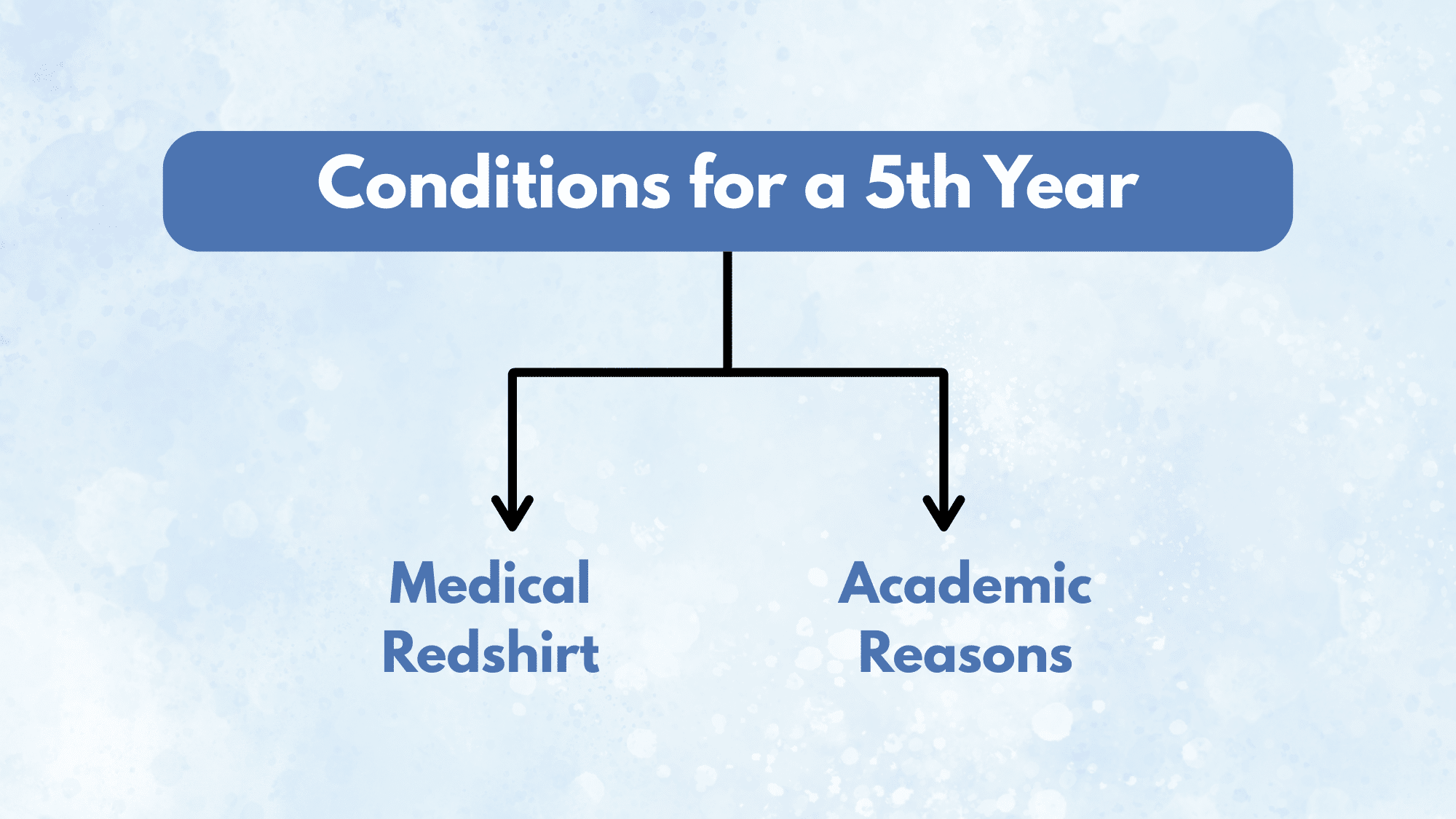
A 5th year of participation allows athletes to extend their time and compete beyond four years. This typically happens due to conditions like injury or academic delays.
Conditions Under Which Athletes Can Use a 5th Year:
- If an athlete is injured and misses a season, they may be granted a 5th year to make up for the lost time.
- If an athlete doesn’t complete their degree within four years due to academic challenges, they may be allowed to play in a 5th year.
For example, an athlete who misses a season due to injury might apply for a medical redshirt, extending their eligibility.
Similarly, athletes who take longer to graduate due to academic challenges may use the extra year to complete their degree while continuing to play.
Age Limits and NCAA Eligibility Rules
| Factor | Description | Example |
|---|---|---|
| Eligibility Clock | The program starts when an athlete enrolls and lasts 5 years. | Must complete eligibility by age 23. |
| Military Service | Time spent in the military pauses the clock. | 2 years in the military don’t count against eligibility. |
| Injury | Injuries may grant a medical redshirt. | Miss a season due to injury and get an extra year. |
| Incoming Freshmen | Must start college sports by age 21. | Must be 21 or younger when starting college athletics. |
| Transfers | Transfers must meet age and eligibility rules. | A transfer student with 3 years of eligibility left can play 1 more year. |
Additional Considerations
Impact of COVID-19 on eligibility
The NCAA also granted additional eligibility during the COVID-19 pandemic, extending eligibility by one year. Athletes affected by disruptions could play an extra season.
Special Circumstances and Waivers for Athletes
Athletes can apply for waivers in certain situations that may extend their participation. Some common reasons for waivers include:
- Hardship Waivers: If an athlete faces personal issues, such as a health crisis or family emergency, they may be granted additional time to compete.
- Other Special Cases: Athletes experiencing significant disruptions (e.g., military service, natural disasters) may also be eligible for an extended period to compete after NCAA review and approval.
Conclusion
NCAA Division 1 participation rules can seem tricky, but understanding the guidelines makes them manageable.
You have four years to compete, with a possible fifth year for reasons like injury or academic delays.
Stay on top of your academic and athletic requirements, and reach out to NCAA resources or your athletic advisor for personalized advice.
Stay focused, stay informed, and take full advantage of every opportunity!