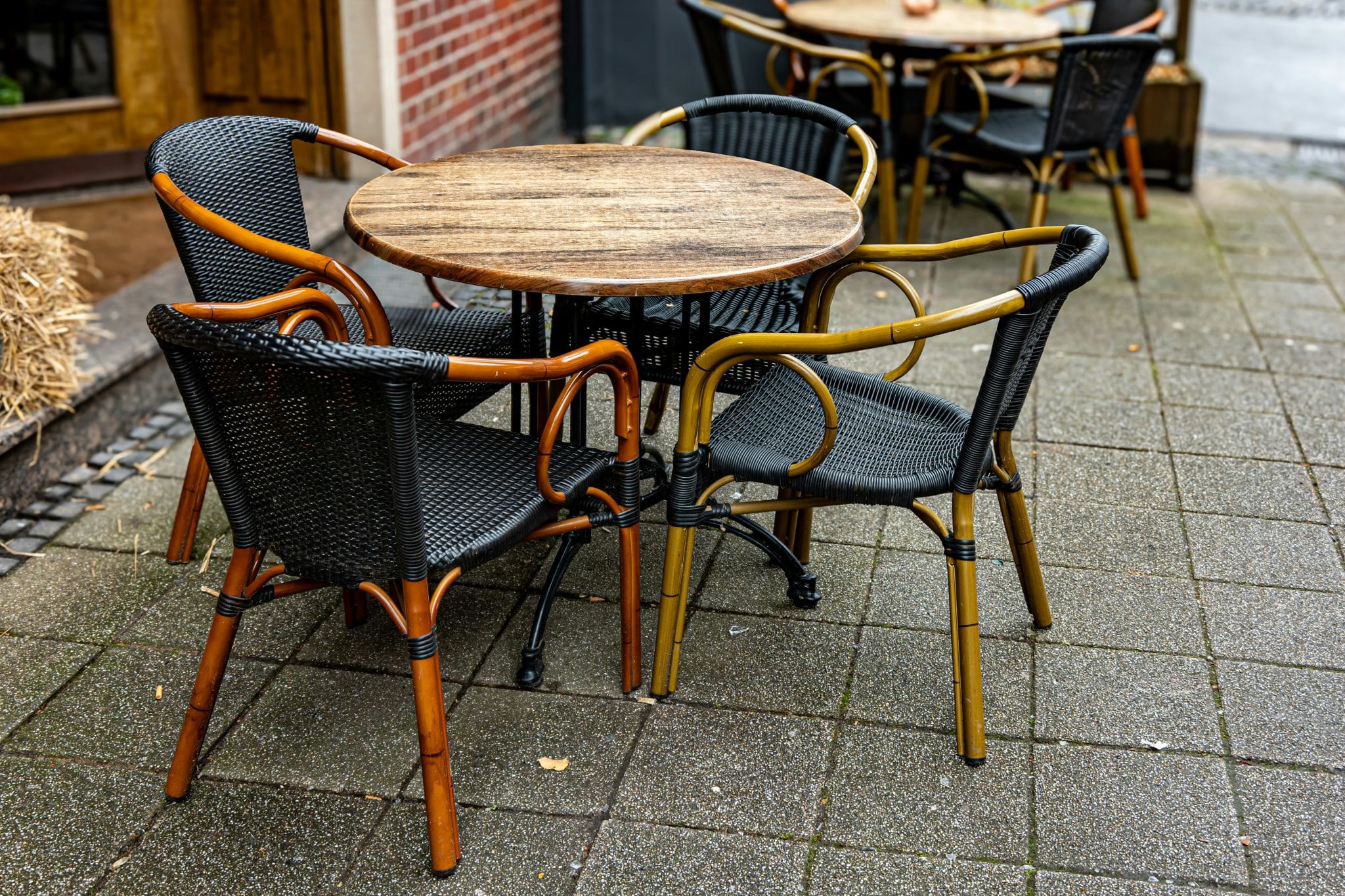

Choosing dining chairs sounds like a simple task until you realise how many moving parts there are.
From comfort to proportions, finishes, and the way a chair “sits” (no pun intended) visually in the room, there’s lots to consider. So, understanding it all helps you avoid chairs that look gorgeous online or in a showroom but feel awkward in real life.
In this guide, I’ll walk you through key considerations when trying to find the best dining chairs for your home. I’ll cover everything from style and design to lumbar support, materials, and sizing, as well as the clearances that make dining feel effortless rather than cramped.
When choosing dining room chairs, always start with measurements and clearances. Then, think about comfort and materials that suit how you use your dining space. Once these practical boxes are ticked, it becomes much easier to pick a style you love.
Start with the table, not the chair
When choosing dining room chairs, it’s tempting to fall in love with the chair design first, especially if you’ve spotted a shape or fabric you adore.
However, your dining table sets the rules, and before anything else, I always look at:
- Table height
- The thickness of the tabletop or apron (the frame underneath that can steal leg space)
- Table shape (round, rectangular, oval, square)
- How many people do you want to seat comfortably.
In terms of sizing, most dining tables are around 75–76 cm high, and a comfortable seat-to-tabletop difference is usually around 25–30 cm. Using these numbers as a guide helps you avoid the classic mistake of choosing chairs that are too tall (knees jammed) or too low (shoulders hunched).
If you’re trying to understand how to pick dining room chairs that match an existing table, measure from the floor to the underside of the tabletop, not just the top surface. This is what your thighs actually need.
Get the clearance right so the room works day-to-day
Clearance is the part most people skip when they’re choosing dining chairs, and it’s the reason the space can feel tight.
Here are some clearances I recommend as a starting point:
- A minimum of around 70 cm from the table edge to the nearest wall or furniture. This means someone can sit down comfortably and push their chair in.
- Roughly 20–25 cm between chairs, so elbows aren’t clashing and the table doesn’t feel crowded.
- Think about who’s sitting at the table. A common rule of thumb for rectangular tables is to leave around 60–70 cm between each person.
Also, if you regularly host, or if your dining room is also a walkway to the kitchen or garden, I’d always be more generous with that space behind chairs. The difference between “it fits” and “it flows” could be as little as 10–20 cm in the right place.
Choose comfort first, then make it beautiful
The best dining chairs look the part and are super comfortable. So, if you’re shifting and fidgeting after an hour, you might have a problem.
Here are some of the most important aspects of comfort, and things to look for when you’re choosing dining room chairs:
Lumbar support and back shape
I’m a big fan of gently curved backs on dining chairs because they support the natural shape of your spine and don’t force a rigid posture.
However, if you like a lower-backed chair (which are also very chic and often lighter-looking), make sure it supports your mid-back, so you aren’t perching.
Seat depth and width
A deeper dining chair seat can feel lounge-like, but it can be uncomfortable for shorter legs if the edge presses into the back of people’s knees. On the flipside, a very narrow chair can look delicate, but may feel restrictive.
If you can, try to mimic your favourite sitting position when picking out your chair. Do you like to tuck a leg under, or do you naturally sit forward? Your habits are just as important as the design, if not more.
Arms or armless
Armed chairs can be wonderful at the “heads” of the table, but check two things:
- Will the arms slide under the table comfortably?
- Do they take up too much space in your dining room?
These will help you make the right decision regarding your space and your dining chairs.
Materials that work in real life, not just the mood board
Understanding materials is understanding how to pick dining room chairs you’ll love for longer. It’s also where I see the biggest mismatch between aspiration and reality.
Here are some of the key differences between the most popular materials for dining chairs:
Upholstered chairs
Upholstery brings comfort and adds warmth, which is especially lovely in homes with hard flooring and minimal window dressings.
And if you have children, pets, or frequent guests, consider:
- Textured weaves that hide minor marks
- Mid-tone colours rather than very pale neutrals
- Wipeable or treated fabrics, where possible.
In addition, remember that upholstered seats can compress slightly over time. This can actually increase thigh clearance under some tables.
Wooden chairs
Wood dining chairs can look timeless and are relatively easy to maintain. As a result, they’re a great choice for most family homes.
What’s more, if a lack of comfort is a concern, you can always add a seat pad. That way, you get the durability of wood with a softer seating position, and you can change the aesthetic seasonally.
Metal and mixed materials
Metal frames can feel modern and sleek, which helps in smaller rooms because they don’t visually “block” out any space. However, check stability and floor-friendliness, because some metal feet can scratch kitchen floors if they aren’t adequately protected.
Visual weight: why some chairs feel “too much” in a room
Two chairs can have the exact same measurements, yet one makes a room feel heavy, and the other feels airy. This is because of “visual weight”, which can increase based on various factors:
- Dark colours
- Thick legs or bulky frames
- High backs with solid panels
- Heavy textures (chunky boucle, large patterns).
Things that reduce visual weight include:
- Slimmer legs
- Open backs or spindles
- Lighter tones
- Mixed materials that break up the silhouette.
Matching chairs to the dining table
Matching is an interesting one when it comes to choosing dining room chairs, because it either means coordinating so a set looks intentional, or buying multiple chairs of the same style, so everything is uniform.
My advice would be to always try to match tones, not materials. For example, try a warm oak table with chairs that include warm tones, even if the chairs are upholstered.
You could also try echoing one detail of the dining room chair with another piece in the kitchen. For example, if your table has black legs, pair it with chairs that have black feet or subtle black accents.
And finally, consider how shape brings harmony to the space. A rounded pedestal table, for example, works beautifully with dining room chairs that have softer curves rather than sharp angles.
And if you want the easiest route, start by choosing whether your “anchor” piece is the table or the chairs. Then let the other item support it rather than compete with one another.
The practical checklist to use when choosing dining room chairs
Before you commit to buying your chairs, consider the following:
- Table height and underside clearance
- Seat height so the chair sits roughly 25–30 cm below the tabletop
- Space behind chairs, ideally around 70 cm minimum for comfort
- Space per person at the table (and between chairs)
- How long you actually sit at the table (comfort needs change fast after 30 minutes).
Final thoughts
Choosing dining room chairs gets much easier once you come at it with a game plan. Measure first, plan clearance next, then think about comfort and material based on how you live. After all this is confirmed, choosing the right style becomes the enjoyable part rather than a gamble.
FAQs
How do I know if my dining chairs are the right height for my table?
As a rule of thumb, aim for around 25–30 cm between the chair seat and tabletop.
How much space do I need behind dining chairs?
If possible, allow a minimum of around 70 cm behind a chair so someone can pull it out and sit comfortably. If the dining area doubles as a walkway, aim for a bit more space.
Should dining chairs match the dining table?
Not necessarily. Coordinating tones, shapes, or one repeated detail often looks more intentional and harmonised than buying a perfectly matched set.
Are upholstered dining chairs a bad idea for everyday use?
Not at all. Upholstered chairs can be brilliant for comfort, especially if you linger at the table between meals. Choose practical fabrics and colours that suit your household, and consider how easy they are to clean day-to-day.