
Have you ever used the same hair product as your friend, only to get completely different results?
Maybe their hair turns out soft and shiny, while yours feels heavy, dry, or just… off.
The truth is, what works for one person might not work for another, and a big reason for that is how your hair handles moisture.
In this blog, you will learn the key differences between low porosity vs high porosity hair, how to test your own, and simple ways to care for it.
Let’s find out what your hair’s been trying to tell you!
What is Hair Porosity?
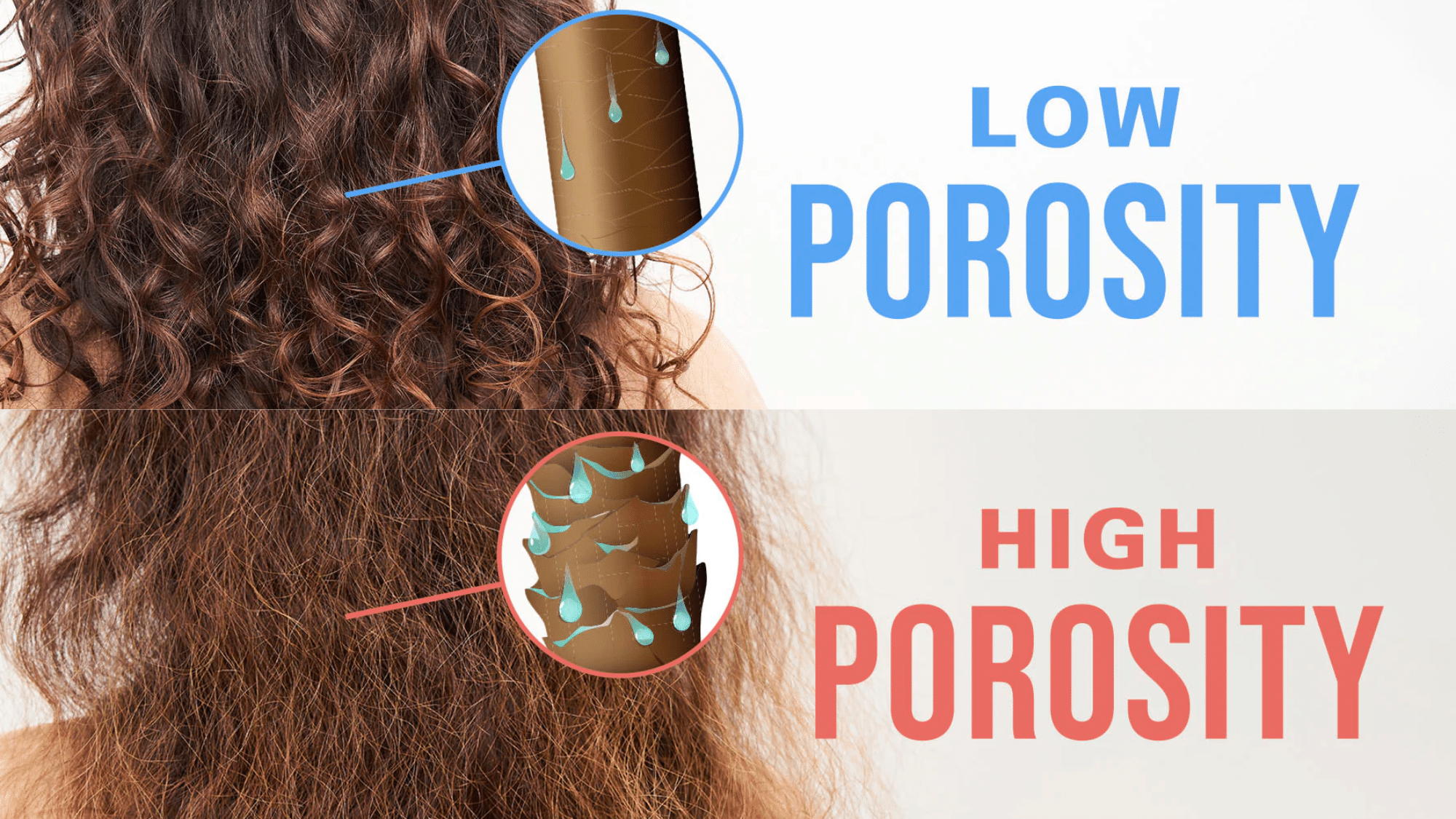
Hair porosity is all about how your hair absorbs and holds onto moisture. It depends on the condition of your hair’s outer layer, called the cuticle.
When the cuticle is tightly packed, moisture has a harder time getting in. And, when it’s raised or damaged, moisture goes in easily but also escapes quickly.
There are three main types of hair porosity:
- Low Porosity: moisture struggles to get in
- Normal Porosity: moisture balance is just right
- High Porosity: moisture gets in easily but doesn’t stay long
Key Differences Between High vs Low Porosity
To better understand how different hair types respond to moisture, products, and daily care, here’s a side-by-side comparison of high porosity vs. low porosity hair:
| Feature | High Porosity Hair | Low Porosity Hair |
|---|---|---|
| Moisture Absorption | Absorbs water quickly | Slow to absorb moisture |
| Moisture Retention | Loses moisture fast | Holds moisture longer |
| Cuticle Layer | Raised or damaged | Flat and tightly packed |
| Feel When Wet | Rough or overly soft | Smooth; takes longer to dry |
| Common Causes | Heat, bleach, or genetics | Mostly genetic |
| Product Behavior | Soaks in fast, fades quickly | Sits on top, may cause buildup |
| Best Products | Heavy creams, oils, and protein treatments | Lightweight oils, humectants, heat-activated products |
How to Test Your Hair Porosity?
Here are three easy ways to test your hair at home:
1. The Float Test
Take a clean strand of dry hair without any products and drop it into a glass of room-temperature water.
If it floats for a long time, you likely have low porosity hair.
On the other hand, if it sinks quickly, your hair is probably of high porosity.
2. The Spray Test
Spray a small section of clean, dry hair with water.
If you notice that water beads up and sits on the surface, your hair is likely low porosity.
But if the water absorbs into your strands quickly, that’s a strong sign that your hair has high porosity.
3. The Touch Test
After washing your hair, gently feel a damp section.
Low porosity hair often feels smooth and takes a long time to dry.
High porosity hair may feel rough or overly soft, and it usually dries very fast, indicating how easily it loses moisture compared to low porosity strands.
Tip: For best results, make sure your hair is freshly washed, free of products, and the water is at room temperature. This helps give you the most accurate results.
How to Maintain High Porosity and Low Porosity Hair?
Let’s break down how to care for different hair porosity levels so you know exactly what your strands need.
1. High Porosity Hair
High porosity hair absorbs moisture easily, but it also loses it just as fast. That’s why the main goal is to lock in moisture and strengthen the hair.
What It Needs
Focus on sealing in hydration, strengthening your strands, and minimizing extra stress from heat.
- Moisture Sealing: Use oils and butters to keep moisture from escaping.
- Protein Treatments: These help rebuild damaged cuticles and add strength.
- Minimal Heat: Excessive heat can exacerbate the damage, so use styling tools with caution.
Suggested Routine: Try the LOC method: Liquid (like water or aloe), Oil (such as castor oil), and Cream (like shea butter) to hydrate and seal your hair step by step.
Best Ingredients to Look For
These natural helpers make it easier to keep your hair nourished and shiny.
- Shea butter – seals in moisture and adds softness
- Castor oil – thick and rich, perfect for sealing ends
- Aloe vera – hydrates and soothes the scalp
With the right care, high-porosity hair can remain hydrated, shiny, and strong.
2. Low Porosity Hair
Low-porosity hair resists moisture, so the goal is to help moisture penetrate and prevent buildup from heavy products.
What It Needs
The goal here is to gently open the cuticle so your hair can actually absorb what you put on it.
- Lightweight Moisture: Use water-based or light oils that won’t sit on top of your hair.
- Warmth: Heat helps open the cuticle, allowing your hair to absorb products more effectively.
- Avoid Heavy Products: Thick creams and butters often just coat the hair and cause buildup.
Suggested Routine: Use warm water to wash your hair and a steam or a heat cap during deep conditioning to help moisture penetrate. Clarify regularly to prevent product buildup.
Best Ingredients to Look For
Look for humectants and light oils that hydrate without weighing your hair down.
- Glycerin – attracts moisture to the hair
- Honey – a natural humectant that softens
- Argan oil – light and nourishing without weighing hair down
With the right routine, low porosity hair can stay hydrated, smooth, and manageable!
Conclusion
Understanding your hair’s porosity is truly a game-changer when it comes to creating a haircare routine that works for you.
Once you know how your strands absorb and retain moisture, you can stop relying on trial and error and start making intentional choices with confidence.
Take a little time to test your hair, stay consistent, and don’t be afraid to adjust until you find what makes your hair look and feel its best.