

Home reverse osmosis systems are engineered filtration units designed to remove dissolved inorganic solids at the molecular level. Unlike carbon-based filters that rely on adsorption, RO systems use semi-permeable membranes to physically reject contaminants.
In controlled lab conditions and field installations, home reverse osmosis systems consistently outperform pitcher filters and faucet-mounted filters, particularly in regions with high TDS, fluoride, or heavy metal contamination. Their performance advantage comes from membrane separation rather than media saturation.
Why RO Outperforms Standard Filtration
RO membranes reject contaminants based on both molecular size and ionic charge, allowing them to remove substances that standard filtration methods cannot reliably address.
Observed removal rates from lab and field data include:
Lead: >99%
Fluoride: 95–98%
PFAS compounds: up to 99%
Sodium and chloride: >95%
This level of rejection makes home reverse osmosis systems especially suitable for households using municipal water with chemical treatment residues or private well water with dissolved minerals.
Membrane Quality Defines System Performance
Reverse osmosis systems are membrane-driven devices. While housings, valves, and tubing affect durability, the membrane itself defines water quality output.
Key evaluation criteria include:
Thin-film composite (TFC) membrane structure
Rejection stability under fluctuating pressure
Chlorine and oxidant resistance
Fouling and scaling control over time
Systems using lower-grade membranes often show declining rejection rates within the first year, even if initial performance appears acceptable.
SimPure Reverse Osmosis Engineering Standards
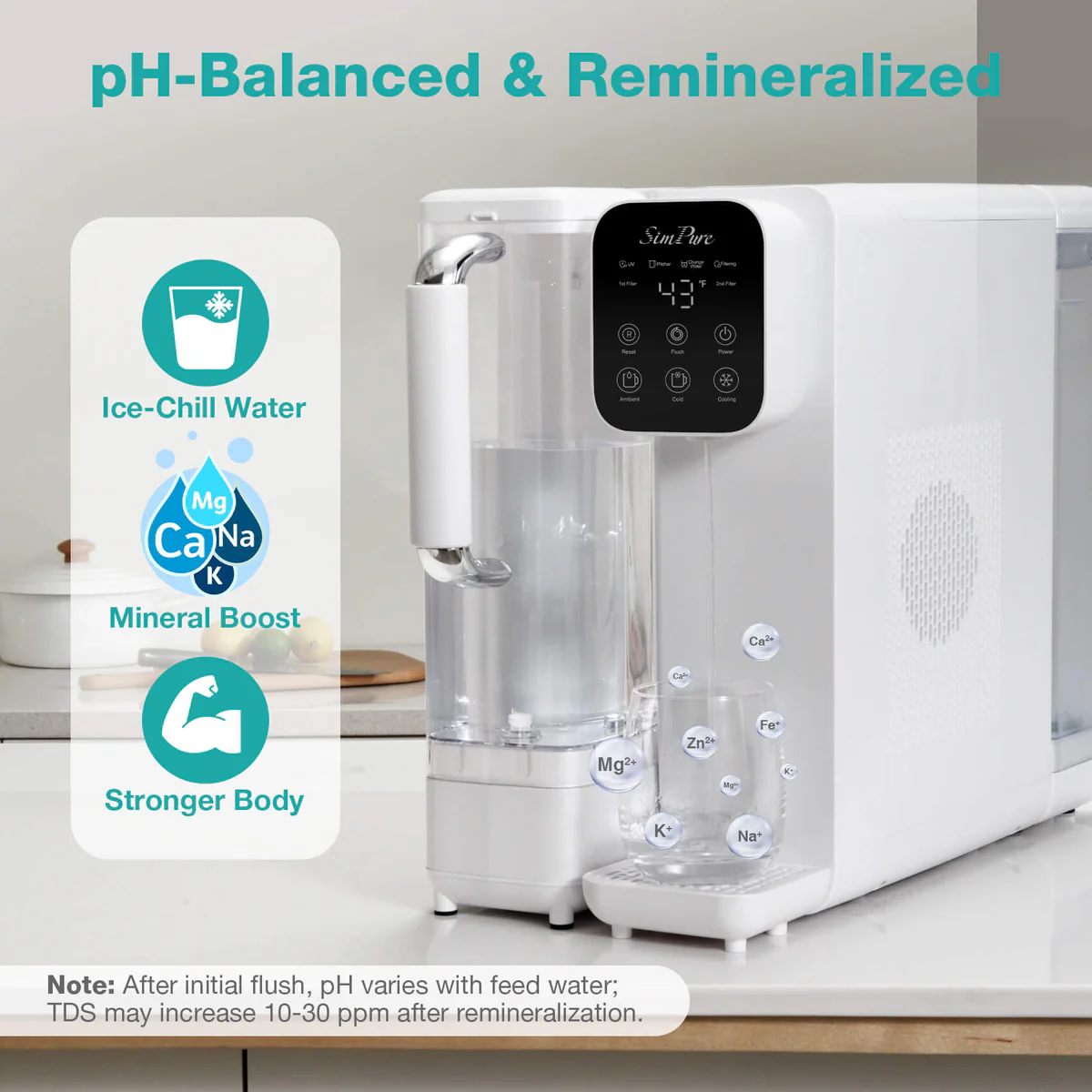
SimPure reverse osmosis systems are built around thin-film composite membranes validated for long-term rejection stability. Internal cycling and stress tests show consistent heavy metal and fluoride removal under fluctuating inlet pressure conditions.
Rather than optimizing only flow rate, SimPure prioritizes membrane integrity, pressure tolerance, and predictable maintenance intervals. This engineering approach ensures that water quality remains stable over the full service life of the system
Water Pressure and Pump Integration
Inlet water pressure has a direct impact on membrane efficiency. When pressure drops below approximately 50 psi, rejection rates can decline and wastewater ratios increase.
For households with low or unstable pressure, integrated booster pumps help maintain optimal membrane performance. Proper pump matching ensures consistent permeate quality without accelerating membrane wear.
Long-Term Performance Considerations
When evaluating home reverse osmosis systems, water quality consistency over time matters more than initial flow rate claims. Systems designed around stable membrane performance typically deliver lower lifetime cost, fewer service issues, and more predictable water quality.