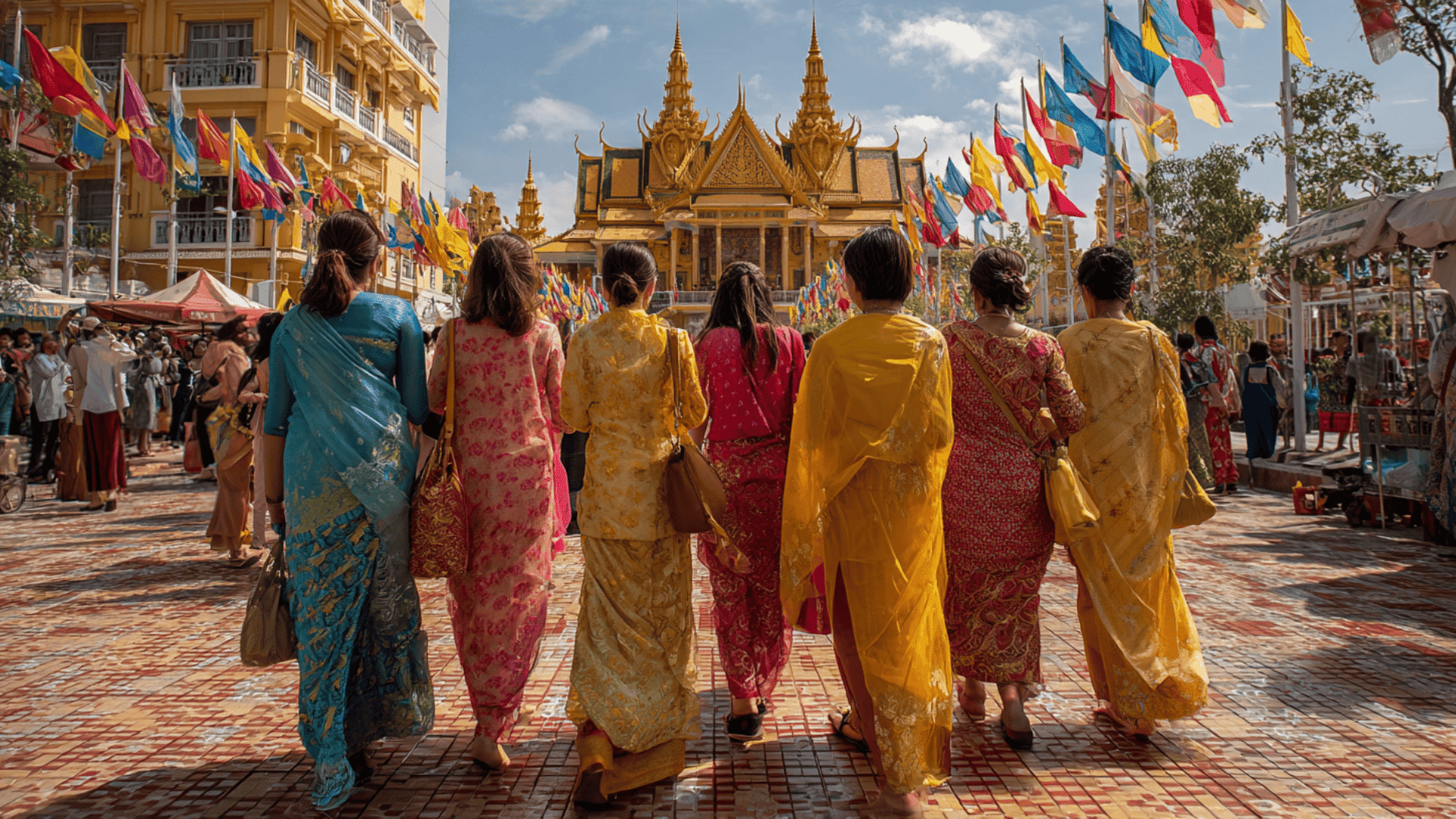

Every April, Cambodia comes alive with color, music, and joy. Streets fill with people in beautiful clothes, temples welcome crowds of families, and the smell of delicious food floats through the air.
This is the Cambodian New Year, also called the Khmer New Year. In Khmer, it is called Choul (Chaul) Chnam Thmey, which means ‘Entering the New Year.’ It is Cambodia’s traditional solar New Year.
It is a time for families to reunite, honor ancestors, and welcome fresh beginnings.
Here, you will learn about the history, significance, and traditions that make this holiday so special, from temple visits and traditional games to festive foods and family blessings.
What Is the Cambodian New Year?
The Cambodian New Year is the traditional New Year celebration in Cambodia, celebrating the new year on the traditional Khmer calendar.
It also marks the end of the harvest season, closely tied to farming and agriculture. For centuries, this has been a time to rest after months of hard work in the fields.
The terms “Cambodian New Year” and “Khmer New Year” mean the same thing. Khmer refers to Cambodia’s largest ethnic group and official language.
People all across Cambodia celebrate it. Khmer communities in other countries also celebrate it and keep the tradition alive.
History and Origins of the Cambodian New Year
The Cambodian New Year has deep roots stretching back centuries. Understanding its origins helps us appreciate why this celebration remains so meaningful to Cambodians today.
Ancient Roots and Calendar Influence
The Cambodian New Year has been celebrated for hundreds of years. The festival follows the traditional Khmer calendar; it is Cambodia’s traditional solar new year.
This calendar shares similarities with others used across Southeast Asia, which is why Thailand, Laos, and Myanmar also celebrate their new year around the same time in April.
The timing connects to nature and farming. It happens near the end of the harvest season, before the rainy season begins, making it a natural time for farmers to rest and celebrate.
The Legend Associated with the Festival
A famous Khmer New Year story says Kabil Moha Prum (the king of the gods) wanted to test a smart boy named Dhammabal Koma. He asked him three riddles and made a deal: the loser would lose their head.
Dhammabal could not solve the riddles at first, but he heard the answers while resting in the forest. When Kabil Moha Prum listened to the correct answers, he lost and cut off his own head as promised.
Before he did, he called his seven daughters and warned them to keep his head safe.
Each year during the New Year, one daughter (a Tevada, or New Year angel) takes a turn in a ceremony that brings blessings for the year ahead.
How Celebrations Evolved Over Time
Over the years, Cambodian New Year celebrations have grown and changed. While ancient traditions remain at the heart of the festival, modern additions have made it even more festive.
Today, large public events, concerts, and community gatherings are common. Cities and towns organize parades, performances, and special programs that bring people together in new ways while still honoring old customs.
Why the Cambodian New Year Is Important
The significance of the Cambodian New Year goes beyond marking a new year. It represents renewal, a chance to leave behind the old and welcome new opportunities, good luck, and happiness.
Family is central to this celebration. Many Cambodians travel to their hometowns to reunite with relatives, show gratitude to elders, and strengthen bonds through shared meals and blessings.
Religion plays an important role, too. Most Cambodians practice Buddhism, and the new year includes spiritual traditions like visiting temples, making offerings, and earning merit through good deeds.
Communities also come together as neighbors share food, temples host events, and public spaces become gathering spots for celebration.
When Is the Cambodian New Year Celebrated?
It usually starts around April 13 or April 14. The start date is set each year using the traditional Khmer calendar and horoscope (Hora) calculations, so that the exact day can shift.
The celebration is traditionally three days, but the official public holiday can be longer in some years.
This timing marks an important seasonal shift as the hot dry season gives way to the coming rains. Each day of the festival has its own name and purpose.
For Cambodian communities living abroad, celebrations often move to the nearest weekend. This allows families who work or attend school during the week to participate fully.
Temples and community centers host events on Saturdays or Sundays close to the traditional dates.
The 3 Days of Cambodian New Year (Khmer New Year)
Each day of the Cambodian New Year has its own name, meaning, and traditions. Here is a breakdown of what happens during this three-day celebration.
Day 1: Moha Sangkrant (or Moha Sangkran)
The first day is called “Moha Sangkran.” It marks the end of the old year and the arrival of the new one. Families wake up early to clean their homes, sweeping away bad luck from the past year.
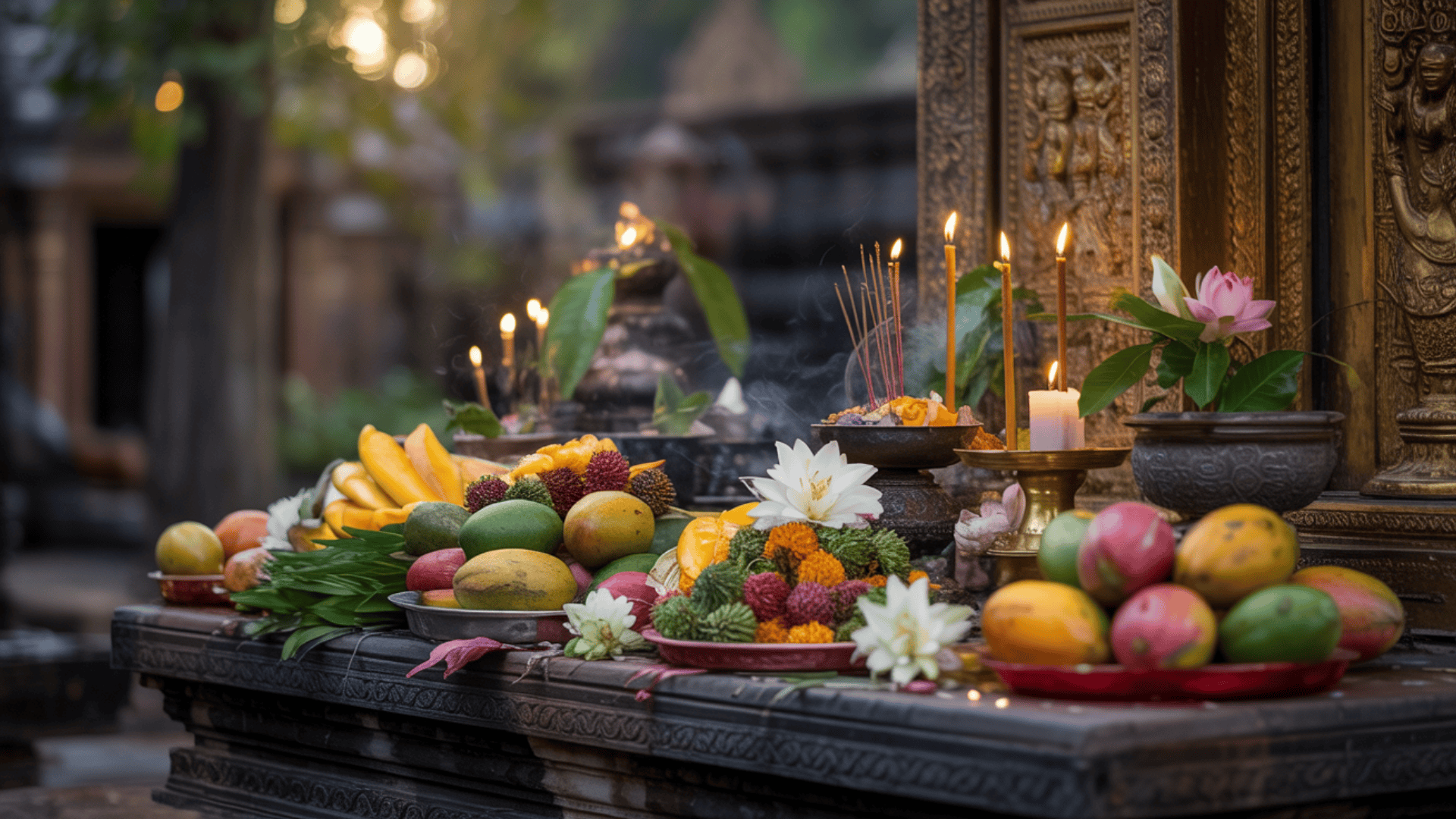
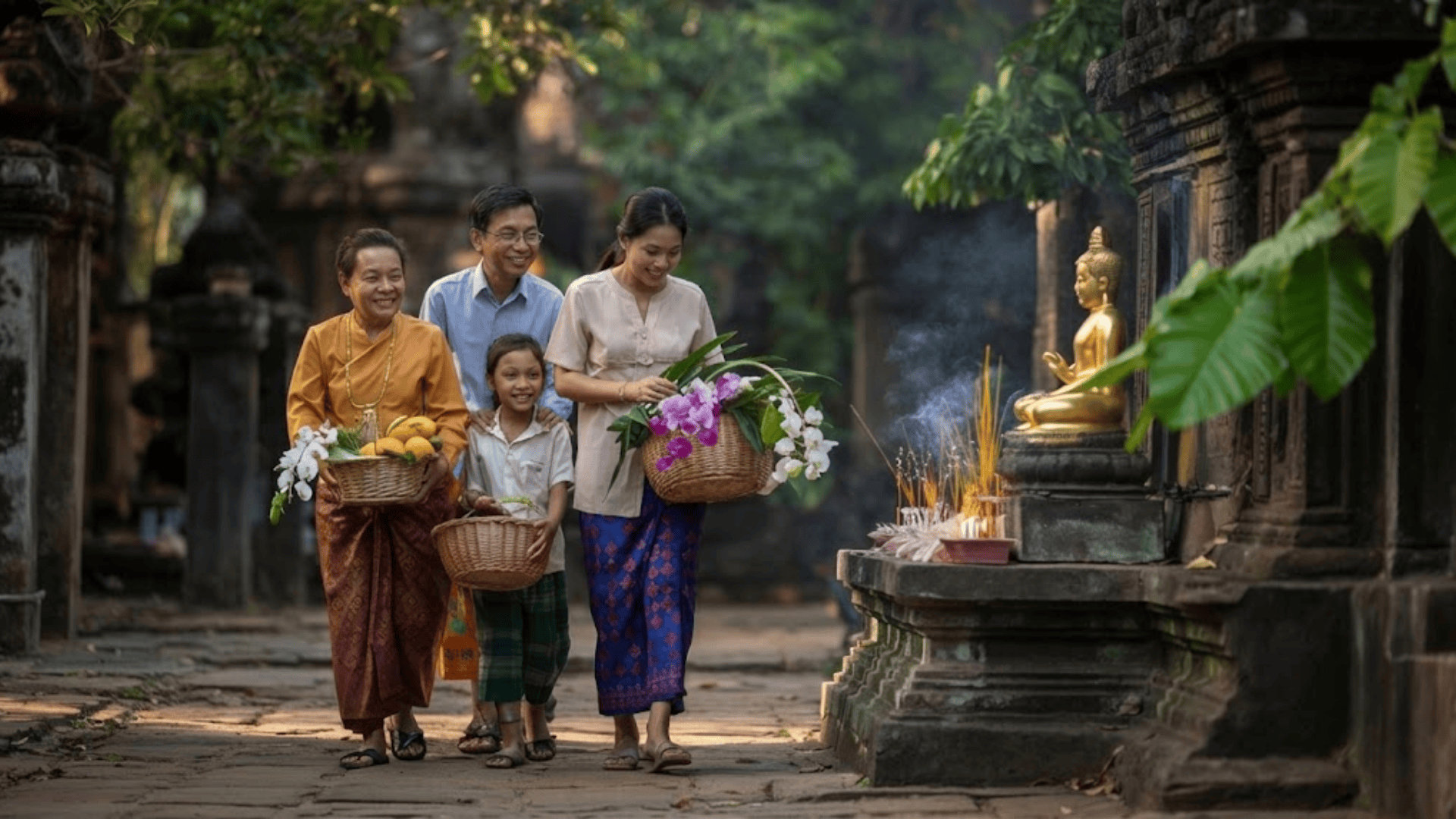
Altars are set up with offerings like fruit, flowers, candles, and incense. People dress in new, bright clothes and visit temples to pray and receive blessings.
In the evening, relatives gather for special meals together.
Day 2: Veareak Vanabat
The second day is called “Veareak Vanabat.” This day focuses on generosity and helping others.
Families give food, money, and supplies to those in need and make donations to temples and monks to earn merit. Respecting elders is especially important.
Younger family members show gratitude through kind words and helpful actions. Communities come together to share meals and support one another.
Day 3: Veareak Laeung Sak
The third day is called “Veareak Laeung Sak.” It marks the official start of the new year. Special rituals are performed to wash away the old and bring good luck.
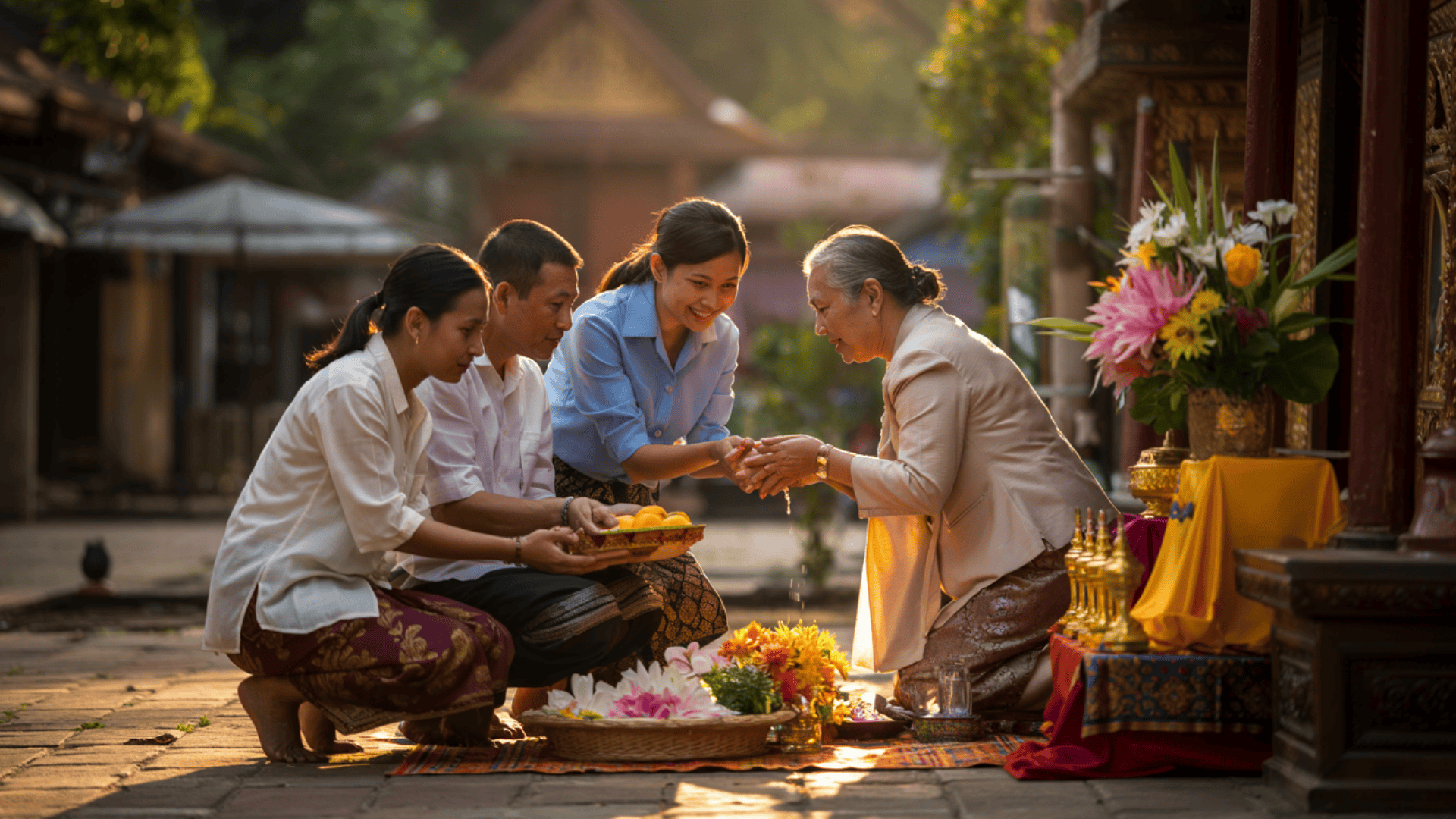
A common tradition involves pouring scented water over elders’ hands to show respect and receive blessings. Buddha statues are ceremonially bathed with perfumed water.
Families gather as older members wish younger ones health, happiness, and success.
Cambodian New Year Traditions and Cultural Practices
The Cambodian New Year is rich with meaningful traditions passed down through generations. These cultural practices bring families closer and connect people to their heritage.
1. Temple Visits and Religious Rituals
Visiting temples is one of the most important traditions during the Cambodian New Year. Families bring offerings such as food, flowers, and incense.
They listen to monks give teachings and receive blessings. Many people also participate in group prayers and meditation sessions.
These religious activities are believed to bring peace, protection, and good fortune.
2. House Cleaning and Symbolic Renewal
Before the new year begins, families thoroughly clean their homes. This is not just about tidiness. Cleaning represents getting rid of bad energy and making room for fresh blessings.
Many families also buy new household items and decorate their homes with flowers and lights.
3. Respecting Elders and Family Customs
Showing respect to elders is a cornerstone of Cambodian culture, and this is especially true during the new year. Young people visit older relatives to pay respects, offer gifts, and receive blessings.
Large family meals bring multiple generations together around the same table, strengthening bonds and creating happy memories.
4. Merit-Making
Merit-making is an important Buddhist practice during the Cambodian New Year. People earn merit by doing good deeds such as giving food to monks, donating to temples, and helping those in need.
Cambodians believe these acts bring good karma and blessings for the coming year. Many families also dedicate merit to their ancestors to honor loved ones who have passed away.
5. Water-Related Celebrations
Water plays a meaningful role in the Cambodian New Year. Pouring water is seen as a form of cleansing and blessing. The gentle washing of elders’ hands and the bathing of Buddha statues are sacred acts.
In some areas, playful water splashing also happens among friends and neighbors, adding joy and laughter to the festivities.
Food Eaten During the Cambodian New Year
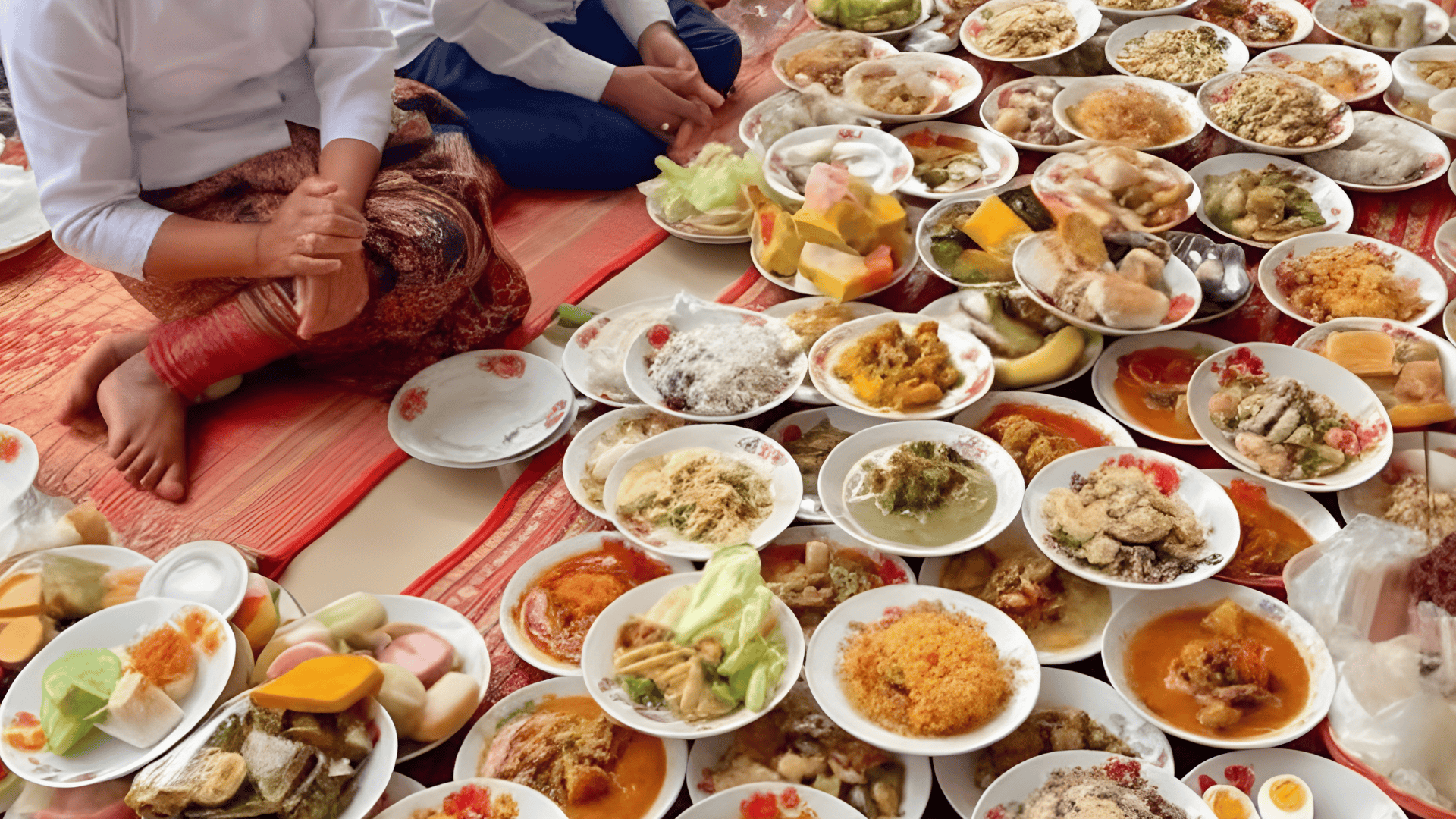
Food is a huge part of Cambodian New Year celebrations. Families spend hours preparing delicious dishes to share with guests and loved ones.
Offering good food is a way of showing hospitality and care. During the Cambodian New Year, families cook special foods and also serve popular Cambodian dishes.
Two foods often linked with the Cambodian New Year are:
- Num Ansom: sticky rice cakes stuffed with pork or banana, wrapped in banana leaves
- Kralan: bamboo sticky rice cooked inside bamboo tubes over a fire
Families also serve many popular Cambodian dishes during New Year meals.
- Cha Houy Teuk: a colorful jelly dessert that is sweet and refreshing
- Samlor Kako: a hearty vegetable soup considered a national dish
- Lap Khmer: a tangy lime-marinated beef salad
- Bai Sach Chrouk: grilled pork served over rice, a breakfast favorite
- Tuk a Loc: sweet drinks made with fruit, sugar, and ice
These dishes bring families together and make the celebration even more special.
Games, Music, and Festive Activities
Traditional games are a highlight of the Cambodian New Year, especially for young people. These games have been played for generations and bring lots of laughter and fun.
- Chol Chhoung: teams of boys and girls toss a scarf ball back and forth while singing traditional songs
- Leak Kanseng: a circle game where players try to drop a towel behind someone secretly
- Bos Angkunh: a game played by throwing and hitting dried seeds
- Tug of War: a classic strength contest between two teams
- Bay Khom: a strategy game similar to mancala, played with pits dug in the ground and seeds
- Chap Kon Kleng: One player acts as a mother hen protecting her chicks, while another player plays the crow and tries to catch the chicks.
- Khmer dancing: traditional dance performances are held at temples, community centers, and public events
Live music, performances, and parades fill the streets during the holiday. Markets pop up selling food, toys, and festive goods. The atmosphere is joyful and exciting.
What to Wear + Etiquette for Visitors
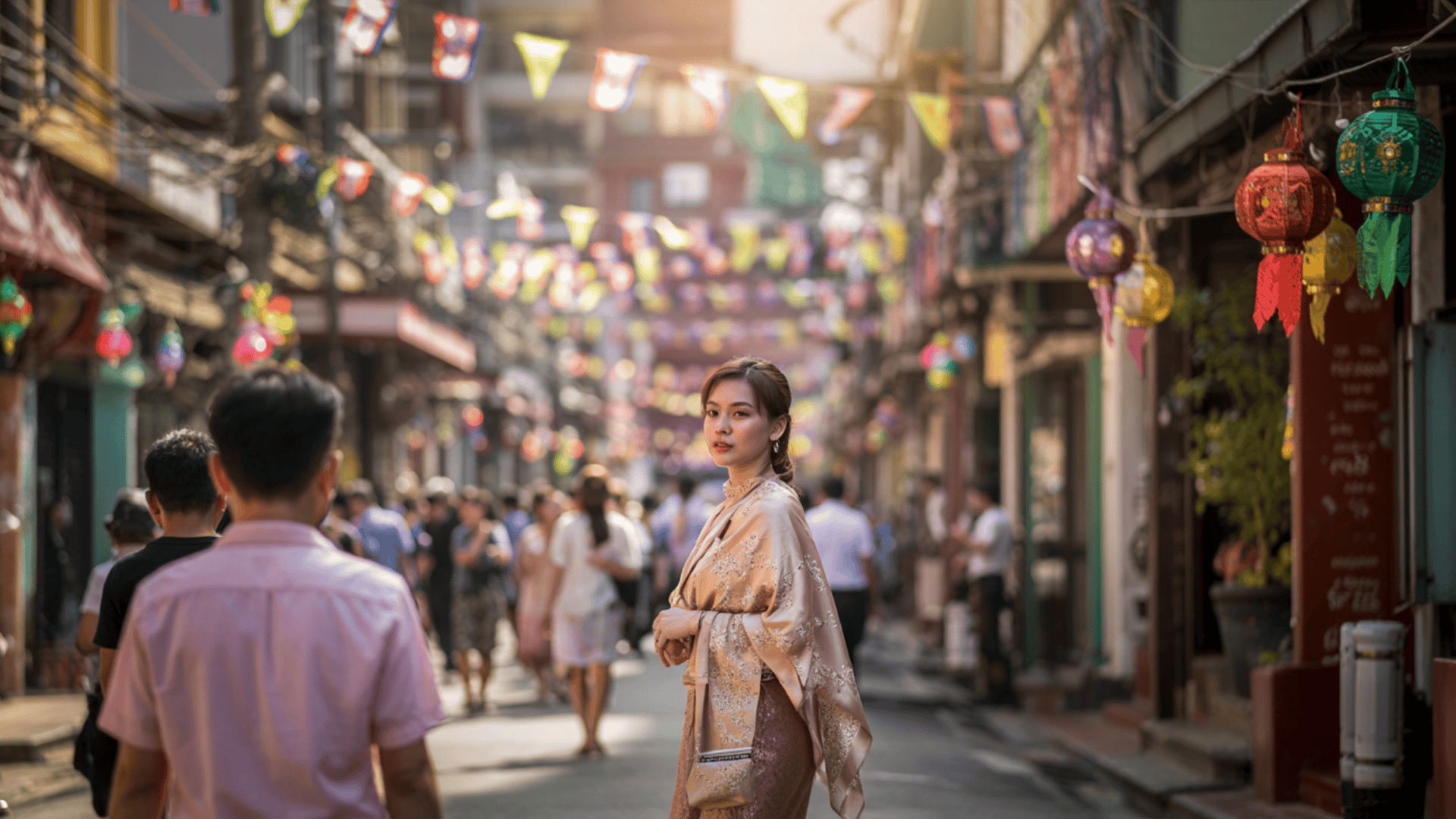
If you plan to join the Cambodian New Year celebrations, dressing appropriately shows respect. When visiting temples, wear modest clothing that covers your shoulders and knees.
Light, comfortable fabrics work best in the April heat. Many Cambodians wear traditional silk clothing in bright colors during the festival.
When greeting people, a polite bow with hands pressed together, called a “sampeah,” is the traditional way to show respect.
If you visit a Cambodian home, bringing a small gift like fruit or sweets is a kind gesture. When taking photos at temples or ceremonies, always ask for permission first.
Cambodian New Year Around the World
Cambodian communities outside of Cambodia keep this tradition alive with dedication. In cities like Long Beach, California, and Paris, France, large celebrations take place each April.
Temples and community centers organize events featuring traditional music, dance performances, food stalls, and games.
These celebrations often happen on weekends near the official dates so more people can attend. While the scale may be smaller than in Cambodia, the spirit remains the same.
It is a time for Cambodians living abroad to reconnect with their heritage and share their culture with neighbors and friends.
How to Celebrate the Cambodian New Year
If you are Cambodian or simply curious about the culture, there are many ways to join in the celebration:
- Visit a local temple or community center: many host public events with food, music, and activities open to everyone
- Try traditional foods: taste dishes like Num Ansom, Kralan, or Samlor Kako to experience the culture
- Spend time with family: share a meal, express gratitude, and offer blessings for the year ahead
- Give to charity: donate or help those in need to reflect the spirit of merit-making central to the holiday
- Wear new or bright clothes: this represents new beginnings and adds to the festive atmosphere
- Learn a traditional game: try playing Chol Chhoung or Bos Angkunh with friends and family
No matter how you choose to celebrate, honoring these traditions is a wonderful way to appreciate Cambodian culture and welcome the new year with joy.
Conclusion
The Cambodian New Year is a beautiful celebration filled with history, meaning, and joy.
From its ancient origins tied to farming and the seasons, to Buddhist traditions of merit-making and blessings, to fun games and delicious food, we can see how every part of this festival reflects the heart of Cambodian culture.
It is a time for renewal, family reunions, and community togetherness.
If you are Cambodian or simply curious about this vibrant tradition, we encourage you to experience the Cambodian New Year and connect with this rich and welcoming culture.
Ready to learn more? Check out our other pieces on Cambodian culture, must-visit temples in Cambodia, and travel tips for your next Southeast Asian trip!