


Who was so wealthy that historians still struggle to put an exact number on his fortune? That question gets tricky fast because ancient wealth was measured very differently from modern net worth.
If you are searching for the richest person to ever live, Mansa Musa is the name you will see most often. He is also widely described as the wealthiest person in history, though no exact figure can be proved.
You also have rulers like Augustus Caesar and businessmen like John D. Rockefeller in the conversation.
Here, you will learn how Mansa Musa built his wealth, why estimates vary, and how his fortune compares with other famous historical figures.
Mansa Musa Holds the Strongest Claim
Mansa Musa is generally considered the richest person to ever live, although no exact value can be proved.
He ruled the Mali Empire during the 14th century, when West Africa played an important role in international gold and trans-Saharan commerce. Musa’s position gave him access to valuable natural resources, commercial centers, taxes, and income generated by merchants crossing his territory.
That makes his wealth different from the fortune of a modern business owner. He did not build a portfolio of publicly traded companies whose prices he could check each day. His financial strength was tied directly to political authority and control over economically productive territory.
This distinction explains both his reputation and the difficulty of assigning a single reliable dollar figure to his fortune.
How Mansa Musa Built His Extraordinary Wealth
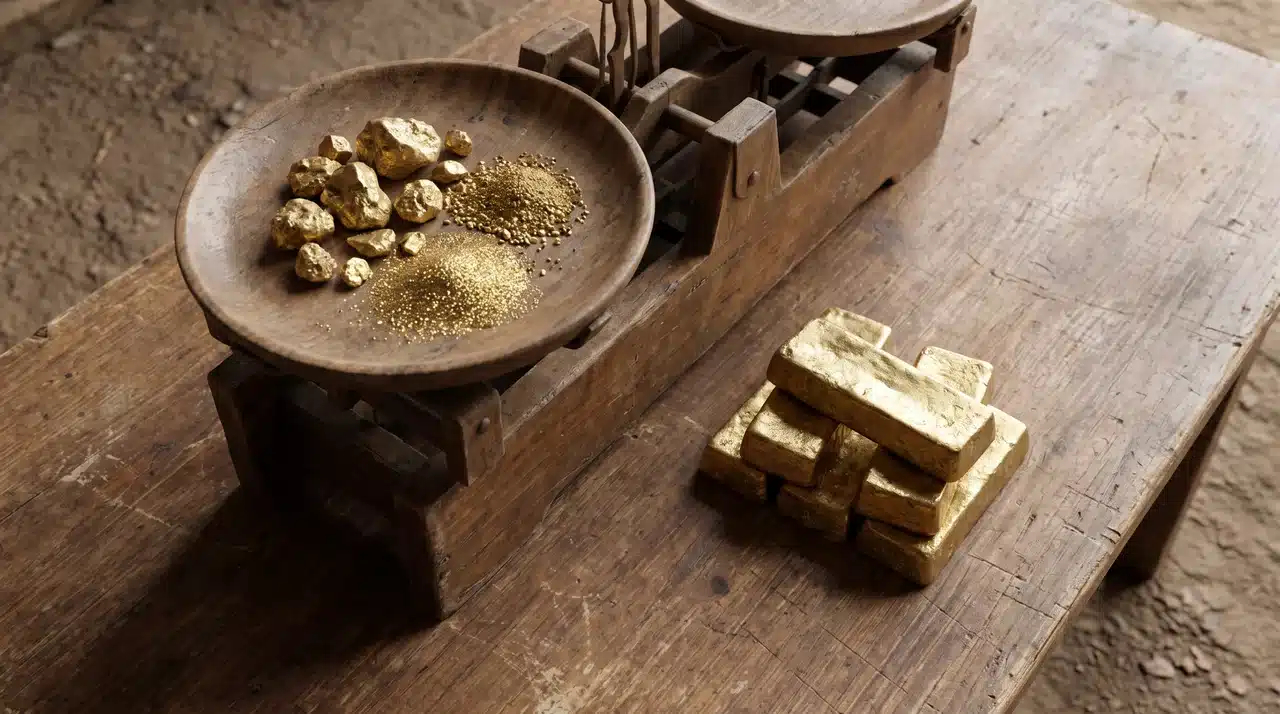
Mansa Musa’s economic power came from several interconnected parts of the Mali Empire, not one business or investment.
- Gold production: Mali controlled important gold-producing regions at a time when gold was highly valuable across international markets.
- Trans-Saharan trade: Commercial routes connected West Africa with North Africa and allowed valuable goods to move between major markets.
- Merchant taxes: Traders passing through Mali could generate government revenue through taxes and duties.
- Salt commerce: Salt was a major regional commodity and an important part of West African trade.
- Land and resources: Musa ruled extensive territory containing agricultural land, settlements, commercial centers, and valuable natural resources.
- Tribute and political authority: Control over subordinate territories further strengthened the resources available to the ruler.
Together, these sources created a level of economic influence that cannot be represented simply by counting the amount of gold Musa personally possessed.
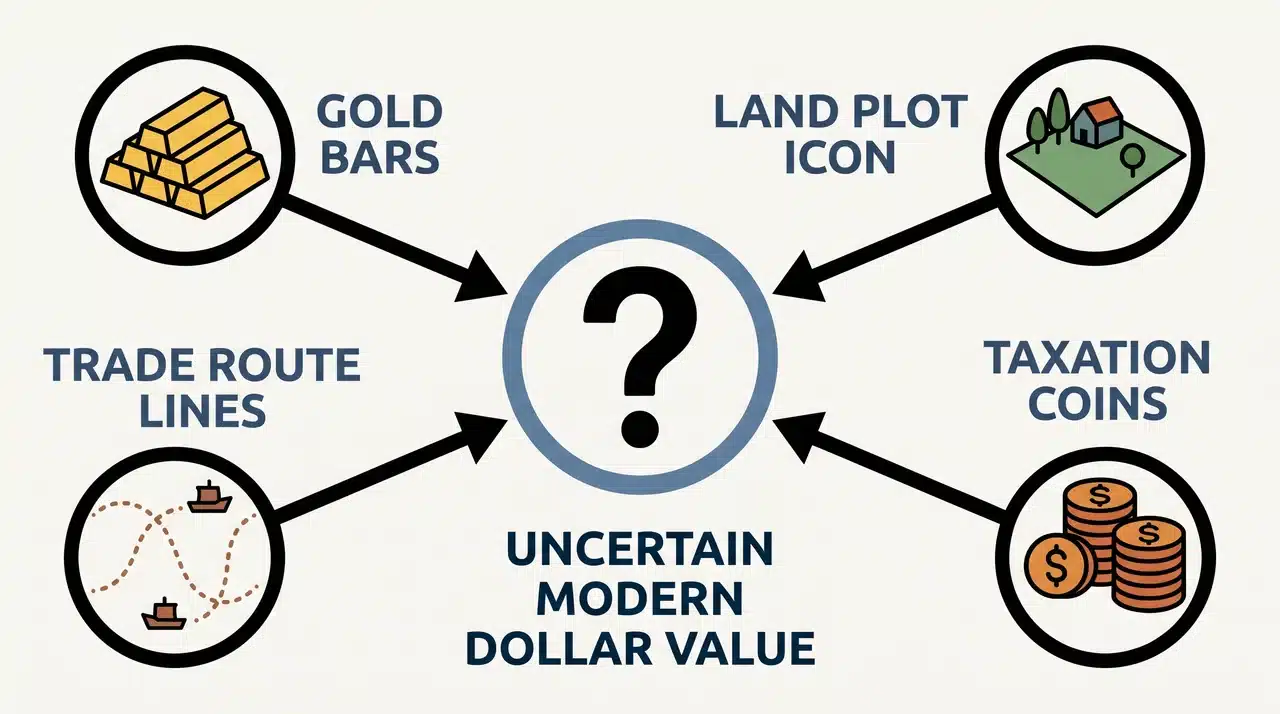
The Truth Behind Mansa Musa’s $400 Billion Net Worth
Mansa Musa is frequently assigned a modern net worth of around $400 billion, while some popular estimates go considerably higher.
The number should be treated as a rough comparison, not a confirmed financial calculation.
Modern billionaires can be valued because analysts know approximately how many company shares, properties, investments, and other assets they own. Those assets usually have market prices.
Musa lived in an entirely different financial system. No standardized corporate records showed which assets belonged personally to him and which belonged to the Mali Empire.
Gold prices, land values, wages, taxation, and purchasing power also worked differently in the 1300s. A calculation based mainly on gold might produce one result, while a comparison based on economic influence could produce something entirely different.
The safest conclusion, then, is not that Musa had exactly $400 billion, but that he controlled an exceptional concentration of valuable resources.
The Pilgrimage That Revealed His Wealth
Mansa Musa’s reputation spread far beyond West Africa after his pilgrimage to Mecca in 1324.
Historical accounts describe an enormous procession containing officials, attendants, merchants, soldiers, enslaved people, and large quantities of gold.
Cairo became one of the most famous stops on the trip.
Musa reportedly spent and distributed substantial amounts of gold while passing through Egypt. Accounts later claimed that the sudden increase in circulating gold reduced its local value and affected the market for years.
Exact figures for the number of travelers and amount of gold involved remain uncertain. However, the event clearly demonstrated the resources available to the Mali ruler.
More importantly, the pilgrimage turned Musa into an internationally recognized figure. Stories about his wealth spread through North Africa and the Middle East before reaching Europe, permanently linking the Mali Empire with gold and prosperity.
Mansa Musa vs Other Richest People in History
Instead of creating separate comparisons for every historical figure, the differences become clearer when you consider their fortunes together.
| Person | Main Source of Wealth | Best Way to Understand Their Fortune |
|---|---|---|
| Mansa Musa | Gold, trade, taxes, land, imperial resources | Strongest traditional candidate for the richest person in recorded history |
| Augustus Caesar | Roman land, taxation, and imperial resources | Could rank extremely high if imperial economic power is treated as personal wealth |
| John D. Rockefeller | Standard Oil | One of the largest and best-documented private business fortunes |
| Andrew Carnegie | Steel | Built enormous industrial wealth before giving much of it away |
| Akbar I | Mughal imperial economy | Controlled resources within one of the world’s largest economies of his period |
| Genghis Khan | Territory and conquest | Possessed immense political power, but much wealth was distributed rather than personally retained |
| Modern billionaires | Businesses, company shares, investments | Easier to value because most major assets have observable financial prices |
The table shows why one universal ranking is impossible. Rockefeller’s private ownership can be documented relatively well, while rulers such as Musa and Augustus exercised economic power through entire states.
Why Historical Wealth Rankings Vary
Historical rich lists often produce different winners because researchers are not measuring the same thing.
Four methods are commonly used:
- Inflation adjustment: Useful for relatively recent monetary fortunes but increasingly unreliable across many centuries.
- Share of the economy: Measures how dominant someone’s fortune was compared with the economy surrounding them.
- Land and resource control: More relevant for emperors whose power depended on mines, farmland, taxes, and territory.
- Purchasing power: Compares how much labor, land, food, or other goods a fortune could purchase at the time.
Each method answers a slightly different question.
A person who ranks first by inflation-adjusted private wealth may not rank first by economic influence. Likewise, an emperor controlling a huge share of an economy may not personally own those resources in the modern legal sense.
Historical rankings are therefore better treated as informed comparisons than exact financial scoreboards.
Mansa Musa’s Legacy Was Bigger Than His Net Worth
Focusing only on a $400 billion estimate misses an important part of Mansa Musa’s story.
His wealth also gave the Mali Empire greater visibility across international commercial and cultural networks. His pilgrimage connected Mali more closely with communities across North Africa and the wider Islamic world.
Mali’s important cities also benefited from commerce and scholarship during this period. Timbuktu became increasingly associated with trade, learning, and religious life.
Musa’s reputation even reached European mapmakers.
His appearance in later medieval maps holding gold shows how strongly foreign observers connected both the ruler and his empire with exceptional wealth.
That international reputation may be one of the strongest signs of his economic importance. Centuries before modern wealth rankings existed, people far beyond West Africa were already telling stories about the extraordinary resources controlled by the ruler of Mali.
Final Verdict
Mansa Musa remains the strongest answer when you ask who held the greatest personal wealth in recorded history. His fortune came from gold, trade, taxes, land, and the economic power of the Mali Empire.
I think the key point is that no modern dollar figure can measure his wealth perfectly. Estimates such as $400 billion help you understand the scale, but they should not be treated as exact records.
Comparing him with Rockefeller, Augustus Caesar, and modern billionaires also shows why historical rankings vary. The richest person to ever live is best understood through economic influence, not one fixed number.
Share your thoughts, or check out related history and wealth comparisons next.
Frequently Asked Questions
Did Mansa Musa inherit his wealth?
Mansa Musa inherited the throne of an already powerful Mali Empire, but the empire continued expanding during his reign. His position gave him authority over valuable territories, commercial centers, and major regional resources.
Where was Mansa Musa’s empire located?
The Mali Empire was located in West Africa. At different points, its territory included areas within present-day Mali, Senegal, Guinea, Mauritania, Gambia, and neighboring parts of the region.
What happened to Mansa Musa’s wealth after he died?
Mansa Musa’s wealth did not pass down as a single recorded personal fortune. Political authority and control of imperial resources transferred to later rulers, while Mali gradually faced internal conflicts and competing regional powers.
Did Mansa Musa build Timbuktu?
Mansa Musa did not found Timbuktu, but his reign helped increase its importance. He supported construction and learning there, contributing to its later reputation as a major center of scholarship, religion, and commerce.
How did Europe learn about Mansa Musa?
Stories of Mansa Musa spread through merchants, travelers, diplomats, and accounts of his pilgrimage. European awareness grew enough that he was later depicted on medieval maps as a powerful African ruler associated with gold.
Are there surviving records written by Mansa Musa?
No known personal financial records written by Mansa Musa survive. Most information about his reign comes from later historians, travelers, regional traditions, maps, and written accounts produced within and beyond West Africa.
Who ruled the Mali Empire after Mansa Musa?
The Keita dynasty succeeded Mansa Musa. Mali remained influential after his death, but political disputes and rising neighboring powers eventually weakened the empire over the following centuries.