

Movies have always been powerful tools that make us laugh, cry, and feel connected to characters on screen.
But during Nazi Germany (1933-1945), the government used this power of film for a dark purpose: to control what people thought and believed.
The Nazi regime turned cinema into a weapon of mass persuasion, carefully crafting films to promote their ideology and shape public opinion.
These movies didn’t just entertain; they manipulated emotions, created division, and justified hatred.
Understanding how the Nazis used movies as weapons of propaganda helps us recognize similar tactics today and protects us from being manipulated by media in our own time.
Creating the “Perfect” German Community
The Nazi government wanted Germans to believe in an ideal society called the Volksgemeinschaft or “national community.”
These movies showed Germans as heroic, clean, and hardworking people who were completely loyal to Adolf Hitler.
But there was a sinister flip side. While films celebrated some Germans, they deliberately excluded others, especially Jewish people.
This wasn’t accidental. It was calculated to make regular Germans see their Jewish neighbors as threats rather than fellow human beings.
Interestingly, this mentality was foreshadowed in Hitler’s earlier artwork, which focused on idealized, traditional German scenes and avoided diverse or modern subjects.
Hitler’s artwork reveals how the idea of a “pure” German identity was ingrained long before his political rise.
Methods and Strategies Behind Nazi Propaganda
The Nazis developed specific techniques to make their propaganda effective.
These methods weren’t created overnight; they built upon anti-Semitic ideologies and political strategies that young Hitler had absorbed during his time in Vienna.
1. Repetition as a Weapon
Their films constantly showed the same ideas: Hitler as a perfect leader, Germans as a superior race, and certain groups as dangerous enemies.
This repetition happened across all media: films, radio, newspapers, and posters, so Germans heard the same messages everywhere.
2. Targeting Emotions, Not Logic
Nazi propaganda focused on making people feel strong emotions rather than think critically.
Marion Pritchard, a Holocaust survivor, shared how her friend said:
“I know that it was all ridiculous propaganda, but for the first time in my life I have a sense of them and us: Jews and Gentiles.”
This shows that propaganda works by influencing emotions and social divisions, even when people know it’s false.
3. Creating “Us vs. Them” Divisions
The films deliberately split society into “good Germans” who supported the Nazis and “enemies” who threatened Germany.
By making people feel they belonged to the “good” group, the Nazis gained loyalty and support for their harmful actions.
4. Using Professional Film Techniques
The Nazis hired skilled directors like Leni Riefenstahl, used advanced camera work, and created high-quality productions.
Professional-looking films seemed more trustworthy and convincing to audiences. The better the technical quality, the more people believed the message.
Why Movies Are So Powerful
Films affect us differently from books or speeches because they engage multiple senses at once. Through images, music, and storytelling, movies make ideas feel real and personal.
They can stir feelings that bypass our logical thinking.
We see this power today in how movies and TV shows shape our ideas about success, beauty, and relationships.
Think about how superhero movies make us want to be brave, or how reality TV creates ideals we try to reach. The same techniques can be used to promote harmful ideas.
Key Nazi Propaganda Films
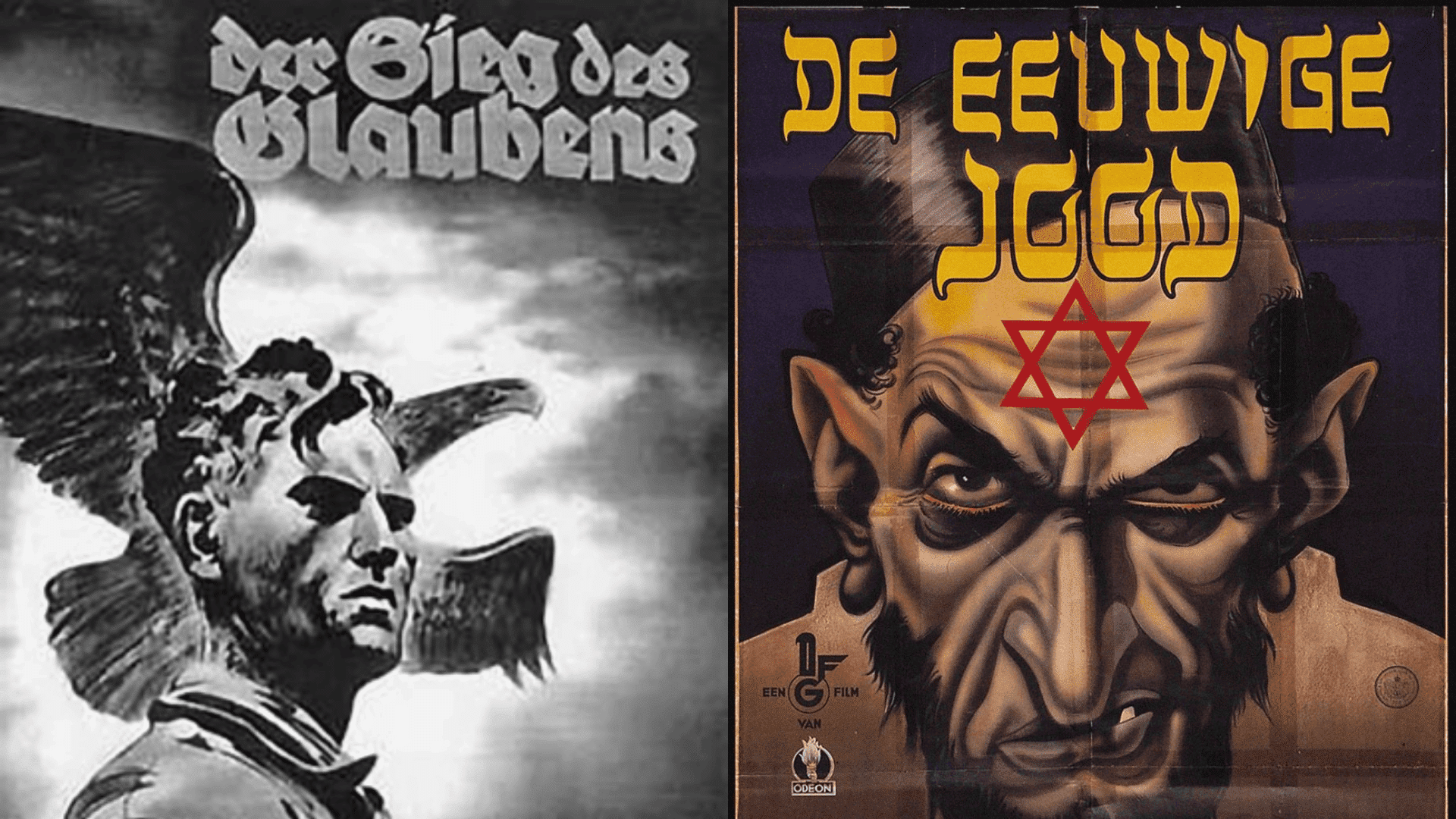
Several Nazi films became particularly influential in shaping public opinion and spreading the regime’s message.
Triumph of the Will (1935) by Leni Riefenstahl
-
Documented a 1934 Nazi party rally using striking images, sweeping music, and dramatic camera work to make Hitler appear godlike and all-powerful.
-
While some argue it’s a documentary because it filmed real events, historians classify it as propaganda because it was designed to promote Nazi ideology rather than provide objective information.
Other Influential Nazi Films
-
Der Sieg des Glaubens (“Victory of Faith”): Promoted Nazi ideology through another rally film.
-
The Eternal Jew: Used harsh stereotypes to dehumanize Jewish people.
-
Stukas: War movies like this glorify German military might.
These films were shown repeatedly to boost morale and maintain support for the Nazi government.
Entertainment as Hidden Propaganda
Not every Nazi propaganda film was obviously political. The government also produced romantic comedies, musicals, and dramas that seemed purely entertaining.
These “entertainment” films promoted traditional German values like family loyalty and devotion to the nation.
They distracted people from harsh wartime realities while reinforcing Nazi ideals without seeming like propaganda at all.
These entertainment films served to soften the public’s view of the regime and keep morale high, an important goal as the war dragged.
Lessons for Today
After World War II, Nazi propaganda films were studied extensively to understand how they worked. This research revealed important lessons about media influence that remain relevant today.
Modern media continues to shape our beliefs and attitudes. While most filmmakers today aren’t trying to promote harmful ideologies, we still see how media can influence political opinions and personal values.
The key is developing critical thinking skills. We need to ask ourselves:
-
Who made this content and why?
-
What emotions is it trying to create?
-
What messages is it promoting?
Moving Forward
The Nazi use of propaganda films reminds us that the media is never truly neutral. Every movie, TV show, and news report reflects certain viewpoints and values.
This doesn’t mean we should distrust all media, but rather that we should consume it thoughtfully.
By understanding how propaganda works, we can better protect ourselves and our communities from manipulation.
We can appreciate the positive power of storytelling while remaining alert to attempts to divide us against our neighbors or promote hatred toward any group of people.
What examples of media influence do you see in today’s world? Share your thoughts in the comments below, and let’s discuss how we can stay vigilant against propaganda in modern times.