


If you’ve hurt your knee, you might wonder if it’s an ACL tear or just a sprain, and what that means for recovery.
Both injuries affect the anterior cruciate ligament (ACL), a key stabilizer in the knee, but the difference between a sprain and a tear can completely change your healing time and treatment plan.
Understanding these recovery timelines is crucial for athletes and active individuals aiming to set realistic goals.
For instance, Javonte Williams’ injury history serves as a real-life example, illustrating how ACL recovery can impact both setbacks and comebacks.
What Is the ACL?
The ACL (anterior cruciate ligament) connects the thigh bone to the shin bone. It helps keep the knee stable during sports, exercise, and daily movement.
When the ACL is injured, the knee may feel weak, unstable, or even give out.
ACL injuries happen most often in sports like football, basketball, and soccer, where quick pivots and jumps are common. They can range from mild overstretching (sprain) to a full tear.
1. ACL Sprain
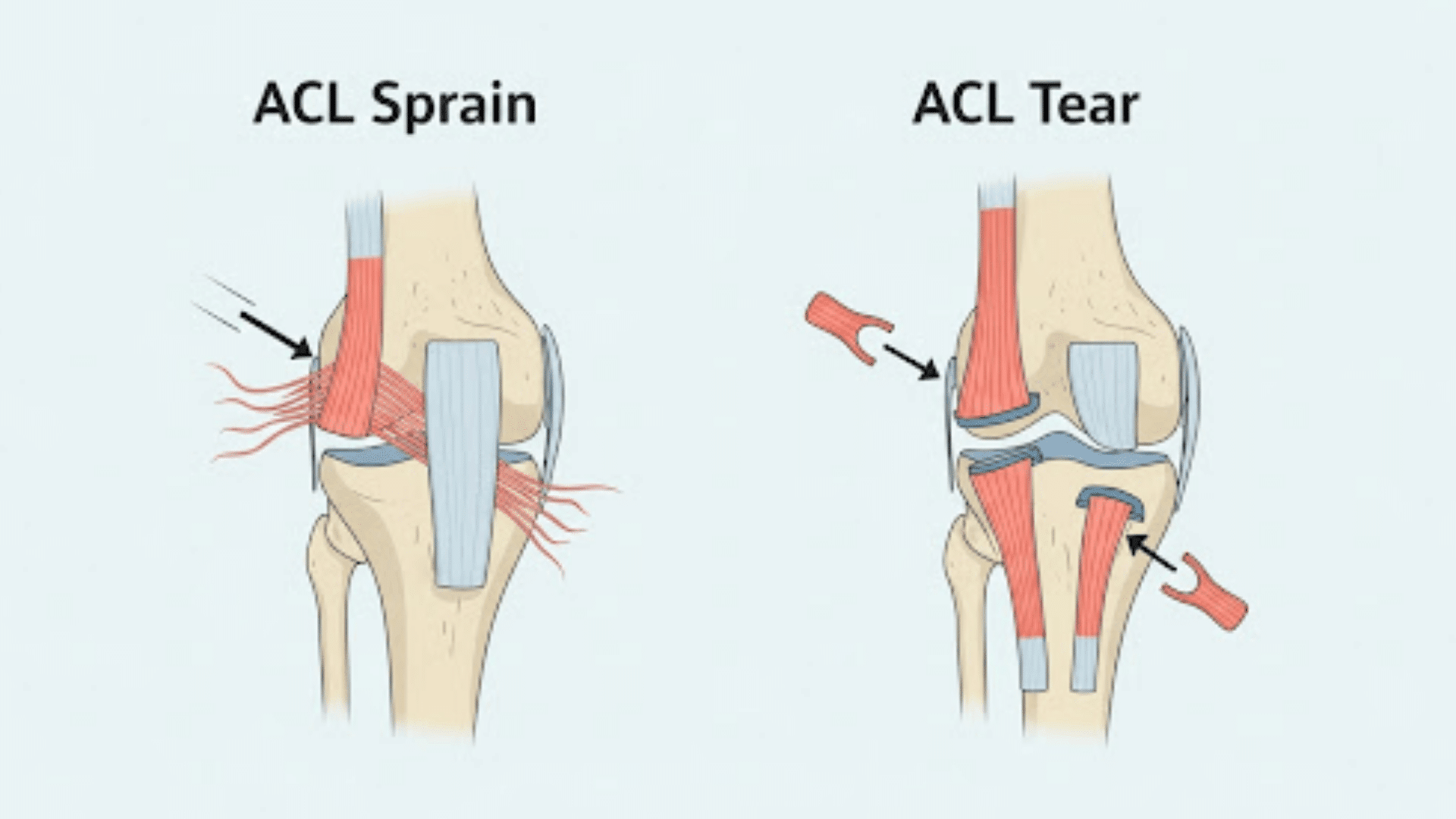
An ACL sprain happens when the ligament is pushed past its normal range of motion. Doctors classify sprains into two main grades:
- Grade 1: The ligament is stretched but remains intact. Symptoms are usually mild, with some discomfort and slight swelling, but stability is preserved.
- Grade 2: A partial tear where fibers are damaged but still connected. Symptoms include noticeable pain, swelling, and a sense that the knee may feel weak under pressure.
Recovery Timeline:
- Grade 1 sprains usually heal in 2 to 6 weeks, especially with proper rest and therapy.
- Grade 2 sprains may take up to 3 months, depending on severity and how closely rehab is followed.
Treatment May Include:
- RICE method (Rest, Ice, Compression, Elevation): Helps reduce pain and swelling in the early days.
- Physical therapy: Strengthens muscles around the knee, restoring flexibility and balance.
2. ACL Tear
An ACL tear, also known as a Grade 3 sprain, happens when the ligament is completely torn apart.
This type of injury often occurs during sudden stops, pivots, or awkward landings in sports.
Symptoms are usually severe, including intense pain, rapid swelling, and a knee that may “give out” when walking or moving.
Recovery Timeline:
- With surgery: Most patients need 9 to 12 months of structured rehab before returning to sports or high-impact activity.
- Without surgery: Some people may recover with physical therapy, but recovery can take 6 to 12 months or more, and returning to competitive sports is often limited.
Rehab Phases After Surgery Typically Include:
- Weeks 1–4: Reducing swelling and regaining the basic range of motion.
- Weeks 4–12: Building strength in the surrounding muscles for better stability.
- Months 3–6: Focusing on balance, agility, and light sport-specific movements.
- Months 6–12: Gradually returning to full activity, including competitive play.
Important: Athletes should avoid rushing the process. Returning before 9 months significantly raises the risk of re-injury, making patience and discipline key to long-term success.
Factors That Affect Healing Time
Not everyone heals at the same pace. Recovery depends on:
- Severity of the injury (sprain vs full tear).
- Age and fitness level: Younger, stronger athletes often bounce back quicker.
- Commitment to rehab: Consistent therapy speeds up healing.
- Surgical choice: While some tears may heal without surgery, athletes often benefit from it.
- Mental readiness: Confidence and patience play a big role in successful recovery.
Real-Life Example: Javonte Williams’ Recovery
A good way to understand the recovery process is by looking at real athletes. NFL running back Javonte Williams suffered a significant knee injury that included an ACL tear.
His journey shows how demanding recovery can be and why patience is key. His case highlights that recovery is not just physical, it’s also mental and requires determination.
Williams’ running stylemakes knee stability primarily important.
His ability to cut, power through contact, and maintain balance relies heavily on a strong ACL, which is why his recovery process has been so closely followed.
Final Thoughts
When comparing an ACL tear vs a sprain, the biggest difference comes down to recovery time and treatment needs.
Sprains typically heal within weeks to a few months with proper care, while tears often require surgery and up to a year of rehab.
Modern NFL teams also rely on 24/7 player monitoring, tracking workload, movement, and recovery, to help athletes safely return to play.
This kind of technology reduces reinjury risk and supports long-term performance, especially for high-impact players like running backs.
If you’re dealing with knee pain or suspect an ACL injury, consult a doctor or physical therapist today. Your comeback starts now.