


Most people are not lazy. They are just stuck doing the wrong things all day. You check emails, attend meetings, scroll through your phone, and somehow the important work never gets done.
Sound familiar? Being productive is not about working more hours. It is about working smarter and focusing on what actually matters.
If you have been feeling overwhelmed, scattered, or behind on your goals, these simple, proven productivity tips can help you get more done every day without burning yourself out.
They are practical, easy to apply, and actually built for real daily routines, not idealistic theory.
What Does It Mean to Be Productive?
Being productive means focusing your time and energy on work that actually moves you toward your goals. It is not about completing as many tasks as possible, but about completing the right tasks with purpose and clarity.
When you become more productive, you can accomplish more in less time, reduce stress, and create more room for the things that matter most. A common mistake is confusing activity with progress.
Many people spend their day answering emails, sitting in meetings, and handling small tasks, yet still fail to make meaningful progress on important work. Productivity is about output and impact, not just staying busy.
Difference Between Productivity vs Busyness
Busyness is about staying occupied, while productivity is about making meaningful progress. You can fill your day with constant activity but still end up with very little to show for it.
Productive people prioritize high-impact work that delivers real results rather than simply reacting to whatever comes their way.
This distinction matters because being busy can create the illusion of progress while keeping your most important goals untouched.
Focusing on productive work helps you achieve better results without constantly feeling overwhelmed.
What are Three Ways to Increase Productivity?
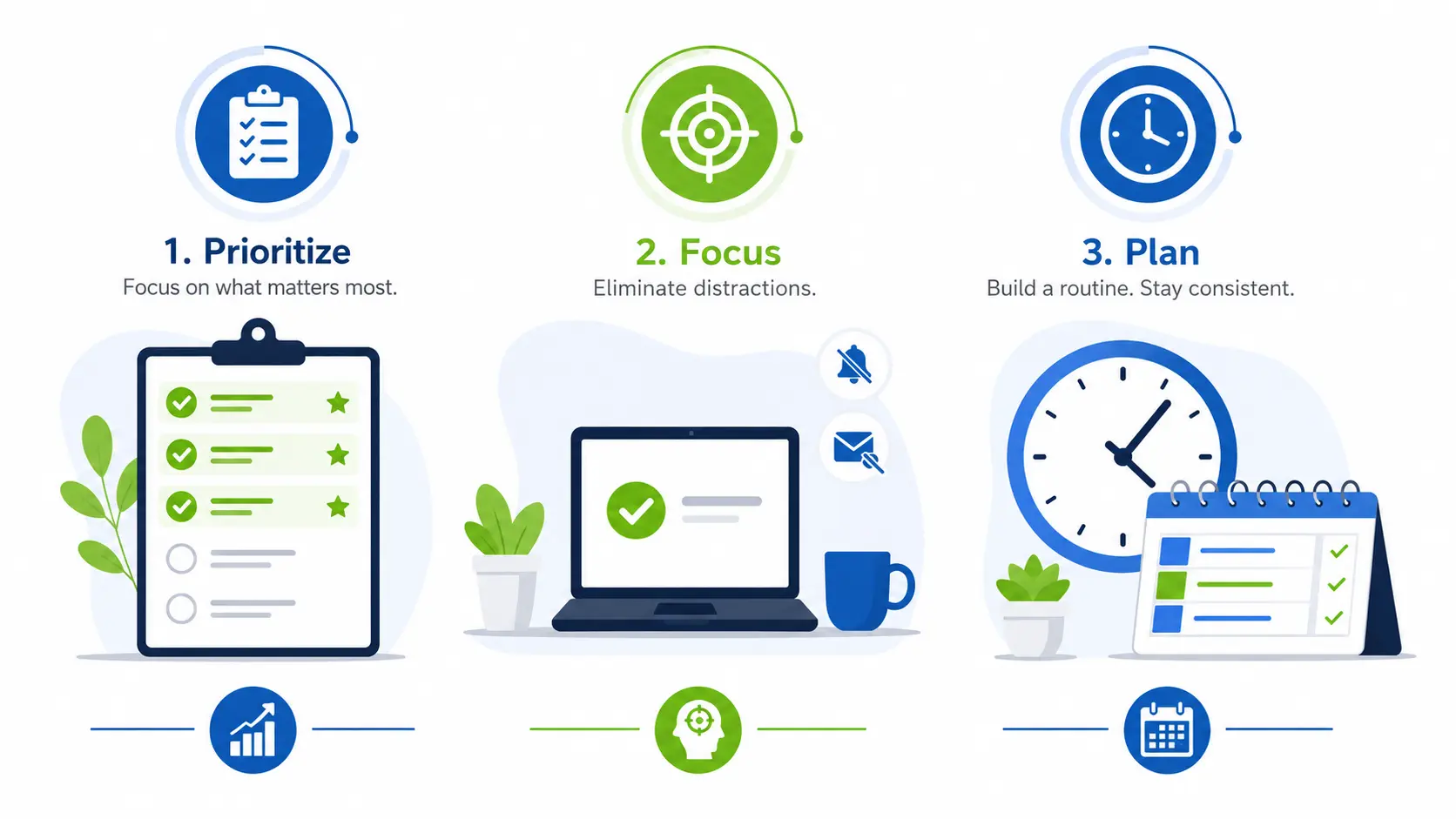
If you only have time for three changes, start with these:
1. Prioritize Your Most Important Tasks
Every morning, pick the two or three tasks that matter most that day. Do those first before anything else. These are called your MITs, or Most Important Tasks.
When you focus on what matters, you make real progress instead of just staying busy.
For example: If you have 10 things on your list, pick the top three that actually move things forward. Finish those first. The rest can wait.
2. Eliminate Distractions and Focus on One Task
Notifications, social media, and background noise are productivity killers. When you sit down to work, turn off your phone alerts, close extra browser tabs, and focus on one thing at a time.
According to research from UC Irvine, it takes about 23 minutes to fully regain focus after an interruption. Protecting your attention is one of the best things you can do.
For example: Before starting a task, put your phone face down, close social media tabs, and give yourself 30 focused minutes. You will finish faster than if you kept switching back and forth.
3. Create a Consistent Daily Routine
A good routine removes the need to make decisions all day. When you wake up, exercise, work, and rest at the same times each day, your brain adjusts, and you waste less mental energy figuring out what to do next.
For example: Waking up and starting work at the same time every day trains your brain to enter focus mode automatically, without needing extra effort or motivation.
Productivity Tips to Get More Done Every Day
Small changes to how you work each day can make a big difference over time. Some of the best tips are listed below; they’re simple, practical, and easy to start using right away.
1. Start Your Day With a Clear Plan
Spend five minutes each morning writing down what you need to do. A clear plan saves hours of confusion later.
It also helps you feel more in control before the day gets busy. Even a short list of three to five tasks is enough to give your day a clear direction.
2. Use the Eisenhower Matrix to Prioritize Tasks
Sort your tasks into four groups: urgent and important, important but not urgent, urgent but not important, and neither.
Focus on the first two groups and cut the rest. This simple method helps you stop wasting time on things that do not move the needle.
Once you start using it, you will quickly notice how many daily tasks were never worth your time in the first place.
3. Follow the 80/20 Rule
Around 20% of your efforts produce 80% of your results. Find what that 20% is in your work and spend more time there.
Cutting low-value tasks frees up energy for work that actually matters. A good starting point is to look at which tasks consistently produce the most results and do more of those first.
4. Time Block Your Schedule
Assign specific time slots to specific tasks. Instead of a loose to-do list, you now have a schedule that tells you exactly what to work on and when.
This removes the guesswork and keeps you from drifting between tasks. Try blocking your most important work during the hours when your energy and focus are at their highest.
5. Try the Pomodoro Technique
Work for 25 minutes, then take a 5-minute break. After four rounds, take a longer 15 to 30-minute break.
This keeps your brain fresh and your focus sharp. Many people find they get more done in focused sprints than in long, unstructured work sessions.
If 25 minutes feels too short or too long, adjust the timer to whatever works best for you.
6. Set SMART Goals
Your goals should be Specific, Measurable, Achievable, Relevant, and Time-bound, a framework better known as SMART goals.
Vague goals lead to vague results. Clear goals give you a finish line to work toward each day.
Writing your goals down makes them feel more real and holds you accountable to actually following through.
7. Break Large Projects Into Smaller Steps
Big projects feel overwhelming. Break them into small, clear actions. Instead of “write report,” write “outline three main points for report.”
Small steps are easier to start and keep procrastination from setting in. When each step feels manageable, you are far more likely to sit down and get started without delay.
8. Eliminate Unnecessary Notifications
Turn off every notification that does not need your immediate attention. Check messages at set times instead of every few minutes.
Every interruption costs you more time than you think. Batching your message checks to two or three set windows per day is one of the simplest ways to reclaim focused work time.
9. Create a Dedicated Workspace
Your brain connects places to activities. A clean, set workspace tells your brain it is time to work.
Avoid working from your bed or couch whenever possible. The right environment makes it much easier to stay focused.
Keeping your workspace tidy and free of clutter also reduces mental distraction before you even begin.
10. Stop Multitasking
Doing two things at once usually means doing both things poorly. Single-tasking is faster and produces better results.
Give one task your full effort, then move on to the next when it is done. Training yourself to finish before switching is a habit that pays off quickly in both speed and quality.
11. Take Strategic Breaks
Short breaks improve focus and prevent burnout. Step away from your screen, stretch, or take a short walk.
Your brain needs rest to stay sharp. Working non-stop without breaks often leads to slower, lower-quality work by the end of the day.
12. Improve Your Sleep Schedule
Sleep is not optional. According to CDC sleep data, poor sleep significantly reduces concentration, decision-making, and overall output
Aim for seven to nine hours each night. A well-rested brain simply works better in every way.
Going to bed and waking up at the same time each day also helps your body establish a natural rhythm, making it easier to feel alert during work hours.
13. Exercise Regularly for Better Focus
Even a 20-minute walk increases blood flow to the brain and improves focus. Regular exercise is one of the most underrated productivity tools.
It also reduces stress, one of the biggest blockers to clear thinking. You do not need a full gym session to see benefits; a short daily walk or quick workout is enough to make a real difference.
14. Review Your Progress Weekly
Set aside 15 to 20 minutes each week to review what you completed, what you got stuck on, and what you want to focus on next.
Regular reviews keep you on track. They also help you catch bad habits before they slow you down for too long.
Over time, these weekly check-ins become one of the most powerful tools for staying consistent and making steady progress.
15. Build Productivity Habits Instead of Relying on Motivation
Motivation comes and goes. Habits stick, and according to UCL research, it takes anywhere from 21 to 66 days to form one.
Build routines that make productive behavior automatic, so you do not have to rely on feeling inspired.
The most productive people are consistent, not just occasionally motivated. Focus on showing up every day, even in small ways, and the results will compound over time.
How to Be More Productive at Work
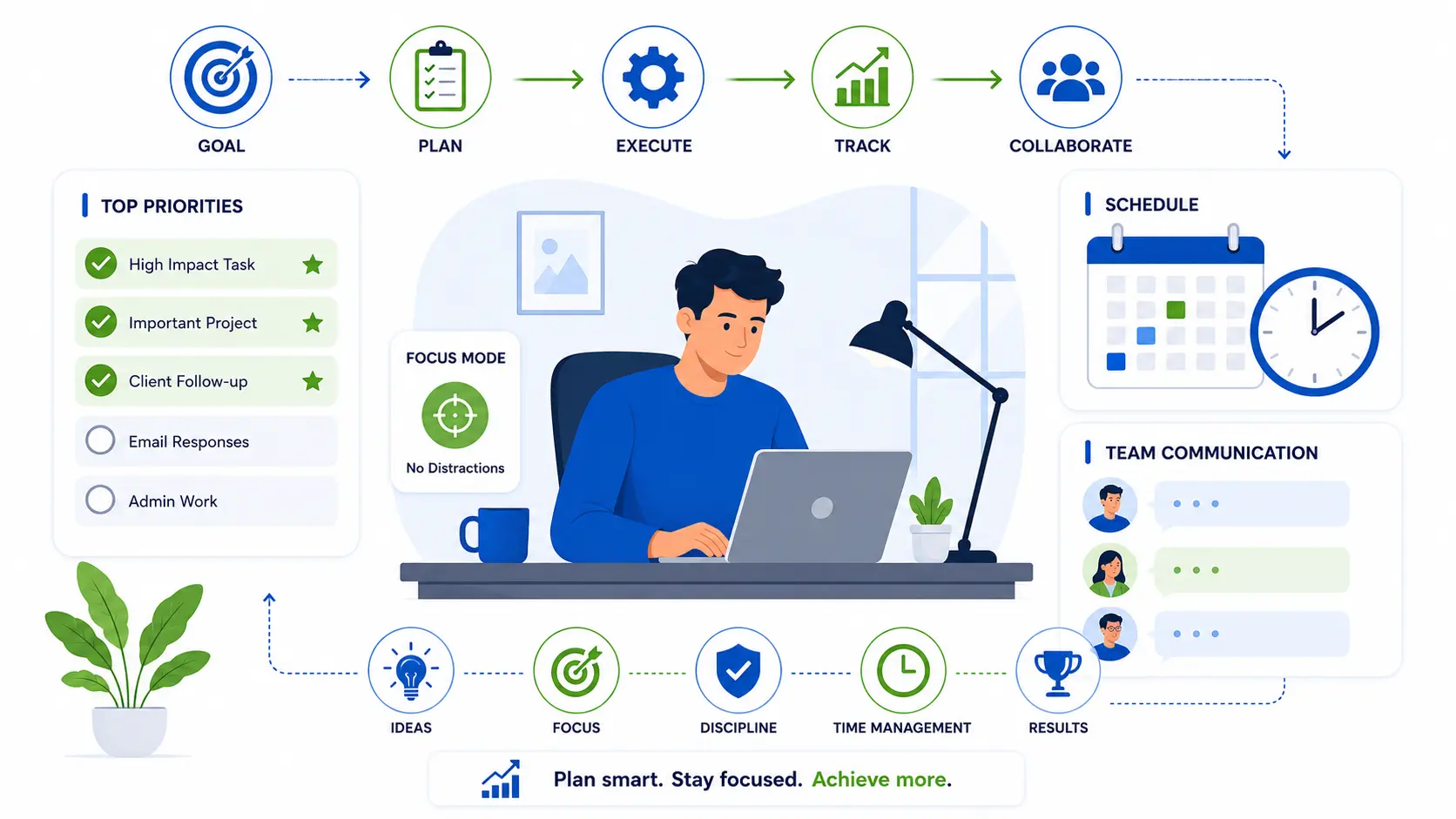
Being productive at work is often about managing your time and attention effectively. Limit unnecessary meetings and keep the ones you attend focused and purposeful.
Reduce distractions whenever possible by creating an environment that helps you concentrate on important tasks.
It is also important to prioritize high-impact work instead of simply staying busy.
Focus on the tasks that will have the greatest impact on your goals, and communicate expectations clearly to avoid confusion, delays, and unnecessary rework.
How to Be More Productive at Home
Staying productive at home requires structure and intentional habits. Creating a daily schedule for work, meals, exercise, and rest can help you stay focused and avoid wasting time.
Setting boundaries around screen time is also important, as social media and streaming can quickly become major distractions. Your environment also plays a big role in productivity.
Keeping your space clean and organized can make it easier to concentrate, while consistent morning and evening routines help create a clear separation between work time and personal time.
Productivity Techniques Worth Trying
If you are not sure where to start, these techniques offer simple, proven ways to structure your day and improve your focus immediately.
- Pomodoro Technique: Work in 25-minute focused blocks followed by short breaks. Great for tasks that require deep concentration.
- Eisenhower Matrix: A simple grid that helps you sort tasks by urgency and importance so you always work on what matters most.
- Time Blocking: Schedule every hour of your day in advance so you always know what to work on and when.
- Eat the Frog Method: Do your hardest or most dreaded task first thing in the morning. Once it is done, everything else feels easier.
- 80/20 Rule: Focus the majority of your effort on the 20% of tasks that produce the most results.
The key is to experiment with one or two methods first and stick with them long enough to see real improvement, instead of constantly switching between systems.
Productivity Habits of Highly Productive People

Highly productive people do not rely on luck or motivation to get things done. They plan ahead, organize their priorities, and have a clear idea of what they need to accomplish each day.
They also protect their focus by minimizing distractions and avoiding unnecessary interruptions that can derail their progress.
Another common habit is managing their energy, not just their time. They understand when they are most alert and schedule important work during those peak hours.
Just as importantly, they regularly review their routines and results, making adjustments when something is not working and doubling down on habits that help them stay productive.
Common Productivity Mistakes to Avoid
Many productivity problems come from habits and beliefs that feel harmless but actually reduce efficiency. Fixing these issues can quickly improve how much meaningful work you get done each day.
- Skipping planning and jumping straight into work without clear priorities
- Multitasking instead of focusing on one task at a time, leading to more mistakes
- Constantly checking phones, emails, or social media, which breaks focus
- Working for long hours without breaks causes fatigue and lower output
- Prioritizing urgent tasks over important ones, hurting long-term progress
- Waiting for motivation instead of starting first, when action usually creates motivation
- Confusing busyness with productivity and focusing on activity instead of results
These small mindset and behavior shifts can make a big difference in your overall productivity.
Signs Your Productivity System is Working
When your productivity system is working well, you consistently complete your most important tasks without feeling constantly overwhelmed.
You spend less time procrastinating and more time making steady progress throughout the day. Work feels more controlled and less stressful because you are focused on what truly matters.
Over time, you also notice that you have more free time for activities outside of work that you actually enjoy.
Conclusion
Productivity is not something you are born with. It is something you build, one small habit at a time.
You do not need a perfect schedule or expensive tools to get started. Pick two or three tips from above and start using them today.
Focus on progress, not perfection. Over time, these small changes will add up, and you will notice a real difference in how much you get done and how you feel doing it. Start small, stay consistent, and the results will follow.
Frequently Asked Questions
How Long Does It Take to Build a Productive Routine?
Most habits take around 21 to 66 days to stick, depending on the person and the habit. Start with one small change and build from there rather than overhauling your entire day at once.
Is It Better to Work Fewer Hours and Be More Focused or Work Longer Hours?
Studies consistently show that focused, shorter work sessions produce better results than long, exhausting ones. Quality of work time matters far more than the number of hours you put in.
What is the Best Time of Day to Do Deep Focused Work?
Most people do their best thinking in the late morning when the brain is fully awake and alert. However, the best time varies by person, so pay attention to when you naturally feel most sharp and use that window for your hardest tasks.