


Modern travel depends on power. From boarding passes and maps to cameras and laptops, everything runs on batteries. The right travel power bank keeps your essentials working throughout flights, road trips, and long days on the move. But not all portable chargers are built the same. Choosing one that fits your needs means looking beyond capacity and price.
Below is a complete guide to help you understand what matters most when selecting a reliable power bank for travel.
1. Capacity That Matches Your Lifestyle
The first thing most people check is capacity, measured in milliamp-hours (mAh). Bigger numbers don’t always mean better performance.
If you mostly charge a phone or small camera, something in the 5,000 – 10,000 mAh range usually covers a full day. For travelers who bring tablets or multiple devices, 20,000 – 30,000 mAh provides enough energy to get through long flights or layovers.
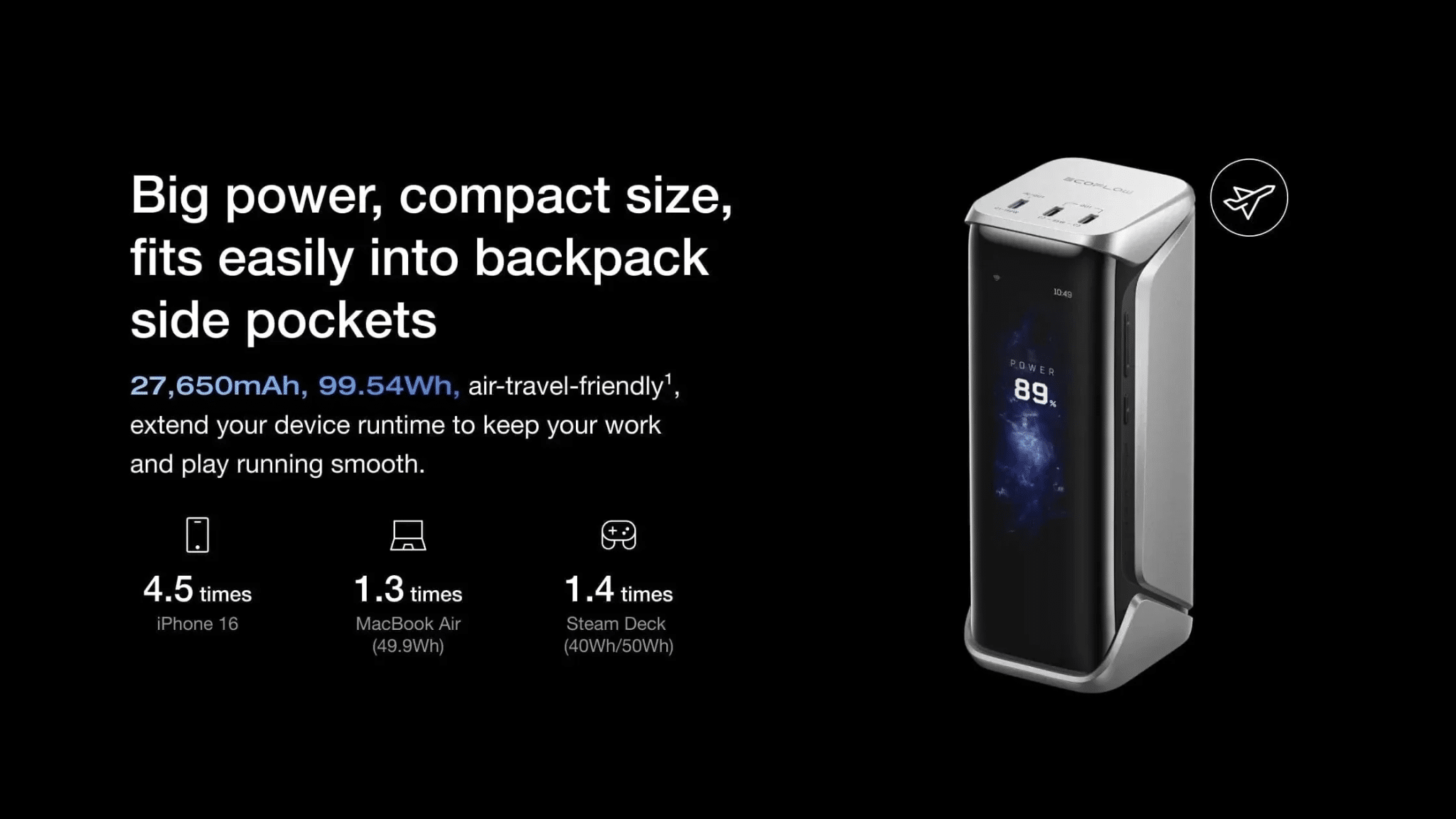
Business or digital-nomad travelers who need to recharge a laptop should look for the watt-hour (Wh) rating instead. Airlines generally allow up to 100 Wh in carry-on luggage. That’s roughly equal to 26,000 – 27,000 mAh depending on voltage. Understanding this rule helps you avoid problems at airport security.
2. Power Output and Charging Speed
A power bank’s output determines how quickly it can charge your devices. Many older chargers provide only 10 – 15 watts, which is fine for phones but not for larger gadgets.
Look for units that support high-speed USB-C Power Delivery (PD). A 60 – 100 watt output can recharge most laptops or tablets efficiently. If you want to charge multiple items at once, check the total output shared between ports. Some chargers can split 100 watts between two or three devices, maintaining solid speed without overheating.
Fast input also matters. If your charger itself takes eight hours to refill, it’s less practical for travelers. A device supporting 60 watt input can fully recharge in about an hour and a half, which is ideal for quick turnaround during short hotel stays or coffee breaks.
3. Weight and Portability
When every ounce counts, size and weight become key.
Smaller 5,000 – 10,000 mAh chargers fit easily in a pocket or purse. Medium ones around 20,000 mAh often weigh about one pound and can slip into a backpack. Larger 27,000 mAh units approach the upper airline limit and work better in carry-on bags.
Choose based on how you move. Backpackers may prefer compact options that balance capacity and comfort, while frequent flyers might accept extra weight in exchange for higher output.
Also consider design details such as a built-in cable or a smooth surface that won’t catch on luggage lining. Rounded edges and minimalistic shapes help keep things tidy inside your bag.
4. Compatibility With Multiple Devices
Modern travelers often carry a mix of electronics: smartphones, tablets, laptops, earbuds, e-readers, and cameras. A good travel power bank supports all of them without adapters.
Check for both USB-A and USB-C ports. USB-C PD is essential for fast charging modern devices, while USB-A ensures backward compatibility. Some advanced chargers even include wireless charging pads or magnetic connectors for added convenience.
It’s worth confirming the supported voltage ranges. Laptops often need 20 volts, while phones use 5 – 9 volts. A flexible output that adjusts automatically keeps each device safe from overvoltage or overheating.
5. Safety Features and Certification
Power banks store significant energy, so safety should never be ignored.
Look for certifications such as UL, CE, or FCC compliance. These indicate that the product meets safety standards for short-circuit protection, temperature control, and overcharge prevention.
Built-in chips that manage heat and voltage help prevent damage to both the power bank and your devices. Travelers who use their charger in hot climates or direct sunlight should especially pay attention to temperature protection.
Airline compliance is another factor. Make sure the label clearly lists watt-hours (Wh). Without that, security may refuse it at check-in. Keeping the charger in your carry-on bag rather than checked luggage is always recommended.
6. Build Quality and Durability
Frequent travel means constant movement, bumps, and drops. A sturdy shell made of aluminum or reinforced plastic will last longer than thin plastic housings.
If you often travel outdoors, consider water-resistant or dust-resistant designs. Even light rain or spilled coffee can damage exposed ports. Some travelers wrap their chargers in a small protective sleeve for extra peace of mind.
Also check for tactile feedback on buttons and clear LED indicators. These small details show how thoughtfully the product is built. You should be able to check remaining power at a glance even in a dim airplane cabin.
7. Smart Features and Convenience
Today’s power banks can do more than store electricity. Some include digital displays showing real-time wattage or estimated remaining charge. Others have built-in cables, eliminating the need to pack extras.
Wireless charging is convenient for phones and earbuds, although it usually works slower than cable connections. If you value simplicity and less cable clutter, this feature might be worth it.
Another underrated convenience is pass-through charging. It lets you plug the charger into a wall outlet while it simultaneously recharges your phone. For travelers with limited outlets in airports or hotels, that can be a big time-saver.
8. Price Versus Value
Price ranges widely depending on capacity, speed, and features. While it’s tempting to buy the cheapest option, extremely low prices often signal poor components or safety risks.
A reasonable investment in a mid-range or premium power bank pays off over time. You’ll experience fewer slow-charging issues, less overheating, and better durability. For frequent travelers, a reliable power source is not a luxury but a necessity.
When comparing models, evaluate cost per watt-hour rather than total price. That gives a clearer sense of value and performance.
9. Real-World Travel Scenarios
Different trips call for different power strategies.
Short city trips: A compact charger around 10,000 mAh keeps your phone and camera ready for sightseeing.
Business travel: Go for higher output with multiple ports to handle laptops, tablets, and phones simultaneously during meetings or long flights.
Outdoor adventures: Pick something durable, preferably with some level of water resistance and fast recharging so you can top it up with limited access to outlets.
International travel: Make sure your wall charger or input supports dual voltage (100 – 240 V). Combine your power bank with universal plug adapters so it can charge anywhere in the world.
10. Sustainability and Battery Lifespan
Power banks age just like any other battery. A quality product typically lasts 500 – 800 full charge cycles before noticeable capacity loss.
To extend its life, avoid leaving it fully discharged for long periods and store it at around half capacity when not traveling.
Some newer models use lithium iron phosphate (LiFePO₄) cells, which maintain stability and longer cycle life. While these may cost more, they can last several years with consistent performance, reducing electronic waste over time.
11. How to Use It Safely on the Road
Even the best charger needs smart habits.
- Keep it out of direct sunlight inside a car.
- Unplug devices once they reach 100 percent to avoid heat buildup.
- Use certified cables that match the power rating.
- Always store it in carry-on luggage when flying.
Following these small precautions ensures both your devices and your charger stay safe.
12. Final Thoughts
A travel power bank is more than a backup battery; it’s a lifeline for your digital world. The best one balances capacity, portability, and safety. Instead of chasing the biggest number on the label, focus on how you actually travel—whether that’s daily commuting, business trips, or international adventures.
By understanding capacity limits, output power, weight, and certifications, you’ll find a charger that keeps everything from your phone to your laptop ready when you need it most.
Before your next trip, take a few minutes to compare specifications carefully. A thoughtful purchase can save you from countless low-battery warnings and make your journey smoother from start to finish.