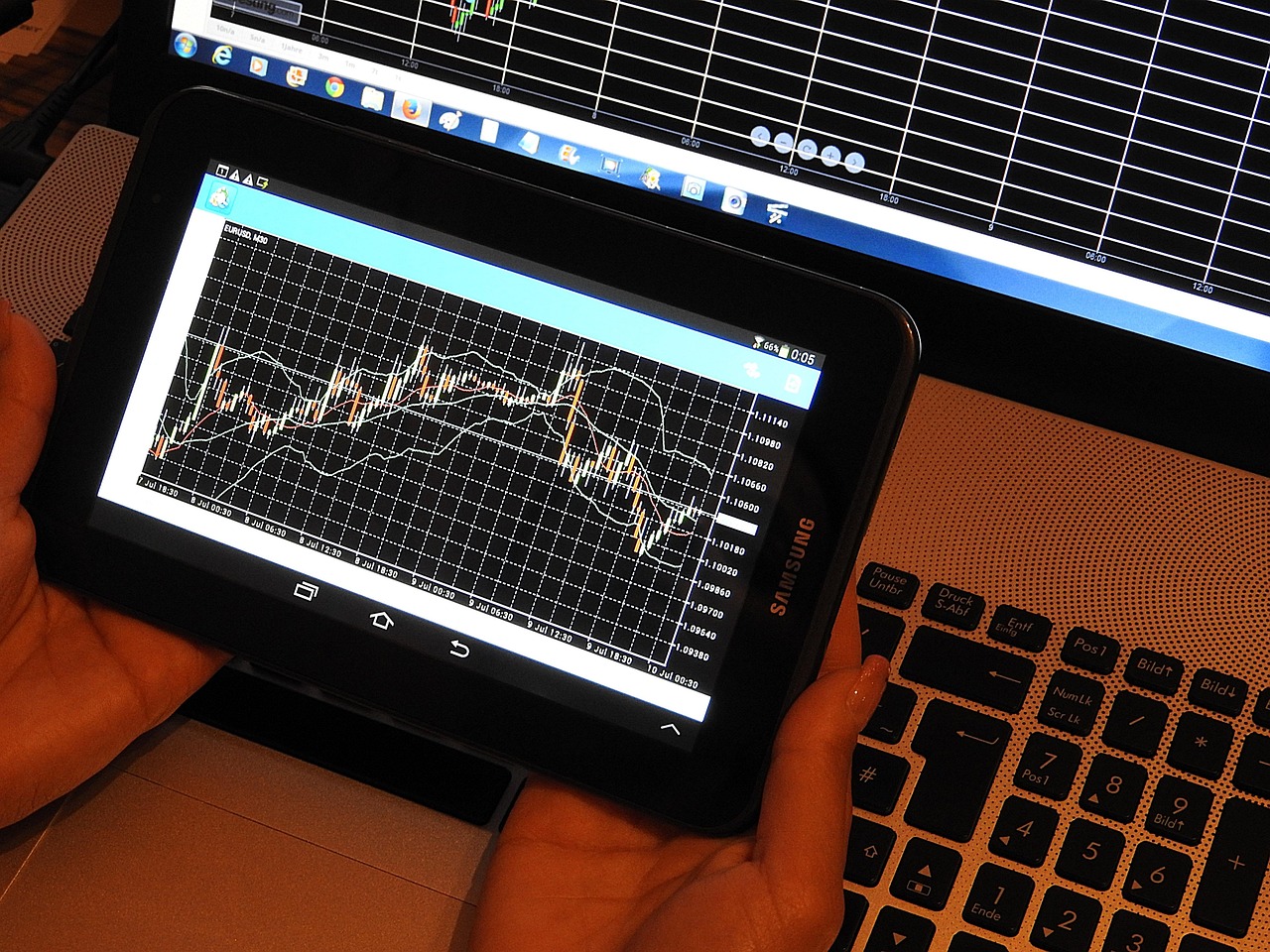

Learning the basics of markets and key drivers is no longer a case of having to spend hours reading textbooks from cover to cover. For students in the digital age, there is a range of interactive charting platforms that can be used in demo mode to quickly get up to speed, and TradingView is the most popular option. This beginner-friendly learning pathway can be used as a tool to explore different financial markets under a variety of conditions, improving your overall understanding of how they evolve over time.
With all of this in mind, we’re going to take a closer look at the finer points and key pieces of functionality that allow you to accelerate your learning journey with TradingView.
What Makes Tradingview a Student-Friendly Resource?
Students interested in finance, economics, and investing have the option to use charting platforms to learn about different types of market behavior. There is no pressure to use them to make live trades—they can be used simply as learning tools to augment lectures and traditional textbooks. Anyone wanting to know what is TradingView from the perspective of a budding student can think of the platform as an interactive learning resource that uses the very latest real-world data.
If we take a broad overview of how the platform works and what it has to offer, we see that it has the following benefits for every student who chooses to use it:
- A highly accessible format that is built around basic charts and simple indicators means that students of all abilities can make a start at a pace they feel comfortable with
- Built-in tutorials and training options will show students how to build their knowledge of the mechanics of the platform and adopt more advanced approaches
- The option to have charting functionality and indicators working side by side with real-world data and different market conditions provides a comprehensive training environment
- A wide variety of markets are covered, meaning that students can improve their understanding of how major stocks behave in ways that are often very different from niche cryptocurrencies and established commodities
The point here is that the more comfortable you feel with the resource, the more you will be able to get out of it in the long run. Exactly what you want to hear when you’re looking to set the tone for a progressive learning journey in which you are able to make consistent progress at a pace that you feel comfortable with.
The Importance of Real-Time Data in Trading
Static examples are all well and good, but they don’t get you thinking in a way that reflects how traders and analysts view the world around us. Having access to a charting platform that allows you to work with real-time data is invaluable because it teaches you about the pace markets move. Assets like stocks, crypto, and forex all move up and down in value throughout the day, but they each have their own characteristic timeframes. The more you are able to learn with real-world data that continually evolves, the better your understanding of such changes will be.
Real-time data also helps students to improve their understanding of how strategies need to dynamically evolve as the potential of positions changes. The point here is that by thinking like a trader while you’re learning, you will be able to gain a far better understanding of the many nuances, variables, and subtleties that go into balancing risk and reward. You can understand more about real-time data and how it relates to trading from ThinkMarkets.
Understanding How Technical Indicators Work
Students typically find that technical indicators remain largely abstract concepts when they are watching tutorial videos or reading about them in textbooks, which is why charting platforms can really come into their own. TradingView has over 100 technical indicators that are available to every student, allowing them to understand when and how they become useful.
By using real-world data to understand the nuances of things like moving averages and Bollinger Bands, a student can see what they can and cannot tell them about market behavior. It’s this process of learning through direct application that allows beginners to quickly develop an intuitive understanding of how markets evolve and what their current state means for future behavior.
With so many technical indicators available, it can initially be difficult for a student to remember when and how each one becomes useful. By giving them the option of exploring real-world data and seeing how the indicators work, a charting platform allows them to gradually build a richer picture of what market analysis should look like. This is especially important for students who want to be able to understand multiple types of market behavior simultaneously.
Leveraging a Social Community to Learn Faster
The option to learn from other traders is also something that many students find they benefit from. By being able to share their analyses with other learners of a similar ability and level of experience, they can quickly clarify key points and develop at an accelerated rate. The social side of learning on a central platform is also a proven way to improve student morale, especially during times of stress or uncertainty.
When students enjoy the way they learn, they have so many more ways in which they can take in new knowledge. Central to this is the fact that learners who are interested and motivated will naturally allow their curiosity to lead them, taking them away from the rigid direction set out in lectures and in textbooks as a result. It’s these individual learning offshoots that can make the real difference as they allow a student to dive deeper into a specific subtopic, and to do so in a way that enables them to unite previously disparate parts of their knowledge and understanding.
Learning Pine Script to Further Develop Your Understanding
Students can also use charting platforms to develop their own custom strategies to further test their knowledge against a range of different market conditions. Pine Script allows students of all abilities to script their own indicators and strategies that they can then customize to the prevailing market conditions. This allows students to move from an approach where they put existing strategies into place to a position where they assess the current market and shape their strategy based on market potential.
Learning to script also helps students to clarify key nuances so that they develop an extra layer of depth and clarity. It’s this enhanced level of understanding that will allow any student to apply what they have learned in a wide range of different markets, regardless of the current and future market conditions.
Conclusion
Students who use interactive trading platforms like TradingView give themselves a chance to apply what they have read about in their textbooks and heard about in their lectures. By having access to a range of charting options, technical indicators, and real-world data, they can test their knowledge against real market conditions, allowing them to identify gaps in their understanding. The point being that they will be able to improve by practicing in a way that gives them new things to think about and conditions to consider. Only then will they be able to develop an intuitive feel for how markets behave and evolve under different constraints.