
Arteries are the blood vessels that carry oxygen-rich blood from the heart to the rest of the body. However, when fat, cholesterol, inflammatory cells, and fibrous tissue accumulate inside the arterial walls, it leads to plaque formation. As a result, the artery wall becomes thickened, stiff, and narrow. This results in restricted blood flow.
In some cases, the plaque can become unstable and rupture, which further leads to blood clot formation. This can completely block the artery. This chronic disease of the arteries is known as atherosclerosis.
Atherosclerosis typically develops slowly, often beginning in childhood. It progresses slowly over decades. It is caused by a combination of lipid accumulation, inflammation, and damage to the arterial wall. However, poor lifestyle choices, smoking, genetics, obesity, high blood pressure, diabetes, and stress also contribute to atherosclerosis.
Since it leads to various life-threatening cardiovascular diseases, it is vital to diagnose it at an early stage. Here is where the recombinant cathepsin B protein comes into play.
What is Recombinant Cathepsin B Protein?
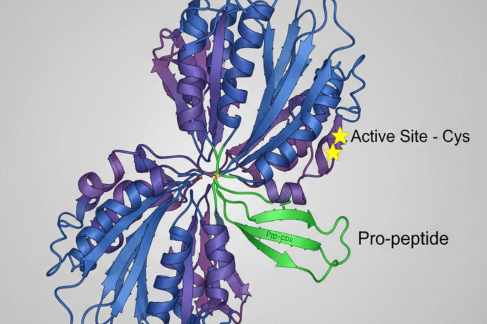
Cathepsin B is an enzyme that helps break down proteins inside cells. It plays a key role in cleaning up damaged cell parts and is involved in diseases like atherosclerosis. Scientists use recombinant Cathepsin B protein to study how it affects artery plaques, inflammation, and to develop diagnostic tools and drugs.
While it usually works inside lysosomes, it can sometimes leak or be secreted outside the cell, especially during inflammation or disease. The excess levels of CTSB also contribute to plaque formation, ECM degradation, and plaque rupture.
So, scientists use recombinant CTSB protein to check the amount of active CTSB in different tissues. This helps them understand how this enzyme behaves during the development and progression of atherosclerotic plaques.
How Recombinant CTSB Protein Aids in Atherosclerosis Research?
Understand ECM Degradation in Plaques
The extracellular matrix (ECM) is the structural framework of the artery wall. It contains proteins like collagen and elastin that keep the artery strong.
During atherosclerosis, Cathepsin B becomes overactive. It breaks down these ECM proteins faster than normal. This weakens the plaque and makes it more likely to rupture.
However, recombinant Cathepsin B protein helps scientists study exactly how this enzyme breaks down ECM components. They add recombinant CTSB to lab samples of collagen, elastin, or artery tissue. Then they observe how quickly it degrades them.
This helps researchers understand how plaque stability is affected and why some plaques become dangerous.
Study Inflammatory Pathways
Inflammation is at the center of atherosclerosis. When Cathepsin B levels rise, inflammation inside the artery also increases. Recombinant CTSB allows scientists to study this process in detail.
Researchers add recombinant CTSB to cultured cells such as macrophages, smooth muscle cells, and endothelial cells. They observe how the cells react—whether they release more inflammatory chemicals, produce stress signals, or activate certain genes.
This helps scientists understand how Cathepsin B triggers or worsens inflammation in the arterial wall. It also shows which cell types are most sensitive to CTSB activity.
Develop Diagnostic Tools
Early detection of atherosclerosis is important. However, many people show no symptoms until the plaque becomes severe or ruptures. At times, researchers use recombinant CTSB to develop diagnostic assays and imaging tools.
They use the recombinant enzyme to test new chemical probes that glow or change color when CTSB is active. These probes can then be used on tissue samples or imaging scans to detect high CTSB activity.
Depending on the results, researchers can check whether there is early plaque formation or an unstable plaque. This helps identify people who might be at risk before a serious event like a heart attack occurs.
Drug Development and Inhibitor Screening
Since Cathepsin B contributes to plaque growth and rupture, it serves as a target for a drug or therapeutic development. Researchers need pure and active CTSB to test new drugs.. This is where recombinant CTSB is essential.
Scientists mix recombinant CTSB with different chemical compounds to see which ones block its activity. This process helps identify powerful CTSB inhibitors, which then can be used as medicines that slow down atherosclerosis or make plaques more stable.
Recombinant CTSB also helps test the strength and selectivity of these inhibitors. This helps researchers ensure they work specifically on Cathepsin B.
The Bottom Line
Now that you know why recombinant CTSB protein is essential for atherosclerosis research, what are you waiting for? Find a reliable supplier of recombinant CTSB protein so that you can ensure you get accurate results for your experiments.