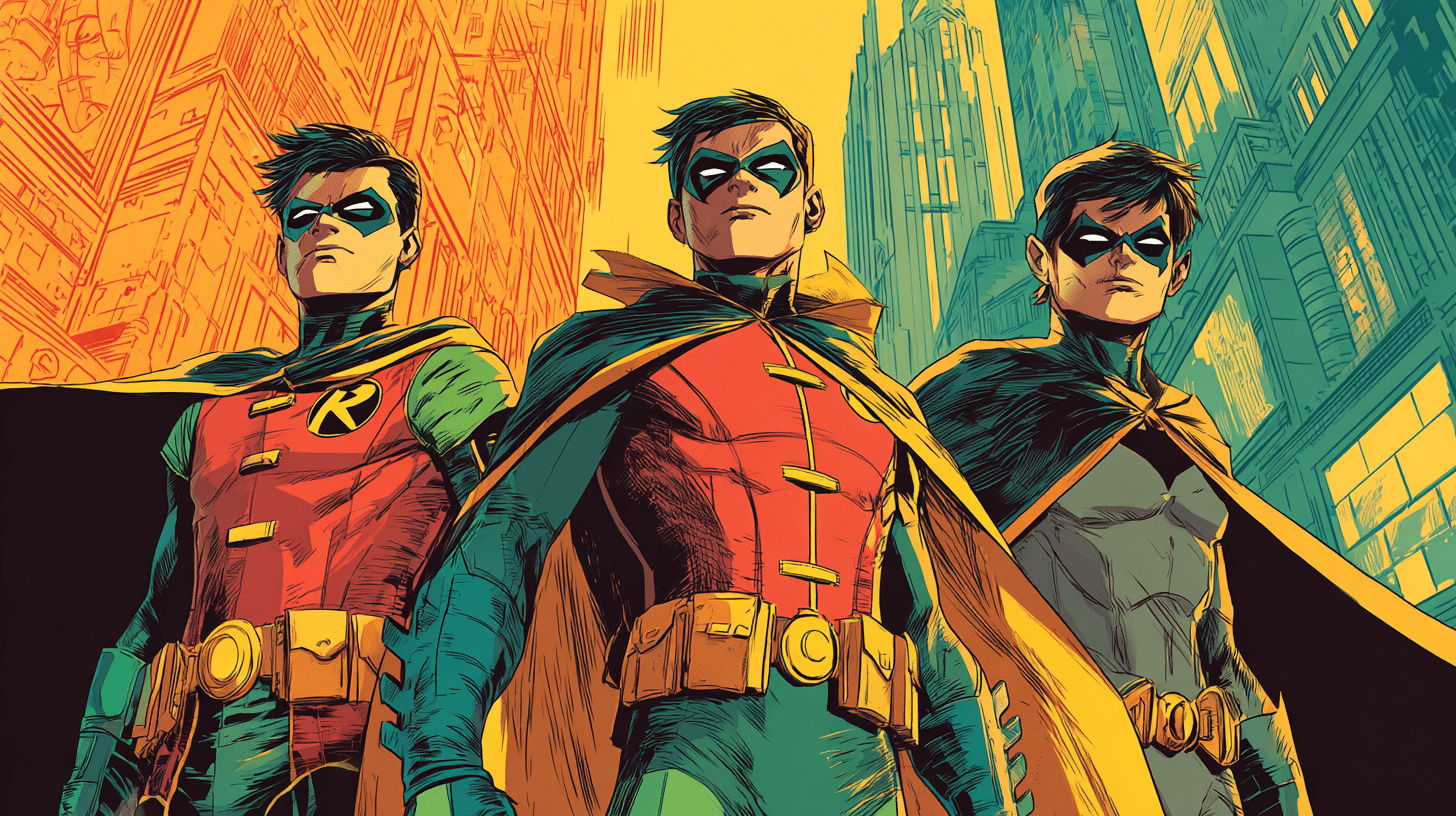

Three young heroes have carried the Robin mantle through Gotham’s darkest nights, each bringing their strengths to Batman’s mission.
Dick Grayson established the template with circus-trained agility and natural leadership. Jason Todd challenged conventions with street-smart intensity before returning as the lethal Red Hood.
Tim Drake solved Batman’s identity through pure deduction and has continued growing as a character, including recent storylines that explore his bisexuality in the comics, adding new depth to his path.
Understanding these three Robins means understanding how mentorship, loss, and growth shape heroes in a city that demands everything from those who protect it.
Dick Grayson: The Original Robin and Nightwing
Dick Grayson debuted in 1940 after the loss of his circus acrobat parents. Trained by Batman, he blended grace, agility, and empathy, often lightening the tone without losing focus on the mission.
As he matured, Dick sought independence, forged his path, and adopted the Nightwing identity.
He leads with presence and steadiness, scans a room, and builds teams that function.
In combat, he favors speed, aerial movement, and precision strikes, using escrima sticks and acrobatics to finish engagements before foes can reset.
Jason Todd: The Wild Card Turned Red Hood
Jason Todd arrived in the 1980s with a tougher background and a temper that tested boundaries. As Robi,n he punched above his weight, but impatience and anger often put him at odds with Batman.
His death in “A Death in the Family” changed Gotham forever – a storyline that remains one of the most controversial decisionsin comic history.
Years later, Jason returned as the Red Hood, a harsher vigilante who uses firearms, intimidation, and a willingness to do what others won’t.
He still loves Gotham, but he measures success by deterrence and fear, not trust. When paired with the Bat-Family, he clashes over limits yet often lands the decisive blow.
Tim Drake: The Detective and Strategist
Tim Drake entered in 1989 as the kid who solved the riddle of Batman and Robin’s identities. He sought the role not for thrills but because Batman needed a partner to stay grounded.
Tim’s edge is analysis: surveillance, pattern recognition, contingency planning, and clean execution. He balances staff work, stealth, and escapes with top-tier deductive skill.
Later, as Red Robin, he ran global operations, coordinated intel, and proved he could protect a city or a team with planning as much as with fists.
Recent arcs also address his identity and steady growth as a leader and partner.
Contrasting Strengths and Styles
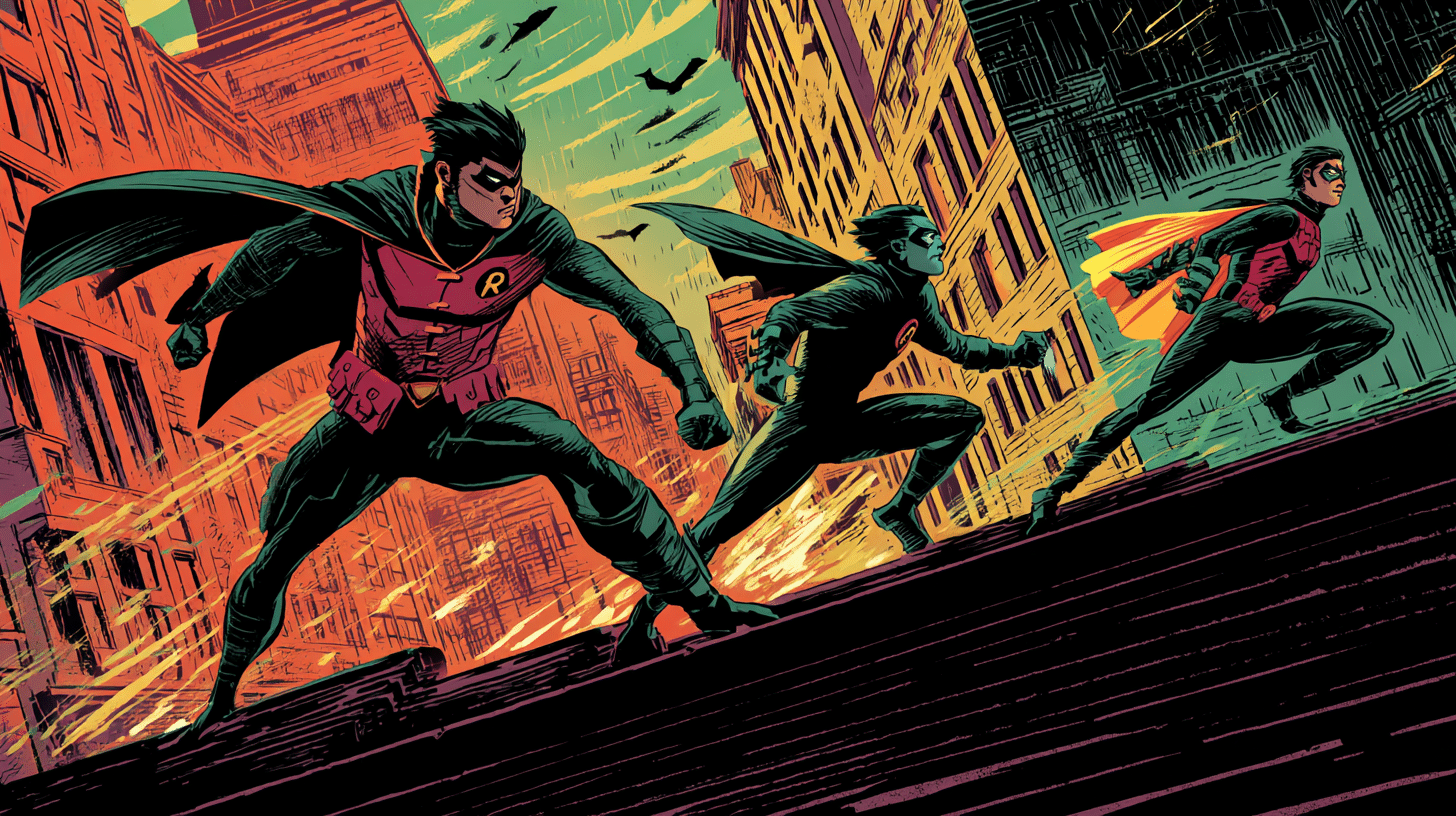
Here’s a quick side-by-side to spotlight how each Robin’s core traits differ. Skim this grid first, then jump into the role-specific insights that follow.
| Aspect | Dick Grayson | Jason Todd | Tim Drake |
|---|---|---|---|
| Background | Circus acrobat orphan | Street orphan | Bright, self-taught sleuth |
| Fighting Style | Aerial agility, escrima, precision | Aggressivpowerfulwer strikes, firearms as Red Hood | Tactical balance, staff work, stealth |
| Personality | Charismatic, optimistic, steady | Defiant, intense, blunt | Thoughtful, measured, curious |
| Relationship with Batman | Trusted partner who grew into a peer | Strained yet loyal, values tough results | Respectful strategist and problem-solver |
| Later Identity | Nightwing | Red Hood | Red Robin |
Keep this snapshot handy as a reference while outlining scenes, team dynamics, and mission types.
What Sets Each Robin Apart
Leadership: Dick builds coalitions and mentors younger heroes. People follow him because he listens and delivers.
Edge: Jason forces hard questions about outcomes and accountability. He scares villains who shrug at capes.
Method: Tim turns clues into plans. He keeps teams alive by anticipating threats and crafting workarounds.
Best Fit for Different Missions
-
Urban triage: Jason’s shock tactics can break gang control fast, though they risk collateral rifts.
-
Team operations: Dick maximizes strengths across a squad, keeps morale high, and adapts under pressure.
-
Long game: Tim excels when time, data, and coordination matter – surveillance nets, safe-house webs, and counter-plots.
Fan and Critical Reception
Readers gravitate to different robins for different reasons. Dick’s mix of warmth and reliability makes him the model partner and a natural leader.
Jason attracts readers who favor more complex answers in a city that rarely plays fair, though his character development has sparked intense fan debates over the years.
Tim appeals to fans who like chessboard thinking and emotional steadiness.
Across eras, creators have refined these roles while letting each character grow, change costumes, and take on new responsibilities without losing core identity.
Three Robins, One Powerful Legacy
The Robin Legacy proves that heroism isn’t one-size-fits-all. Grayson’s emotional intelligence, Todd’s unflinching pragmatism, and Drake’s analytical precision each serve Gotham in vital ways.
Rather than competing for the “best robin” title, these characters complement each other across different challenges and story arcs.
Grayson builds bridges, Todd breaks through barriers, and Drake builds systems that last.
Their combined impact shows why Batman’s most outstanding achievement isn’t his technology or his methods – it’s the heroes he’s helped create.
Each robin carried the symbol forward while making it their own, proving that legacy grows stronger through diversity, not uniformity.
Comment on which of Robin’s approaches resonates most with your idea of heroism?