

The trading-card hobby has evolved from nostalgia to a serious asset class. Analysts valued the market at about $15 billion in 2022. A pristine 1952 Mickey Mantle fetched $12.6 million the same year. Yet light, heat, and fingerprints can wipe out value overnight. You want to display your collection without downgrading its grade. This guide delivers seven proven display methods—spanning hardware, décor, tech, and climate controls—so you can showcase cards today and protect them for tomorrow.
1. UV-blocking acrylic cases

Museum-grade acrylic panes block 98–99 percent of ultraviolet light, the band that bleaches inks and dulls foil finishes, according to Gaylord Archival. Slide a graded slab inside and you get archive-level protection without losing eye appeal.
The rigid shell guards corners against dings, and snug seams seal out dust that can grind into glossy layers. Integrated rails hold PSA- or BGS-sized cards upright, so nothing slides if the case is bumped.
Cost check: a single-card tabletop display with UV glass sells for about $39. A nine-card wall unit with the same filtration sits near $150, which is still cheaper than re-grading one damaged grail. For specific product ideas, explore these best acrylic trading-card display cases curated for serious collectors.
Follow a simple order to future-proof the investment: penny sleeve → semi-rigid → slab → case. The three-layer stack keeps airborne grit off the cardstock and lets you enjoy the view every day without handling the card itself.
Bottom line: UV-blocking acrylic shows off prized pulls now while keeping their colors and value intact for tomorrow.
2. Shadow-box and frame displays
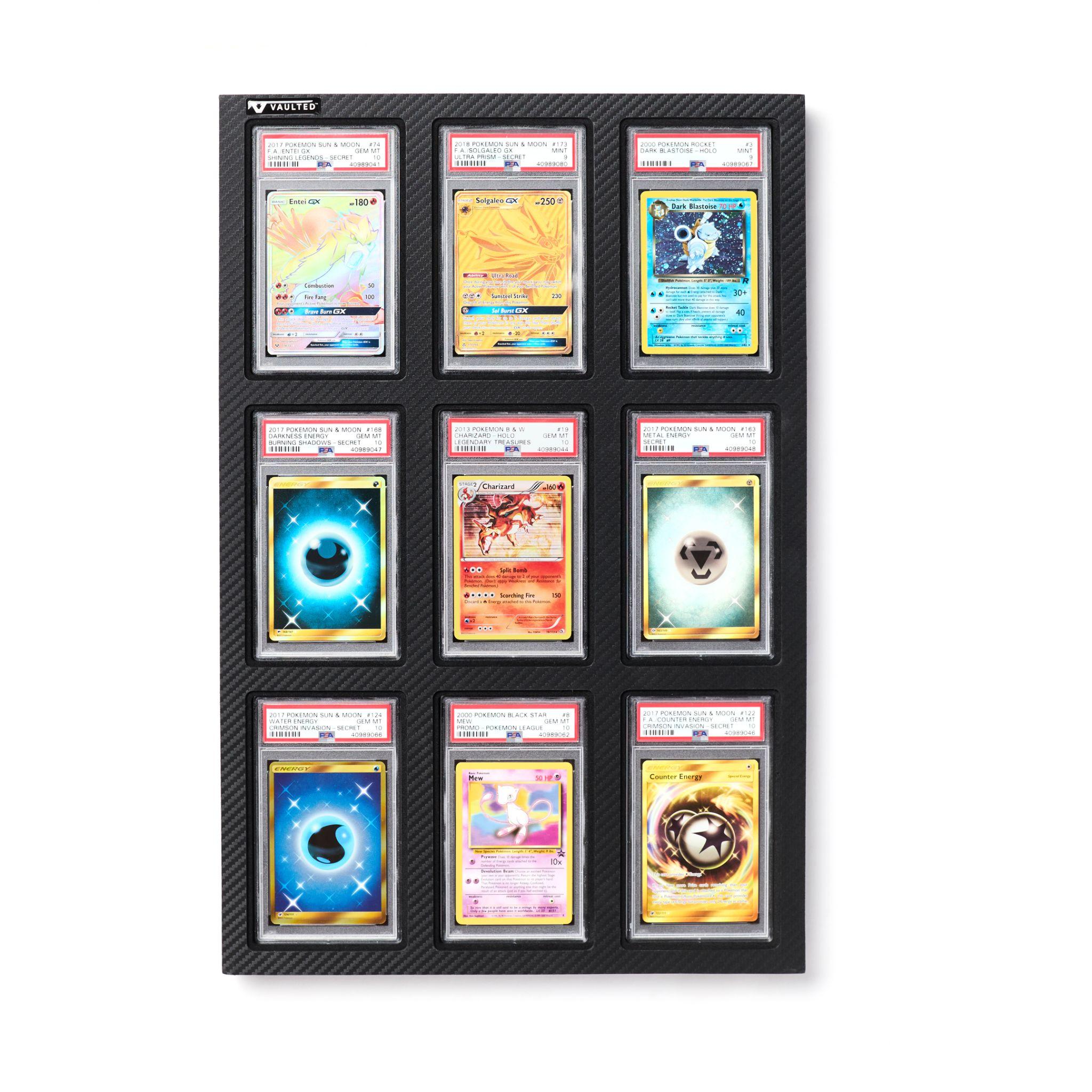
Wall space can serve as gallery space when you build the frame like a conservator. A 1-inch-deep shadow box leaves room to mount sleeved or slabbed cards without pressure, so surfaces stay pristine.
If you prefer a ready-made solution, wall-mounted graded-card displays built for PSA, SGC, or CGC slabs give you the shadow-box look without any custom framing.
Vaulted’s Card Display Plus (PSA/CGC) uses high-density EVA foam with a friction-fit channel to hold each slab snugly and a magnetic front window with UV protection, which is a useful template for what to look for in any off-the-shelf display.
Prioritize that kind of foam cradle, UV-filtering front panel, and out-of-the-box mounting hardware so the cards stay level, protected, and easy to re-curate.
Start with 100 percent cotton or lignin-free, acid-free mat board; it resists the yellowing that budget backers transfer to paper over time. Slip each card into archival corner mounts—no tape, no regrets—then float the assembly behind the glazing.
Glazing choice matters. Museum glass or Optium-grade acrylic blocks 97–99 percent of ultraviolet light while cutting reflections, the same spec used in art conservation.
Hang it like a pro. A single four-inch aluminum French cleat rated to 30 lb keeps the frame level and flush. Larger pieces can take a second cleat for redundancy. In earthquake or kid zones, add a small security screw at the bottom rail.
Curate for narrative impact: nine holographic ’90s inserts this season, a rookie-to-retirement timeline next quarter. Rotating themes limits any one card’s light exposure and keeps the wall fresh.
Done right, a trading-card shadow box turns blank drywall into a mini museum while guarding every corner, edge, and autograph for the next grading cycle.
3. Curate themed story displays
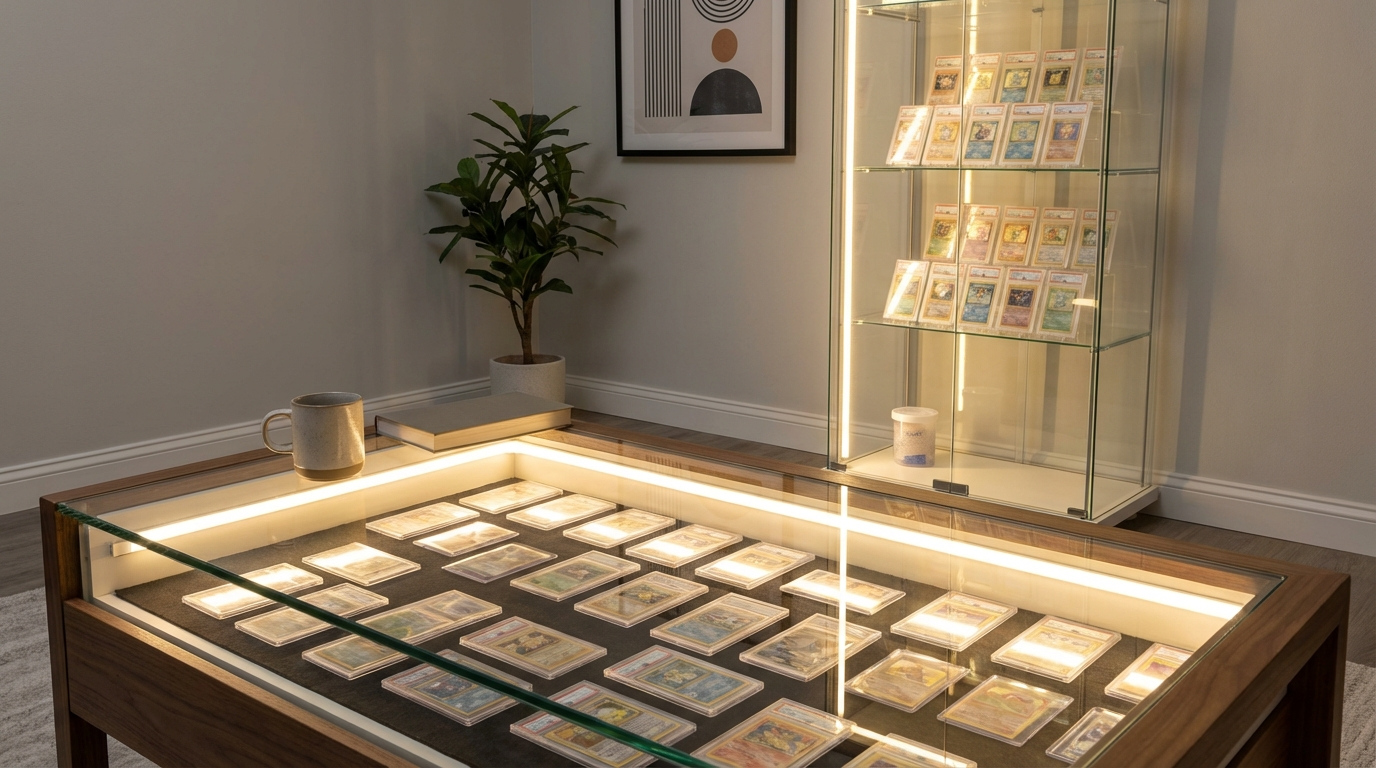
Great collections read like chapters, not spreadsheets. Group cards around one thread—such as an athlete’s career arc, a 1990s color palette, or an all-foil run—and the wall becomes a story guests grasp at a glance. Slip a ’96 All-Star ticket beside turquoise-border Fleers and the era reappears instantly.
Preservation still matters. Museums limit light-sensitive paper to three–twelve months of display before dark storage, according to the Smithsonian. Borrow the habit: rotate each themed trading-card display every quarter. During the swap, re-sleeve, dust, and note any curling corners.
The payoff is conversation. Visitors will ask why that lineup appears together, unlocking stories only you can tell.
4. Digital frames and interactive overlays
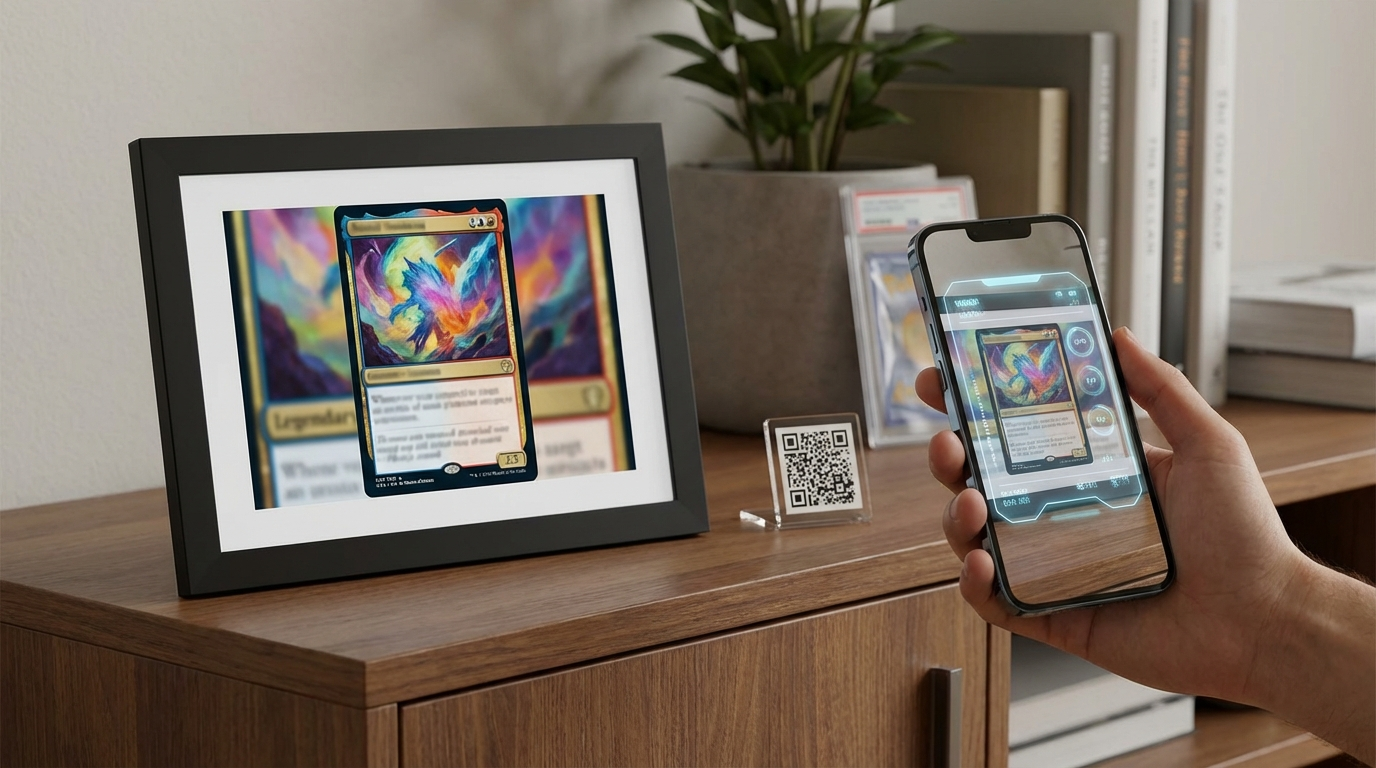
When a card is too valuable for open air, display a high-resolution copy instead. A ten- to fifteen-inch, 1080 p Wi-Fi digital frame can loop front-and-back scans, giving your Jordan rookie or Black Lotus screen time while the slab rests in a dark safe. Many models start around $85 and pull images from the cloud, so a freshly graded card appears within minutes.
Add interaction. Place a small QR or NFC tag beside the screen to open auction history, population reports, or a three-dimensional spin on a phone. Augmented-reality apps let guests point a camera at a framed Charizard and watch it animate in real time, delighting kids and reminding adults that cardboard has entered the digital age.
A digital trading-card frame will never replace the original, but it complements it, keeping the grail safe in darkness while the pixel copy earns the spotlight.
5. Maintain proper conditions while on display
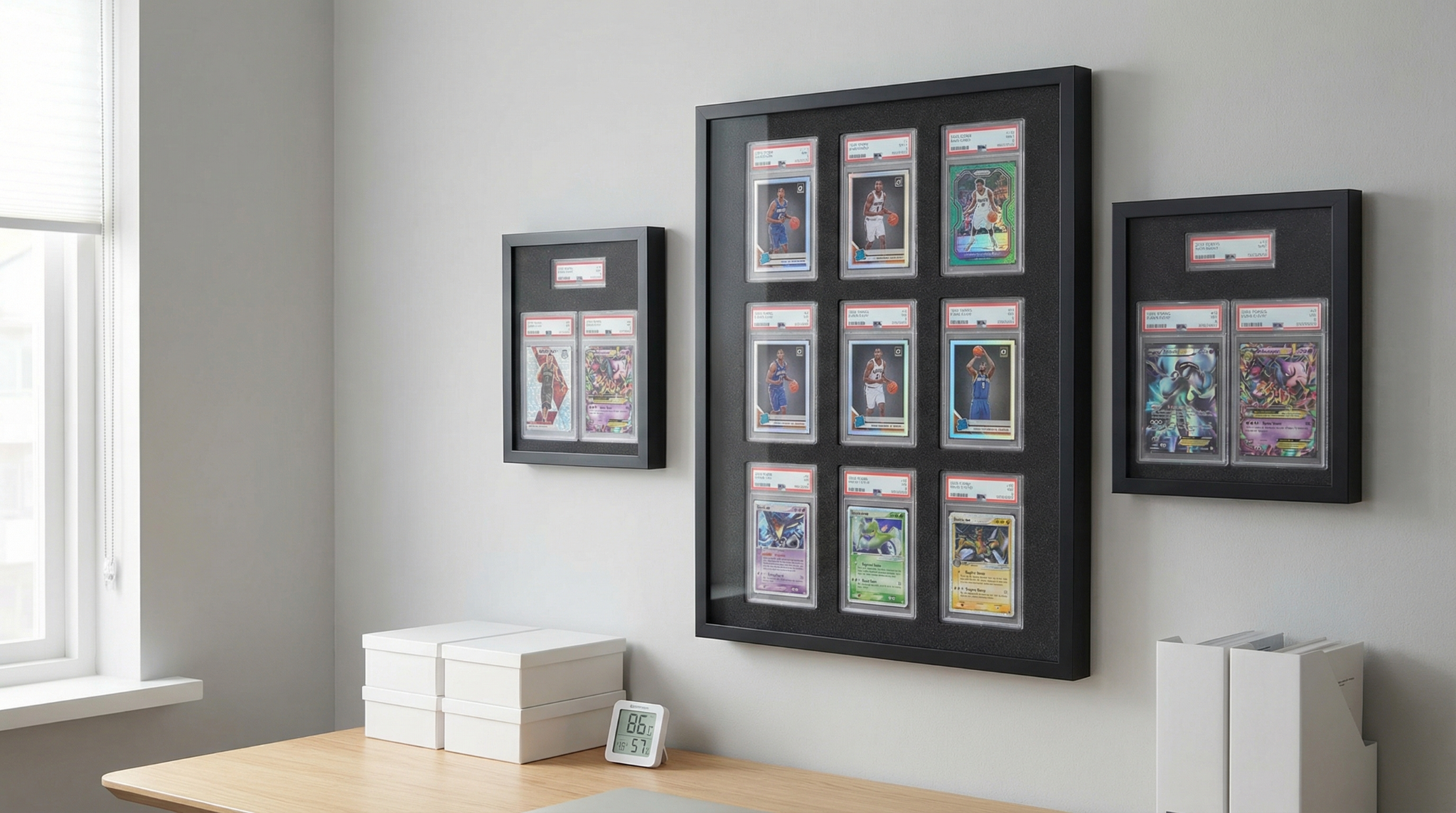
Display cases protect only if the room behaves like a light-duty archive.
- Temperature. Keep the space 65–70 °F. Heat speeds chemical decay, while cold followed by reheating invites condensation. The Smithsonian recommends no more than 70 °F for paper collections. Place displays away from radiators, exterior walls, and direct sun.
- Humidity. Hold relative humidity near 45–50 percent. That range is dry enough to prevent mold yet moist enough to avoid brittleness. The Library of Congress lists 30–55 percent RH as safe for newsprint and other acid-sensitive papers. Use a shelf-top hygrometer and add silica gel or a cup-size humidifier if readings drift.
- Light. Sunlight’s UV rays bleach inks, so cover windows with film or blinds. Interior LED strips sold as “UV-free” are safest; LEDs emit negligible ultraviolet and much less heat than incandescent bulbs.
- Monthly check. Set a reminder to open each case, dust the glazing, and inspect corners for warp or clouding. Replace exhausted desiccant and tighten mounts before small issues become permanent.
Conclusion
Displaying trading cards in 2026 is no longer about choosing between pride and preservation. With the right approach, you can achieve both—turning your collection into a living gallery without sacrificing long-term value.
UV-blocking cases, shadow boxes, and curio-style displays provide the physical backbone, shielding cards from light, dust, and accidental damage. Thoughtful curation transforms those protected cards into stories, not just assets, while rotation schedules borrowed from museums ensure no single piece bears the full burden of exposure. Digital frames and interactive overlays add a modern layer, letting ultra-high-value cards shine publicly while the originals remain safely stored. Finally, climate control ties everything together; temperature, humidity, and lighting discipline are what separate a display that merely looks good today from one that preserves grades for decades.
The collectors who win long-term are the ones who think like conservators. They assume every card may one day be regraded, resold, or passed down. That mindset turns display decisions into investment decisions—and small upgrades now prevent irreversible losses later.
In short, the best collectible displays don’t just showcase cardboard; they protect history, value, and personal legacy. Get the environment right, use archival materials, rotate with intention, and let your collection be seen without being sacrificed. When done correctly, your display becomes part of the collection’s value, not a risk to it.