

David Bowie’s eyes were as iconic as his music. But did he really have two different colored eyes?
For decades, fans assumed the answer was yes, that Bowie was one of those rare people born with one eye a completely different color from the other.
The truth is far more interesting, and it traces back to a single afternoon in 1962, a teenage argument, and a punch that nobody intended to land quite the way it did.
Those eyes became part of who he was, and the story behind them says a lot about the man himself.
Did David Bowie Really Have Different Colored Eyes?
If you ask most people what made David Bowie’s eyes so striking, the answer is almost always the same: one blue, one brown. It is one of those pop culture “facts” that gets repeated so often it feels true.
Except it isn’t.
Did You Know? David Bowie’s eyes were actually the same color. Both of them blue. What people were seeing in photos and on stage wasn’t two different eye colors at all, it was something else entirely.
The confusion stems from a condition called heterochromia, in which each iris is a genuinely different color. Bowie did not have heterochromia.
His irises were blue in both eyes. What he had was a separate condition, one that created the illusion of different colors without altering his iris color.
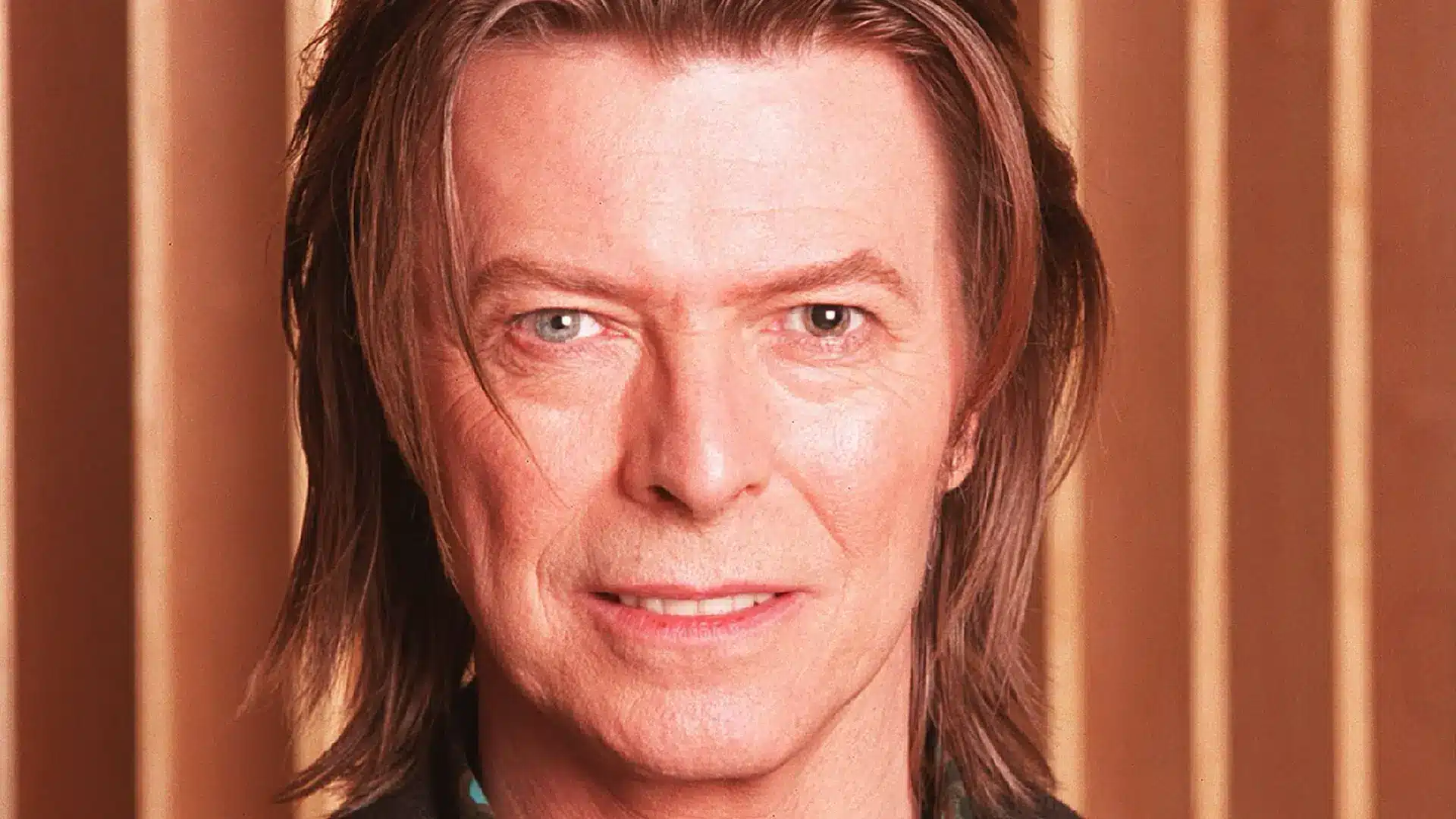
In certain lighting and photographs, his left eye appeared so dark it looked black, or even brown.
That contrast next to his lighter right eye was enough to convince most people they were looking at two completely different colors. They were not. The iris was the same. The appearance was not.
The Eye Condition Behind the Illusion: Anisocoria Explained
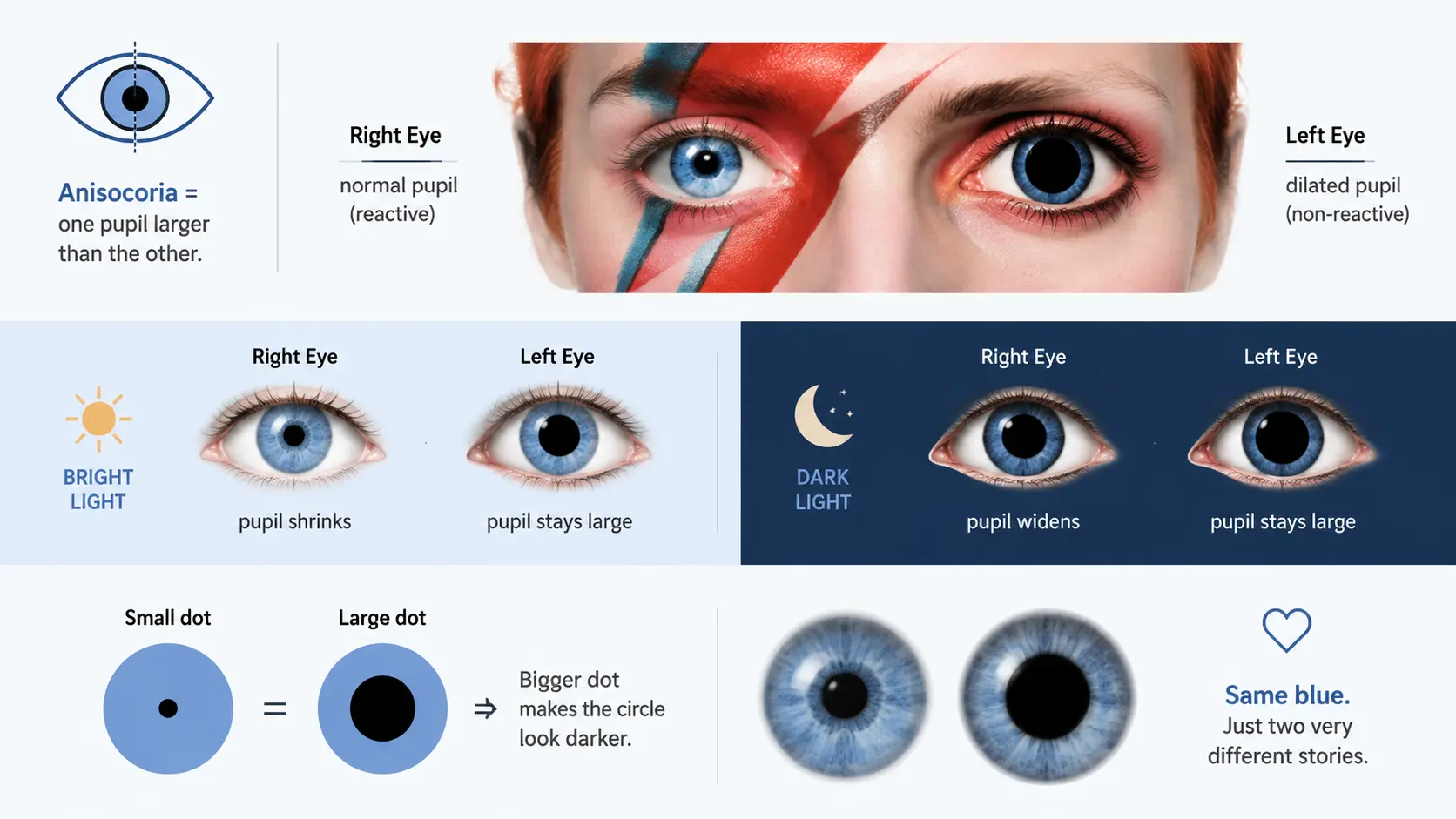
What Bowie actually has is called anisocoria, a condition in which one pupil is permanently larger than the other.
In a healthy eye, the pupil adjusts constantly. It shrinks in bright light and widens in the dark. Bowie’s left pupil could not do that. It was frozen open, stuck in full dilation, unable to respond to light at all.
That enlarged pupil covered most of his iris, making his left eye appear almost entirely dark while his right behaved normally.
Think of it this way: two identical blue circles, one with a small black dot in the center and one with a large black dot.
The bigger dot makes that circle look darker overall, even though the blue underneath is exactly the same. That was Bowie’s gaze. Same iris color. Completely different appearance.
Same blue. Just two very different stories.
The Punch That Changed Bowie’s Eyes Forever
In early 1962, a 15-year-old David Jones, still years away from becoming David Bowie, found himself in a conflict with his school friend, George Underwood, over the same girl. Underwood believed Bowie had played him, and in a fit of anger, confronted him and threw a punch.
The Injury
The punch landed on Bowie’s left eye, but it wasn’t the force that made it serious. Underwood’s fingernail scratched the surface of the eyeball, paralyzing the muscles controlling the iris.
Though Bowie went home that day, by February 14, his condition worsened, prompting a rushed visit to Moorfields Eye Hospital in London.
Treatment and Aftermath
Surgery saved Bowie’s eye, but the damage was permanent. His left pupil remained dilated, and he developed poor depth perception in that eye for the rest of his life.
Despite the injury, Bowie and Underwood remained friends and continued working together, with Underwood designing covers for iconic albums such as Hunky Dory and The Rise and Fall of Ziggy Stardust.
A Lasting Legacy
Bowie later told Underwood that the injury gave him “a kind of mystique,” and Underwood, somewhat regretfully, acknowledged that it had indeed become part of Bowie’s signature look.
Years later, Bowie told his old friend that the injury had given him “a kind of mystique.” Underwood’s take: “Funnily enough he did say I did him a favour, later on. I’m not exactly proud of it.”
Myths Busted and Facts Worth Knowing
A few myths about David Bowie’s eyes have never quite gone away. Here’s what’s actually true.
The Myths:
- He Had Heterochromia (Different Colored Eyes): He didn’t. Heterochromia means different colored irises. Both of Bowie’s irises were blue. The “different colors” effect was entirely caused by the dilated pupil.
- His Darker Eye Was Brown or Green: It appeared darker because of the enlarged pupil covering most of the iris, not because the iris itself was a different color.
- The Injury Ruined His Friendship with George Underwood: It didn’t. They stayed close for life. Underwood designed artwork for some of Bowie’s most iconic albums.
- Anisocoria occurs only from injuries; it can also result from neurological conditions, certain medications, or occur naturally in people with no underlying health issues. Most people have very slight pupil asymmetry without ever knowing it.
bThe Facts Most People Don’t Know:
- Bowie was a lifelong admirer of Little Richard, once saying that without him, he likely would never have gone into music.
- The punch happened in early 1962. Shortly after, Bowie ended up in emergency surgery at Moorfields Eye Hospital in London.
- He had poor depth perception in his left eye for the rest of his life as a result of the injury.
- George Underwood, the person who accidentally shaped one of the most famous faces in music, went on to design two of the most iconic album covers in rock history, both of which prominently feature Bowie’s eyes.
- Bowie himself confirmed in interviews that both eyes were the same color. The appearance of different colors was entirely a result of the permanently enlarged pupil.
The National Library of Medicine shares the curious story about David’s eyes
Summing Up
The story of David Bowie’s eyes starts with a punch in a schoolyard and ends with one of the most recognized faces in music history.
What began as a teenage injury and a long and frightening four months of hospital treatment became something nobody planned for.
The boy who was afraid of losing his eye entirely went on to have one of the most photographed gazes of the 20th century.
His eyes were both blue. They just told two completely different stories. And perhaps that was always the most Bowie thing about them, that even the facts, once you knew them, were stranger and more interesting than the myth.
Frequently Asked Questions
Did David Bowie’s Eye Condition Affect His Ability to See Normally?
Yes. Bowie developed permanent poor depth perception in his left eye after the injury, affecting his vision throughout his life.
Could David Bowie’s Anisocoria Have Been Treated or Surgically Corrected?
No treatment exists to reverse paralysis of the iris muscles. Bowie’s left pupil was permanently dilated and could never be medically corrected.
Did David Bowie Ever Talk About His Eyes in Interviews?
Yes. Bowie confirmed in interviews that both eyes were blue and called the distinctive appearance his personal “kind of mystique.”
Is Anisocoria a Common Eye Condition or Rare in the General Population?
Mild anisocoria is actually fairly common. Around 20 percent of people have slight differences in natural pupil size with no symptoms.