

You may have heard plenty of terms in the LGBTQ+ community, but aroace might be new to you.
Well, it’s a blend of aromantic and asexual, describing people who don’t feel romantic or sexual attraction in the typical ways.
In this blog, we will break down what being aroace really means, clear up common myths, and help you better understand this often-overlooked identity.
Whether you are curious or just starting to learn, you are in the right place!
What Does Aroace Mean?
To break it down:
- Aromantic (Aro) individuals don’t feel romantic attraction, meaning they typically don’t desire romantic relationships or experience “crushes.”
- Asexual (Ace) individuals don’t feel sexual attraction and often don’t have the urge to pursue sexual activity.
So, someone who is aroace identifies with both of these experiences.
While they may not seek romance or sexual connection, they can still form strong, meaningful bonds rooted in friendship, trust, and emotional closeness.
What Does Aromantic Mean?
Aromanticism is about not feeling romantic attraction.
While aromantic people may not pursue romantic partnerships, they can still nurture deep friendships and supportive companionships.
It’s a misconception that aromantic people don’t feel love. They absolutely can; they just experience it in non-romantic ways, often through emotional closeness and shared experiences.
What Does Asexual Mean?
Asexuality refers to not experiencing sexual attraction. Asexual individuals might not seek out sexual relationships, but that doesn’t mean they’re disconnected from intimacy.
They may build close emotional connections or share physical affection without it stemming from sexual desire.
Some asexual individuals may still engage in sexual activity for various personal or relational reasons.
The key is that asexuality is about how a person experiences (or doesn’t experience) sexual attraction, not their behavior.
How Aroace is Different from Other Identities?
Attraction can show up in many different ways, and the aroace identity highlights one unique combination within that range:
- Aroace individuals do not experience either romantic or sexual desire, which sets them apart from many other identities.
- Bisexual and pansexual people may feel multiple forms of attraction across different genders.
- Graysexual and demiromantic individuals experience attraction in limited or situational ways, such as only rarely or after deep emotional bonds.
- These differences emphasize that not everyone connects or relates to others through the same types of feelings.
The Importance of Aroace Visibility
Representation matters. Aroace individuals often go unseen, even within LGBTQ+ spaces.
However, visibility helps validate their lived experiences and reminds them they are not alone.
It also combats harmful assumptions, like the idea that everyone is looking for romance or sex.
By recognizing aroace identities, we affirm that all forms of connection and identity are valid, whether they involve intimacy, companionship, or something else entirely.
So, creating space for these stories encourages a more compassionate and inclusive world, one where people aren’t defined by attraction, but by authenticity.
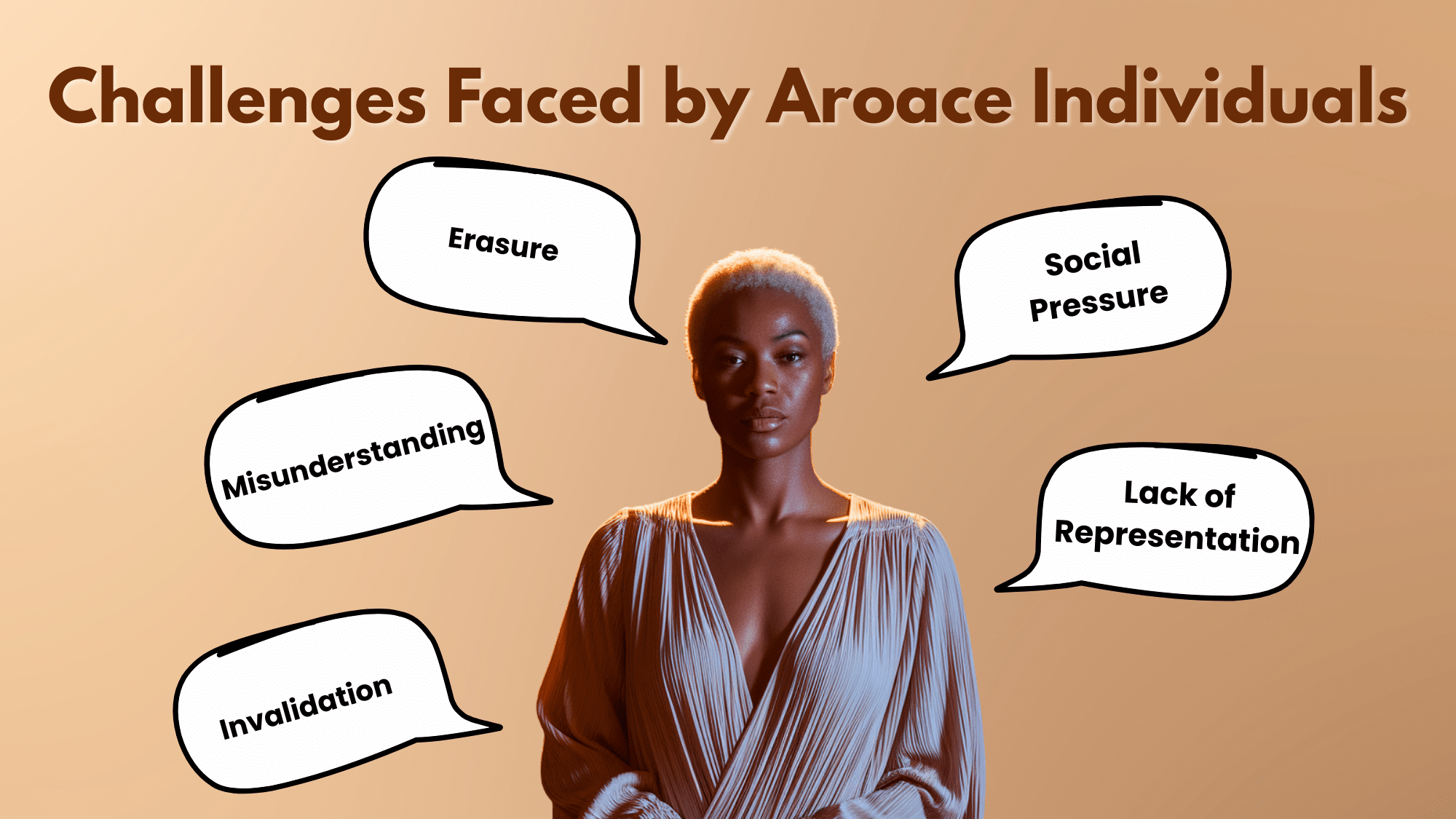
These challenges reflect daily struggles, from being misunderstood to feeling isolated due to limited recognition and representation.
- Aroace identities are often overlooked, with assumptions that everyone feels romantic or sexual attraction.
- They are sometimes seen as cold, despite forming strong, non-romantic bonds.
- Social pressure to conform to romantic or sexual norms can lead to confusion and isolation.
- Lack of visibility makes self-acceptance harder for many aroace individuals.
- Minimal media representation leaves them feeling unseen and without role models.
Conclusion
Have you ever stopped to consider that not everyone seeks love or intimacy the same way?
Well, for aroace individuals, that’s the reality, and it’s perfectly valid.
Perhaps you have met someone who doesn’t discuss crushes or relationships.
Or maybe this blog even made you reflect on your own experiences.
Either way, learning about aroace identities helps us understand just how varied and beautiful human connections can be.
So, what can you do next? Stay curious. Ask questions respectfully. And most importantly, listen.
By welcoming all forms of identity, we create a space where everyone can feel seen, valued, and accepted just as they are.